

More news on this day
Pensacola International Airport’s debut of its “Wings for All” program is quickly becoming a touchstone for inclusive travel, as major U.S. airlines and global hotel brands move to capture a growing market of neurodivergent and disabled travelers seeking barrier-free journeys.
Practice Runs in the Sky Put Pensacola on the Accessibility Map
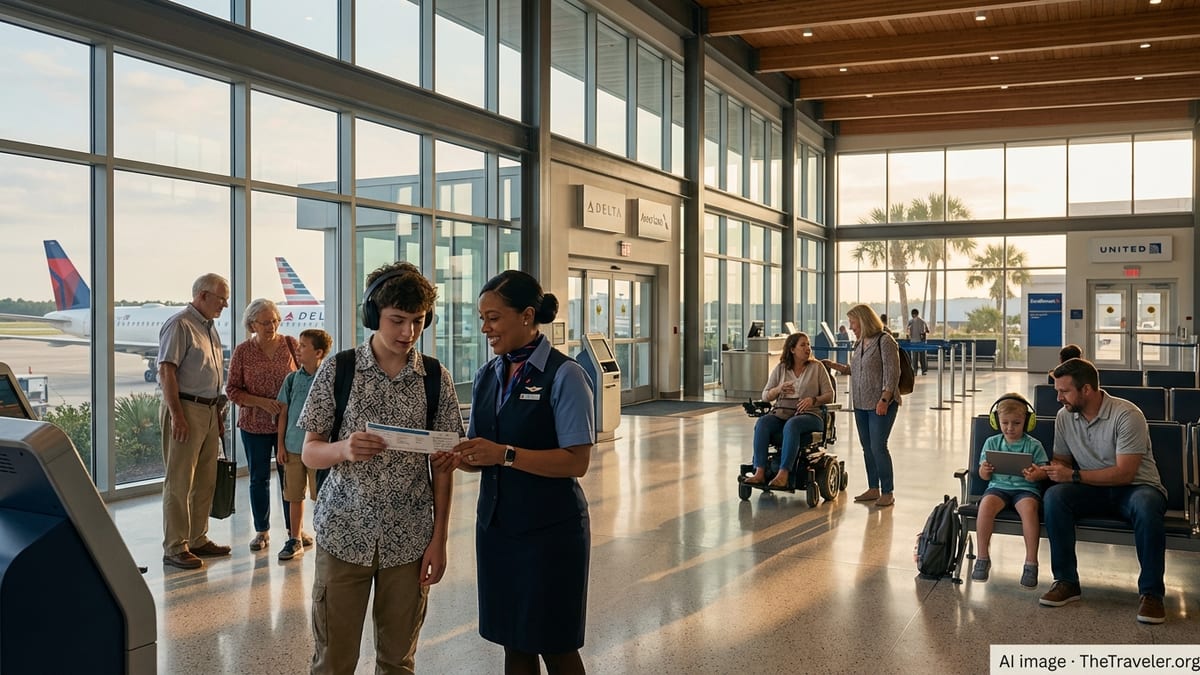
Pensacola International Airport hosted its first “Wings for All” event on February 24, 2026, offering a full mock flight experience tailored to neurodivergent travelers and people with intellectual or developmental disabilities. Participants checked in at real counters, passed through security, boarded an aircraft and taxied on the runway, all without the pressures of an actual departure time.
The program, run in partnership with Delta Air Lines and disability advocacy organization The Arc Gateway, mirrors and expands on earlier “Wings for Autism” simulations in other U.S. cities. Families described the event as a rare chance to rehearse the complex airport environment, helping ease sensory overload and anxiety that can make flying feel out of reach.
Airport officials in Pensacola say they plan to make “Wings for All” a recurring feature, integrating feedback from participants to refine everything from check-in signage to lighting and sound in gate areas. The goal is to carry lessons from the simulated flight into everyday operations, turning an awareness initiative into lasting infrastructure and training improvements.
By elevating accessibility from a compliance requirement to a community partnership, Pensacola has effectively positioned itself as an incubator for inclusive travel practices that larger hubs are now watching closely.
Delta, American, United and Southwest Align on Disability-Friendly Travel
Delta’s prominent role in Pensacola’s launch builds on its broader accessibility strategy, which includes sensory rooms at major hubs, assistance programs for cognitive and invisible disabilities and an Advisory Board on Disability that feeds traveler feedback directly into product design and training. The carrier has also tested a prototype seat that allows powered wheelchair users to remain in their own chairs for the duration of a flight, signaling a push toward more inclusive cabins.
American Airlines, United Airlines and Southwest Airlines are now exploring similar mock-flight and airport rehearsal experiences, airport and industry officials say, with discussions focused on sharing best practices for staff training, communication and quiet spaces for passengers who may be overwhelmed by crowds and noise. While approaches differ, all four carriers are converging on the idea that predictable, step-by-step experiences reduce stress for a wide range of travelers, not only those with diagnosed disabilities.
The wave of initiatives also reflects regulatory and market pressure in the United States, Canada, the United Kingdom and Brazil, where accessibility laws and customer expectations are tightening. Airlines increasingly view inclusive design as both a legal obligation and a competitive differentiator, particularly as families factor accessibility into decisions about which carrier and which airport to use.
Industry analysts say the combined efforts of Delta, American, United and Southwest signal a transition from scattered pilot programs to a more systemic, network-wide approach to disability inclusion in commercial aviation.
Canada, UK and Brazil Become Testbeds for Accessible Routes
As practice-run initiatives in Pensacola gain visibility, route planners are looking at how inclusive services connect with key international gateways in Canada, the United Kingdom and Brazil. These markets already have robust accessibility frameworks, and airlines see an opportunity to harmonize assistance standards across borders.
Delta and its U.S. peers are coordinating with Canadian airports and regulators on consistent pre-travel support for passengers with cognitive and sensory disabilities, including clearer ways to request assistance and document needs before arrival. Similar conversations are under way with hubs in London and major Brazilian cities, where passenger growth and evolving disability-rights legislation are pushing airports to invest in sensory rooms, staff training and clearer wayfinding.
For travelers, the benefit is continuity: an anxious first-time flyer who practices boarding at Pensacola can be handed off to trained staff and familiar procedures in Toronto, London or São Paulo. For airlines and airports, the payoff is loyalty, as families and disability advocates increasingly recommend network combinations that minimize surprises along the journey.
This emerging “accessibility corridor” model is prompting some carriers to quietly map and promote routes that can deliver a reliably supportive experience, from curb to hotel check-in.
Hilton, Marriott and Hyatt Package Inclusive Stays Around Accessible Flights
The hospitality sector is moving in parallel. Hilton, Marriott and Hyatt have expanded online accessibility information, with more detailed room descriptions and search filters that surface mobility- and hearing-friendly features. Pensacola’s “Wings for All” event has given these chains a tangible story to build on, as local properties work with the airport to design packages around practice flights and future real trips.
Hotel executives say families that attend mock-flight programs are often beginning to plan their first vacations involving air travel. That creates a window for brands to demonstrate accessible room design, quieter floors, early check-in flexibility and staff training tailored to guests with sensory sensitivities or complex medical needs.
In markets linked to Canada, the United Kingdom and Brazil, Hilton, Marriott and Hyatt are piloting more consistent accessibility standards across properties, aiming to reduce the guesswork that travelers with disabilities often face when booking rooms in unfamiliar cities. Front-desk teams are being briefed on airport rehearsal programs like Pensacola’s so they can better anticipate questions and coordinate transportation and check-in times.
Travel advisors note that this alignment between accessible flights and reliably accessible hotels can turn previously daunting international itineraries into realistic options for multi-generational families and travelers who once wrote off flying altogether.
Inclusive Tourism Emerges as a Growth Market, Not a Niche
Behind the surge in interest from airlines and hotel groups is a growing recognition that inclusive tourism is a significant, underserved market. Disability advocates estimate that tens of millions of people in North and South America live with cognitive, sensory or mobility differences that can complicate travel, and many are willing to pay for predictable, lower-stress experiences.
Pensacola’s “Wings for All” organizers say demand for the February event exceeded available slots, with waitlists forming for future sessions. That level of interest underscores the gap between what traditional air travel offers and what many families need to feel safe and confident navigating airports and aircraft.
As word spreads through advocacy networks and social media, destinations that can demonstrate credible, lived-in accessibility rather than one-off marketing slogans are gaining an edge. Partnerships among airports, airlines and hotel brands are increasingly framed not as charity, but as smart economic strategy tied to longer stays, repeat visits and positive word of mouth.
For now, Pensacola International Airport’s mock flights represent a modest but powerful proof of concept. If the current momentum continues, the lessons learned on a quiet taxiway in Florida could help reshape how some of the world’s largest travel companies design and deliver inclusive journeys across continents.