

More news on this day
Philippine Airlines is widening its Pacific footprint in 2026 with new routes from Manila to Palau and Saipan, a move expected to deepen tourism flows, support regional trade, and strengthen long-standing ties between island communities across Micronesia and Southeast Asia.
Get the latest news straight to your inbox!
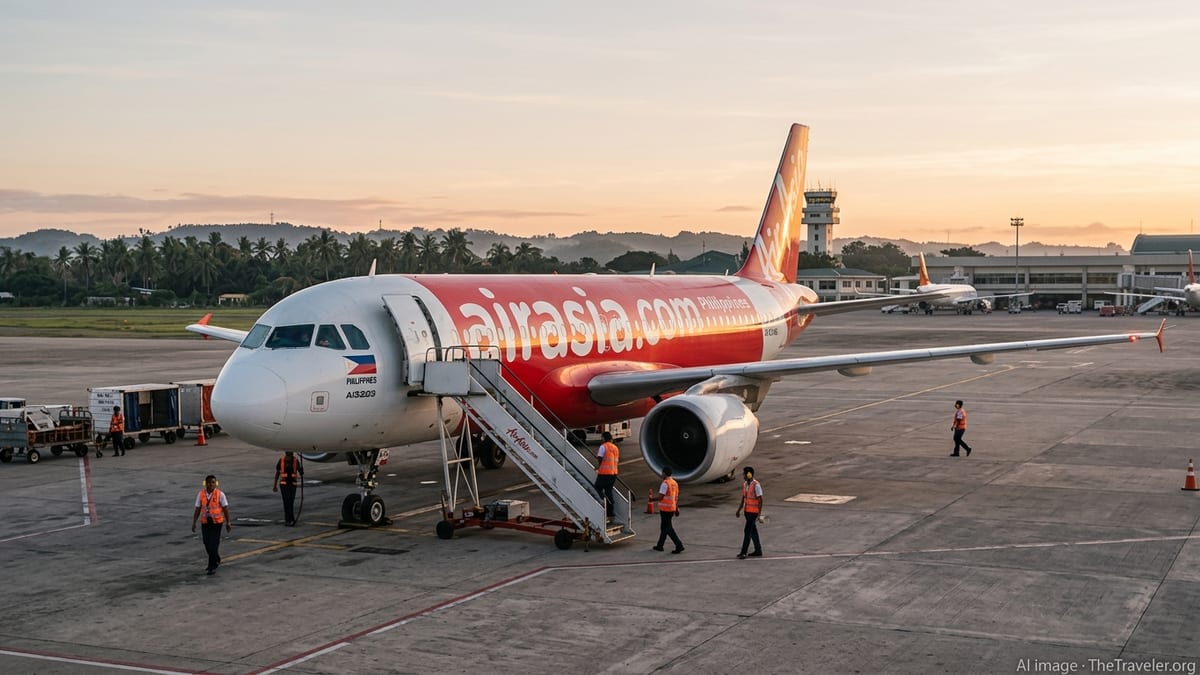
New Pacific Links Take Off in 2026
Publicly available schedules and recent coverage indicate that Philippine Airlines is rolling out new direct services from Manila to Koror in Palau and resuming nonstop flights to Saipan beginning March 29, 2026. The launches place the Philippine flag carrier at the center of a fresh wave of connectivity in the Western Pacific, linking its Manila hub more tightly to emerging island destinations and established Filipino communities abroad.
The Manila–Palau route adds a new Pacific island nation to the airline’s map, while Manila–Saipan restores a link that has been dormant for several years. Both routes are planned as twice-weekly services operated by Airbus A321 aircraft in a two-class configuration, aligning with Philippine Airlines’ broader strategy of deploying single-aisle jets on medium-haul island sectors.
These new connections complement existing flights from Manila and Cebu to Guam and Honolulu, creating a more coherent network arching from the Philippines across Micronesia to Hawaii and onward to North America. Industry observers note that, taken together, the additions point to a renewed focus on the Pacific Islands as a growth corridor for both leisure and migrant traffic.
Timetables and loyalty program documents published in early 2026 list Koror and Saipan among Philippine Airlines’ international routes, underscoring the airline’s commitment to sustaining the new services throughout the Northern Hemisphere summer season.
Tourism Opportunities for Palau and Saipan
Tourism agencies in Palau and the Northern Mariana Islands are positioning the new flights as an important lever for recovery and diversification after several challenging years for global travel. Recent press releases from the Marianas highlight expectations that the Manila–Saipan connection will make it easier for visitors from the Philippines and the wider Asian region to access the territory’s beaches, golf courses, and cultural sites.
Palau, meanwhile, is widely promoted as a premier diving and eco-tourism destination, with clear lagoons, marine sanctuaries, and strict environmental regulations that limit visitor numbers and protect fragile reefs. Direct access from Manila is expected to open new package-tour possibilities combining city stays in the Philippine capital with multi-day diving trips and island-hopping itineraries in Palau.
Travel industry reports suggest that tour operators in the Philippines, Japan, South Korea, and Australia are likely to repackage Palau and Saipan as add-ons to Southeast Asian holidays once the new flights stabilize. The ability to connect through Manila from secondary Philippine cities as well as from major Asian gateways could encourage travelers to pair Palau’s marine attractions or Saipan’s resort offerings with urban, culinary, or heritage experiences in Luzon and the Visayas.
Analysts also note that increased lift into Palau and Saipan may support niche segments such as dive tourism, sporting events, and small-scale meetings and incentives travel, which can have an outsized economic impact in small island economies compared with pure transit traffic.
Economic and Community Impact Across the Pacific
Beyond tourism, the new routes are expected to influence trade, employment, and community ties across the Pacific arc between Manila, Micronesia, and the Pacific Rim. Cargo capacity on the Airbus A321 flights is being marketed to exporters moving high-value, time-sensitive goods such as fresh seafood, specialty agricultural products, and e-commerce parcels between island markets and distribution centers in the Philippines.
Industry commentary points out that using Manila as a hub allows shipments from Palau and Saipan to connect to Philippine Airlines’ wider network of Asian, Middle Eastern, and North American destinations. This could shorten transit times for certain goods that previously relied on more circuitous routings via Guam or other hubs, potentially improving margins for small businesses in the islands.
The resumption of Manila–Saipan flights also holds social importance, as Saipan and the wider Northern Mariana Islands host a sizeable Filipino community working in tourism, construction, and services. More direct capacity between Manila and Saipan is expected to simplify home visits, family reunions, and labor mobility, supplementing existing routes operated by other carriers through Guam or Japan.
In Palau, closer air links to Manila may encourage educational exchanges and medical travel, given the Philippines’ role as a regional center for healthcare and higher education. Observers suggest that additional connectivity has the potential to support broader government and business engagement between Palau and the Philippines, particularly in sectors such as fisheries, maritime services, and environmental management.
Strategic Network Expansion for Philippine Airlines
The Palau and Saipan launches form part of a wider Philippine Airlines expansion program spanning 2025 and 2026, which includes new or restored services to cities such as Da Nang, Seattle, and Sapporo. Aviation analysts interpret the moves as a dual strategy: capturing premium long-haul demand while also filling in thinner, underserved regional routes where the carrier can leverage its Manila hub and its strong brand among Filipino travelers.
Published timetables show that the Pacific island routes are timed to connect with a mix of domestic and international banks of flights at Manila, allowing passengers from Cebu, Davao, and other Philippine cities to reach Palau and Saipan with a single connection. The schedule design also facilitates onward same-day links from Palau and Saipan to destinations including Tokyo, Seoul, and various points in the Middle East and North America.
By adding Palau and Saipan alongside its existing Guam operation, Philippine Airlines is strengthening its position as one of the few carriers offering a multi-point network across Micronesia and the Central Pacific anchored on an Asian hub. Observers note that this positioning may become increasingly valuable as tourism boards and investors market the broader region as a cluster of complementary island experiences rather than stand-alone destinations.
The airline’s choice to deploy the Airbus A321 on these routes is seen as an effort to balance capacity with seasonal demand, giving flexibility to adjust schedules as markets mature. Aviation commentators suggest that, if load factors and yields prove favorable, Philippine Airlines could eventually consider frequency increases or expanded seasonal operations tailored to peak diving and holiday periods.
Competitive Landscape and Future Prospects
The entry of Philippine Airlines on the Manila–Palau and Manila–Saipan sectors introduces new competition on routes that have historically seen limited carrier presence. In the case of Palau, industry data show that United Airlines has long served the market via Guam, while Saipan has relied heavily on connections through Guam and East Asian hubs.
Adding a Manila gateway gives travelers and shippers an additional option that may translate into more competitive fares, diversified tour offerings, and improved schedule choice. Travel trade coverage notes that regional low-cost carriers are also stepping up their Southeast Asia and North Asia networks around the same period, creating opportunities for interline or self-connecting itineraries that could feed traffic onto Philippine Airlines’ Pacific services.
For Palau and Saipan, the long-term impact of the new flights will depend on factors such as tourism marketing, environmental policies, and the pace of global economic growth. Both destinations have emphasized sustainable development and carrying-capacity limits, meaning that measured, higher-value visitor growth is likely to be favored over rapid volume increases.
For Philippine Airlines, success on these routes would reinforce its broader narrative of recovery and renewal after the disruptions of the early 2020s. If the Palau and Saipan services perform in line with expectations, analysts anticipate that the carrier could further refine its Pacific strategy, deepening its role as a bridge between the Philippines, Micronesia, and major markets across Asia and North America.