

More news on this day
Hundreds of passengers were left in limbo at Phoenix Sky Harbor International Airport on March 28 as widely used flight-tracking data showed at least 137 delayed departures and two cancellations, disrupting travel on major carriers including American Airlines, Southwest and Delta on busy routes to New York, Chicago, Atlanta and other hubs.
Get the latest news straight to your inbox!
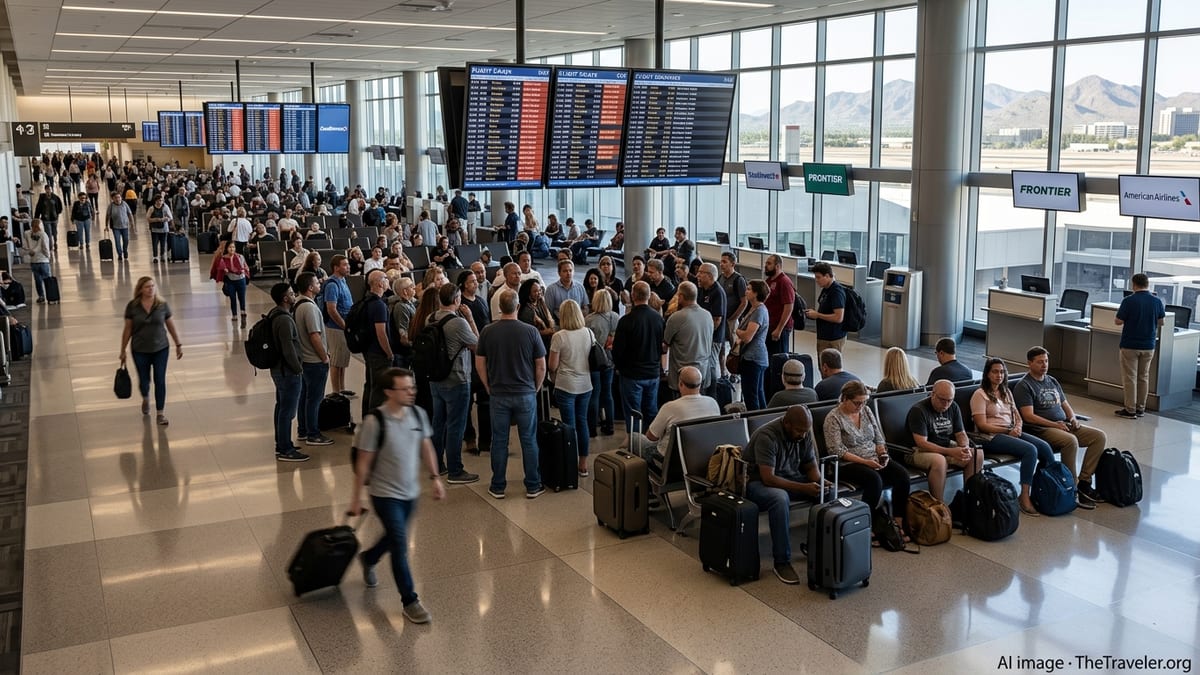
Major Disruption at One of America’s Busiest Airports
Publicly available status boards and flight-tracking platforms on Saturday indicated that Phoenix Sky Harbor was operating with an unusually high volume of schedule changes, with more than a hundred departures and arrivals pushed back from their planned times. The pattern of rolling delays left gate areas crowded and connecting passengers struggling to rebook onward journeys.
The disruption affected both domestic and connecting international itineraries, as Phoenix serves as a key link between the Southwest and large East Coast and Midwest hubs. Travelers heading to or returning from cities such as New York, Chicago and Atlanta reported missed connections and extended waits as aircraft and crews fell out of position.
Despite the relatively low number of outright cancellations compared with the volume of delays, the operational impact was magnified by tight aircraft utilization and full spring travel loads. Even a short delay on an early departure created knock-on effects through the rest of the day, compounding the backlog and keeping passengers on the ground far longer than scheduled.
Airport operations information showed that, while runways remained open, departure queues lengthened during peak periods, with some flights held at gates or on taxiways while crews awaited new departure slots and updated routing from air traffic control.
American, Southwest, Delta and Others Hit Across Key Routes
Data from airline schedules and published flight-status feeds indicated that the disruption cut across multiple carriers with a strong presence in Phoenix, notably American Airlines and Southwest Airlines, as well as Delta Air Lines and several smaller operators. These airlines collectively operate a dense network of flights from Phoenix to large domestic hubs, making the ripple effects particularly widespread.
Services to New York–area airports, including John F. Kennedy, LaGuardia and Newark, were among those reporting extended delays, reflecting broader congestion on transcontinental routes. Flights to Chicago, a heavily trafficked corridor served through hubs such as O’Hare and Midway, also showed late departures, complicating onward connections to the Midwest and Great Lakes regions.
Routes to Atlanta, one of the country’s busiest connecting hubs, experienced schedule slippage as well. Delta’s operations between Phoenix and Atlanta form part of a web of domestic and international connections, and even modest delays on this segment can lead to missed long-haul departures out of the Southeast.
Other carriers, including low-cost and regional airlines, were not spared. Aircraft rotations that rely on precise timing found themselves off schedule, with inbound late arrivals from other U.S. cities forcing further adjustments in Phoenix and at downline airports.
Possible Weather and System Factors Behind the Delays
While no single cause fully explained the disruption, weather and broader system pressures appeared to be contributing factors. National aviation dashboards showed that parts of the country, particularly in the Midwest and along some East Coast corridors, were experiencing unsettled conditions and residual impacts from a series of strong late-winter systems earlier in March, which have periodically slowed air traffic flows.
Even when skies are relatively clear in Phoenix, congestion or ground stops at destination or en route airports can force carriers to hold flights in place. When large hubs such as New York or Chicago face volume restrictions or arrival metering, departures out of connecting points like Phoenix may be assigned later takeoff times, leading to visible queues on local departure boards.
Industry analyses of U.S. aviation performance in recent months have also highlighted how tight schedules and high aircraft utilization leave little buffer when adverse conditions arise. With many airlines operating near pre-pandemic capacity, any weather-related slowdowns or minor technical issues at one airport can cascade through the network, increasing the odds of widespread delays similar to the pattern seen at Phoenix.
Observers of the aviation system note that sustained irregular operations at multiple hubs, combined with busy spring travel demand, can rapidly strain both airline staffing and airport infrastructure, making days with over a hundred delays at a single large airport more likely even without an extreme local weather event.
Stranded Passengers Face Long Lines and Scrambled Plans
Inside the terminals, travelers contended with packed gate areas, long customer service queues and uncertainty over revised departure times. Social media posts from Phoenix and other affected cities described families sleeping on seats, business travelers trying to work amid crowded concourses and vacationers recalculating hotel stays and car rentals as itineraries slipped by hours.
Passengers connecting through Phoenix bore the brunt of the disruption, particularly those traveling onward to evening departures in New York, Chicago and Atlanta. Missed connections forced some travelers to accept overnight stays or next-day flights, while others searched for alternate routings on different carriers or through secondary hubs.
Airport information screens cycled through a familiar pattern of rolling updates, as departure times were pushed back in 15- to 30-minute increments. Travelers reported that, in some cases, boarding would begin only to pause while airlines awaited final clearance or aircraft swaps, further stretching already frayed patience.
Ancillary services at the airport, including food outlets and airport hotels, saw increased demand as delays accumulated. With many flights still operating, security checkpoints remained busy through the day, adding to the sense of congestion for those trying to re-clear screening after rebooking or returning to the terminal from nearby accommodations.
What Travelers Can Do During Wide-Scale Flight Disruptions
Travel experts note that, on days when an airport accumulates more than a hundred delays, individual passengers have limited ability to avoid disruption entirely but can take steps to reduce the impact. Using airline mobile apps and subscribing to flight-status alerts can provide earlier notice of schedule changes than gate announcements alone.
When large hubs such as Phoenix experience cascading delays, same-day changes to earlier or alternative routings may become scarce. Travelers are often advised to act quickly if rebooking options appear, especially on routes with limited daily frequencies to cities like New York, Chicago or Atlanta. Securing a confirmed seat, even on a later connection, can be preferable to waiting for a standby slot on an overbooked flight.
For those who have not yet departed for the airport, checking real-time departure and arrival boards, as well as broader national delay maps, can inform decisions on when to leave home or whether to explore alternative airports. In some cases, shifting to a nearby departure point or adjusting connection cities can help bypass the worst of local congestion.
As airlines and airports continue to recover from broader system strains, episodes like the Phoenix disruption underline the importance of building extra time into itineraries, particularly when traveling through busy hubs during peak seasons. Longer layovers and flexible hotel and ground-transport reservations can provide a buffer when operational challenges turn a routine travel day into a prolonged wait on the concourse.