

Hudson Bay has long captured travelers’ imaginations with its tide-scoured coasts, drifting sea ice, and the possibility of seeing polar bears padding across the tundra. Yet the wider Arctic circle holds many other regions that offer a similar blend of harsh beauty, cultural depth, and profound remoteness. For travelers drawn to wide horizons, long winter nights, and landscapes shaped by ice and wind, these destinations offer an experience that feels like stepping to the very edge of the map.
Understanding the Allure of Hudson Bay
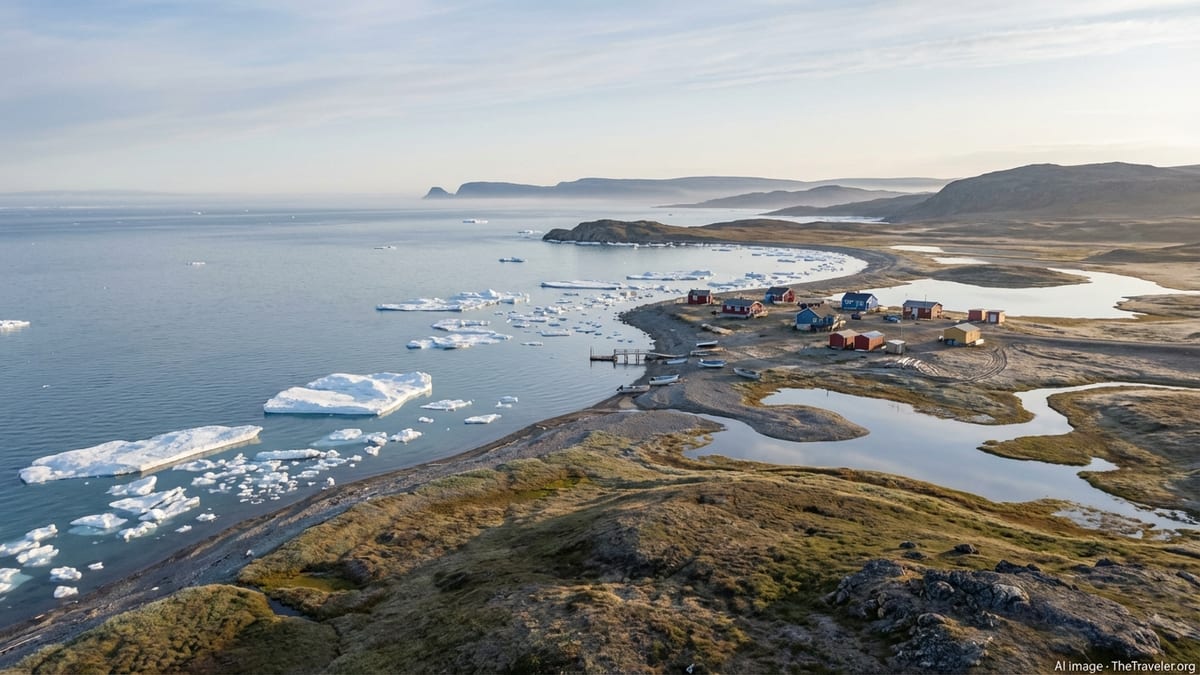
Hudson Bay is not simply a large inland sea in northern Canada. It is a complex environment where subarctic forest gives way to tundra and sea ice, where seasonal pack ice controls travel and wildlife migrations, and where small Indigenous communities maintain deep ties to the land and water. Its shoreline stretches thousands of kilometers, but only a handful of settlements dot the coast, keeping the sense of vast emptiness very much alive.
In towns such as Churchill, often called the “polar bear capital of the world,” wildlife is an everyday presence rather than a distant attraction. Seasonal movements of polar bears coincide with the freeze-up of the bay, while in summer beluga whales enter estuaries and river mouths in great numbers. The northern lights blaze across winter skies, and strong tides sculpt the ice each season into ever-changing forms.
For visitors, the appeal often lies as much in the atmosphere as in the wildlife. Long winter nights, a biting wind sweeping across the flats, and the knowledge that the next community might lie hundreds of kilometers away all contribute to a feeling of being on the threshold of the Arctic. Travelers who fall in love with Hudson Bay’s stark character often begin to look further afield for regions that share that same mix of remoteness, ice-chiseled scenery, and resilient northern cultures.
Svalbard: High Arctic Fjords and Polar Night
Far to the northeast, midway between mainland Norway and the North Pole, the Svalbard archipelago offers a dramatic counterpart to Hudson Bay. Its main town, Longyearbyen, is one of the world’s northernmost communities with a permanent population and serves as a logistical hub for expeditions deeper into the islands. Ringed by steep mountains and glaciers that spill into icy fjords, it has a modern feel but remains firmly shaped by the Arctic climate, from months of winter darkness to summers of midnight sun.
Travelers arriving in Svalbard encounter a landscape where glaciers, rugged peaks, and wide valleys dominate. Narrow fjords are hemmed in by cliffs, with tidewater glaciers calving into steel-grey seas. The tundra is mostly treeless, but in summer it comes alive with saxifrage, moss campion, and other hardy plants. Reindeer graze on slopes above town, Arctic foxes wander around the outskirts, and the possibility of encountering polar bears outside settled areas is serious enough that residents routinely carry rifles as a precaution.
What makes Svalbard feel similar to Hudson Bay is the sense of an active, living Arctic. This is not only a wilderness for cruises and snowmobile safaris. It is also a center for research into climate change and polar ecosystems, home to the Svalbard Global Seed Vault, and a place where people have adapted everyday life to extreme conditions. As in Hudson Bay communities, visitors quickly realize that safety, self-sufficiency, and respect for the environment are not romantic notions but practical necessities.
Access to Svalbard is relatively straightforward compared with many Arctic regions, with regular flights from mainland Norway and a small network of local operators offering guided excursions. Yet once you leave Longyearbyen’s lights behind for a remote cabin, a dog-sled journey, or a ski tour, the feeling of isolation becomes as intense as anything in the Canadian North. For travelers who appreciate Hudson Bay’s blend of accessible adventure and genuine remoteness, Svalbard is a compelling next step deeper into the Arctic world.
Greenland’s West Coast: Icebergs, Inuit Culture, and Quiet Harbors
On the other side of the Arctic, Greenland’s west coast offers a landscape that will feel familiar to anyone who has gazed out over Hudson Bay’s windswept waters. Many of its communities are small coastal settlements set on rocky headlands or nestled along fjords, with colorful houses clinging to slopes above the sea. The sense of being on the edge of a vast northern ocean is ever-present, as is the rhythm of seasons that dictate travel, hunting, and fishing.
In towns such as Ilulissat and Sisimiut, sea ice, tidal currents, and drifting icebergs shape daily life and navigation much the way Hudson Bay’s ice influences communities from Nunavut to Manitoba. Ilulissat, near one of the world’s most active glacier fronts, looks out over a fjord choked with immense icebergs that glow blue and white in the low Arctic sun. Even in more southerly settlements, the chill of Greenland’s ice sheet is never far away, and winter travel by snowmobile, dog sled, or even traditional qajaq in certain seasons still plays a role in local life.
Culturally, Greenland has strong parallels with the Hudson Bay region. Inuit traditions remain central to identity, from language and place names to hunting practices and the use of country foods such as seal, fish, and caribou. Modern life, from supermarkets to schools and internet connections, exists alongside this heritage. Travelers who visit with curiosity and respect can gain insight into how Indigenous communities navigate both continuity and change in the modern Arctic.
Reaching Greenland typically involves flights via Iceland or Denmark, followed by smaller aircraft or coastal ferries between towns. Once there, visitors quickly learn that distances may be short on a map but long in actual travel time, echoing the logistical challenges of moving around the Hudson Bay coast. Weather can ground planes or delay boats, and flexible plans are essential. In return, travelers are rewarded with vivid northern light, quiet harbors edged with sea ice, and an enduring sense of being in one of the last great cold frontiers.
Ellesmere and the Canadian High Arctic: Beyond the End of the Road
If Hudson Bay feels remote, the Canadian High Arctic islands move that experience into another register altogether. Ellesmere Island, Canada’s northernmost major island, lies well above the Arctic Circle and approaches the latitude of northern Greenland. It is a land of mountain ranges, deeply incised fjords, and extensive ice caps. Large portions of the island are protected within Quttinirpaaq National Park, one of the country’s most isolated parks, where visitors are few and the environment feels almost untouched.
The resemblance to Hudson Bay lies in the marriage of vast, austere landscapes with a strong sense of Canadian Arctic identity. Small outposts such as the community of Grise Fiord, Canada’s northernmost civilian settlement, maintain year-round life in conditions of extreme cold and long polar night. Much as coastal Hudson Bay communities balance traditional activities with modern necessities, residents of the High Arctic combine hunting and land skills with satellite communications, airlifted supplies, and seasonal employment.
Travel to the High Arctic is a serious undertaking. There are no roads linking these islands to the rest of North America, and visitors generally arrive via chartered aircraft or rare ship expeditions during a brief summer window. In Quttinirpaaq National Park, hikers and skiers traverse valleys where muskoxen graze, glaciers spill from the ice caps, and the silence is interrupted only by the wind. Conditions can change rapidly, and even in summer temperatures can remain near freezing. For those willing to accept the logistical complexity and cost, however, the reward is immersion in landscapes that feel as close to polar wilderness as it is possible to find.
For travelers who have fallen in love with the raw horizons of Hudson Bay and seek an even more remote experience within Canada, the High Arctic archipelago offers a progression rather than a departure. The same themes recur here: ice-dominated ecosystems, small communities relying on air and sea links, and a powerful sense that nature, not people, sets the terms of daily life.
Wrangel Island and the Russian Arctic: Wildlife at the Edge of the World
Across the Arctic Ocean from Alaska, in the far northeastern reaches of Russia, Wrangel Island provides another remote counterpart to Hudson Bay. Located well above the Arctic Circle in the Chukchi Sea, it is part of a strictly protected nature reserve, together with nearby Herald Island and surrounding waters. Scientists have documented unusually high biodiversity here compared with many Arctic islands, including a rich variety of tundra plants and large populations of Pacific walrus and polar bears.
For travelers, Wrangel Island’s appeal lies in its combination of harsh isolation and concentrated wildlife. The seas around the island are often choked with pack ice, and the climate is unforgiving, with long, cold winters and a very short summer season. Access is normally possible only by ice-strengthened expedition vessels during a brief window in late summer, often via northern Russian ports or, on some itineraries, from Alaska. Visitor numbers remain low, and special permits are required, keeping the island far from the mainstream tourism circuit.
Once on shore, the scenery recalls aspects of the Hudson Bay coast but on an even more remote scale. Rolling tundra, low mountains, and lake-dotted valleys stretch inland from gravel beaches. Polar bears patrol shorelines where walrus haul out, and large seabird colonies nest on rocky cliffs and headlands. There are no permanent tourist facilities, and visitors generally land from small boats for guided hikes under strict rules designed to protect both wildlife and fragile vegetation.
The Russian Arctic more broadly, from the Chukchi and East Siberian seas west to the Kara and Barents seas, shares Hudson Bay’s qualities of vastness, ice dependence, and sparse human settlement. Yet the added layers of logistical complexity, language barriers, and strict permitting requirements mean that only a small subset of travelers will ever experience it. For those who do, the combination of Arctic wildlife, austere scenery, and a sense of standing on a seldom-visited shore can be unforgettable.
Coastal Communities of Arctic Canada: Tuktoyaktuk, Nunavut, and Beyond
Not all destinations that echo Hudson Bay require crossing an ocean. Other parts of Arctic Canada offer similar encounters with tundra coastlines, traditional knowledge, and the realities of northern life. Along the shores of the Beaufort Sea in the Northwest Territories, for example, the Inuvialuit hamlet of Tuktoyaktuk occupies a low-lying site on Kugmallit Bay, near the Mackenzie River delta. While much smaller than the Hudson Bay itself, this region shares its reliance on seasonal ice, permafrost, and marine resources.
In Tuktoyaktuk, the sea, the weather, and the community’s Inuvialuit heritage shape daily life. The settlement has become more accessible since the opening of an all-season road from the inland town of Inuvik, turning what was once an exclusively air and winter-road destination into the end point of an overland journey to the Arctic Ocean. The surrounding landscape is notable for its pingos, dome-shaped hills formed by ice pushing up through permafrost, some of which are protected in a federal landmark. Visitors who stand on their summits on a clear day look out over a flat horizon of tundra and sea that feels very similar in spirit to the vistas of western Hudson Bay.
Across Nunavut, from Baffin Island communities such as Iqaluit and smaller settlements on nearby islands, to coastal hamlets facing Hudson Strait and the High Arctic islands, travelers encounter variations on the same themes: small populations, reliance on air transport for most goods, and a strong persistence of Inuit languages and cultural practices. Sea ice dictates the timing of hunting and travel, while climate change is reshaping shorelines and undermining older patterns of life. For visitors, engagement with local guides and operators is not merely practical but also one of the best ways to gain insight into how these communities navigate both environmental and social change.
Exploring Arctic Canada beyond Hudson Bay does not necessarily mean going farther north; sometimes it simply means going sideways into different parts of the same vast northern system. Each community has its own history and traditions, yet together they form a mosaic that reflects the broader story of adaptation, resilience, and ingenuity in the circumpolar world.
Planning Responsible Travel to Remote Arctic Regions
Whether you are drawn to Svalbard’s sharp-edged peaks, Greenland’s iceberg-filled fjords, or the quiet shorelines of the Canadian High Arctic, journeys to places like Hudson Bay demand more preparation and humility than most other trips. Distances are large, services are limited, and weather can rapidly disrupt well-laid plans. Travelers should build in extra time for delays, work with reputable local operators, and understand that flexibility is part of the experience rather than an inconvenience.
Responsible Arctic travel also means recognizing the environmental sensitivity of these landscapes. Permafrost soils, thin tundra vegetation, and nesting sites for birds and marine mammals can be easily damaged by careless footsteps or poorly managed activities. Many regions have strict regulations on where ships can land, how close visitors can approach wildlife, and what kind of waste management is required. Choosing operators who prioritize low-impact practices, follow local rules, and actively support conservation efforts is one of the most important decisions a traveler can make.
Equally crucial is respect for the people who call the Arctic home. From Inuit communities around Hudson Bay and Nunavut to residents of Greenland, Svalbard, and northern Russia, local perspectives on tourism vary, and not every place is eager to see large numbers of visitors. Taking time to learn a few phrases of the local language, listening to community members’ views on development, and spending money in locally owned businesses are all ways to ensure that your visit brings tangible benefits.
Practical considerations cannot be ignored. Travel insurance that explicitly covers remote evacuation, careful packing for extreme cold, and honest assessment of your own physical capabilities are all essential. The Arctic is not a place to push your limits without backup. Yet with proper planning, it can be surprisingly comfortable and welcoming, especially when hosted by experienced guides and community members who have grown up reading the weather, sea ice, and wildlife in ways that visitors cannot.
The Takeaway
For travelers enchanted by Hudson Bay’s remote coastlines, the wider Arctic offers a constellation of destinations that echo its atmosphere while each maintaining a distinct character. Svalbard brings together scientific research, polar night, and glacier-choked fjords. Greenland’s west coast amplifies the interplay of ice and Inuit culture. The Canadian High Arctic pushes remoteness to an extreme, while places such as Tuktoyaktuk and scattered Nunavut communities show how everyday life unfolds along other cold shores.
What unites these regions is not only ice, tundra, and wildlife, but a shared reality that the Arctic is changing. Retreating sea ice, thawing permafrost, and shifting migration patterns are already altering the landscapes and livelihoods that attract travelers in the first place. Visiting responsibly, with an understanding of both the fragility and resilience of these environments, allows travelers to bear witness without adding unnecessary strain.
In the end, journeys to places like Hudson Bay are less about ticking off remote destinations and more about developing a deeper relationship with the planet’s colder latitudes. Standing on a quiet shore under a pale Arctic sun, hearing only wind and the creak of distant ice, you gain a new appreciation for scale, silence, and the thin margin by which life persists at the top of the world.
FAQ
Q1. When is the best time of year to visit destinations similar to Hudson Bay?
The ideal time depends on your priorities. Late spring and summer offer milder temperatures, open water, and easier logistics, while autumn and early winter bring increased chances of northern lights and, in some places, better polar bear viewing.
Q2. Do I need previous cold-weather experience to travel in the Arctic?
Previous experience helps but is not strictly required if you travel with reputable guides, choose itineraries suited to beginners, and invest in proper clothing. Independent or expedition-style trips in very remote areas do demand solid winter and backcountry skills.
Q3. How expensive are trips to remote Arctic regions?
Costs are generally high because of limited transport options, specialized gear, and the small scale of local infrastructure. Expedition cruises, charter flights, and guided multi-day tours can be significantly more expensive than equivalent trips in more temperate regions.
Q4. Is it possible to visit Arctic communities in a respectful way?
Yes. Traveling with locally owned operators, asking before taking photographs, buying crafts or services directly from residents, and learning about local history and current challenges all contribute to a more respectful visit.
Q5. What kind of wildlife might I see in places like Svalbard, Greenland, or the Canadian High Arctic?
Depending on the region and season, travelers may encounter polar bears, seals, walruses, whales, muskoxen, Arctic foxes, reindeer or caribou, and a wide variety of seabirds and migratory species.
Q6. How is climate change affecting destinations similar to Hudson Bay?
Many regions are experiencing reduced and thinner sea ice, thawing permafrost, coastal erosion, and shifts in wildlife distribution. These changes can alter travel seasons, infrastructure stability, and traditional practices.
Q7. What safety concerns should travelers be aware of in the Arctic?
Key concerns include extreme cold, sudden weather shifts, limited medical facilities, wildlife encounters, and the possibility of delayed rescue if something goes wrong. Planning with these risks in mind is essential.
Q8. Can I travel overland by road to any of these Arctic destinations?
Road access is limited. Some communities, such as Tuktoyaktuk, are now linked by all-season roads, but many others, including those in Greenland and the High Arctic islands, can only be reached by air or sea.
Q9. What gear should I bring for a trip to places like Hudson Bay or Svalbard?
Layered thermal clothing, a windproof and waterproof outer shell, insulated boots, warm gloves and hats, sunglasses, and high-quality sunscreen are basics. Specific gear, such as ice spikes or dry bags, depends on your activities.
Q10. Are these Arctic trips suitable for families or less adventurous travelers?
Some itineraries, such as short guided tours based out of established towns or moderate expedition cruises, can work well for families and cautious travelers. Highly remote, self-supported journeys are better reserved for those with substantial outdoor experience.