

Winnipeg rewards curious travelers who like to mix big ticket culture with walkable neighborhoods and unfussy, flavor driven food. With two or three days, you can move beyond flyover status and get under the skin of Manitoba’s capital, from major museums at The Forks to independent galleries, breweries, and bakeries scattered through character districts on both sides of the river.
How Many Days in Winnipeg and Where to Stay
Winnipeg is compact enough that a long weekend gives you time to see headline museums, stroll a few distinct neighborhoods, and sample the local food scene without feeling rushed. Two days works if you focus tightly on downtown, The Forks, and one or two close by districts. A third day lets you cross the rivers, linger longer in cafes and taprooms, and add a neighborhood like St. Boniface or Corydon that has its own clear identity.
For a museum focused itinerary, staying downtown or near The Forks keeps you within easy walking distance of the Canadian Museum for Human Rights, the Manitoba Museum, and WAG Qaumajuq. Many hotels cluster along Portage Avenue and around the sports and entertainment district, so you can step out the door and be on a main transit corridor or at a restaurant within minutes. If you prefer a more residential feel, look at guesthouses or small hotels in Osborne Village, which still put you a short bus or taxi ride from most sights.
Winnipeg winters are long and cold, while summers can be hot and festival heavy, so your experience will change with the season. Shoulder months like late May, June, and September often offer pleasant walking weather and fewer crowds in galleries and at The Forks. Whenever you visit, build in short indoor breaks between outdoor walks so the city feels manageable and comfortable rather than something to power through.
Because this itinerary leans on walking and public transit, it is easy to follow without a car, especially if you base yourself near The Forks or downtown. Taxis and rideshares are widely available for evening returns or when the weather turns, and Winnipeg Transit buses connect major neighborhoods like Osborne Village, the Exchange District, St. Boniface, and Corydon reasonably efficiently for visitors willing to use basic route maps or apps.
Day One: The Forks, Canadian Museum for Human Rights, and Downtown
Begin at The Forks, the historic meeting point where the Red and Assiniboine rivers converge. For thousands of years it has been a trading and gathering place for Indigenous peoples and later became a rail yard before being redeveloped into a public market and cultural hub. Today you can spend a full morning moving between riverfront paths, public art, and the indoor market halls that shelter food counters, local shops, and seasonal events from winter chills and prairie winds.
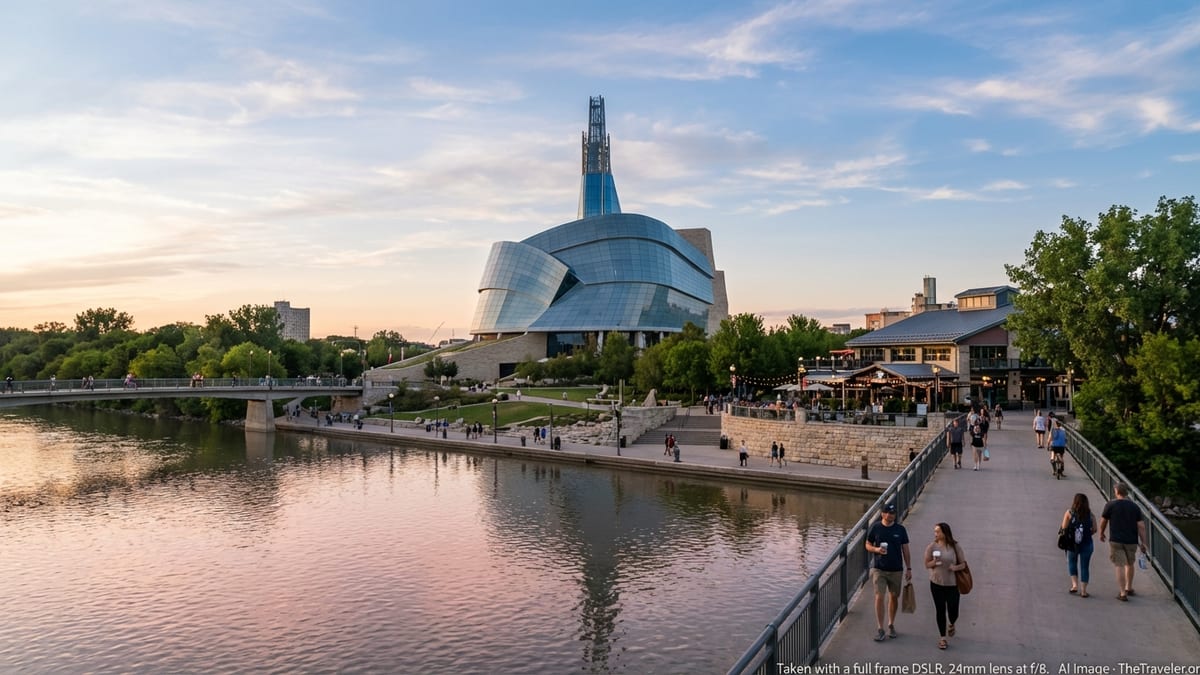
Use the late morning and early afternoon for a deep visit to the Canadian Museum for Human Rights, which rises just off The Forks with its glass tower and limestone forms. The museum explores the history and present of human rights with a strong focus on Canada, using multimedia exhibits, testimonies, and architecture that invites reflection rather than spectacle. Current exhibitions often address themes like Indigenous rights, racial justice, and the experiences of marginalized communities, so check what is on when you visit and allow at least three hours inside.
After such heavy subject matter, come back to earth with a relaxed walk along the river promenades or a coffee in The Forks Market, where stalls serve everything from local roasts to casual comfort food. If the weather cooperates, you might rent a bike or simply wander the boardwalks and green spaces to see why locals treat The Forks as their informal living room. In winter, the site often becomes a launching point for skating trails and outdoor warming huts, so you can still enjoy being outside briefly before retreating indoors to thaw out.
As evening approaches, make your way into downtown proper for dinner and a first taste of Winnipeg’s restaurant scene. You will find a mix of casual rooms focused on regional ingredients, global flavors shaped by the city’s diverse communities, and relaxed lounges perfect for unwinding after a full day. If you are staying downtown, this is the night to keep things close to your hotel, try a local beer or Canadian whisky, and perhaps catch a performance at a nearby theater or concert venue before turning in.
Day Two: Museums, Inuit Art, and the Exchange District
Dedicate your second morning to the Manitoba Museum, the province’s leading human and natural history institution. Its galleries trace Manitoba’s story from geological origins and prairie ecosystems through Indigenous histories, fur trade eras, and modern urban life. One of the museum’s most distinctive features is its focus on regional environments, which helps visitors understand how geography and climate shaped the communities you have been walking through. The museum complex also incorporates a planetarium and a hands on science gallery, so you can tailor your visit depending on your interests and how much time you have.
From there, head toward the Winnipeg Art Gallery and Qaumajuq, a connected campus that houses one of the world’s largest public collections of contemporary Inuit art. Qaumajuq’s dramatically curved white facade and its visible vault of carvings and sculptures make it worth visiting for the architecture alone, but the real highlight is the artwork that bridges Canada’s North and South. Recent exhibitions have included major retrospectives of Inuit artists and thematic shows that foreground Inuit voices and stories, so you can expect to encounter both historical pieces and contemporary perspectives on issues like environment, identity, and resilience.
Plan to have lunch somewhere between the museums and the Exchange District, Winnipeg’s compact historic warehouse quarter just north of downtown. The area is a National Historic Site known for its early 20th century commercial architecture, narrow streets, and growing cluster of independent businesses. As you walk in, look up to appreciate the brick warehouses and stone facades that now house cafes, design studios, and galleries. In recent years, the Exchange has seen a steady rise in restaurants, bars, and microbreweries, which makes it ideal for an afternoon and evening of low key exploration.
Spend the late afternoon browsing small galleries, design shops, and record stores, or take a guided walking tour if one is available during your visit. These tours often highlight the district’s role in Winnipeg’s rise as a grain and financial center in the early 1900s, as well as its more recent life as a creative hub and film location. As daylight fades, settle into one of the neighborhood’s restaurants or brewpubs. Many champion prairie ingredients like bison, pickerel, wild berries, and regional grains, pairing them with local craft beers or cocktails that nod to Manitoba’s seasons.
Day Three: Neighborhoods, Local Markets, and Food Culture
If you have a third day, use it to experience Winnipeg at a slower neighborhood pace. Start in Osborne Village, the dense, walkable district just south of the Assiniboine River. Bordered by the river on two sides, the area is packed with apartments, heritage houses, and a mix of independent shops, cafes, and casual eateries along Osborne Street. In recent years, Osborne Village has remained popular with young professionals and artists because it balances a central location with a slightly bohemian, lived in character.
From Osborne, you can walk or take a short transit ride to Corydon Village, sometimes nicknamed Little Italy thanks to its historic concentration of Italian eateries and sidewalk patios. In warmer months, the avenue comes alive with outdoor dining, ice cream windows, and people watching that stretches late into the evening. Even if you visit in cooler weather, Corydon’s mix of cafes, bakeries, and small restaurants gives you ample options for a long lunch or mid afternoon coffee while you watch local life flow past the big windows.
Another half day option is to cross the river to St. Boniface, Winnipeg’s historic French quarter. Here you will find French language signage, patisseries, and a quieter street grid of homes and small businesses anchored by landmarks like the St. Boniface Cathedral ruins and related historic sites. If you are interested in Franco Manitoban or Métis history, this area rewards slow strolling and time in its cultural institutions. Even a short visit for lunch at a local spot or a pastry stop adds another layer of identity to your overall picture of the city.
Whichever neighborhoods you choose, weave food into the experience rather than treating restaurants as separate destinations. Look for bakeries that specialize in hearty prairie loaves, cafes pouring locally roasted coffee, and delis or groceries that highlight regional products. Winnipeg’s sizable communities originating from the Philippines, Ukraine, and other parts of Eastern Europe have also helped shape the local food scene, so do not be surprised to find pierogi, sausage, or Filipino comfort food sharing the same block as sushi bars and burger joints.
Understanding Winnipeg’s Museum Landscape
Part of what makes Winnipeg compelling for culture oriented travelers is the depth and variety of its museums relative to its size. The Canadian Museum for Human Rights stands out as a national institution with a mandate to explore rights issues at home and abroad, using interactive exhibits and powerful stories to inspire dialogue rather than dictate conclusions. Its location at The Forks, on Treaty 1 territory and at a long standing Indigenous meeting place, reinforces the idea that history here is layered and ongoing rather than finished.
The Manitoba Museum complements this by focusing on the province’s natural and human history, from fossil rich rock formations and prairie grasslands to Indigenous cultures, fur trade routes, and the growth of Winnipeg as a rail and commercial hub. Expansive dioramas and carefully curated exhibits help visitors grasp how the landscape and climate shaped communities, and how industrialization, migration, and resource extraction have transformed them. For travelers, it gives context to the prairies glimpsed from the plane window or train carriage.
WAG Qaumajuq adds an essential artistic dimension through its enormous collection of Inuit art, which includes carvings, prints, textiles, and new media works created across many decades and regions. Instead of framing this art as an exotic curiosity, the galleries foreground Inuit voices and curatorial leadership, highlighting both traditional themes and contemporary concerns like climate change and cultural continuity. This makes a visit valuable not only for art lovers but also for anyone interested in how northern and Indigenous perspectives shape the wider Canadian story.
Smaller, more specialized museums and cultural centers are scattered throughout the city, from railway heritage sites to community focused institutions in various neighborhoods. While you may not have time to visit many of these on a short trip, keeping them in mind can help you customize your itinerary if you have a particular interest in topics such as rail history, local sports, or specific cultural communities. Checking current exhibitions and events listings before you travel will help you choose which places align best with your time frame and curiosity.
Local Food, Markets, and Craft Drinks
Winnipeg’s food scene reflects both its prairie setting and its diversity of communities. Locally owned restaurants tend to place emphasis on generous portions, approachable menus, and ingredients that travel well across the vast distances that separate Manitoba from coastal suppliers. You are likely to encounter dishes built around regional staples such as pickerel from nearby lakes, bison and beef from prairie ranches, and grains that form the backbone of Canada’s breadbasket. Seasonal vegetables and berries also feature, especially in independent spots that draw from farmers markets and small producers.
The Forks Market remains one of the easiest entry points for tasting what Winnipeg eats, since it gathers multiple food counters and vendors under one roof. You can graze from different stalls, pairing a snack rooted in local traditions with something that reflects newcomers’ cuisines. Many travelers build at least one lunch or early dinner here into their schedule, using it as a flexible option when museum visits run long or the weather makes outdoor wandering less appealing.
Beyond The Forks, the Exchange District, Osborne Village, and Corydon all offer concentrations of restaurants, cafes, and bars that reward exploration. In these areas you can move from a craft coffee shop to a microbrewery taproom to a dining room that nods to Italian, Asian, or Eastern European influences without covering much ground. Winnipeg’s craft beer scene has expanded steadily in the last decade, so it is easy to include a brewery visit or tasting flight as a late afternoon or evening activity, especially in neighborhoods where taprooms share blocks with galleries and live music venues.
For a deeper dive into local food culture, pay attention to seasonal farmers markets, food festivals, and special event dinners hosted by museums or cultural centers. For instance, the Canadian Museum for Human Rights periodically offers themed culinary nights that link food to human rights stories, while neighborhood events may spotlight traditional dishes from specific communities. Even if your visit does not coincide with a major festival, simply choosing independent, locally owned places over generic chains will connect you more directly to the people shaping Winnipeg’s evolving culinary identity.
Practical Tips for Getting Around and Timing Your Visit
Winnipeg’s weather is one of the biggest variables to consider when planning a short trip. Winters are famously cold, with temperatures often dropping well below freezing, though the city is equipped to handle snow and ice. If you visit between roughly November and March, design your days around short outdoor transfers between warm indoor stops, and consider booking accommodation connected to indoor walkways where available. Spring can be unpredictable, but late spring and early fall often offer clear, crisp days ideal for walking between museums and neighborhoods.
Public transit in Winnipeg is centered on an extensive bus network that connects downtown and The Forks with major residential areas such as Osborne Village, Corydon, and St. Boniface. For visitors staying in or near the core, most of your trips will be short hops of ten to twenty minutes, and routes serving central corridors tend to run frequently during the day. In the evenings or when traveling farther afield, taxis and rideshares fill in gaps and provide a straightforward way back to your hotel after dinner or a show.
When it comes to timing, weekdays often mean quieter museums and shorter lines at popular exhibits, though school groups can make mornings lively at places like the Manitoba Museum. Weekends, especially in summer, bring more events to The Forks, outdoor concerts and markets, and a busier feel in restaurant districts. If your schedule is flexible, you may want to plan your most contemplative museum visits for weekday mornings and save neighborhood wandering and dining for Friday and Saturday evenings when the city feels most social.
Finally, remember that Winnipeg sits at the meeting point of several cultures with deep roots, including First Nations, Métis, and Franco Manitoban communities. Taking time to read interpretive signs, visit cultural institutions, and listen to local perspectives will enrich the basic itinerary of museums and meals. Even on a short trip, small gestures like learning a few words in French, acknowledging the territory you are visiting, and seeking out Indigenous led experiences can turn a simple city break into a more thoughtful journey.
The Takeaway
A two or three day stay in Winnipeg offers a satisfying balance of serious culture, walkable neighborhoods, and relaxed, hearty food. By centering your plans around The Forks, the Canadian Museum for Human Rights, the Manitoba Museum, and WAG Qaumajuq, you tap into institutions that explain how this prairie city fits into larger national and global stories. Each museum reveals a different facet of place, whether through rights, history, or art.
Layering in time in districts like the Exchange, Osborne Village, Corydon, and St. Boniface turns the trip from a checklist into a lived experience. These neighborhoods show how Winnipeggers actually spend their days, from morning coffees in independent cafes to evenings on patios and in music venues. As you move between them, food becomes both fuel and narrative, telling stories of migration, climate, and community through pierogi, pickerel, pastries, and pints.
With thoughtful pacing and a willingness to walk, you can see a great deal without feeling overscheduled. Plan one or two anchor activities per day, leave room for unscripted finds, and pay attention to how the seasons shape what locals do. You will leave with a more nuanced sense of Winnipeg than its reputation as a cold, inland city suggests, and perhaps a list of reasons to return for a longer, deeper visit.
FAQ
Q1. Is two days enough to see Winnipeg’s main museums?
Two days is enough to visit The Forks, the Canadian Museum for Human Rights, and either the Manitoba Museum or WAG Qaumajuq, especially if you stay downtown and plan your timing carefully.
Q2. Do I need a car for this 2 to 3 day Winnipeg itinerary?
A car is not essential if you base yourself near downtown or The Forks, since buses, taxis, and rideshares connect major museums and nearby neighborhoods reasonably well.
Q3. What is the best season to follow this itinerary?
Late spring, summer, and early fall generally offer the most comfortable conditions for walking between neighborhoods, though winter visits can still be rewarding if you are prepared for the cold and focus on indoor sights.
Q4. Are Winnipeg’s museums suitable for children?
Yes, the Manitoba Museum’s natural history and science areas are particularly family friendly, and the Canadian Museum for Human Rights and WAG Qaumajuq offer exhibits and programs that can be adapted for older children and teens.
Q5. How much time should I plan for the Canadian Museum for Human Rights?
Most visitors find that two and a half to three hours allows them to see the core exhibits without rushing, though you could easily spend longer if you read every panel and watch all multimedia elements.
Q6. Can I walk between The Forks, downtown, and the Exchange District?
Yes, these areas sit close together, and many visitors choose to walk between them, using the riverfront paths and downtown streets, while relying on transit or taxis only for farther neighborhoods.
Q7. What kinds of local foods should I look for in Winnipeg?
Look for dishes featuring prairie ingredients like pickerel and bison, Eastern European specialties such as pierogi and sausage, and baked goods from local bakeries that draw on Ukrainian, French, and other traditions.
Q8. Is Osborne Village safe to explore on foot in the evening?
Osborne Village is a lively, mixed use neighborhood that many people walk through in the evening; as in any city, basic awareness of your surroundings and sticking to well lit main streets is recommended.
Q9. Can I visit both the Manitoba Museum and WAG Qaumajuq in one day?
It is possible to visit both in a single day if you start early and limit each visit to a few hours, though art and history enthusiasts may prefer to devote a separate half day to each.
Q10. Do I need to book Winnipeg museum tickets in advance?
Advance tickets are often recommended for busier times, special exhibitions, or guided experiences, but for regular daytime visits, same day admission is usually available outside of major peak periods.