

More news on this day
Air connectivity between Pokhara and Jomsom has resumed after a three month winter suspension, restoring a key lifeline for Mustang’s tourism economy and remote communities in northern Nepal.
Get the latest news straight to your inbox!
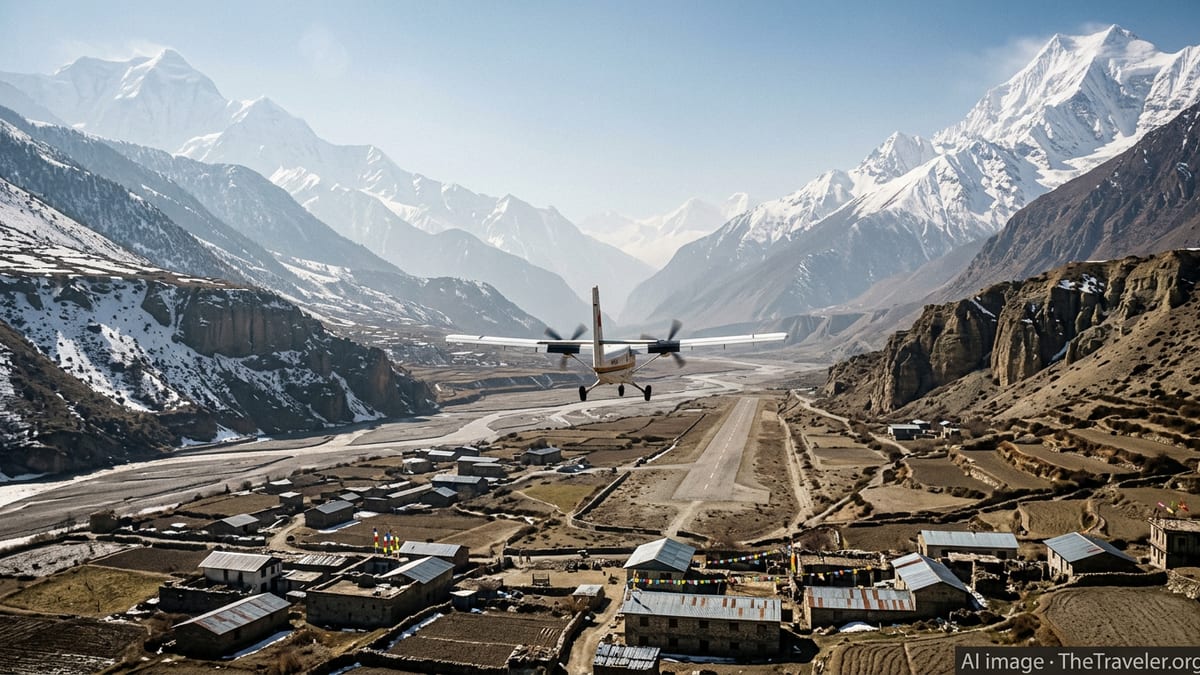
Flights Restart After Three Month Gap
Recent coverage from Nepali outlets indicates that commercial flights on the Pokhara–Jomsom sector resumed in early March 2026, following a three month shutdown over the coldest part of the winter. Services had been halted in early December as tourist numbers fell sharply and forecasts pointed to persistent snowfall and high winds over the Kali Gandaki corridor, making operations difficult.
Reports describe the latest restart as part of a familiar seasonal pattern on this mountain route. Private airlines that connect Pokhara with Mustang typically scale back or fully suspend flights during the mid winter months, then restore services in late February or March as conditions stabilize and trekkers begin to return. This year’s pause was longer than some previous off season breaks, with aircraft grounded for about ninety days.
The first flights back into Jomsom in March were operated by private carriers using Twin Otter aircraft, which are commonly deployed on short, high altitude airstrips across Nepal. Coverage notes that initial frequencies remain modest, with operators monitoring weather trends and demand before ramping up to multiple daily rotations during the peak spring trekking period.
Local media accounts point out that the resumption brings immediate relief for residents and businesses that depend on a reliable air link to Pokhara for access to medical care, supplies, and domestic tourism flows. For many travelers heading onward to Kagbeni, Muktinath, and Upper Mustang, the brief flight once again replaces a long and demanding road journey.
Winter Suspension Driven by Weather and Weak Demand
The most recent shutdown followed a formal announcement in late December 2025 that private airlines were suspending Pokhara–Jomsom flights for the winter season. Publicly available information cited a combination of factors, including a steep drop in visitor numbers to Mustang after the autumn trekking rush and increasingly unstable mountain weather at the start of winter.
Tourism focused publications explain that strong crosswinds, low cloud cover, and the risk of snowfall frequently disrupt operations along this corridor, which threads between the Annapurna and Dhaulagiri ranges. When conditions deteriorate for extended periods, carriers face repeated cancellations and diversions, pushing up operating costs on already thinly margined short hops.
Sector observers also highlight the growing influence of ground transport. Improvements along the Beni–Jomsom road have gradually shifted some local and budget conscious travelers from air to road, particularly in shoulder seasons. While buses and jeeps still contend with landslides and rough sections, the alternative has eroded a share of the passenger base that once relied almost exclusively on flights.
Against this backdrop, airlines have increasingly treated winter stoppages as a way to contain costs and avoid prolonged periods of low load factors. The 2025–26 suspension fits that pattern, with operators indicating that they would return to the route when tourist flows and weather conditions were more favorable.
Crucial Link for Mustang’s Tourism and Local Mobility
The Pokhara–Jomsom air bridge remains central to Mustang’s tourism industry. The short flight cuts travel time dramatically for trekkers on the Annapurna Circuit, pilgrims visiting Muktinath, and domestic holidaymakers heading to the high valley towns of Jomsom and Marpha. Travel writers and tourism agencies consistently describe the route as one of Nepal’s classic mountain flights, offering dramatic views of Nilgiri and the Kali Gandaki gorge.
When air services pause for weeks or months, hotels, teahouses, guides, and transport providers across Lower Mustang feel the impact quickly. Previous suspensions linked to monsoon disruptions or protests have been followed by noticeable drops in occupancy and income, according to tourism oriented reporting from the region. The latest winter halt prompted similar concerns among business owners preparing for the spring season.
The restart of flights in March 2026 is therefore viewed as an important signal that the spring trekking and pilgrimage window is open once again. With the Hindu and Buddhist pilgrimage calendar bringing visitors to Muktinath, and international hikers returning to high altitude trails after the coldest months, airlines are expected to increase capacity as bookings pick up.
Beyond tourism, the route is also a practical necessity for residents of Mustang and neighboring districts. Air travel between Jomsom and Pokhara is often the fastest way to reach major hospitals, government offices, and markets. The return of scheduled services shortens journey times for patients, students, and traders who might otherwise spend long hours on rugged mountain roads.
Operational Constraints and Safety Considerations
Operating into Jomsom has long been considered technically demanding. The airstrip sits at an altitude of around 2,700 meters, surrounded by steep terrain and subject to strong valley winds that can build rapidly as the day warms. Aviation documents and investigative reports describe how flights typically depart in the early morning window, when winds are lighter and visibility is more predictable.
Airlines commonly limit daily departures to a handful of rotations before late morning, reflecting both the short flying time and the narrow operational window. During the busy spring and autumn seasons, this can lead to tight seat availability and occasional backlogs of passengers when weather delays accumulate. The winter suspension underscores how quickly the balance can tip from marginally viable operations to repeated cancellations.
Although the most recent pause was attributed mainly to seasonal conditions and demand, the route’s safety record also shapes perceptions. Past accidents involving flights between Pokhara and Jomsom, including high profile crashes in the 2010s and early 2020s, continue to inform traveler choices and regulatory oversight. Aviation authorities and airlines have introduced a series of procedural and training adjustments in response to those incidents, and reports note an ongoing emphasis on daytime operations and visual flight rules in suitable weather.
With flights now back in the air for spring 2026, operators appear to be taking a measured approach, maintaining conservative schedules and prioritizing the morning hours. Travel advisories and trip planners frequently encourage passengers to build flexibility into their itineraries, recognizing that even during the main tourist seasons, rapid weather shifts in the Himalayas can still lead to same day cancellations or diversions on the Pokhara–Jomsom sector.
Outlook for the 2026 Spring and Autumn Seasons
The resumption of flights positions Pokhara and Mustang to benefit from a broader rebound in Nepal’s tourism arrivals in 2026. Economic and tourism analyses published in recent months point to a steady recovery in visitor numbers, with trekking and pilgrimage routes among the key drivers of growth. In this context, the stability of regional air links such as the Pokhara–Jomsom service will be closely watched by local businesses.
Stakeholders in Mustang’s hospitality sector are preparing for what many expect to be a busier than average spring, as pent up demand and improving connectivity encourage longer stays and more side trips to villages off the main corridor. The availability of flights from Pokhara is likely to influence how travelers structure multi day circuits that combine road and air segments.
Looking ahead to the autumn 2026 high season, airlines operating into Jomsom are likely to adjust capacity in line with booking trends and operational experience from the spring. Previous years show that sudden weather related disruptions, or wider events such as protest movements and infrastructure closures, can still interrupt services at short notice. Even so, the early March restart after the winter suspension is being read as a positive indicator of confidence in the route.
For now, the reopening of this short but strategically important air link restores a familiar rhythm to travel in western Nepal. As early season trekkers and pilgrims once again board morning Twin Otter flights out of Pokhara, the connection between the lakeside city and Mustang’s wind swept valley towns returns to its role as one of the country’s most emblematic mountain journeys.