

More news on this day
Poland has been added to a growing list of European destinations covered by stricter UK travel guidance, as new Schengen entry rules, biometric registration and tighter digital monitoring of visitor stays reshape how British travelers plan trips to the continent ahead of major system changes expected by April 2026.
Get the latest news straight to your inbox!
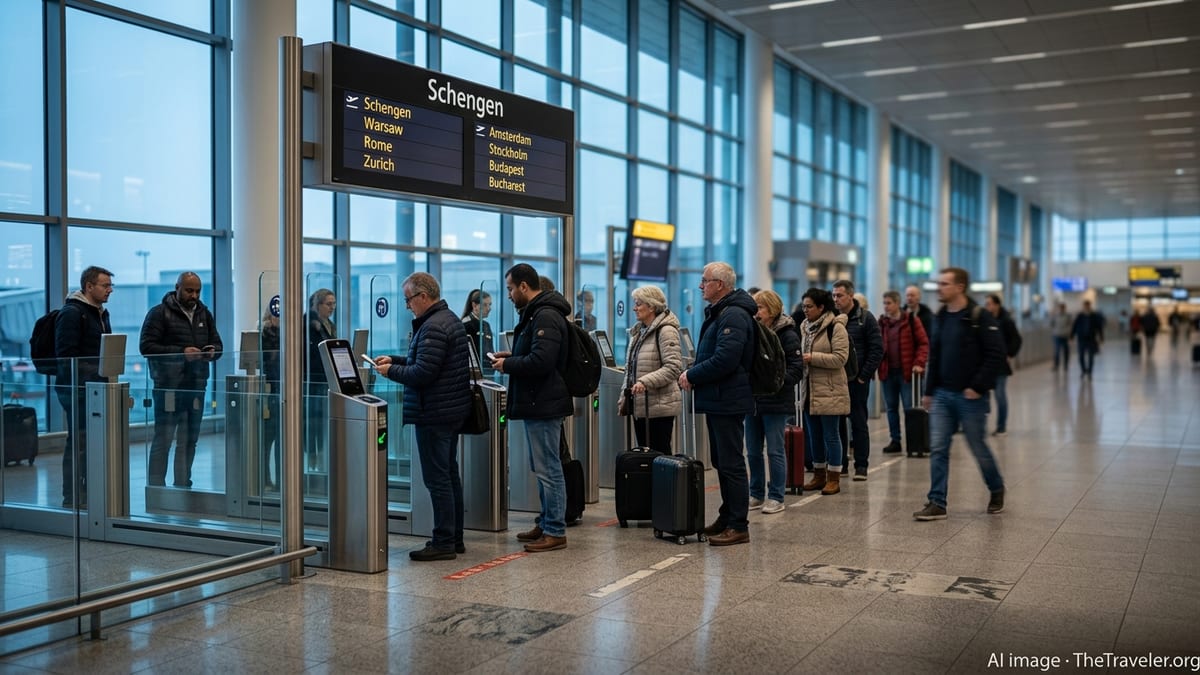
UK Travel Advisory Widens To Cover More Schengen States
Recent updates to the UK government’s foreign travel advice have tightened guidance for several of the most popular European destinations, including Poland, Romania, Switzerland, Italy, Hungary, Sweden and the Netherlands. Publicly available information indicates that these changes are framed around new Schengen border technologies and closer enforcement of stay limits for non EU and non Schengen visitors.
The latest advisory language highlights an increased risk of delays at external Schengen borders as countries move to full implementation of the European Union’s Entry Exit System, or EES. The system replaces manual passport stamping with biometric registration, recording each entry and exit of non EU nationals into a shared database. Travel industry coverage notes that this is prompting the UK government to issue more detailed warnings about paperwork, timing and compliance for trips into the Schengen area, particularly during peak holiday seasons.
Poland’s inclusion alongside Romania, Switzerland, Italy, Hungary, Sweden and the Netherlands reflects how widely the new rules will apply once fully activated. These countries feature heavily in UK leisure and business travel patterns, which means any disruption at their airports and land borders is expected to have a visible impact on British travelers from 2025 and especially around the April 2026 deadline cited in multiple advisory summaries.
While the UK guidance does not prohibit travel, it emphasizes that border checks will feel more intrusive and may be slower, and that travelers who ignore new documentation and timing requirements could be refused entry or questioned about their plans and previous time spent in the Schengen zone.
Schengen Entry Exit System Tightens Biometric Controls
According to EU policy documents and specialist travel briefings, the Schengen Entry Exit System is being phased in ahead of full operation expected by 10 April 2026. Once live in all participating countries, including Poland and the other states highlighted by the UK advisory, most non EU visitors will have their fingerprints and facial images taken the first time they cross an external Schengen border.
These biometric records will sit alongside a digital log of each border crossing, allowing authorities to automatically calculate how long a person has spent inside the Schengen area over any rolling 180 day window. This replaces the previous reliance on manual passport stamps, which were often incomplete or hard to interpret. The UK travel advice now underlines that travelers should be prepared to spend several extra minutes at automated kiosks or special registration booths, particularly on their first trip after the system becomes fully operational.
For Poland and its regional neighbors, this means additional infrastructure at major airports and land crossings. Reports from government and industry sources describe plans for new biometric kiosks, separate lanes for first time enrollees and additional staffing at busier crossing points. British travelers arriving by air or rail may be directed to designated EES areas before proceeding to a border guard, with detailed instructions provided by airlines, rail operators and port authorities.
Although the biometric process itself is relatively quick, a large number of first time registrations during school holidays and long weekends is expected to generate queues. The UK advisory therefore encourages travelers to allow more time at departure points and to factor potential congestion into tight connections or same day onward travel.
Stricter Enforcement Of Digital Stay Limits And Border Records
Alongside biometric checks, the digital nature of the new Schengen systems is expected to sharpen enforcement of visa free stay limits for British citizens and other non EU travelers. Under the long standing 90 days in any 180 day rules, visitors can move between Poland, Romania, Switzerland, Italy, Hungary, Sweden, the Netherlands and other Schengen members without internal border checks, but must not exceed the overall cap.
Previously, overstays were sometimes difficult to detect in real time because border officers had to read back through stamped passports to reconstruct a traveler’s movements. With EES in place, the system will automatically flag when an individual has used up their allowance, and this information will be visible each time they cross an external border. Travel law and policy summaries suggest that this may lead to more questions for travelers whose patterns of movement are complex, or who are close to the limit when attempting to re enter the area.
For Poland and the other countries now highlighted in the stricter UK advisory, this means that visitors who have been combining long stays across multiple European destinations could face increased scrutiny. Frequent travelers, digital nomads and second home owners are being advised through industry briefings to monitor their days carefully, keep clear evidence of entries and exits, and avoid relying on informal interpretations of the rules.
Public guidance also notes that digital records will be stored for several years, allowing historical patterns to be reviewed if a traveler is questioned about their compliance at a later date. This longer data horizon represents a significant change from the previous paper based system, where incomplete or faded stamps could sometimes limit retrospective checks.
Visa Policy Adjustments And ETIAS Authorisation On The Horizon
Alongside EES, European authorities are preparing to introduce the European Travel Information and Authorisation System, or ETIAS, for visa exempt visitors. Background documentation indicates that once ETIAS is activated, British citizens and nationals from many other countries will need to obtain an electronic travel authorisation before visiting Schengen destinations such as Poland, Romania, Switzerland, Italy, Hungary, Sweden and the Netherlands for short stays.
Travel industry analysis describes ETIAS as similar in concept to the United States ESTA system, involving an online application, a small fee and automated checks against security and migration databases. Once granted, the authorisation will be valid for multiple trips over several years, but travelers will still need to respect the 90 days in any 180 day stay limit and meet local entry conditions on arrival.
The forthcoming ETIAS obligation is referenced in planning material as part of a wider package of visa policy and border management changes that aim to make Schengen borders more secure while maintaining relatively easy short term tourism and business travel. However, consumer facing commentary suggests that the cumulative effect of new forms, fees and biometric processes may feel to many travelers like a substantial tightening of access compared with the period before the UK’s withdrawal from the European Union.
In response, the UK’s updated travel advisory language for countries including Poland increasingly stresses the importance of checking entry rules not only a few days but several weeks before departure, as precise dates for the rollout of systems like ETIAS can shift and requirements may differ for family members of EU citizens, long term residents and holders of various residence permits.
Practical Impacts For UK Travelers Heading To Poland And Neighbours
For British travelers planning city breaks to Kraków or Warsaw, ski trips in the Italian Alps or Switzerland, beach holidays in southern Italy, or business visits to hubs such as Stockholm, Amsterdam, Budapest or Bucharest, the immediate advice remains focused on preparation rather than avoidance. Publicly available travel guidance stresses the need to hold a passport issued within the last ten years and valid for at least three months after the planned departure from the Schengen area, sensibly long travel insurance coverage and supporting documents proving accommodation and onward or return travel.
Poland’s addition to the list of prominently cited destinations reflects both its rising popularity and its role as a major external Schengen border country for road and rail links. Travelers arriving by car or coach from non Schengen neighbors can expect a more structured process at border posts as new equipment and procedures bed in. Those passing through large hubs in Switzerland, Italy or the Netherlands may experience similar changes, with airports increasingly serving as primary test sites for biometric registration workflows.
Travel organisations and consumer bodies are advising that UK visitors build extra time into itineraries involving transit through multiple Schengen states, particularly where a missed connection could have knock on effects. Recommendations include avoiding tight back to back flight or rail connections across external borders, carrying printed copies of key confirmations in case of connectivity problems at automated kiosks, and checking whether traveling companions such as children or older relatives may require additional assistance at biometric points.
Although the evolving systems are largely technical, their combined effect is reshaping how trips from the UK to Poland, Romania, Switzerland, Italy, Hungary, Sweden, the Netherlands and other Schengen destinations are planned and experienced. The widening UK advisory is a response to that structural change, signalling that the era of casual, last minute cross channel travel has been replaced by one in which digital presence, biometric identity and strict day counts are central features of any journey into the Schengen zone.