

More news on this day
The upland town of Polomolok in South Cotabato is moving to the forefront of Mindanao’s sports tourism push, aligning a stop of the Premier Volleyball League’s provincial tour concept with a growing slate of trail running and outdoor endurance events that capitalize on its pineapple plantations, rolling foothills and cultural attractions.
Get the latest news straight to your inbox!
PVL’s Provincial Tour Concept Reaches Pineapple Country
The Premier Volleyball League has been steadily expanding its “on tour” concept, bringing top-flight women’s professional volleyball beyond Metro Manila and major urban centers to secondary cities and municipalities where fan bases are strong but elite competitions are scarce. Publicly available coverage of recent PVL seasons shows that provincial legs typically sell out mid-sized arenas and civic centers, drawing local families, school groups and regional club players who rarely see their heroes live. While league schedules remain concentrated in Luzon, recent discussions among volleyball followers point to broader outreach as a way to keep the sport’s momentum and expand audiences across the archipelago.
Within this context, Polomolok’s push to be included in future PVL tour stops signals an effort to leverage volleyball’s surging popularity as a driver for visitor arrivals. Local leaders in South Cotabato have already hosted large-scale multi-sport gatherings such as the provincial athletic meet in Polomolok’s town center, and observers see the addition of a professional league showcase as a logical next step in the municipality’s sports development pathway. If realized, a PVL visit would be expected to pull in fans from General Santos City, nearby Tupi and other SOCCSKSARGEN communities.
Reports on previous PVL provincial legs in other parts of the Philippines suggest that such events generate short-term boosts for accommodation, food and transport providers. In Polomolok’s case, a volleyball showcase could easily be paired with farm tours and cultural experiences already present in national tourism itineraries for South Cotabato, creating multi-day packages that extend stays beyond a single match day.
Trail Running Events Turn Foothills Into Outdoor Playground
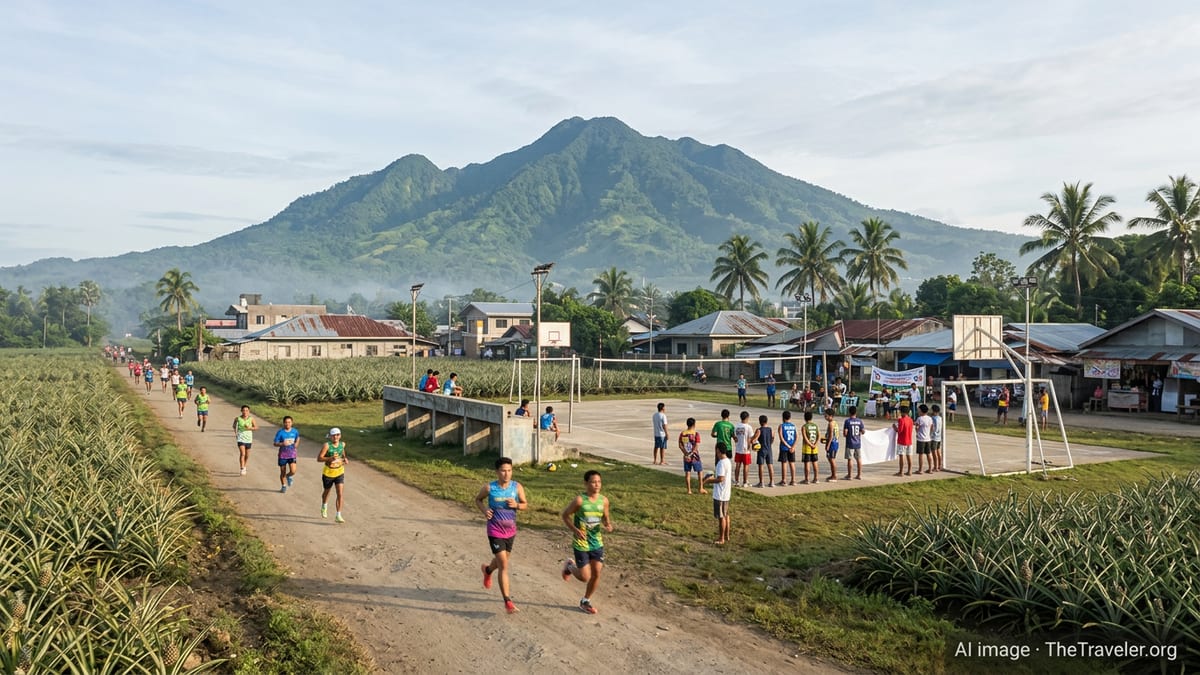
While volleyball taps into mainstream sporting enthusiasm, Polomolok is also courting a niche but fast-growing market through trail running. Event listings and regional race calendars highlight the S’kuya Di Amtutung “Run in the Wild” trilogy, with legs hosted in barangays around Polomolok and neighboring areas of South Cotabato. These races typically send participants along dirt roads, forest singletrack and plantation access trails, offering views of Mt. Matutum and surrounding agricultural landscapes.
Trail runners in the Philippines have shown an appetite for new destinations that combine technical routes with cultural immersion, a trend reflected in the rise of events in Mindanao’s highlands and around alpine lakes in South Cotabato. Race organizers promoting the S’kuya Di Amtutung series emphasize the rugged terrain and community involvement, positioning Polomolok as a gateway for runners who may later explore more remote locations in the province. This layering effect helps distribute visitor traffic across multiple municipalities while building South Cotabato’s overall brand as an adventure destination.
Complementing these efforts, the provincial government has used initiatives such as the “Race to Eleven” challenge to connect its 11 localities through endurance-based activities that highlight heritage sites and natural attractions. By situating Polomolok’s trail runs within a wider adventure circuit, planners are able to market the town not as a stand-alone stop, but as part of a broader loop that encourages repeat visits and cross-promotion among race organizers.
Sports Tourism Strategy Builds on Existing Youth and Heritage Programs
Public documents and earlier coverage of South Cotabato’s athletic meets indicate that Polomolok has already served as host for major youth sports gatherings, attracting delegations from across the province for track, field and team sports competitions. These events have strengthened grassroots participation and familiarized local institutions with the logistical demands of accommodating large numbers of athletes, coaches and spectators in a short period.
Tourism planning materials also highlight the inclusion of Polomolok’s Blaan communities in cultural immersion circuits, where visitors can experience indigenous crafts, music and food. By pairing cultural stops with sports activities, the town’s emerging sports tourism blueprint aims to differentiate itself from purely urban or beach destinations. For example, a visiting volleyball fan or trail runner could combine a morning match or race with an afternoon cultural program, thereby dispersing economic benefits to a broader set of stakeholders.
Observers of Philippine tourism trends note that destinations which integrate culture, nature and sports often see stronger year-round visitation than those built around a single draw. Polomolok’s combination of fertile plantations, tribal heritage and access to the Matutum range gives it several narratives to work with, and sports tourism provides a contemporary hook to introduce these narratives to new audiences.
Infrastructure, Sustainability and Community Readiness in Focus
As Polomolok positions itself for a higher profile in both volleyball and trail running circuits, infrastructure and sustainability questions have become central. Experiences from other South Cotabato events, including high-altitude races near Lake Holon, show that demand for outdoor competitions can outpace regulatory processes, leading to cancellations if environmental permits and safety protocols are not fully aligned. Recent reporting on cancelled trail events elsewhere in the province has underscored the importance of robust coordination between race organizers, environmental agencies and local communities.
For Polomolok, this means ensuring that routes for trail races respect watershed areas, cultural sites and agricultural operations, while any future PVL tour leg would require venue upgrades, transport planning and crowd management measures that can meet professional standards. Publicly available information on other provincial tour stops suggests that host towns commonly invest in lighting, seating and locker room improvements ahead of league visits, as well as temporary traffic schemes and enhanced public transport options during match days.
Community readiness is another important factor. Local hospitality providers, from small inns to homestays, will need to adapt to spikes in demand on race or match weekends. Training programs on service quality, basic sports event awareness and environmental stewardship can help ensure that visitors meet knowledgeable hosts who understand the needs of athletes and fans. Such capacity-building has been a recurring element in successful sports tourism destinations across the Philippines.
Mindanao’s Wider Sports Tourism Picture
Polomolok’s efforts are unfolding within a broader Mindanao context where provincial governments are leveraging sports to change perceptions and attract investment. In South Cotabato, outdoor events focused on lakes, mountains and rolling countryside have complemented long-running cultural festivals, signaling a deliberate shift toward adventure and wellness-focused travel. Elsewhere in the island, similar strategies around trail running, cycling and regional volleyball tournaments are helping diversify tourism offerings beyond traditional beach and dive markets.
Analysts following the Philippine sports calendar note that 2026 is shaping up as a significant year for volleyball nationally, with the country preparing to host major international tournaments and domestic leagues adjusting schedules to align with continental commitments. For a town like Polomolok, aligning its own sports tourism roadmap with this heightened visibility could mean tapping into traveling fan bases, national media attention and potential partnerships with brands active in both volleyball and endurance sports.
If current trajectories hold, the combination of PVL’s outbound push into provincial venues and the maturing trail running scene in South Cotabato may give Polomolok an outsized role in Mindanao’s evolving tourism story. The town’s challenge will be to convert one-off events into a sustainable calendar that keeps athletes and spectators returning, while protecting the natural and cultural assets that make its setting distinctive.