

More news on this day
UK travelers heading to Portugal are being urged to prepare for longer queues and potential technical hiccups as the country fully reactivates the European Union’s new biometric Entry/Exit System, joining Spain, France, the Netherlands, Switzerland and other Schengen states where the rollout has already produced delays.
Get the latest news straight to your inbox!
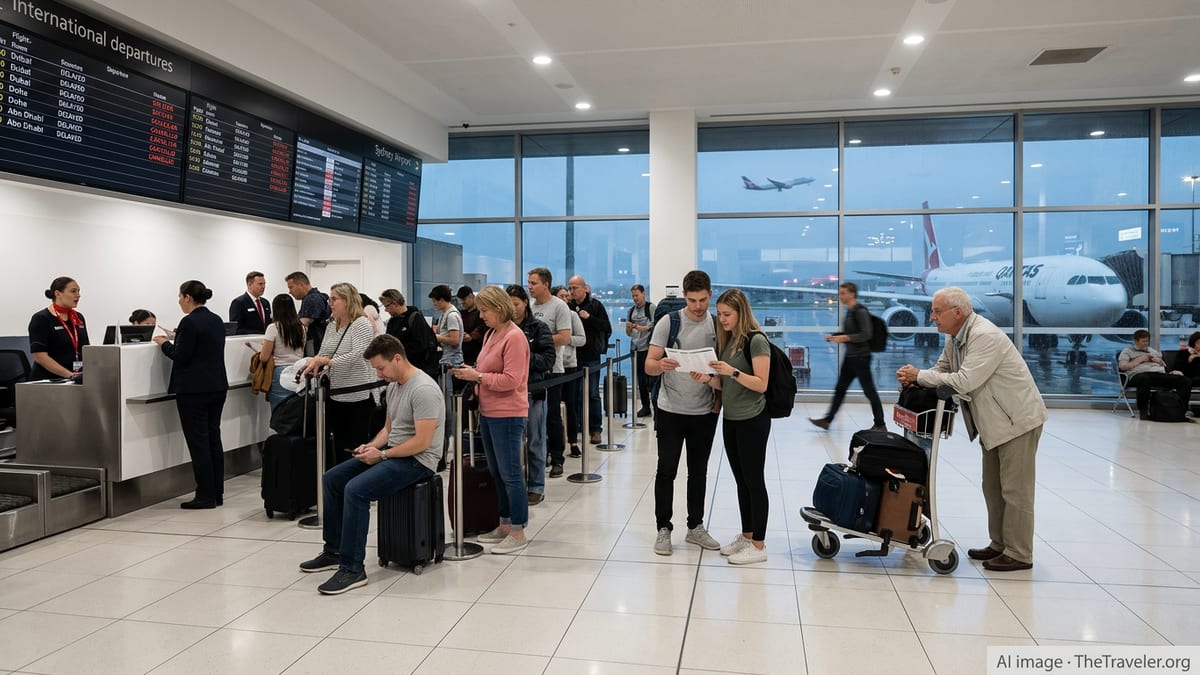
Portugal Brings EES Fully Online After Stop-Start Rollout
Portugal has now brought the EU’s Entry/Exit System, known as EES, to full operational status across major airports and other external border points following a series of suspensions and partial tests. Publicly available information from Portuguese outlets indicates that biometric checks are again active at Lisbon, Porto, Faro, Madeira and key Azores airports after being paused over the 2025 holiday period due to severe congestion.
The current phase marks a shift from experimental use to routine processing. Reports from local media describe a three stage timeline: initial live tests produced multi hour lines at Lisbon in mid and late 2025, authorities then suspended most EES checks for several months to recalibrate staffing and equipment, and in late March and early April 2026 full activation resumed with additional kiosks and infrastructure.
Early monitoring of the restart suggests a mixed picture. At quieter times of day, some travelers describe clearing border control within 20 to 30 minutes. During peak morning and evening waves, however, UK and other non EU visitors are still encountering waits close to two hours as border police and passengers adapt to the unfamiliar procedures and as technical glitches are ironed out.
Officials in Portugal have outlined a priority list that includes reinforcing network capacity, deploying more automatic gates, retraining border staff and using real time monitoring of airport flows. Industry groups warn that the true stress test will come with the summer 2026 holiday season, when visitor numbers from the UK and other key markets typically surge.
What The EES Actually Is And Why It Matters For UK Travelers
The Entry/Exit System is a large scale EU wide database introduced in October 2025 to register the arrivals and departures of so called third country nationals, which includes UK citizens after Brexit. Instead of relying on manual passport stamping, the system records biometric identifiers such as fingerprints and a facial image, together with the traveler’s passport details and the time and place of crossing.
For UK leisure visitors, the system is intended to automate enforcement of the familiar 90 days in any 180 day limit on short stays in the Schengen area. Once a traveler’s data is in EES, future trips should in theory involve quicker checks as information is pulled up automatically at border booths or e gates. In practice, the first registration is taking several minutes per person, and when multiplied across full flights or cruise ship arrivals this is contributing to visible queues.
British travelers will typically encounter EES at their first point of entry into the Schengen zone. That could be at Portuguese airports such as Lisbon or Faro, at Spanish hubs including Madrid and Barcelona, at French controls in Paris or at juxtaposed border posts located in the UK at Dover, Folkestone and London St Pancras where French officers carry out exit checks before departure.
Industry briefings from European institutions and UK travel bodies consistently flag that the first journey under EES is likely to be the slowest. Families and groups may be processed together but each traveler still needs to provide their own biometrics, and minor errors, nervousness at kiosks or software glitches can cascade into longer waits for everyone behind them.
Delays, Glitches And Long Queues Across Spain, France, Netherlands And Switzerland
Portugal’s renewed problems are part of a wider pattern around Europe as EES moves from controlled pilots to full use. Airlines, airport associations and travel trade publications in recent weeks have highlighted queues of between two and three hours at certain periods in Spain and France as border teams adjust work flows, especially at large holiday gateways.
In Spain, airports serving the Balearic and Canary Islands have been cited in regional coverage as particular pinch points at peak weekend and school holiday times, with carriers advising UK passengers to arrive earlier than before. In France, attention has focused both on busy Paris airports and on the Channel routes to and from the UK, where juxtaposed checks mean any slowdown at the EES stage can quickly back up car and coach traffic.
Reports from Switzerland describe non EU tourists at Geneva facing what some local media have called interminable queues following the country’s own integration into the system. The Netherlands, where Amsterdam Schiphol remains a major hub for UK bound and UK originating flights, has also seen periodic bottlenecks as authorities reconfigure e gate layouts and staffing rosters to account for EES procedures.
European airport and airline associations are publicly calling for a more flexible implementation timetable and additional funds to upgrade infrastructure. Statements from sector bodies argue that without adjustments, the combination of biometric registration, capacity limits in older terminals and high summer demand risks undermining Europe’s reputation for smooth travel.
What UK Travelers Should Expect At Portuguese Borders This Summer
For UK citizens arriving in Portugal over the coming months, border control is likely to feel more structured but also more time consuming. Travelers on their first post EES trip will be directed either to staffed booths equipped with biometric scanners or to self service kiosks where they will scan their passport, have a facial image taken and in some cases provide fingerprints before seeing a border officer.
Portuguese media and airport operators are advising passengers to allow significantly more time than in the pre EES era, particularly if they land in Lisbon during the busy morning bank of transatlantic and European arrivals or depart for the UK in early to mid morning when multiple flights converge. Industry commentary suggests arriving at the airport at least three hours before departure for flights back to the UK and being prepared for potential lines of one to two hours at immigration when entering the country.
Travel reports indicate that operational issues in Portugal are not confined purely to the technology. Physical constraints at Lisbon’s Humberto Delgado Airport, including limited floor space for extra kiosks and waiting areas, have been blamed for some of the worst backups. Previous pauses in EES use were linked to a lack of personnel and equipment rather than to a single software failure, and while staffing levels have reportedly been increased, a full fix for space limitations depends on longer term infrastructure projects.
At regional airports such as Porto and Faro, anecdotal accounts from travelers describe a more manageable experience so far, with shorter queues and somewhat smoother processing. Tourism stakeholders, however, remain cautious and note that passenger numbers will climb sharply into late spring and summer as UK visitors return to the Algarve coast and northern city breaks in greater volumes.
How To Minimize Disruption And What Changes Are Still Coming
Travel organizations, consumer groups and airlines are publishing a steady stream of practical guidance as EES beds in. Core recommendations include checking airline and airport advice before travel, arriving earlier than usual for both outbound and return flights, and ensuring that passports are valid and undamaged to avoid secondary checks that can lengthen delays.
Some airports and national authorities are encouraging non EU travelers to make use of new mobile tools that allow pre registration of certain data before arrival. Portugal has started using a version of the Travel to Europe app, which currently enables travelers to complete part of the entry questionnaire in advance, although biometric collection still takes place at the border crossing itself.
Experts following EU digital border reforms stress that EES is only one part of a broader shift. A separate travel authorization scheme, known as ETIAS, is scheduled to launch in late 2026, adding an online application and fee for most UK visitors before departure. While ETIAS is not yet in force, UK travelers are being advised to monitor developments through reliable official channels and reputable news outlets to avoid last minute surprises.
For now, the message from across Portugal, Spain, the Netherlands, France, Switzerland and other participating states is consistent. The new Entry/Exit System is here to stay, and although it promises more accurate records and potentially quicker repeat journeys in the future, British holidaymakers in 2026 should plan for extra time, a degree of uncertainty and the possibility that queues and technical malfunctions will continue to feature in European travel stories for some time to come.