

More news on this day
As geopolitical tensions and safety concerns reshape traditional getaway choices, Portugal is emerging as a favored 2026 spring break refuge for travelers from the United States, Canada and across Europe.
Get the latest news straight to your inbox!
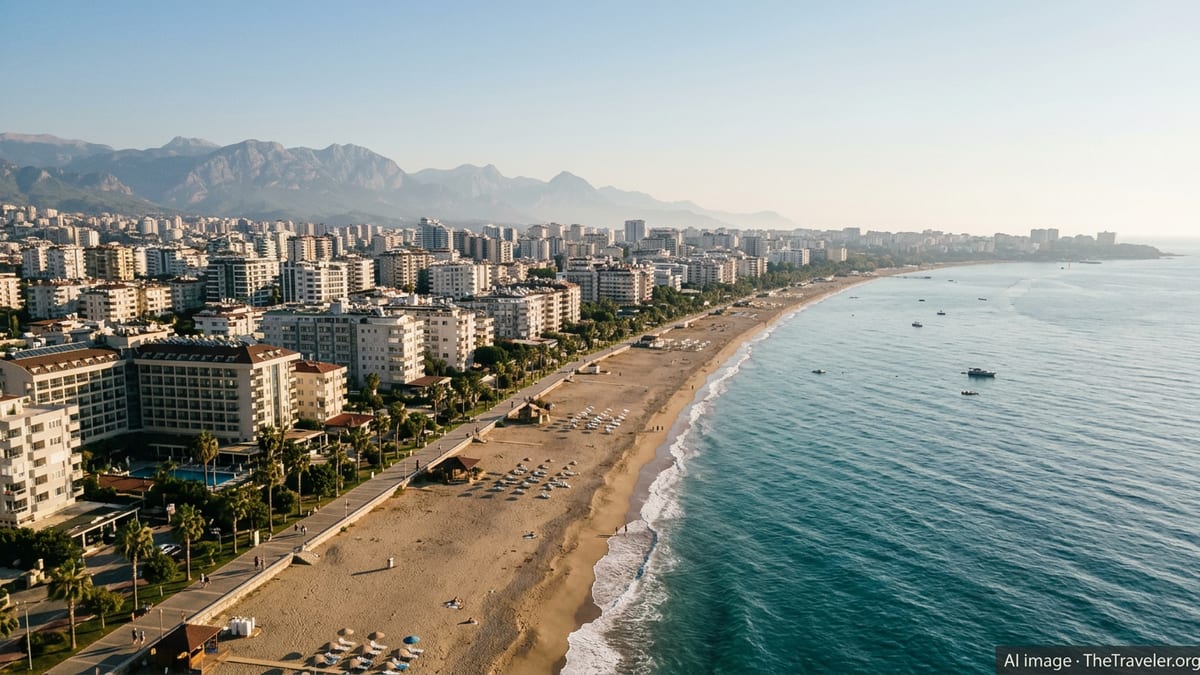
Safety Rankings Turn Portugal Into a Peace-Time Outpost
Portugal’s image as a low-risk destination is a central driver of its new spring break appeal. The country consistently ranks among the world’s most peaceful states in the Global Peace Index, placing seventh globally in the 2025 edition and second in the Safety and Security domain in recent assessments. Publicly available information highlights Portugal’s relatively low violent crime rates and limited internal conflict compared with many other sun-and-sea destinations.
Industry-focused coverage in 2025 and early 2026 notes that travel insurance and risk-analysis firms routinely list Portugal among the safest places to visit worldwide, with some rankings putting it firmly in the global top fifteen. These evaluations draw on a mix of crime data, conflict indicators and traveler feedback, reinforcing the perception that visitors are unlikely to encounter serious security incidents during a holiday stay.
Reports also indicate that Portugal benefits from strong health care access, efficient public transport and a stable political environment, all factors increasingly weighed by international travelers planning leisure trips. For spring breakers evaluating options at a time of regional conflicts and sporadic unrest in parts of the Middle East, North Africa and Eastern Europe, those fundamentals are tipping the scales in Portugal’s favor.
While urban pickpocketing in busy areas of Lisbon and Porto remains a routine caution in travel advisories, the overall security picture compares favorably with many rival coastal destinations. As a result, Portugal is being framed in travel media as a rare European destination that offers both party-friendly city life and a sense of calm.
Record Tourism and the Rise of North American Visitors
The safety narrative is aligning with hard numbers. Portugal set new tourism records in 2024, welcoming around 29 million visitors and recording all-time highs in overnight stays, according to figures circulated by the country’s statistics office and tourism board. International guests accounted for about 70 percent of those nights, underscoring the country’s dependence on foreign arrivals.
Within that surge, North American markets stand out. National tourism data for 2024 show the United States climbing into Portugal’s top tier of source markets, ranking among the five largest by overnight stays and third by number of guests. Published figures indicate that US visitors generated more than 5.2 million overnight stays in 2024, with growth above 12 percent compared with the previous year. Canada, although a smaller market, has been expanding even faster in percentage terms.
Monthly breakdowns from late 2024 and 2025 show particularly strong gains in peak-leisure months, including August and the shoulder seasons around Easter and early spring. Analysts cited in trade publications describe this as evidence that North American travelers are no longer limiting trips to summer, but are increasingly targeting March and April for beach and city breaks.
Industry reporting for 2025 and early 2026 further notes a modest overall rise in international demand, but with North America maintaining outsize influence on revenue due to longer average stays and higher per-capita spending. This pattern is now feeding directly into spring break planning by airlines and tour operators.
Geopolitical Tensions Reshape Spring Break Maps
Behind the statistics lies a broader reconfiguration of where North Americans and Europeans feel comfortable spending spring holidays. Ongoing conflicts in Eastern Europe and the Middle East, along with high-profile security incidents in several long-haul resort hubs, have prompted many travelers to reassess risk. Coverage by international news outlets in late 2025 and early 2026 describes a gradual cooling in demand for destinations perceived as being closer to active conflict zones.
At the same time, a political and social backlash in Canada against travel to the United States has influenced some Canadians to look elsewhere for leisure trips during the 2025 to 2026 period. Public reporting on that boycott highlights how many Canadian travelers are redirecting their budgets toward domestic trips, Mexico, the Caribbean and Europe. Portugal, with its combination of safety, mild climate and well-established air links via major European hubs, is increasingly appearing on those alternative shortlists.
US travelers are also diversifying. Industry surveys and airline booking analyses cited in travel trade coverage suggest that more Americans are choosing European city-and-coast combinations for spring break, instead of defaulting to Mexico or certain Caribbean islands. Concerns about crime in some resort areas, shifting travel advisories and a desire for destinations seen as politically stable are all described as contributing factors.
European travelers, meanwhile, are facing their own regional anxieties, from war-related disruptions further east to domestic security alerts in several major cities. Against this backdrop, Portugal’s position on the Atlantic edge of the continent, away from conflict fronts yet firmly inside the European Union and Schengen area, is being framed as a geographic and psychological buffer.
Lisbon, Porto and the Algarve Brace for Spring Crowds
The shift in traveler sentiment is already visible on the ground. Data from Portugal’s national statistics office for 2024 show Lisbon and the Algarve leading in overnight stays, with coastal areas and major cities absorbing the bulk of growth. Real estate and hospitality industry reports describe record occupancy levels in August 2024 and solid gains in shoulder seasons, trends that hoteliers expect to extend into spring 2026.
Lisbon continues to function as the main gateway for long-haul arrivals, especially from North America, with airlines steadily rebuilding or adding transatlantic routes in recent seasons. Once in the country, spring break travelers are spreading out to beach destinations such as Cascais and the Algarve, as well as to Porto and nearby Douro wine country, all of which are marketed as relatively compact, accessible and safe.
Hotel-chain analyses released in March 2026 point to robust performance in 2025 and a cautiously optimistic outlook for the current year, noting that both US and Canadian markets are seen as strategically important. Operators are investing in upgrades to resort infrastructure, expanding midscale offerings for younger travelers and adding more boutique options for higher-spending visitors seeking quieter, culture-focused stays.
Local authorities and tourism boards are also under pressure to manage crowding. Academic work linked to European tourism initiatives has highlighted concerns that overtourism can strain urban infrastructure and affect quality of life for residents. Portugal is experimenting with tools to forecast visitor peaks and spread demand more evenly across regions and seasons, an approach that may prove essential if spring break traffic continues to climb.
Balancing Growth, Affordability and Sustainability
Portugal’s spring break moment is unfolding alongside a debate about how much growth the sector can absorb without eroding the very qualities that attract visitors. Housing costs in Lisbon and Porto, partially influenced by the expansion of short-term rentals, have become a sensitive political topic. Publicly available information shows that national and municipal regulations on local lodging have been tightened in recent years, as policymakers attempt to keep tourism revenue flowing while protecting residential neighborhoods.
In coastal regions such as the Algarve, environmental considerations are also coming to the fore. Local coverage points to concerns about water stress, waste management and the impact of intensive resort development on fragile ecosystems. Tourism promotion campaigns increasingly reference sustainability, encouraging visitors to use public transportation, seek lesser-known destinations and respect local communities.
For now, affordability remains a relative advantage. Compared with some Western European neighbors, Portugal still offers comparatively moderate prices for accommodation, dining and transport, a factor that is especially important for student and young professional travelers planning spring break on limited budgets. Combined with the strength of Portugal’s peace and safety metrics, that value proposition is helping the country move from a “hidden gem” to a mainstream choice.
Whether Portugal can maintain its newly intensified popularity among US, Canadian and European spring breakers will depend on how successfully it can reconcile safety and stability with capacity and cost-of-living pressures. For travelers seeking a calmer backdrop to their 2026 celebrations, however, the country is already firmly on the map.