

More news on this day
China’s largest freshwater lake is stepping into the spotlight this spring, as Poyang Lake in Jiangxi Province promotes free-entry days at its national wetland attractions and a cluster of flower-focused experiences designed to draw travelers in March 2026.
Get the latest news straight to your inbox!
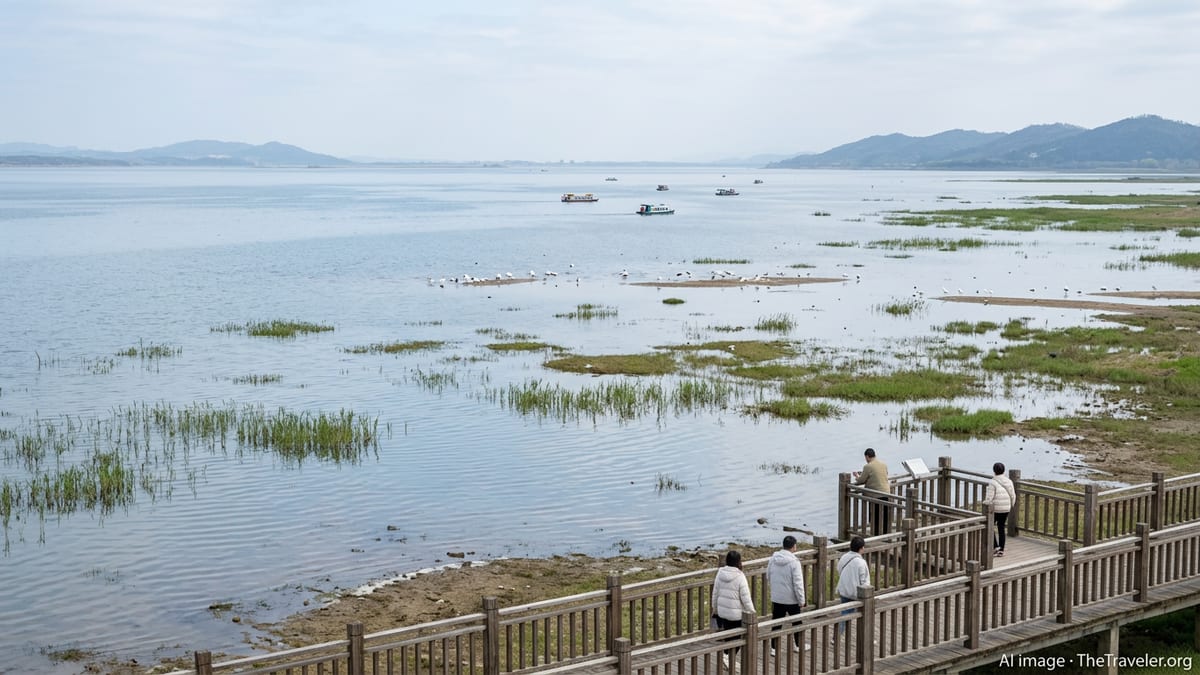
Free-Entry Campaign Welcomes Visitors to the Wetland Park
Publicly available tourism information for Jiangxi indicates that Poyang Lake National Wetland Park is using early spring 2026 to lower the barrier for first-time visitors, with selected free-entry days and bundled ticket promotions tied to March travel periods. These offers are framed as part of a wider push to spotlight the lake’s ecology outside the traditional winter birdwatching peak, encouraging travelers to experience the wetlands as temperatures rise and vegetation begins to green.
While specific dates and conditions vary by operator and package, recent tour product brochures for 2026 show Poyang Lake National Wetland Park listed among flagship stops on “Magnificent Jiangxi” spring itineraries, often described as including the wetland park entry within the overall package price. Some itineraries highlight added-value experiences such as guided photo stops, short boardwalk walks and access to lake-facing viewing platforms, giving visitors a no-surprise way to explore the reserve without separate ticket planning.
Information compiled by domestic travel platforms for the 2026 season also points to flexible entry policies at lakeside wetland zones, with free admission for some groups, such as young children under a specified height, and occasional off-peak concessions. For independent travelers, this combination of free-entry days, bundled tickets and family-friendly policies makes March one of the more cost-effective windows to see the wetlands before high summer humidity sets in.
Travel advisories emphasize that visitors should still check the latest local notices or tour-agency updates before arrival, as access arrangements at nature reserves can be adjusted in response to weather, water levels or conservation needs.
Spring Bloom Season: From Lake Wetlands to Rapeseed Seas
Although Poyang Lake is widely known for the pink lythrum flower spectacle that carpets some shoreline areas in late autumn, the 2026 spring program is drawing attention to a different palette. Regional tourism campaigns for Jiangxi highlight March as a prime period to pair the lake wetlands with nearby spring flower destinations, especially the famous rapeseed terraces and village landscapes in the greater Shangrao and Wuyuan area.
Updated flower-viewing guides for 2026 describe late February to mid-March as the main rapeseed bloom in northeastern Jiangxi, with mid to late March often cited as the peak period. Travel content for the current year presents images of golden hillsides and terraced fields, and notes that many multi-day itineraries now link these landscapes with boat or lakeside excursions at Poyang Lake. For visitors drawn by the “flower sea” concept, this routing creates a combined experience of yellow rapeseed fields in the hills and early-spring greenery in the wetland shallows.
Package descriptions for “Magnificent Jiangxi” tours valid through December 2026 mention springtime flower elements such as magnolia and begonia alongside Poyang Lake. Although these blossoms are typically concentrated in landscaped garden areas or urban parks rather than in the wetland core, their inclusion underlines how the province is marketing spring as a multi-stop bloom season, with Poyang Lake presented as the water and wildlife anchor at the heart of the route.
For independent travelers, March 2026 is therefore positioned as a versatile month: cool enough to be comfortable on boardwalks and boat decks, late enough to catch surrounding flower shows, and early enough to avoid the heavier summer crowds that gather around major inland lakes.
Birdlife, Water Levels and What to Expect in March
Poyang Lake has long been recognized in environmental reporting as one of the world’s most important wintering grounds for migratory waterbirds, including an exceptionally high share of the global Siberian crane population. Coverage of the lake’s ecology in early 2026 continues to describe the wetlands as a wintering haven, supported by large-scale habitat restoration and water regulation efforts carried out in recent years.
By March, the classic heart-of-winter scenes of dense crane flocks begin to thin as spring migration progresses, but publicly available nature-tour descriptions still list early March as part of the broader birdwatching season. Visitors during this period can expect to see a mix of remaining winter migrants and resident species, especially around shallow inlets, sandbars and managed wetland cells. Interpretive signage and small visitor centers near key viewpoints help explain the shifting bird populations as the lake transitions from winter to spring.
Hydrology is another defining element of the March experience. Reports on Poyang’s changing water levels note that late winter and spring usually fall into a shoulder period between the driest low-water months and the full expansion of the lake in the summer wet season. For travelers, this often means visible mudflats, patchwork pools and exposed islands in some zones, balanced by broader stretches of open water in others. The result is a landscape that can feel stark but photogenic, with long views across the lake basin and clear sightlines to distant bird activity.
Travel planners increasingly recommend that visitors check recent photography or lake-level updates before departure, since conditions can shift with regional rainfall. However, March 2026 is broadly presented as a stable, accessible month for both casual walkers on the wetland boardwalks and more serious nature photographers looking for layered water, grass and sky compositions.
Access, Transport and Visitor Experience Around the Lake
Poyang Lake’s main wetland tourism hubs are typically accessed from cities such as Shangrao, Yugan and Nanchang, which act as gateways for both organized tours and independent trips. Current 2026 itineraries marketed to international and domestic visitors often bundle Poyang Lake with other Jiangxi highlights, including ancient villages, historic towns and mountain viewpoints, reflecting the fact that the lake itself is a broad landscape rather than a single compact attraction.
Public transport links, including high-speed rail connections to Nanchang and Shangrao, underlie much of this packaging. Once in the region, travelers commonly rely on tour coaches, private drivers or local buses to reach the wetland park entrance areas, small harbors and view platforms. Travel descriptions published for this year emphasize that some boardwalks and basic viewing areas near the park are suitable for families and older visitors, while more extensive lakeside exploration may require longer walks over uneven ground or short boat rides.
The park experience in March is typically framed as quiet and nature-focused. Visitor guides suggest bringing windproof layers for boat trips and open platforms, as temperatures near the water can feel cooler than in surrounding towns. Daytime highs are generally mild, and early spring sunlight often produces clear, slightly hazy vistas rather than the intense glare of midsummer, conditions that many photographers regard as favorable.
Food and services are concentrated in nearby towns rather than deep within the wetland core, so most travel advice encourages planning meals around transfers, with only light snacks and water carried into the reserve itself. Simple roadside eateries and small guesthouses around the lake have been gaining visibility in travel coverage, presenting Poyang as a destination where low-key rural stays can easily be combined with formal protected-area visits.
Pairing Poyang Lake With Wider Jiangxi Spring Routes
The timing of Poyang Lake’s March 2026 campaign aligns closely with a broader “chasing spring” narrative that travel media have been applying across mainland China. In Jiangxi, this often centers on the classic spring triangle of Poyang Lake, the rapeseed fields and historic Huizhou-style villages in surrounding counties, and urban flower events in cities such as Nanchang and Shangrao.
Recent regional guides recommend multi-day journeys that might begin in an urban hub, continue through village and terrace landscapes at peak bloom, and conclude with a slower-paced day on the Poyang lakeshore. In this model, the free-entry and bundled-access policies at the wetland park during March lower the overall cost of a route that might otherwise include several ticketed scenic spots.
For long-haul international visitors who are already planning to visit well-known spring destinations such as Wuyuan or neighboring provinces, Poyang Lake is being promoted as a quiet counterpoint: a freshwater expanse that combines wildlife, big-sky scenery and low-key rural tourism. March 2026 sits at the heart of this positioning, with comfortable temperatures, accessible wetlands and nearby flower spectacles all peaking within a narrow window.
With travel operators and content platforms foregrounding Poyang Lake in new spring advertising, the lake is set to shift in perception from a specialist winter birdwatching site to a more rounded March escape, where free-entry days at the wetland park, shoulder-season calm and surrounding bloom routes offer travelers a fresh reason to look toward Jiangxi this spring.