

Italy offers universal public healthcare, yet private healthcare plays a growing role in how residents and expatriates access medical services. For people evaluating relocation, understanding how private providers, insurance, and out-of-pocket costs fit alongside the public Servizio Sanitario Nazionale (SSN) is essential to planning realistic healthcare access and budgeting.
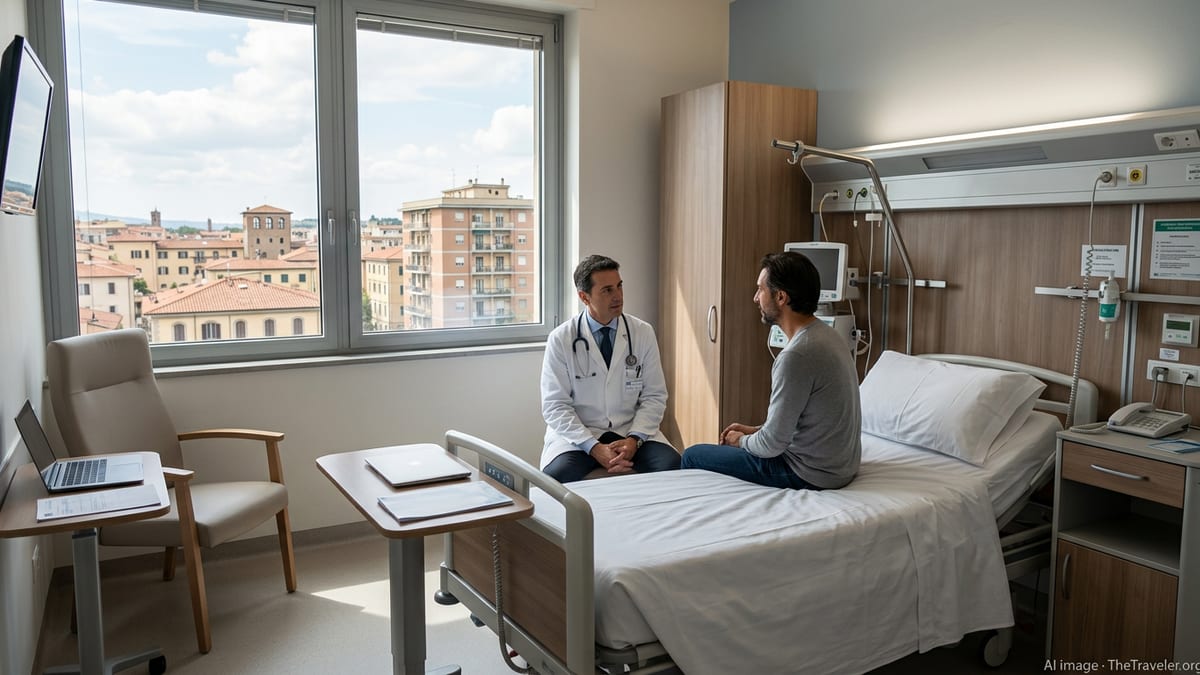
Overview of Private Healthcare within Italy’s Health System
Italy’s health system is built around universal public coverage, but private expenditure represents a substantial and increasing share of total health spending. Recent data indicate that roughly one fifth to one quarter of all health expenditure is paid directly by households out of pocket, with only a small percentage routed through private health insurance or corporate health funds.([ansa.it](https://www.ansa.it/english/news/2025/02/18/private-healthcare-spending-up-but-40-useless-gimbe_c8f7f26e-f8f9-4d12-a841-000f828bf885.html?utm_source=openai))
Hospitals and clinics are a mix of public, private non-profit, and private for-profit providers. Many private hospitals are “accredited,” meaning they have contracts with regional health authorities to deliver publicly funded services, while also selling purely private services to individuals and insurers. Publicly funded care is generally accessible but often associated with waiting times and more basic hotel-style amenities, which creates demand for private care among middle- and higher-income residents and mobile professionals.
For relocating professionals, private healthcare in Italy is not a full substitute for the public SSN in the way it might be in some non-European countries. Instead, it is best viewed as a parallel channel that allows faster access to diagnostics and specialists, expanded provider choice, and higher comfort standards, especially in urban centers such as Milan, Rome, and Bologna where private capacity is densest.
The key implication for relocation planning is that while core, essential care can usually be accessed via the public system once eligible, a realistic healthcare strategy often includes a mix of public enrollment, targeted use of private outpatient services, and optional private insurance for higher-cost scenarios such as hospitalization in private facilities.
Structure of the Private Hospital and Clinic Sector
Italy has seen a steady expansion of the private hospital sector over the past decade. Between 2011 and 2021, the number of private hospitals nearly doubled, rising from a little over 500 to close to 1,000 facilities.([ansa.it](https://www.ansa.it/english/news/general_news/2023/03/31/number-of-private-hospitals-in-italy-doubled-2011-2021_d3b56b9c-08a9-45bf-bf43-cb36202ac7e7.html?utm_source=openai)) While the number of hospitals has increased, the public sector still holds the majority of total beds nationwide, with accredited private beds representing roughly one quarter to one third of national hospital bed capacity depending on the region and classification.([commonwealthfund.org](https://www.commonwealthfund.org/international-health-policy-center/countries/italy?utm_source=openai))
The private landscape includes several categories: fully private hospitals offering only self-pay or insured care; accredited private hospitals that treat both publicly funded patients and paying private patients, often in separate wards; and smaller polyclinics and diagnostic centers focused on outpatient imaging, consultations, and minor procedures. Large private or faith-based institutions such as Gemelli University Hospital in Rome and Casa Sollievo della Sofferenza in Puglia illustrate a common hybrid model where the same institution delivers public SSN services and private-pay care, including hotel-style rooms and fast-track consultations.([en.wikipedia.org](https://en.wikipedia.org/wiki/Gemelli_University_Hospital?utm_source=openai))
Geographical distribution is uneven. Northern and central regions such as Lombardy, Lazio, and Emilia-Romagna typically show a higher share of private beds and more extensive networks of accredited private facilities, while parts of the South and islands rely more heavily on public hospitals and have fewer high-end private options.([statista.com](https://www.statista.com/statistics/961556/number-of-beds-in-private-accredited-hospitals-by-area-in-italy/?utm_source=openai)) This regional variation is relevant for relocation decisions, as it influences both the availability of private providers and the practical value of private insurance.
From an access perspective, private hospitals in Italy are commonly used for elective surgery, orthopedics, cardiology, oncology, and maternity services where patients are willing to pay for shorter waiting times, specific specialists, or single rooms. Emergency care for acute life-threatening conditions is primarily routed through the public system, even when the care is delivered in an accredited private facility, and is not usually structured as a purely private, cash-based service.
Typical Costs of Private Medical Services
Out-of-pocket payments are the dominant funding source for private healthcare in Italy. Estimates suggest that close to 9 out of 10 euros spent privately on healthcare are paid directly by households rather than by insurers or health funds.([ansa.it](https://www.ansa.it/english/news/2025/02/18/private-healthcare-spending-up-but-40-useless-gimbe_c8f7f26e-f8f9-4d12-a841-000f828bf885.html?utm_source=openai)) For relocating individuals, this means that routine private care is often affordable enough to pay directly, particularly when compared with prices in North America or some Asian hubs, but significant events like major surgery can still represent notable one-off expenses if not insured.
Typical indicative ranges reported by recent expat and industry guides are as follows: a private general practitioner consultation often costs around 50 to 70 euros in many regions, and sometimes up to about 100 euros in large cities or for English-speaking physicians.([expatica.com](https://www.expatica.com/it/healthcare/healthcare-services/doctors-in-italy-79350/?utm_source=openai)) A first-time specialist visit in a private setting usually falls in the 80 to 200 euro range depending on specialty, location, and the seniority of the physician. More complex outpatient diagnostics such as MRI scans can cost around 150 to 300 euros when paid privately, although prices vary significantly by region and facility.([oladoctor.com](https://oladoctor.com/en/blog/healthcare-italy-guide?utm_source=openai))
Private hospital stays and surgical procedures are more expensive and typically the main reason residents take out private insurance. Uninsured daily rates for a private room in a clinic can be several hundred euros per night, sometimes in the 300 to 600 euro range in higher-end facilities.([reddit.com](https://www.reddit.com/r/ItalyTravel/comments/1ektimz?utm_source=openai)) Elective surgeries, such as orthopedic or cosmetic procedures, can range from a few thousand to over ten thousand euros depending on complexity and the hospital’s profile.([visitworld.today](https://visitworld.today/blog/804/what-is-the-cost-of-medicine-in-italy-and-how-can-you-go-for-treatment-in-the-country?utm_source=openai)) These figures are considerably lower than comparable charges in countries without universal healthcare but can still be financially significant, especially if combined with extended recovery periods.
For many expatriates with secure incomes, a common pattern is to use the public system for high-cost hospital care once eligible, while paying privately out of pocket for faster-access outpatient appointments, dentistry, and selected diagnostics. Private insurance is then used more as a backstop against high-cost hospitalization in private facilities or to gain access to premium networks rather than for minor day-to-day care.
Private Health Insurance Options and Premium Levels
Voluntary health insurance in Italy is relatively small compared with the scale of public funding and direct out-of-pocket payments, but it has been growing steadily. Recent insurance sector data indicate that health insurance premium income has risen to around 8 billion euros annually, with year-on-year growth in the high single digits.([ivass.it](https://www.ivass.it/pubblicazioni-e-statistiche/statistiche/bollettino-statistico/2026/n-1-2026/Bollettino_1_2026_EN.pdf?language_id=3&utm_source=openai)) Coverage is supplied by Italian insurers, international providers, and corporate or sectoral health funds often linked to employment contracts or professional associations.
Three broad types of private health insurance are relevant for people relocating to Italy: domestic individual policies marketed to residents; group or corporate policies bundled with employment contracts; and international or “expat” policies purchased from global insurers that provide coverage both in Italy and abroad. Italian domestic policies often focus on inpatient benefits, private-room supplements in accredited hospitals, high-cost diagnostics, and partial reimbursement of outpatient visits, while leaving everyday low-cost care largely to self-pay.
Premium levels vary widely by age, scope, and whether cover includes international care or only facilities in Italy. Market examples and expatriate reports suggest that an international policy for a middle-aged couple focused primarily on major inpatient care, with limited outpatient and excluding the United States, can cost on the order of several thousand US dollars or euros per year, while more limited domestic policies tailored to students or young adults may cost in the low hundreds of euros annually.([reddit.com](https://www.reddit.com/r/AmericansinItaly/comments/1pczz31/how_do_i_get_a_health_insurance_for_a_residence/?utm_source=openai)) For older applicants or those seeking extensive outpatient and cross-border cover, premiums rise sharply.
It is important to note that voluntary health insurance in Italy generally supplements, rather than replaces, entitlement to the public SSN. Many policies are structured on a reimbursement basis: the insured pays the provider directly, then submits receipts for partial or full reimbursement up to stated limits. Some higher-end products operate with direct billing arrangements in selected private networks, but this is not universal. When evaluating policies, relocating professionals should examine the share of costs reimbursed for private consultations, the annual or per-episode ceilings, waiting periods, and exclusions such as dental or maternity, which are frequently limited or excluded.
Comparative Advantages and Limitations of Private Care
The main advantages of accessing private healthcare in Italy relate to speed, choice, and comfort rather than basic clinical outcomes. Private consultations and diagnostics typically offer significantly shorter waiting times than equivalent public services, particularly in specialties such as dermatology, orthopedics, cardiology, and imaging where public waiting lists can extend for weeks or months in some regions.([eurohealthobservatory.who.int](https://eurohealthobservatory.who.int/docs/librariesprovider3/publicationsnew/hit-summaries-no-flags/hit-summary-italy-2024-final-%28002%29.pdf?utm_source=openai)) Patients can usually choose their specialist more freely and often find greater availability of English-speaking or multilingual physicians in private practices frequented by international clients.
Hotel-style amenities and privacy are also clear differentiators. Private hospitals and accredited clinics that sell private packages commonly provide single rooms with ensuite bathrooms, flexible visiting policies, and hotel-like services that are not standard in public wards. For some expatriates, especially those used to more consumer-oriented healthcare markets, these factors can significantly influence satisfaction during hospitalization and childbirth.
However, private care in Italy has notable limitations. Emergency and highly specialized tertiary care, such as complex trauma management or advanced intensive care, is anchored in the public network, and even high-profile private hospitals often deliver these services under SSN contracts rather than as purely private episodes. Furthermore, not all regions have dense private networks, and in smaller towns the choice of private providers may be narrow, reducing the practical benefits of holding insurance that relies on private facilities.
Another consideration is coordination of care. Because Italy’s public system is organized regionally and primary care is typically centered on a publicly contracted family doctor, private consultations may sit outside official care pathways unless individuals and providers proactively share documentation. This can be managed through good record-keeping and communication but requires conscious effort, especially for chronic conditions that will be followed within the public system.
Regional Variations and Planning Considerations
Regional variation is a defining feature of both public and private healthcare delivery in Italy. Northern regions generally exhibit higher per capita health expenditure and a greater share of private accredited beds, while several southern regions face more constrained resources and longer waiting times.([oladoctor.com](https://oladoctor.com/en/blog/healthcare-italy-guide?utm_source=openai)) For professionals evaluating relocation, this means that the practical value of private healthcare options is closely tied to the target region or city.
In major metropolitan areas such as Milan, Rome, Turin, and Bologna, private hospitals and diagnostic centers are widely available, and many institutions maintain dedicated international or expatriate desks. English-speaking staff and physicians are more common, and corporate or international insurance products are more likely to have established provider networks. By contrast, in smaller cities and rural areas, there may be fewer private options and a stronger reliance on publicly managed facilities, even among higher-income residents.
Relocation planning should therefore consider three distinct layers: eligibility and timing for enrollment in the public SSN; the density and quality of private providers in the chosen region; and the role of insurance in bridging any gaps. For example, an assignee relocating to a northern industrial region with strong private capacity may derive clear value from a comprehensive employer-sponsored insurance plan that facilitates private hospital access, while a retiree settling in a smaller southern town may benefit more from prompt enrollment in the SSN combined with selective private self-pay care for specific services.
Additionally, expatriates should confirm how their chosen insurer interacts with accredited private facilities, as some policies may preferentially reimburse care in certain networks or require prior authorization for planned admissions. Clarifying these operational details before relocation reduces the risk of unexpected out-of-pocket exposure during an acute health episode.
The Takeaway
Private healthcare in Italy functions primarily as a complement to, not a replacement for, the national public health service. For relocating individuals and families, it offers faster access to specialists and diagnostics, broader provider choice, and more comfortable hospital conditions, particularly in regions with dense networks of private or accredited hospitals. Costs for routine private outpatient care are often manageable out of pocket, but inpatient stays and major procedures can be expensive and are the main scenarios where private insurance significantly reduces financial risk.
Decision-grade planning should recognize that Italy continues to devote the majority of health spending to the public system, while private out-of-pocket expenditures and voluntary insurance play targeted but expanding roles. Assessing the specific healthcare environment of the destination region, the expected frequency and type of medical needs, and the structure of any employer-sponsored or personal insurance policy will allow relocating professionals to design an appropriate combination of public enrollment, private self-pay, and voluntary insurance coverage.
Prospective movers who approach Italy’s mixed public–private ecosystem with realistic expectations and a clear strategy can generally secure timely, high-quality care while maintaining predictable healthcare costs, especially when they align their insurance choices with the actual availability and pricing of private services in their chosen area.
FAQ
Q1. Is private health insurance mandatory to access private healthcare in Italy?
Private healthcare in Italy can be accessed on a self-pay basis, so insurance is not legally required. However, insurance can reduce the financial impact of hospital stays and major procedures and may provide access to direct billing networks.
Q2. How much should a relocating professional budget annually for private medical visits?
Budgeting several hundred to a low four-figure amount in euros per year is often sufficient for occasional private GP and specialist visits, assuming no major surgery. Actual needs depend on health status, family size, and frequency of consultations.
Q3. Are private hospitals in Italy of higher clinical quality than public hospitals?
Clinical quality is generally high in both sectors, and many top specialists work in public teaching hospitals. Private facilities primarily differentiate through shorter waiting times, more personalized service, and enhanced comfort rather than systematically better medical outcomes.
Q4. Can expatriates use international health insurance directly in Italian private hospitals?
Many Italian private hospitals accept international insurers, particularly in large cities, but direct billing is not universal. Expatriates often pay upfront and seek reimbursement, so it is important to verify network arrangements and claims processes in advance.
Q5. How do costs of private outpatient care in Italy compare with North America?
Private outpatient costs in Italy are typically significantly lower than in North America. A private GP or specialist visit often costs a fraction of comparable fees in major US or Canadian cities, although exact differentials vary by specialty and facility.
Q6. Does private insurance in Italy usually cover dental and vision care?
Many standard private health insurance policies in Italy provide limited or no routine dental and vision coverage. Where such benefits exist they are often capped at relatively modest annual limits, so individuals may still pay substantially out of pocket.
Q7. Are private hospitals widely available in southern Italy?
Southern regions and islands do have private and accredited facilities, but networks are generally less dense than in northern and central regions. This can limit provider choice and reduce the practical advantages of private insurance in some southern locations.
Q8. Can private healthcare help avoid waiting lists for diagnostics and elective surgery?
Yes. One of the main reasons residents use private providers is to bypass public waiting lists for imaging and elective procedures, obtaining appointments and results more rapidly by paying directly or using insurance.
Q9. Do private hospitals in Italy provide English-speaking medical staff?
English-speaking staff are more commonly found in private hospitals and clinics in major cities and in institutions that regularly treat international patients. In smaller towns, English proficiency is less guaranteed and may require advance verification.
Q10. Is it realistic to rely solely on private healthcare without using the public system?
It is technically possible but not typical. Emergency and highly specialized care are strongly integrated into the public network, and many private hospitals operate under public contracts for critical services. Most residents combine public coverage with selective use of private care and, where appropriate, supplementary insurance.