

More news on this day
Propellic has been named headline sponsor of the inaugural Travel Marketing AI Summit 2026 in New York City, highlighting how artificial intelligence is rapidly moving to the center of global travel marketing strategy.
Get the latest news straight to your inbox!
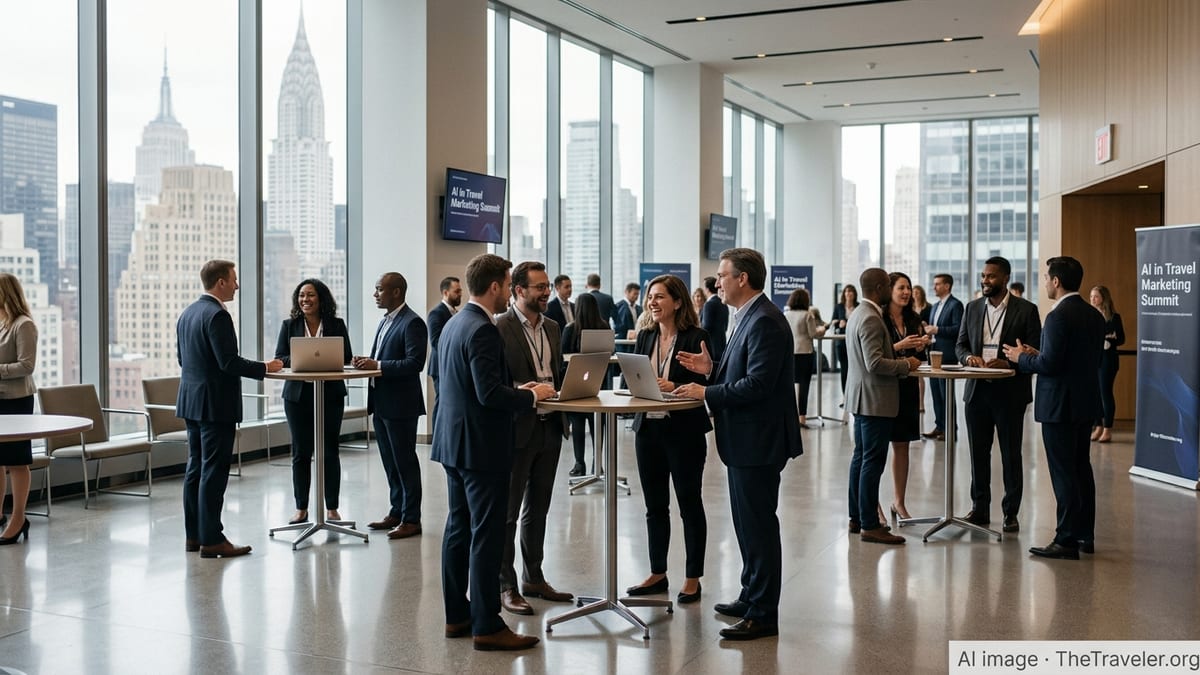
New Sponsorship Underscores Rising Importance of AI in Travel Marketing
Publicly available information indicates that Propellic, a travel-focused performance and AI marketing agency, has been confirmed as the headline sponsor for the Travel Marketing AI Summit taking place on March 24, 2026, in New York City. The one-day executive forum, created by travel research and events firm Phocuswright, is designed to gather senior leaders at the intersection of travel, marketing and artificial intelligence to explore how emerging tools are reshaping the traveler journey from search to loyalty.
Reports on the program describe the summit as intentionally compact, emphasizing depth of discussion over scale. Registration has been capped at roughly a few hundred senior-level participants, with the agenda prioritizing strategic conversations, applied case studies and peer-to-peer exchange over traditional expo formats. The decision to position Propellic as headline sponsor places the agency at the center of those discussions at a time when many travel brands are rethinking how they attract and convert customers in an AI-driven environment.
Industry coverage of the event notes that generative AI and automation have quickly become top investment priorities for travel companies, from global online travel agencies to destination marketing organizations. Against this backdrop, the summit’s organizers have framed the gathering as a response to demand for practical, data-led guidance rather than theoretical debate, making the headline sponsorship a high-visibility platform for Propellic’s specialization in AI-driven travel marketing.
Propellic Brings AI Visibility and Performance Expertise to the Stage
According to published coverage, Propellic is positioned as the only dedicated travel marketing and advertising agency on the summit’s sponsor roster. The company works with tour operators, hotel groups and online travel brands on performance marketing, search engine optimization, analytics and what it describes as AI visibility optimization, aiming to ensure travel brands remain discoverable as algorithms and interfaces evolve.
Event announcements indicate that Propellic’s CEO and founder, Brennen Bliss, will lead a featured presentation at the summit titled “What $250M in Travel Ad Spend Taught Us About the Five Things That Actually Drive Bookings.” The session is expected to draw on aggregated campaign data and experiments across multiple travel categories, outlining which levers most consistently translate marketing investment into reservations in an era where recommendation engines and AI assistants increasingly mediate traveler decisions.
In addition to the headline speaking slot, the sponsorship gives Propellic a central role in shaping the broader conversation around AI and travel marketing. Reports suggest the agency will use the platform to showcase approaches for integrating large language models, predictive analytics and evolving search behaviors into acquisition strategies, retargeting frameworks and content planning. For travel marketers navigating fragmented channels and shifting privacy rules, such applied examples are likely to be closely scrutinized.
Propellic’s involvement at this level follows a wider pattern of the agency appearing at AI-focused travel forums and webinars, where it has highlighted how changes in search interfaces and generative results can alter which brands travelers see first. Its headline status at the Travel Marketing AI Summit reinforces that positioning and signals growing demand for niche expertise tailored specifically to the travel and tourism sector.
Inside Phocuswright’s New One-Day Executive Summit Format
The Travel Marketing AI Summit is the latest addition to Phocuswright’s portfolio of executive events, but reports emphasize that it departs from larger conference models. The summit is scheduled for March 24, 2026, at Convene 237 Park in Midtown Manhattan, with programming built around keynotes, executive interviews, moderated panels and small-group discussions rather than extensive exhibitor floors.
Event descriptions explain that attendance is targeted primarily at chief marketing officers and senior leaders responsible for customer strategy, data and innovation, as well as marketing technology and AI decision-makers. Investors, advisors and agencies working closely with travel brands are also part of the intended audience. This senior-level focus is intended to foster more candid dialogue on budgets, organizational change and risk management related to AI adoption.
Phocuswright’s own research has highlighted that generative AI and related technologies rank among the highest near-term investment priorities for travel companies. By creating a one-day summit dedicated exclusively to marketing use cases, the organization is aligning the format with that trend, concentrating discussion on practical questions such as attribution in AI-shaped journeys, measurement of algorithmic visibility and balancing automation with brand control.
The New York location is likely to encourage participation from both North American and international travel executives, given the city’s role as a hub for airlines, hospitality groups, travel technology firms and media. The timing in late March also positions the summit early in the industry’s annual calendar, as companies refine plans ahead of peak travel seasons in the northern hemisphere.
Curated Partner Lineup Reflects Focus on Targeted Collaboration
Coverage of the summit’s design notes that Phocuswright has deliberately limited its partner list to a small number of companies that align closely with the event’s focus on applied AI. Reports indicate that sponsorships were constrained in order to keep commercial messaging tightly connected to the topics on stage and to avoid the crowded feel of large trade shows.
Within this framework, Propellic’s designation as headline sponsor underscores its role in connecting the strategic conversations taking place in plenary sessions with the hands-on realities of running campaigns for travel brands. Other partners highlighted in event previews, such as data platforms and digital advertising technology providers, are expected to complement that perspective by showcasing supporting tools and infrastructure.
The curated partner structure also reflects a broader shift in industry events toward smaller ecosystems of collaborators that work together across research, media, marketing services and technology. For travel executives, this can offer a more coherent view of how to integrate AI across the marketing stack, from audience insight and experimentation through to media activation and performance optimization.
By centering a travel-specialist marketing agency in that mix, the summit’s organizers appear to be signaling that sector-specific expertise still matters even as general-purpose AI platforms proliferate. The headline sponsorship by Propellic exemplifies that approach, positioning the agency as a bridge between rapidly advancing AI capabilities and the distinctive requirements of travel brands operating in a highly seasonal, experience-led market.
Implications for Travel Brands Navigating an AI-Driven Future
For travel companies, the announcement of Propellic as headline sponsor of the Travel Marketing AI Summit carries implications beyond event branding. It highlights the degree to which marketing strategy, technology and data science are converging, and how external partners are becoming central to navigating that convergence at speed.
Summit materials and related commentary suggest that one of the most pressing challenges for travel marketers is keeping pace with how AI-mediated discovery is changing what travelers see first when they plan trips. From conversational search tools to algorithmically curated offers, the path to purchase is in flux, and the question of how to remain visible and relevant across these touchpoints has become critical.
By focusing content on proven levers that drive bookings and on how to adapt performance marketing playbooks to an AI-first world, Propellic’s headline role points to growing demand for evidence-based guidance. The summit itself, with its limited headcount and senior-level remit, reflects an emerging view that travel brands need concentrated, expert-led forums to compare strategies and avoid duplicating missteps as they experiment with new tools.
As March 24 approaches, the combined visibility of Phocuswright’s research platform and Propellic’s applied marketing experience is likely to draw attention from across the global travel ecosystem. For many brands, the discussions in New York may help shape how they prioritize AI investments, structure teams and measure success in the next phase of digital travel marketing.