

Greece is far more than whitewashed villages and island sunsets. For most visitors, the real test of a smooth trip is figuring out how to move between its busy cities, mountain towns and scattered islands. Public transport is often the most economical way to travel, and in many cases it is also the most practical. Yet services can feel confusing for first time visitors, especially when timetables shift, strikes are called on short notice, or infrastructure projects cause temporary disruptions. Understanding the basics of how buses, trains, metros and ferries work in Greece in 2026 will help you travel more confidently and avoid common surprises.
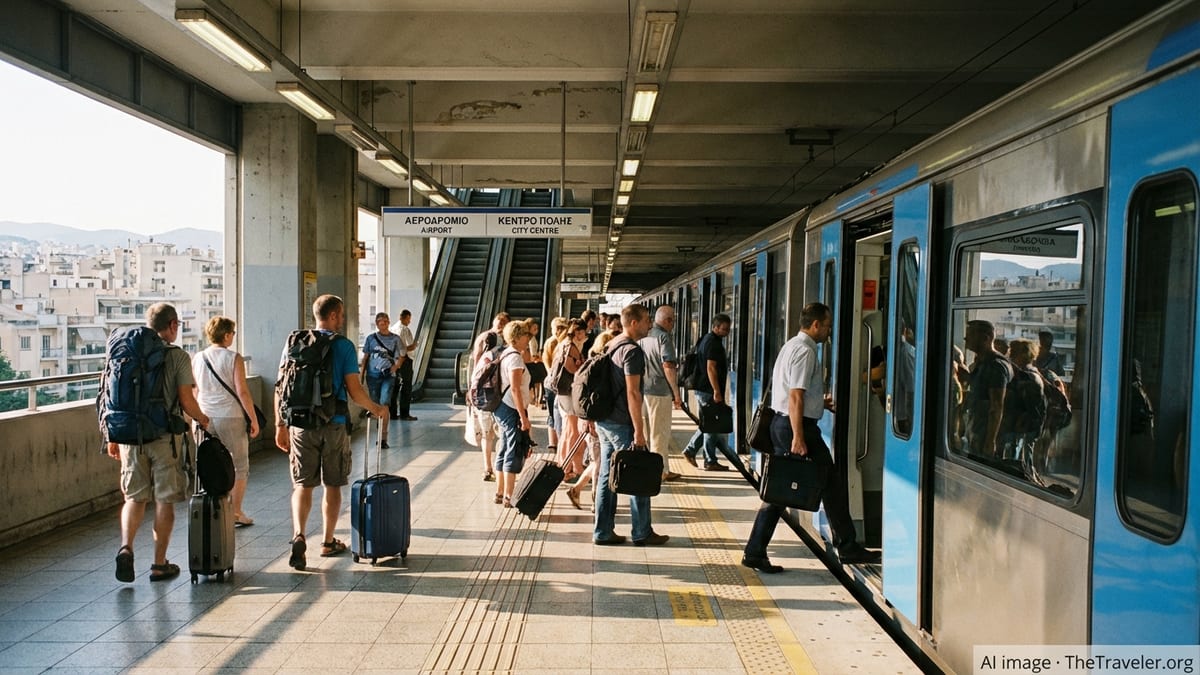
How Greek Public Transport Is Organised
Greece’s public transport network is a patchwork of modern urban systems, long distance bus routes, a still recovering national rail network and an extensive web of ferries between the islands. The experience you have in central Athens or Thessaloniki will feel very different from what you encounter in a small Cycladic island port or a village in the Peloponnese. Planning almost always requires thinking in two layers: how you will move within each city or island, and how you will connect between them.
Urban transport in Athens and Thessaloniki is generally the most organised and familiar to visitors. In Athens, a unified ticketing system covers metro lines, trams, buses and the suburban railway within the city zone, while Thessaloniki combines its new driverless metro with a busy bus network and suburban trains. In both cities, tourists rely heavily on fixed rail for speed and predictability, then use buses or trams to cover gaps. Smaller cities, such as Patras, Larissa, Heraklion or Chania on Crete, largely depend on local bus operators and taxis, with limited or no rail services.
For movement between regions, the backbone is the network of intercity KTEL buses, which link almost every town with nearby cities and ferry ports. The main north south rail axis between Athens and Thessaloniki continues to operate but with capacity reductions and occasional delays due to ongoing works and safety upgrades. Given Greece’s geography, ferries are effectively an extension of the national transport system, carrying millions of passengers each year between Piraeus or Rafina and islands spread across the Aegean and Ionian seas.
Tourists should be aware that national discussions about rail safety and infrastructure reforms are still ongoing in 2026 after a serious crash in 2023. While this has prompted investment commitments and new rolling stock orders, it has also led to timetable reductions on some intercity routes while maintenance and upgrade works continue. Trains can still be a pleasant way to travel, but they are no longer the default choice for every long distance journey and should be planned with some flexibility.
Using Public Transport in Athens
Athens has the most comprehensive and tourist friendly public transport in Greece. Three metro lines, a coastal tram, urban buses and trolleybuses, and the suburban railway all work under a unified tariff system within the city area. A standard 90 minute ticket allows unlimited transfers between metro, tram, bus and suburban rail in the urban zone and is generally excellent value for visitors who plan to move around several times a day. As of early 2026, typical prices for a single 90 minute ticket are a little over one euro, with day and multi day passes that quickly pay off if you combine sightseeing with evenings out.
Airport travel is the main exception to the unified pricing. The blue metro line from Athens International Airport to Syntagma and Monastiraki requires a special ticket that costs several times more than a normal ride, and the same applies to the express airport buses that run 24 hours between the airport and central locations. These higher fares can still be worth it for the speed and convenience, but budget conscious travellers should be aware of the difference so they are not surprised at the ticket machine. Taxis from the airport to the city centre operate on a fixed legal fare rather than the meter, with a higher price at night.
Service levels are generally reliable, but there are some quirks. The metro becomes very crowded during weekday rush hours, particularly around Syntagma, Omonia and on the airport line. If you have large luggage, it is wiser to travel in the late morning or mid afternoon. On Friday nights, metro services run later, and on Saturdays recent changes have extended operation through the night on key lines, which is a major advantage for visitors enjoying Athens nightlife in districts like Gazi or Psyrri. The tram along the Athens Riviera is slower but scenic, and for many tourists it is as much a low cost seaside excursion as a simple transport mode.
Safety on Athens public transport is generally good, but pickpocketing is a real issue on some crowded routes. Professional teams often target the airport metro line, busy central stations and the express airport bus that terminates at Syntagma Square. Keep bags zipped and in front of you, avoid leaving valuables in outer pockets, and double check that phones and passports are secure before boarding or alighting. Late at night, trains and buses are usually calm, but as in any major city it is sensible to stay alert and sit near other passengers.
Thessaloniki and Other Greek Cities
Thessaloniki, Greece’s second city, has undergone a quiet transport revolution with the opening of its long awaited metro. The main line links the New Railway Station with eastern districts such as Nea Elvetia, drastically cutting travel times across the city. Trains are automatic and frequent, and stations are modern and well lit. For visitors staying near the seafront, Aristotelous Square or the upper town, the metro is often the fastest way to reach intercity buses, the train station or newer neighbourhoods further east.
The metro network is still expanding, with an extension to Kalamaria and additional stations undergoing testing cycles. At times in late 2025 and early 2026, portions of the network have been temporarily shut down for system tests, then reopened with adjusted timetables. When you plan a trip that relies on the Thessaloniki metro, particularly to connect with trains or flights, it is wise to recheck the operating hours and any disruption notices close to your travel date. Official announcements are usually clear about first and last trains and any temporary timetable changes.
Thessaloniki also relies heavily on a dense bus network that connects the centre with the airport, suburban areas and coastal neighbourhoods. Buses can be crowded and slow during peak hours, especially on main arteries parallel to the seafront, but they reach places that the metro does not yet serve. Tickets are typically bought at kiosks or machines and validated on board. For the airport, a dedicated bus line offers a simple and economical link, but travel time can vary with traffic, so build in extra time for flights.
In other Greek cities, public transport is dominated by buses and taxis. Patras, Larissa and Volos have local bus services that cover central districts and outlying suburbs. On Crete, urban buses in Heraklion and Chania are frequent along main routes used by tourists, such as connections between city centres, beaches and airport terminals. Smaller towns may have only a handful of local routes that run a few times a day. Timetables are often posted at bus stops or stations but can be subject to seasonal change, with more frequent services in summer and reduced schedules in winter.
Long Distance Travel: Buses, Trains and Domestic Flights
For intercity journeys on the mainland, most visitors will find that buses offer the greatest coverage and flexibility. Each region is served by a KTEL operator, and together they run frequent services between Athens, Thessaloniki, Patras and other major hubs, as well as to smaller towns that have no rail stations. Coaches are usually modern, air conditioned and reserved seating, with luggage stored in the hold. Buying tickets in advance during peak summer weekends is sensible, but outside those times it is often possible to purchase on the day.
The national rail network, operated by Hellenic Train in cooperation with the new state rail infrastructure entity, continues to run core intercity routes such as Athens to Thessaloniki and Athens to regional centres like Larissa, Volos and Kalambaka. However, works on the infrastructure and ongoing upgrades mean that timetables can be reduced or adjusted, particularly on the busy Athens Thessaloniki corridor. On some days there are fewer direct intercity trains than in previous years, and services can be replaced or supplemented by buses on certain sections while maintenance is carried out.
Where trains do run, the experience can be pleasant, with comfortable seating and scenic views through central Greece. Advance booking is advisable on popular routes and holiday periods, both to secure seats and to avoid any last minute changes. Passengers should be prepared for possible delays and keep connections to ferries or flights flexible when possible. Official rail announcements in the wake of the 2023 crash have emphasised safety upgrades and new rolling stock orders, but improvements are being phased in over several years rather than overnight.
Domestic flights remain a practical alternative for longer distances, especially when time is limited. Routes such as Athens to Thessaloniki, Crete, Rhodes, Kos and other larger islands operate several times a day in high season, connecting through Athens International Airport and, increasingly, Thessaloniki as a secondary hub. Flights are typically more expensive than buses but can drastically reduce travel time. For those with a tight itinerary who want to visit both mainland and distant islands, a mix of domestic flights and ferries can strike a good balance between speed and experience.
Island Ferries and Local Transport on the Islands
Greece’s ferry network is the lifeline of the islands and a highlight of many trips. From the ports of Piraeus, Rafina and Lavrio near Athens, and from regional ports such as Thessaloniki, Kavala, Volos and Igoumenitsa, ferries fan out across the Aegean and Ionian seas. There are two broad categories: conventional ferries, which are larger, slower and often allow vehicles, and high speed catamarans or hydrofoils, which cost more but cut travel times significantly. Between May and September, schedules are usually dense on popular routes like Piraeus to Mykonos, Santorini, Paros or Naxos, while shoulder season and winter can see far fewer sailings.
For tourists, the key challenge is that ferry timetables change seasonally and sometimes only become final a few weeks before departure dates. Weather can also disrupt services, particularly in autumn and winter when strong winds in the Aegean occasionally lead to port closures or delays. Booking popular high speed services in advance is common in July and August, but for conventional ferries with large capacity there is often more flexibility. It is unwise to schedule a same day ferry and international flight without a generous buffer in case of disruption.
On the islands themselves, local transport varies widely. Larger destinations like Crete, Rhodes, Corfu, Naxos and Paros usually have a solid network of public buses linking main towns, beaches and ports, with extra services in summer. Smaller islands might rely on a few minibus routes, seasonal tourist buses or shared taxis, and in some cases you may find that walking, renting a scooter or hiring a car is practically essential for exploring beyond the main village. Timetables are commonly displayed at central bus stations, kiosks or ports, but online information can lag behind last minute adjustments.
Tourists should also factor in the heat when planning island transport. Waiting at exposed bus stops in July or August can be tiring, and popular beach routes may be full at peak times, with standing passengers. Where possible, travel earlier in the morning or later in the afternoon, carry water and sun protection, and build some flexibility into your schedule. On islands with steep terrain, such as Santorini, local buses can be crowded on routes between Fira, Oia and the port, especially when cruise ships are in. In those cases, patience and early starts pay off.
Tickets, Strikes and Practical Tips
Buying tickets in Greece is generally straightforward, but practices vary by mode. In Athens and Thessaloniki metro systems, tickets and passes are sold at vending machines and staffed counters, and must be validated at entry gates. On buses and trams, tickets are sometimes purchased in advance from kiosks or machines and then validated on board. For intercity KTEL buses, you typically buy a specific seat for a specific departure at stations, kiosks or online, and staff at the bay will check your ticket and direct you to the right coach.
Ferry tickets can be purchased online, through travel agencies or directly at port ticket offices. In high season, collecting boarding passes or printed tickets can take extra time because of queues, particularly in Piraeus. Some operators have moved toward digital boarding passes on smartphones, but printed tickets remain common. For trains, online booking through the operator’s official channels is useful for checking which services are running on specific dates, especially as temporary timetable changes continue on parts of the network.
Strikes are a recurring feature of Greek public life and can affect transport without much warning. Nationwide or sector specific strikes may temporarily shut down metro lines, trains, ferries or flights for part of a day. When a major strike is announced, airlines and ferry companies usually adjust schedules or allow free ticket changes, and limited skeleton services might run in cities during core hours. As a visitor, the best defence is to check the news regularly in the days before a major move between cities or to and from the airport, and to build a contingency plan such as travelling a day earlier when possible.
Beyond strikes, seasonal crowds and heat are the main practical challenges. July and August bring not only tourists but also Greeks returning home, which means full trains, buses and ferries around weekends and public holidays. Booking intercity and island journeys ahead, avoiding last minute port dashes, and using earlier departures can make travel significantly smoother. If you rely on public transport for time sensitive events such as weddings, tours or cruise departures, always leave additional margin in case of traffic, delays or sudden service adjustments.
Staying Safe and Culturally Aware
Public transport in Greece is generally safe, with low levels of violent crime. The main concern for most visitors is petty theft in crowded urban settings. As in many European capitals, professional pickpockets target busy metro lines and bus routes that link the airport, central squares and popular tourist districts. Carry bags in front of you, avoid placing phones or wallets in back pockets, and be cautious of distractions such as jostling at doors or sudden questions from strangers when boarding or exiting vehicles.
At night, metros and buses in Athens and Thessaloniki remain well used, especially on weekends, and many tourists feel comfortable returning to their accommodation after midnight. If you are travelling alone, sitting near other passengers, choosing well lit stations and stops, and avoiding empty train cars are sensible precautions. On islands and in smaller towns, evening buses tend to be calm and often carry groups of tourists returning from beaches or tavernas together.
From a cultural perspective, Greek public transport passengers are typically relaxed but can become vocal when services are disrupted. Loud conversations, animated phone calls and drivers speaking with regular passengers are normal. Boarding queues are sometimes loosely observed, particularly when a crowded bus arrives, but there is usually a sense of informal order. Having your ticket ready, moving inside the vehicle instead of standing by the door, and offering your seat to elderly passengers or parents with small children are appreciated gestures.
Language is less of a barrier than many visitors expect. Younger Greeks and those working in transport hubs often speak some English, and announcements on metro systems and major intercity routes are commonly made in both Greek and English. Ferry and long distance bus staff are used to handling foreign passengers and will usually help you find the right gate or platform if you ask politely. Learning a few basic Greek phrases, such as greetings and simple questions about directions, can still go a long way in making interactions smoother and more enjoyable.
The Takeaway
Navigating public transport in Greece in 2026 requires a little more attention than in some other European countries, but it rewards travellers with both savings and local insight. Athens and Thessaloniki now offer modern metro systems that can whisk you between archaeological sites, markets and nightlife with relative ease, while KTEL buses, ferries and a still evolving rail network connect the mainland with mountains, islands and coastal towns.
The key for visitors is to stay flexible, check for timetable changes and strikes, and avoid planning too many tight same day connections. Give yourself breathing room between a ferry and a flight, between a long distance train and a guided tour, and between an intercity bus and your evening plans. When something does change, station staff and fellow passengers are often your best source of real time advice.
With realistic expectations, a copy of your essential timetables, and a willingness to adapt when needed, Greek public transport becomes far less daunting. It turns into a front row seat on everyday life, from commuters chatting on the tram along the Athens Riviera to islanders loading crates of produce onto the early morning ferry. Plan ahead, travel light and leave some room in your schedule for delays and detours, and you will find that public transport can be one of the most memorable parts of your journey through Greece.
FAQ
Q1. Is it better to use public transport or taxis in Athens?
Public transport is usually faster and cheaper for most central journeys, especially between major sights, while taxis are useful late at night, with luggage or for door to door trips.
Q2. Do I need to buy Athens metro tickets in advance?
No, you can buy metro tickets and passes at machines or ticket counters in stations on the day. Advance purchase is not necessary for ordinary urban trips.
Q3. How reliable are trains between Athens and Thessaloniki?
Trains still run but timetables have been reduced at times due to ongoing infrastructure works and upgrades, so you should check schedules close to your travel date and allow extra time for connections.
Q4. Are ferries to the Greek islands often delayed?
Most ferries run broadly on schedule in calm summer weather, but strong winds or port congestion can cause delays or occasional cancellations, so avoid very tight same day flight or train connections.
Q5. Can I rely on public buses on small islands?
Larger islands usually have good summer bus networks, but smaller islands may have limited routes and frequencies, so you might need to adjust your plans or consider renting a vehicle.
Q6. How do I find out if there is a transport strike in Greece?
Strikes are usually reported in local and international news, and airlines, ferry operators and city transport agencies post notices, so checking the news and official channels a few days before travel is important.
Q7. Is public transport in Greece safe at night?
Yes, violent incidents are rare, and main metro and bus routes remain in use, but you should still take normal precautions, keep valuables secure and choose well lit stops and carriages.
Q8. Can I use the same ticket on Athens buses, metro and tram?
Within the urban zone, standard time based tickets and passes generally cover metro, buses, trams and suburban rail, but special airport fares are separate and not included in regular tickets.
Q9. Do public transport services run on public holidays?
Yes, but they may follow Sunday or special holiday timetables with reduced frequencies, so it is wise to check schedules in advance for major holidays and religious festivals.
Q10. Should I reserve KTEL bus tickets before I arrive in Greece?
For peak summer weekends and popular routes it is sensible to book ahead, but at quieter times you can often buy tickets a day or even a few hours before departure at the bus station.