

Public transport in Italy is extensive, generally reliable, and often the smartest way for visitors to move between cities and inside them. Trains, metros, buses, and trams connect historic centers with airports, suburbs, and small towns, but each system comes with its own rules on tickets, validation and passes. Understanding how it all fits together will save you time, money and stress once you land.
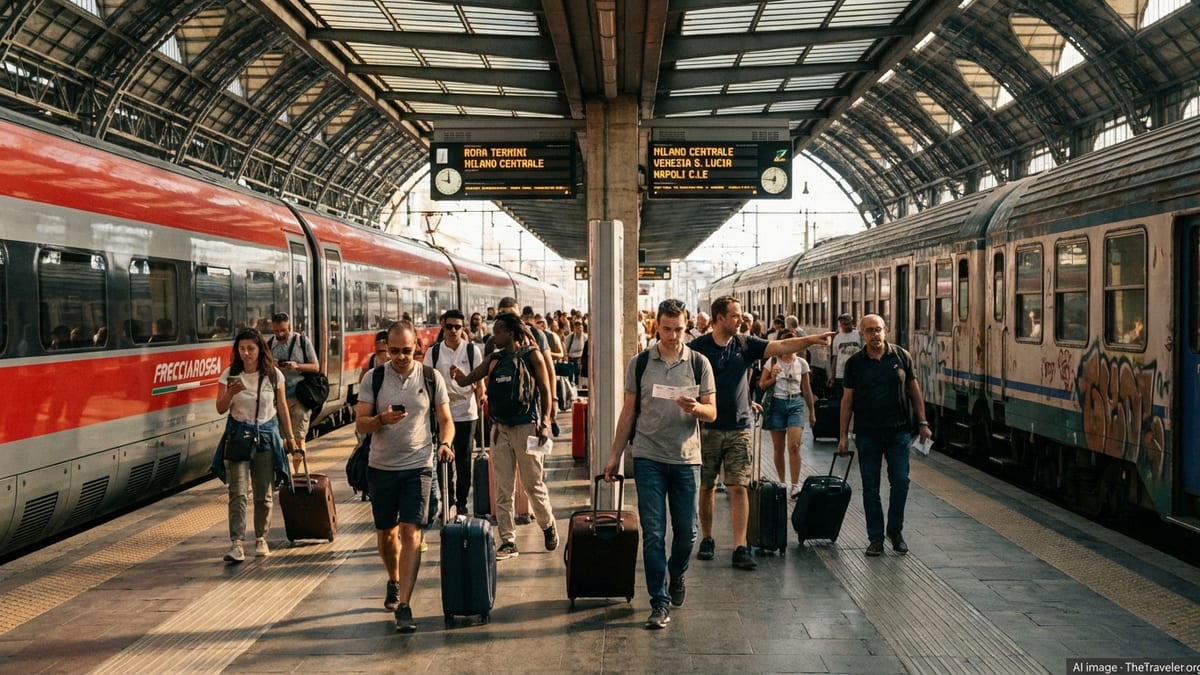
How Public Transport Works in Italy
Italy’s public transport is built around its railways and city networks. High speed and intercity trains link major destinations such as Rome, Florence, Venice, Milan and Naples, while a dense web of regional trains, buses and ferries connects smaller towns and rural areas. Within the cities themselves you will usually find a combination of metro lines, trams and urban buses, with suburban rail services filling in the gaps.
Services are provided by different companies, which is what often confuses visitors. On long distance routes the main train operators are Trenitalia, the national rail company, and Italo, a private high speed operator. At regional level, Trenitalia shares the network with several regional rail companies, and within cities the local transport authority runs metros, buses and trams under its own brand. Tickets are therefore issued by many different agencies, but the basic principles remain similar across the country.
Most Italian cities use integrated urban tickets that cover several modes of transport for a limited time, typically around 90 to 100 minutes from first validation. That means a single ticket may allow you to take a bus, change to a tram and then the metro, as long as you stay within the time limit and the valid zones. For trains, tickets are point to point and usually valid only for a specific date and train, especially for high speed and intercity services.
For tourists, the key is to distinguish between long distance rail, regional rail, and purely urban transport. You will usually buy long distance train tickets in advance, often online. For regional trains you can choose between advance purchase or buying on the day. Urban tickets are often purchased right before you travel. Once you understand which category you are using, finding the right ticket and how to validate it becomes much easier.
Trains in Italy: High Speed, Intercity and Regional
Italian trains fall broadly into three categories that matter for visitors. High speed trains, branded as Frecciarossa, Frecciargento and Frecciabianca by Trenitalia or simply Italo on competing services, link the main cities at up to very high speeds. They are fast, comfortable and require a seat reservation. Intercity and night trains connect medium sized cities and longer routes that are not fully covered by high speed lines. Finally, regional and local trains, often labelled Regionale or Regionale Veloce, serve shorter hops and smaller towns.
On high speed and most intercity services your ticket will show a specific date, departure time, train number, carriage and seat. There is no extra validation process at the station. You simply arrive in good time, find your platform on the departure board and board the correct carriage. Conductors will scan the QR code or check the details once you are on board. Buying these tickets in advance often gives access to discounted fares, although cheaper options are usually less flexible if you need to change plans.
Regional trains work differently. Tickets for a Regionale service can typically be used on any regional train on that route for a certain period, usually the day of travel. If you buy a paper ticket from a machine or ticket office, you normally have to validate it in a small machine on the platform before boarding. The validator prints the date and time on the ticket. Fines for travelling without validation can be steep, and ticket inspectors do carry out checks, so it is wise to make validation a habit whenever you use paper tickets.
Digital regional tickets purchased through official apps or websites are usually tied to a specific train or time window and are considered already validated once activated in the app, so you do not use the platform machines. Rules can change by region and operator, so it is a good idea to check the conditions when you buy. As a visitor, using official apps and digital tickets is often the simplest way to avoid confusion over validation and to keep all your journeys in one place.
Urban Transport in Major Italian Cities
Every major Italian city has its own public transport brand, ticketing rules and time limits, but the general pattern is similar. Rome, Milan, Naples and Turin have metro systems combined with extensive bus and tram networks. Florence relies mainly on trams and buses, while Venice uses water buses called vaporetti alongside buses on the mainland. In all cases, urban tickets belong to the local network and are not valid on long distance trains, although they may include some suburban or commuter rail services.
Rome uses an integrated system that allows a single ticket to be used on the metro, city buses, trams and some local trains within the city boundary. The standard single ticket is time based, giving you a set number of minutes from first validation to make multiple transfers. There are also 24, 48 and 72 hour passes, plus weekly tickets, which can be loaded onto traditional paper tickets or newer contactless cards issued by the city. Contactless bank cards and phones can be used at many metro gates and on a growing share of buses and trams, but not yet on every vehicle, so carrying a backup paper or app ticket is still prudent.
Milan’s network covers metro lines, trams, buses and some suburban trains, organised in zones with a core urban area that covers most tourist itineraries. A standard urban ticket again offers a period of validity with free transfers inside the zone. Paper tickets are being phased out, and from early 2026 only rechargeable cards and contactless payments will be accepted on the network. Visitors can already tap a contactless bank card or smartphone on the metro gates and newer validators on trams and buses, which removes the need for separate paper tickets in many situations.
Florence, Bologna and other medium sized cities use simpler systems with time based tickets that generally last around 90 minutes from validation within the urban zone. Ticket machines at key stops and tobacco shops sell single tickets and day passes. In Venice, tickets for the water buses are sold in time based versions that allow unlimited travel within the chosen validity window, with separate fares for trips to the airport or outer islands. In all of these cities, you must validate a paper ticket when you first board a vehicle or enter the metro, using the small machine near the door or the turnstile.
Buying Tickets: Machines, Apps and Tabacchi
Where and how you buy a ticket in Italy depends heavily on whether you are travelling by train or within a city. For long distance and regional trains, stations have self service machines that offer multiple languages and usually accept both cards and cash. Ticket offices with staff can handle more complicated requests, but queues can be long at busy times. Many visitors prefer to buy high speed and intercity tickets online through official operator websites or mobile apps before they even arrive in Italy, which also helps with advance discounts and seat choices.
For urban transport, the most traditional place to buy tickets is a tabaccheria, or tobacco shop, marked by a large letter T sign. These small shops are scattered across city neighborhoods and typically sell single ride tickets, carnets of several journeys and short term passes. Some newsstands and bars are also authorised sellers. Metro stations almost always have ticket machines for the local network. At major hubs, machines for train tickets and city transport sit side by side, so pay attention to which system you are buying for.
Digital options are expanding quickly. Most large cities now offer official ticketing apps that let you buy and activate tickets on your phone. In Rome, for example, several partner apps allow you to buy 24, 48 and 72 hour passes or standard time based tickets that you activate in the app instead of using paper. Milan has its own app to manage its rechargeable cards and digital tickets. On trains, Trenitalia and Italo both provide full featured apps where you can purchase and show tickets, receive platform information and manage changes.
One important habit in Italy is to think ahead. You are rarely able to buy a ticket directly from the driver on a city bus or tram, and boarding without a valid ticket can lead to an immediate fine if inspectors board. Before you head to a bus stop or tram stop, make sure you already have a paper ticket, app ticket or contactless card ready to use. At the station, allow a little extra time to find and use the ticket machine, especially in peak travel seasons when queues are common.
Validation Rules, Fines and Contactless Payments
Validation is one of the most frequent sources of confusion for tourists using Italian public transport. The rule of thumb is simple. If your ticket is a paper one for a bus, tram, metro or regional train, you almost always need to validate it in a machine before or as you start your journey. For metros, that happens at the turnstile, which will not open unless the ticket is valid. For buses and trams, look for small yellow or sometimes green boxes near the doors, insert your ticket and wait for the stamp and beep. For regional trains, validation machines are usually on the platform and look like small standalone boxes.
Digital tickets bought through official apps are treated differently. When you purchase a train ticket in an app, the QR code is either automatically linked to a specific train or you are asked to activate the ticket shortly before departure. The digital record already contains your date and time, so there is no need to use physical validation machines. The same applies to many urban digital tickets. You activate the ticket in the app, which then shows a code, timer or animation that inspectors can check. Trying to activate a mobile ticket only when you see inspectors is not allowed and can still result in a fine.
Contactless payment systems are becoming more common, especially in Rome and Milan. On these networks, you can tap a contactless bank card, phone or smartwatch directly at metro gates and on equipped buses and trams. The system calculates the correct fare or daily cap based on your taps. In Rome, this contactless system runs in parallel with classic paper tickets and does not yet cover every single bus or outer zone, so carrying a backup option is wise. In Milan, contactless is now standard and is replacing classic paper tickets, particularly in preparation for the full phaseout of paper on the metro, trams and buses.
Fines for travelling with no ticket, the wrong ticket, or an unvalidated paper ticket can be substantial compared with the price of a single ride. Inspectors in plain clothes or uniforms conduct random checks, especially on buses and regional trains. They can usually collect payment on the spot, and fines may increase if you refuse or if they need to open a formal process. Since most misunderstandings come from validation issues, make a point of stamping every paper ticket as soon as you start using it and keeping it handy until you leave the system.
Tourist Passes, Rail Passes and When They Make Sense
For city sightseeing, short term tourist passes can offer good value and remove the need to think about individual tickets. Rome sells 24, 48 and 72 hour tickets that give unlimited public transport within the city limits for the chosen period. Weekly passes exist for longer stays and can be particularly useful for visitors who plan to use buses and the metro several times each day. Milan has its own day and multi day options for the urban area, along with zone based passes that cover the wider metropolitan region if your accommodation is outside the central zone.
Some tourist passes also combine transport with museum entries and discounts. Rome’s tourist cards, for example, often include a set number of free attractions and then reduced entry fees thereafter, bundled with public transport. Cities like Venice have similar integrated offers that bundle water buses with museum passes. Before purchasing, check the list of included attractions and consider how many you are realistically likely to visit. For stays of only one or two days with modest use of public transport, buying single or daily tickets can be cheaper than an all inclusive tourist card.
On the rail side, foreign visitors can consider national rail passes that allow a set number of journeys within a period. Trenitalia offers its own pass products aimed at non residents, which can be used on high speed and intercity services on domestic routes within Italy. These passes typically come in versions that allow a certain number of journeys within a set number of days, for example three trips within seven days or ten trips within a month, with different classes of service. Seat reservations are usually mandatory for each journey and must be booked separately after purchasing the pass.
Whether a pass is worth the cost depends on your itinerary and travel style. If you plan to hop frequently between major cities over a week or two, especially on expensive high speed trains, a rail pass can offer savings and flexibility. If your trip consists of only one or two long distance rides and a couple of regional journeys, buying individual tickets in advance is often more economical. The same logic applies inside cities. Heavy users of metros and buses who are staying several days benefit from time based city passes, while light users can simply buy pay as you go tickets or use contactless payment where available.
Practical Tips for Using Buses, Trams and Regional Links
Once you have the right ticket or pass, using local buses, trams and regional connections in Italy comes down to a mix of route planning and local habits. In many cities, bus stops list the lines that serve them and sometimes basic timetables. Real time information displays are common on tram lines and at major interchanges, but in smaller towns the posted schedule may be the only guide. Official apps from city transport agencies or regional mobility platforms are often the most reliable way to check next departures and any planned disruptions.
On buses and trams, boarding etiquette can vary slightly by city, but some rules are consistent. You normally board through the front or central doors and are expected to validate your ticket immediately. During busy times, locals often move to the back quickly to make room, and you are expected to do the same rather than standing near the door. When your stop is approaching, press the stop button well in advance and move towards the exit. In some regions, rural and interurban buses will only stop if you signal clearly to the driver as they approach.
Regional transport, particularly in mountainous or rural areas, may combine buses, small local trains and cable cars under a unified ticket. In regions such as South Tyrol, for example, a single mobility system coordinates buses and regional trains with shared tickets and cards. Mobile tickets through regional apps are increasingly encouraged, with contactless validation on board and QR codes for occasional paper tickets. These integrated systems make it easier to explore smaller towns and alpine areas without a car, though timetables can be less frequent, so planning is important.
At night and on holidays, services are usually reduced. Many cities run a limited network of night buses after the metro closes, which can be very useful for returning to your accommodation after dinner. Timetables for these services are usually available online and at main stops. On national holidays, particularly around major festivals, both train and local transport networks may run special schedules. When planning early morning flights or late evening arrivals, always check the date and confirm that your intended bus, tram or train is operating as usual.
FAQ
Q1. Do I need to validate every ticket I buy in Italy?
Paper tickets for buses, trams, metros and most regional trains must be validated in a machine before or at the start of your journey, but digital and app based tickets are usually considered validated once activated and do not require separate stamping.
Q2. Can I buy tickets on board buses and trams?
In most Italian cities you cannot buy standard tickets from the driver, so you should purchase a ticket in advance from a machine, tabaccheria, newsstand or app before boarding.
Q3. Are contactless bank cards accepted on public transport in Italy?
Contactless payment is increasingly accepted on metro gates and many buses and trams in large cities such as Rome and Milan, but coverage is not yet universal, so it is wise to carry a backup paper or app ticket.
Q4. What is the difference between high speed and regional trains?
High speed trains connect major cities with reserved seats and dynamic fares that reward advance booking, while regional trains are slower, stop more often, have simpler fixed pricing and generally require validation only if you are using a paper ticket.
Q5. Is it worth buying a city transport pass as a tourist?
City passes offering unlimited travel for 24 hours or more are good value if you expect to use public transport several times a day, but for short stays with only occasional rides, single or daily tickets may be cheaper.
Q6. How early should I buy my long distance train tickets?
For popular high speed routes it is sensible to buy tickets as soon as you know your rough travel dates, since cheaper fare levels often sell out first and last minute tickets can be noticeably more expensive.
Q7. Are Italian trains and buses safe for solo travelers?
Public transport in Italy is generally safe, including for solo travelers, although you should take normal precautions against pickpockets in crowded areas and keep valuables close, especially in stations and on busy urban lines.
Q8. What happens if I forget to validate a paper ticket?
If an inspector finds you travelling with an unvalidated paper ticket, it is usually treated as travelling without a ticket and can result in an on the spot fine that is much higher than the fare itself.
Q9. Can I use one ticket for both the airport train and city buses?
In most cases airport trains or dedicated airport buses require special tickets that are not included in regular city tickets or passes, so you should check and purchase the correct airport fare separately.
Q10. Do Italian buses and trains run on time?
High speed trains tend to be reasonably punctual, but minor delays are not unusual on regional trains and buses, so it is best to allow extra time for connections, especially when heading to an airport or important appointment.