


Puebla has quietly become one of Mexico’s most compelling city breaks, and travelers are starting to notice. Skyscanner recently reported that flight searches to Puebla’s airport have grown by more than 100 percent compared with the previous year, a surge that reflects how quickly this colonial city is rising on the radar of food lovers and culture seekers. With a UNESCO listed historic center, legendary markets and easy day trips to nearby Cholula and Tlaxcala, Puebla rewards visitors who like to walk, taste and explore.
Get the latest updates straight to your inbox!
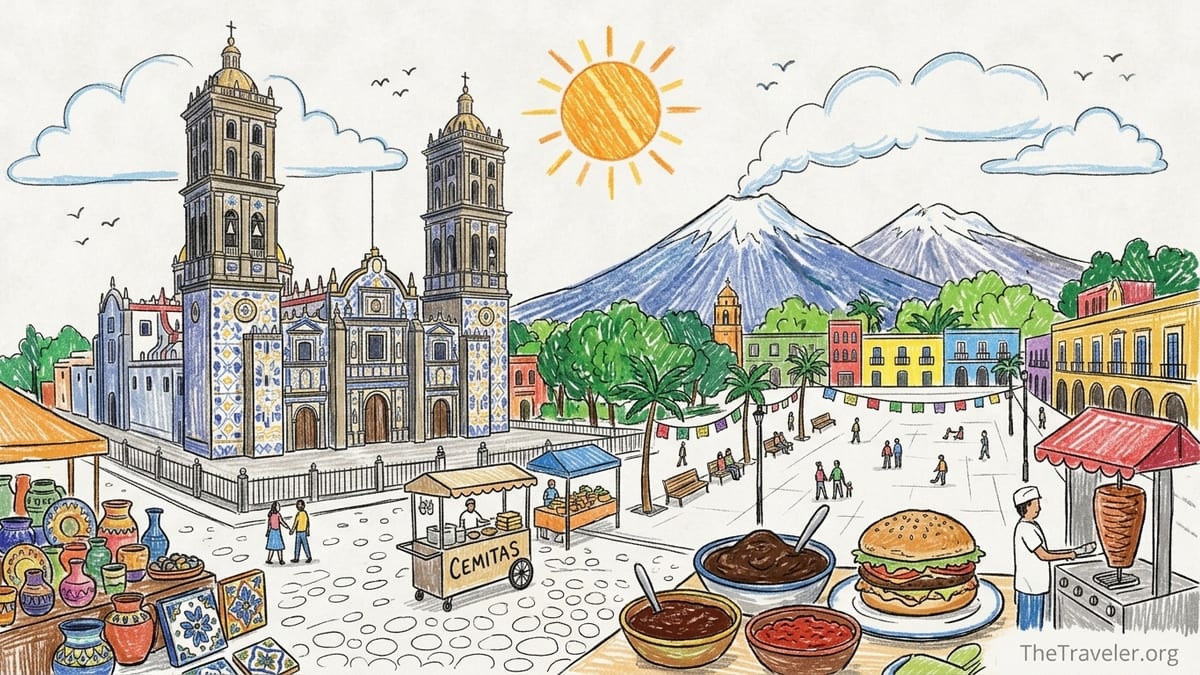
Why Puebla Is Suddenly on the Travel Map
Puebla sits about two hours east of Mexico City along the traditional route to the port of Veracruz, a strategic position that made it a commercial and cultural crossroads in colonial times and helps explain its rich mix of Spanish, Indigenous and Middle Eastern influences. Today, it remains one of Mexico’s largest cities but feels manageable for visitors, with a compact historic center and a well preserved grid of streets radiating from the main square. Long overshadowed by the capital, it is now drawing more international visitors looking for something more intimate and more affordable than Mexico City, without sacrificing big city dining and museums.
The city’s appeal is broad. Architecture fans come for the baroque churches and Talavera tiled facades that earned Puebla’s historic center UNESCO World Heritage status in 1987. Food travelers are drawn by dishes that helped define Mexican cuisine, such as mole poblano and chiles en nogada, and by street food like cemitas and tacos árabes. Cultural travelers find a deep lineup of museums, traditional candy shops, artisan markets and live music in plazas most evenings. For many international visitors, Puebla is still pleasantly undercrowded compared with destinations like Oaxaca or San Miguel de Allende, which means shorter lines at major sights and easier last minute restaurant bookings.
Access has also improved. Travelers can reach Puebla by direct bus in roughly two hours from Mexico City’s airport or main terminals, while the city’s own international airport handles flights from hubs such as Houston and Monterrey. Budget travelers increasingly pair a few days in Puebla with time in Mexico City, arriving in the capital and then heading to Puebla by comfortable intercity bus for less than the cost of a short ride share at home in many U.S. cities. Once in town, local ride hailing fares often fall between the cost of a coffee and a casual meal, keeping transportation expenses modest for most visitors.
Eating in Mexico’s Kitchen: Iconic Poblano Flavors
Puebla is sometimes called the kitchen of Mexico, and its food scene justifies the title. The city is widely recognized as the birthplace of mole poblano, the complex sauce that blends different types of chiles with spices, nuts and a measured amount of chocolate. Many visitors try their first plate of mole in a traditional restaurant facing the zócalo, where a portion of chicken with mole, rice and handmade tortillas may cost the equivalent of 10 to 15 U.S. dollars in a mid range dining room. Smaller neighborhood fondas and market kitchens often serve more affordable daily menus that include soup, a main dish and agua fresca.
Another signature dish is the cemita poblana, a hearty sandwich built on a round sesame seeded bread that is crusty outside and soft inside. Typical fillings include milanesa de res or pollo, a generous layer of quesillo, slices of avocado, chipotle and the pungent herb pápalo. In traditional markets such as Mercado del Carmen, a well stuffed cemita can be enough for two light eaters and is often priced well under what an urban sandwich shop in the United States might charge for a similar sized meal. Locals debate fiercely about the best cemita stands, with some favoring stalls inside Mercado de Sabores Poblanos and others swearing by family run spots in neighborhood markets.
Puebla is also the cradle of tacos árabes, a direct legacy of Middle Eastern immigration to the region. These tacos use thin slices of spit roasted pork wrapped in a soft flour based pan árabe instead of a corn tortilla and are typically dressed with a simple tomato or chipotle based salsa. Well known specialists in the city center have been serving versions of this taco for decades, and current menu prices show individual tacos in the range that a U.S. visitor would recognize as good value for a quick lunch or late night snack. Street vendors often sell orders of two or three tacos for the price of a single fast food combo in many North American cities.
For visitors with a sweet tooth, Puebla’s traditional dulces deserve attention. Along Calle de los Dulces, near the historic center, family run shops sell camotes flavored with fruit, tortitas de Santa Clara made with pumpkin seed paste, and seasonal treats tied to local festivals. A box of mixed sweets makes an easy souvenir that travels well. Pair these with a cup of thick hot chocolate or café de olla in a tiled café and you have a very Poblano afternoon break between museum visits.
Markets and Everyday Food: Where to Eat Like a Local
Puebla’s markets are among the best windows into daily life in the city. Mercado de Sabores Poblanos, located along a main avenue south of the center, gathers more than 100 food stalls in a clean, modern hall with ample seating. Here you can walk from stand to stand comparing versions of the same dishes, then sit down for mole poblano at one table and chalupas at another. Prices are clearly displayed, and a generous plate of enchiladas or a steaming bowl of pancita can cost little more than what a traveler might spend on a single coffee drink in a major U.S. airport.
Closer to the zócalo, Mercado del Carmen, officially known as Mercado Melchor Ocampo, sits in the El Carmen neighborhood and is one of the most emblematic places to try cemitas. In the mornings, produce vendors line the aisles with fresh herbs, chilies and seasonal fruit, while at lunchtime the prepared food section fills with office workers, families and students. Visitors can pull up a plastic stool at a metal counter, order a cemita de milanesa with extra quesillo and a soda, and watch sandwiches assembled at high speed. The scene is busy but friendly, and modest Spanish paired with patience usually goes a long way when ordering.
Other traditional markets such as La Acocota and Mercado 5 de Mayo offer a mix of raw ingredients and prepared food. La Acocota, northeast of the historic center, is known for its range of sauces, vegetables and economical lunchtime plates, while stalls near the forts area around 5 de Mayo highlight antojitos like quesadillas and huaraches. These markets are slightly off the main tourist path, which can mean lower prices and a more local crowd. Travelers interested in food photography or culinary traditions often find these spaces particularly rewarding, provided they ask vendors for permission before taking close up photos of people or stalls.
For those who prefer structured experiences, several operators in Puebla now offer guided food tours of markets and street stalls. These tours typically run for a few hours, include samples of dishes like molotes, pelonas and tacos árabes, and are led by bilingual guides who explain the stories behind each recipe. Prices vary by operator and inclusions, but current listings suggest that small group tours usually cost less than what visitors might pay for a single high end tasting menu in Mexico City, while private tours naturally run higher. Booking ahead is advisable on weekends and during local festivals when demand spikes.
Walking the UNESCO Historic Center
Puebla’s historic center is one of the largest and best preserved in Mexico, with thousands of catalogued historic buildings and a clear street grid that makes it straightforward to explore on foot. The logical starting point is the zócalo, a tree shaded main square framed by arcaded buildings and outdoor cafés. On one side stands the Cathedral of Puebla, a monumental structure with twin towers that dominate the skyline. Visitors can step inside to admire altarpieces and chapels, then exit to circle the exterior and appreciate the interplay of gray stone, brick and Talavera tile that is characteristic of the city’s architecture.
A short walk from the cathedral lies the Church of Santo Domingo and its Rosario Chapel, often described as a masterpiece of New Spanish baroque. The chapel’s interior glitters with gilded stucco, sculpted saints and intricate decorative patterns that cover nearly every surface. Modest entrance fees, when charged, are usually collected at the door and remain reasonable compared with major religious sites in Europe. Dress codes are relaxed but visitors are expected to behave respectfully and avoid disruptive photography during services.
Another highlight is the Biblioteca Palafoxiana, housed in an 18th century building and recognized by UNESCO’s Memory of the World program for its historic collection. Inside, wooden shelves rise to the ceiling and hold tens of thousands of volumes, some dating back centuries. Admission tickets typically cost less than a museum visit in major global capitals and grant access to exhibitions on printing and intellectual life in colonial Puebla. For travelers fascinated by the history of ideas, this library often becomes a quiet favorite stop.
Between monuments, much of the charm lies in the streets themselves. Many facades in the center are covered with glossy Talavera tiles in blue, white and ocher patterns that catch the light at different times of day. Walking routes that link the artists’ quarter near the Barrio del Artista, the Casa de los Muñecos museum and the candy street give visitors a cross section of civil, religious and commercial architecture. Sidewalk cafés and ice cream parlors along these routes make it easy to pause and people watch.
Neighborhoods with Character: From Los Sapos to the Art District
Beyond the immediate cathedral blocks, several historic neighborhoods show different faces of Puebla’s urban life. The Barrio de los Sapos, a few blocks southeast of the zócalo, is perhaps the best known. Its name recalls the frogs that once lived in local ponds, but today the district is associated with antique shops and weekend flea markets. On Saturdays and Sundays, vendors spread out tables and blankets with furniture, ceramics, books and curios, while nearby bars open their terraces for daytime drinks. For travelers who enjoy browsing for vintage posters or secondhand Mexican cinema lobby cards, this area can easily absorb a morning.
Adjacent to Los Sapos is the artists’ quarter, or Barrio del Artista, centered on a small plaza lined with studios and galleries. Painters display canvases along the arcades and are often happy to discuss their work with visitors. Prices for original art range widely, from small watercolors suitable for hand luggage to large oil paintings more suited to shipping. Even for travelers not looking to buy, this neighborhood is a photogenic place to stroll, particularly in the late afternoon when golden light hits the pastel facades.
To the north of the center, the Barrio de Xanenetla has in recent years become known for its street art. Walls of houses bear large scale murals depicting local legends, Indigenous motifs and contemporary social themes. Several self guided walking routes circulate online and lead visitors through the main mural corridors. While the area has benefited from cultural projects, visitors should be mindful that it remains a lived in neighborhood rather than an open air museum, and it is best explored during daylight hours.
Other historic barrios such as Analco and El Alto reveal Puebla’s working class roots and offer a closer look at daily routines. In Analco, a traditional Sunday market fills the plaza with crafts, food stalls and families shopping for household goods. El Alto, perched on higher ground, looks back across rooftops toward the cathedral and is known for its early role as a neighborhood for Indigenous residents during colonial times. Guided walking tours that cover these barrios usually discuss social history alongside architectural details, giving visitors context for the layers that make up modern Puebla.
Cultural Experiences: Museums, Crafts and Nightlife
Puebla offers a spectrum of museums that go well beyond the standard city history presentation. The Museo Amparo, set in a complex of colonial buildings and a modern addition, is one of the most respected museums in Mexico for pre Hispanic and contemporary art. Its rooftop terrace frames a striking view of church domes and the cathedral towers, particularly around sunset. Admission fees are comparable to major regional museums, and rotating exhibitions ensure that repeat visitors find new material.
For an immersion in local crafts, the Museo de Arte Popular Ex Convento de Santa Rosa showcases Talavera ceramics, textiles and everyday objects from across Puebla state. Visitors can learn how Talavera tiles and pottery achieved protected designation of origin status and see examples of the intricate painted patterns that define the style. Many pieces displayed inside have close cousins for sale in the artisan markets of the center, giving travelers a chance to recognize quality and motifs before buying souvenirs.
Handmade Talavera products are widely sold along streets like Avenida 6 Oriente and in dedicated markets, ranging from small tiles and mugs to large serving platters and vases. Prices reflect size, complexity and the prestige of the workshop. Certified producers typically mark their pieces, and several have showrooms open to visitors. Asking whether a piece is lead free and suitable for food use is standard practice and advisable for anyone planning to eat from or cook in their pottery.
As evening falls, nightlife concentrates around the zócalo, Los Sapos and corridors near the convention center. Many restaurants extend dinner service into late evening and bars offer local craft beers and cocktails made with regional spirits. Some venues host live trova, jazz or traditional music, especially from Thursday through Saturday. For a distinctly Mexican night out, visitors can time their stay to catch a lucha libre event at Arena Puebla on a Monday evening, combining a wrestling card with classic snacks like cemitas sold at stands just outside the arena.
Day Trips and Excursions from Puebla
One of Puebla’s advantages is its position within easy reach of several compelling day trip destinations. The most famous is Cholula, a town roughly 15 to 20 minutes away by road that is home to the Great Pyramid of Cholula and the church of Nuestra Señora de los Remedios perched on top of the pyramid’s base. Visitors standing in the main plaza can see the golden domes of the church with the volcano Popocatépetl rising in the background on clear days. Local buses and ride hailing services connect Puebla and Cholula frequently, and independent travelers often make the round trip for less than the cost of a single long distance taxi in many countries.
Organized tours to Cholula from Puebla bundle transportation, guided entry to the archaeological zone and visits to churches such as San Francisco Acatepec and Santa María Tonantzintla, both known for exuberant baroque decoration. Tour prices depend on duration and group size, but recent price lists from local operators show half day excursions costing significantly less per person when booked as part of a four person group than when arranged privately. Many tours depart in the morning and return by mid afternoon, leaving time for an early evening stroll back in Puebla’s center.
Beyond Cholula, the nearby state capital of Tlaxcala makes a quieter excursion, with a compact colonial core, a bullring and a regional museum. Nature focused travelers use Puebla as a base for visiting places like the Africam Safari park or hiking near the volcanoes, though those activities require more planning, specialized transport and, in the case of serious hiking, appropriate gear and local guidance. Several agencies in Puebla advertise full day trips that combine viewpoints, small towns and local food stops, and they can often customize itineraries for private groups.
Travelers interested in pre Hispanic murals and lesser known sites look to Cacaxtla and Xochitécatl, archaeological zones reached by road trips that typically last most of the day. Given that public transport connections can be indirect, many visitors choose to join guided tours that manage timings and transfers. Regardless of destination, it is wise to confirm current opening hours and any temporary closures linked to conservation work or weather before setting out.
Practical Tips: Getting There, Costs and When to Go
Most international visitors reach Puebla either by bus from Mexico City or via Puebla’s own international airport, which has recorded traffic growth of more than 100 percent in recent years according to official passenger statistics. From Mexico City’s main bus terminals, several companies operate frequent departures to Puebla, with modern coaches offering assigned seats, air conditioning and onboard restrooms. The journey generally takes around two hours depending on traffic. From Puebla’s CAPU bus station, taxis and ride hailing services connect travelers to hotels in the historic center in under 30 minutes under typical conditions.
Within Puebla, getting around is straightforward. Many of the main sights in the historic center are within walking distance of each other, and sidewalks are generally in good condition. Ride hailing apps operate widely and are popular among locals for trips across the city or to outlying malls and viewpoints. Visitors report that short journeys within the central area often cost less than the price of a takeaway coffee in many Western cities, which helps keep overall budgets manageable. For day trips, some travelers choose to rent a car, although city traffic and parking can be challenging for those unfamiliar with local driving habits.
In terms of costs, Puebla can feel noticeably more affordable than Mexico City or beach resorts for accommodation and dining. Mid range hotels in refurbished colonial buildings near the zócalo often quote nightly rates that undercut similar properties in more famous destinations, especially outside of peak holiday periods. Boutique properties housed in former monasteries or tile faced mansions cater to travelers who are willing to spend more for atmosphere. At the budget end, simple guesthouses and hostels cluster within walking distance of the center, providing dorm beds or basic private rooms suitable for backpackers and students.
The best time to visit balances weather and festivals. Puebla sits at altitude, which keeps temperatures relatively mild year round, with cool mornings and evenings. The rainy season typically runs from late spring through early autumn, bringing short but often intense afternoon showers. Cultural events such as the celebrations around Cinco de Mayo in early May, Independence Day in September and Day of the Dead at the end of October draw local and domestic visitors, which can push hotel rates higher and make advance booking necessary. Food focused travelers may plan visits around the late summer season for chiles en nogada, when restaurants across the city feature this walnut and pomegranate garnished dish on their menus.
Conclusion: A City That Rewards Curiosity
Puebla’s recent jump in flight search interest reflects a simple reality on the ground: the city offers a dense mix of food, architecture and culture at a scale that feels approachable. Within a radius of a few walkable blocks, travelers can eat a cemita in a bustling market, step into a gilded baroque chapel, browse Talavera ceramics and end the day listening to live music on a shaded plaza. Short excursions expand the picture to include pyramids, volcano views and quiet neighboring towns.
As travel patterns shift and more visitors look beyond the most famous Mexican destinations, Puebla stands out as a place where the core experiences remain rooted in everyday life. Markets still feed local families, churches still anchor neighborhoods, and artisans still fire pottery in traditional kilns. For travelers willing to slow down, taste widely and wander side streets rather than chase a checklist, Puebla offers exactly the kind of layered, lived in city that many hope to find but rarely do. The surge in interest may be recent, but the ingredients that make Puebla special have been simmering for centuries.