

More news on this day
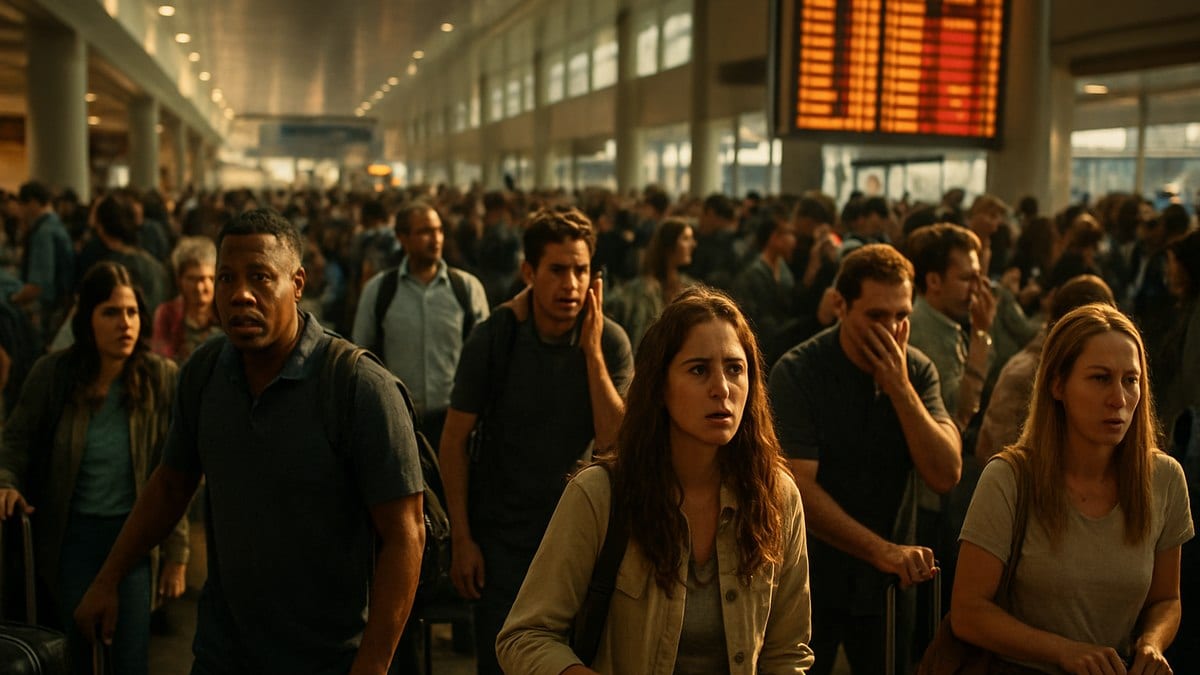
Thousands of travelers moving between Puerto Rico and the U.S. mainland faced an unexpectedly difficult start to the day as extensive disruption at San Juan’s Luis Muñoz Marín International Airport triggered 93 flight delays and six cancellations, snarling connections through major hubs including Miami, New York and Orlando.
Get the latest news straight to your inbox!
Major Disruption at Puerto Rico’s Primary Gateway
The disruption centers on Luis Muñoz Marín International Airport, the main air gateway for Puerto Rico and the wider Caribbean. Publicly available flight-tracking dashboards for today show an elevated number of delayed departures and arrivals, with a smaller but still significant group of outright cancellations. The combined total of 93 delayed services and six cancellations has created cascading challenges for passengers heading to and from the U.S. mainland.
Reports indicate that most affected flights are concentrated in the morning and early afternoon travel banks, when airlines typically schedule dense waves of departures to connect Puerto Rico with major East Coast hubs. As aircraft arrived late or missed their scheduled turns, knock-on delays accumulated throughout the day, leaving many passengers stuck in terminals or confined to aircraft awaiting new departure slots.
Operational updates from airport information boards and flight-tracking platforms show that the impact is not limited to a single carrier. Services operated by major U.S. airlines as well as low-cost competitors are all represented in the disruption totals, reflecting the airport’s role as a shared hub for multiple networks rather than a single-airline stronghold.
The timing of the disruption is particularly sensitive for Puerto Rico, which has seen steadily growing passenger numbers in recent years. Recent tourism and aviation data describe Luis Muñoz Marín as handling the vast majority of the island’s air traffic, meaning any operational disturbance there tends to be felt quickly across popular mainland routes.
Ripple Effects in Miami, New York and Orlando
The imbalance created in San Juan rapidly translated into pressure at key U.S. receiving airports. Flight-status feeds for Miami, New York area airports and Orlando show a series of Puerto Rico-linked arrivals running behind schedule, with some rotations cancelled outright when crews or aircraft could not be repositioned in time.
In Miami, a critical bridge between the Caribbean and the continental United States, delayed arrivals from San Juan complicated already busy schedules. Disruption on San Juan-originating flights meant some Miami departures to other domestic and international destinations lacked aircraft or crews at their scheduled departure times, forcing airlines to push back or consolidate flights.
New York’s major airports, which collectively host a dense mix of Puerto Rico services, also reported irregular operations on routes to and from San Juan. According to published coverage and live tracking data, some flights faced extended ground holds or in-air holding patterns as they attempted to fit into congested arrival banks, further complicating turnarounds for onward journeys.
Orlando, a popular leisure gateway for Puerto Rican travelers and visiting tourists, experienced its own wave of knock-on issues. Several San Juan flights into central Florida ran late, affecting families returning from holiday trips and visitors trying to make same-day connections to other U.S. destinations. Observers at Orlando reported crowded gate areas, long rebooking lines and growing uncertainty among passengers watching departure boards continuously update.
Airlines Juggle Schedules and Limited Capacity
With 93 delays recorded alongside six cancellations, airline operations teams spent much of the day reshuffling aircraft, crews and gate assignments. Publicly available information suggests carriers relied heavily on rolling delays, incremental schedule adjustments and equipment swaps to keep as many flights as possible operating, even if not on time.
In practical terms, this meant many travelers experienced multiple schedule changes over the course of a few hours. A departure that initially slipped by 30 minutes could later be pushed back again as connecting aircraft from other cities arrived late or as air traffic control programs adjusted flow rates into crowded airspace corridors between Puerto Rico, Florida and the northeastern United States.
Analysts who track U.S. flight performance note that Miami and Orlando typically operate with relatively high baseline levels of delays compared with some other hubs, largely because of heavy traffic volumes and recurring weather and congestion issues. When an external shock such as a concentrated disruption in Puerto Rico occurs, these networks can quickly reach a tipping point where delays propagate from one bank of flights to the next.
In addition, New York’s constrained airspace and strict slot controls mean that even small timetable shifts can have disproportionate effects. As today’s Puerto Rico disruptions rippled into LaGuardia, John F. Kennedy International and Newark Liberty services, flight planners had limited flexibility to reschedule missed slots, contributing to the growing list of delayed arrivals and departures.
Passengers Face Missed Connections and Long Waits
For passengers, the operational details translated into missed family events, abandoned vacation days and disrupted business trips. Travelers connecting in Miami, New York and Orlando after arriving late from San Juan were among the most affected, as relatively tight layovers evaporated in the face of rolling delays.
Accounts shared on social platforms and in local media coverage describe packed gate areas in San Juan, with passengers queuing at customer service counters to rebook itineraries or secure overnight accommodation as cancellations were confirmed. Others reported spending several hours aboard aircraft waiting for new departure windows, only to be asked to disembark when further delays became inevitable.
Families traveling with children and older passengers appeared particularly vulnerable to the extended waiting times. With seating in gate areas quickly occupied, some travelers reported sitting on terminal floors, while others sought out less crowded corners of the airport in an effort to rest between schedule updates.
At connecting airports on the mainland, travelers arriving from Puerto Rico faced similar scenes. Some found that their onward flights had already departed, while others were rebooked on later departures that were themselves subject to delay. As the day progressed, airport concourses in affected terminals took on the appearance of temporary waiting rooms, with passengers charging phones, tracking updates and weighing whether to leave the airport or continue to wait.
What Today’s Chaos Says About a Strained U.S.–Caribbean Air Network
Today’s disruption highlights how tightly interconnected the air corridor between Puerto Rico and the U.S. mainland has become. Luis Muñoz Marín International Airport is responsible for the vast majority of Puerto Rico’s passenger traffic, and its primary routes feed directly into some of the busiest and most delay-prone airports in the United States. Even a limited number of cancellations, combined with several dozen delays, can therefore have outsize effects.
Recent industry reports on U.S. flight performance show that airports such as Miami and Orlando already operate with a significant share of delayed departures and arrivals in a typical year, while New York’s trio of major airports regularly appear near the top of national league tables for cancellations. When a high-traffic origin like San Juan encounters a concentrated disruption, those existing vulnerabilities come into sharper focus.
Aviation observers point out that growing demand along the Puerto Rico–mainland corridor is adding further stress to this network. Passenger counts through San Juan and the main Florida and New York gateways have expanded as tourism rebounds and diaspora travel remains strong, meaning there are more travelers than ever relying on schedules that have little room for error.
Today’s events suggest that even relatively contained operational problems can swiftly strand thousands when they occur at a central Caribbean hub feeding already congested U.S. airports. For travelers planning upcoming trips between Puerto Rico and cities such as Miami, New York and Orlando, the disruption serves as a reminder that generous connection windows, flexible itineraries and close attention to same-day flight-status updates remain essential.