

More news on this day
Flights in and out of Puerto Vallarta and Guadalajara are resuming after a tense stretch of cartel-related violence in Mexico’s Jalisco state, with Air Canada among the first major international carriers to restore service to the popular tourism hubs.
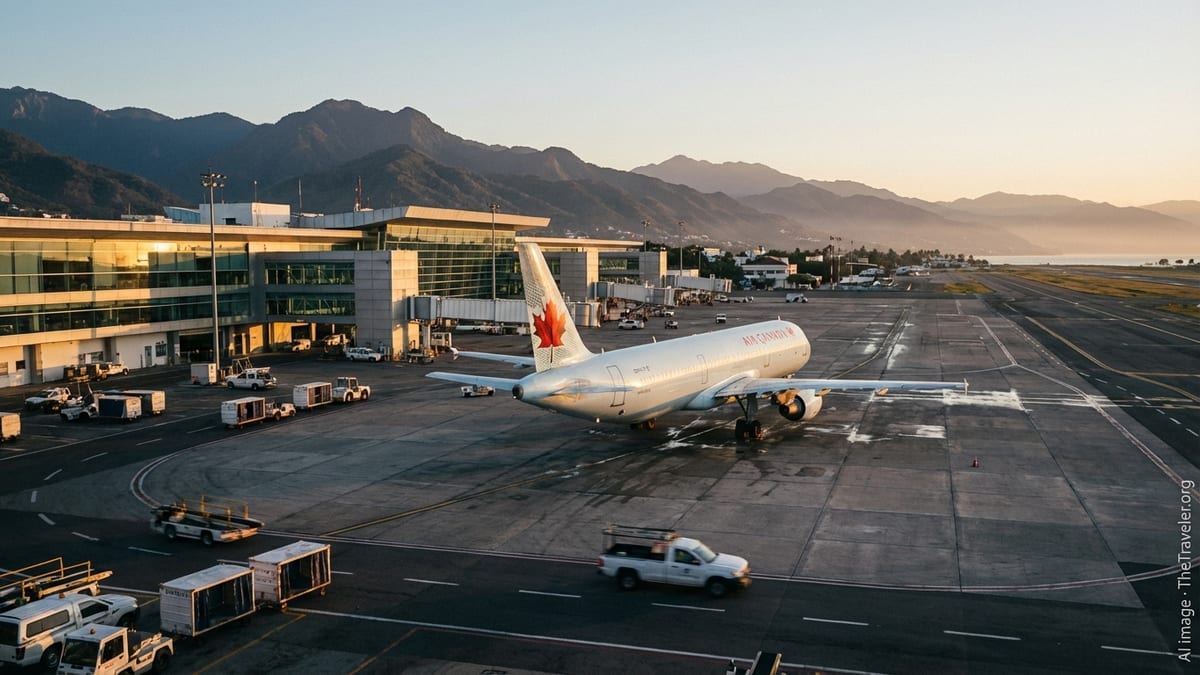
Air Canada Leads Canadian Carriers Back to Jalisco
Air Canada has restarted its full schedule to Puerto Vallarta from Toronto, Montreal and Vancouver as of Tuesday, February 24, following a two-day suspension prompted by security unrest in Jalisco. The airline is also preparing to resume its Toronto–Guadalajara route on Wednesday, signaling renewed confidence in the stability of operations at both airports.
The carrier had halted flights to Puerto Vallarta and Guadalajara on February 22 after violence erupted across the region in the wake of a high-profile security operation targeting the Jalisco New Generation Cartel. The pause left hundreds of Canadian holidaymakers scrambling to rebook or extend stays as airlines reviewed risks to crews and passengers.
To clear the backlog of stranded travelers, Air Canada has deployed larger widebody aircraft, including Boeing 787 Dreamliners, on select Puerto Vallarta rotations. The upgauged capacity is intended to accelerate repatriation efforts while regular narrowbody aircraft gradually return to scheduled service over the coming days.
Other Canadian airlines, including WestJet, Air Transat and Porter Airlines, have also announced the restart of flights to Puerto Vallarta, with some adding Guadalajara and Manzanillo back to their networks as local conditions permit. Flexible rebooking policies remain in place for affected customers through at least late February.
From Mass Cancellations to Measured Reopening
The resumption of flights caps a volatile 72-hour period in which Jalisco’s main gateways saw widespread disruption. On Sunday, February 22, airlines collectively canceled a large share of operations to Puerto Vallarta and significantly reduced services to Guadalajara as road blockades, vehicle fires and security alerts rippled across western Mexico.
At the height of the crisis, roughly half of all inbound flights and more than 60 percent of departures at Puerto Vallarta International Airport were canceled, while U.S. carriers temporarily scrubbed most of their Guadalajara schedules. Although both airports technically remained open under the protection of federal security forces, many airlines opted to suspend or divert flights out of caution, citing crew-safety concerns and uncertain ground access.
By Monday, February 23, operators had begun a gradual restart, with airport authorities in Puerto Vallarta and Guadalajara confirming that terminals were open and functional even as some airlines maintained reduced timetables. Mexican President Claudia Sheinbaum said tourist flights, particularly to Puerto Vallarta, were expected to resume fully by Tuesday, a target that is now largely being met as carriers rebuild their schedules.
Industry trackers estimate that between February 22 and 24, more than 400 flights on U.S. and Canadian routes to Mexico were canceled, with Jalisco’s holiday hotspots among the hardest hit. The cascading disruption left thousands of passengers stranded or facing extended layovers at alternative airports across Mexico and the United States.
What Travelers Can Expect at Puerto Vallarta and Guadalajara Airports
While flights have restarted, travelers heading to Puerto Vallarta and Guadalajara this week should still anticipate occasional schedule changes, residual delays and fuller-than-usual aircraft as airlines work through rebookings. Many carriers have issued travel waivers allowing customers booked through early March to change dates without penalty, particularly on itineraries touching Jalisco.
Airports in both cities remain under heightened security, with visible federal police and National Guard presence at access roads and terminal entrances. Authorities emphasize that there have been no violent incidents inside the terminals themselves, but note that sporadic disruptions on highways and in surrounding municipalities can affect travel time to and from the airports.
Passengers are being urged to monitor airline apps and flight-status tools frequently on the day of travel, arrive earlier than usual to account for possible checkpoints or traffic delays on access roads, and follow instructions from airport staff. Tour operators in Puerto Vallarta report that transfer services are operating, though some have adjusted pickup routes and times in coordination with local authorities.
Inside the terminals, operations are gradually returning to normal, with check-in counters, security screening and customs functioning at near-regular capacity. However, crowds may be larger than usual as stranded passengers and newly arriving tourists converge during the recovery period, especially during peak morning and early-evening banks of international flights.
Safety Advisories and Ongoing Caution for Tourists
The improving aviation picture does not mean the security situation in Jalisco has fully normalized. The U.S. Embassy in Mexico and other foreign missions have maintained advisories urging citizens in parts of Jalisco, including Puerto Vallarta and Guadalajara, to stay alert, follow local guidance and avoid areas affected by recent clashes.
Some shelter-in-place recommendations that were issued over the weekend have been eased as authorities regain control of key roadways and urban zones, but travelers are still encouraged to check for updated advisories before moving between airports, hotels and city centers. Travel insurers and consular officials continue to track conditions closely as Mexico carries out ongoing security operations in the state.
For visitors already in resort areas along the Bahía de Banderas, daily life has largely resumed, with beaches, hotels and restaurants remaining open. Nevertheless, many properties are reinforcing standard safety protocols, such as advising guests to use authorized transportation, stay in well-known tourist corridors, and avoid late-night road travel away from established zones.
Prospective visitors weighing upcoming trips to Puerto Vallarta or Guadalajara are being told to balance official advisory levels, personal risk tolerance and flexibility in their plans. Industry analysts note that while recent events underline Mexico’s long-standing security challenges, they also highlight how quickly air connectivity can be restored when airports remain structurally secure and coordinated responses are in place.
Tourism Rebuilds as Airlines Restore Confidence
Tourism officials in Jalisco are now focused on restoring traveler confidence after a weekend of unsettling headlines. Puerto Vallarta, one of Mexico’s most important Pacific beach destinations for North American visitors, had entered the late-winter high season with strong booking momentum before the sudden outbreak of violence and flight stoppages.
With Air Canada and other major carriers now bringing back regular service, hotel and resort operators are working to reassure guests that the city’s tourism infrastructure is operational. Many properties have extended flexible cancellation and date-change policies introduced during the disruption to encourage travelers to keep their plans rather than abandon the destination entirely.
Guadalajara, Jalisco’s capital and a key cultural and business center, is also in the spotlight as it prepares to host several major events later this year, including World Cup matches. The return of international air service is considered critical to maintaining planning timelines and avoiding a broader hit to the region’s tourism and meetings industry.
Airlines and tourism boards alike acknowledge that images of burning vehicles and military convoys will linger in the minds of some travelers. Still, the rapid decision by carriers such as Air Canada to resume flying, supported by visible security at airports and clear communication from authorities, is being framed as a sign that Jalisco’s gateways remain viable for tourism even amid complex security dynamics.