

More news on this day
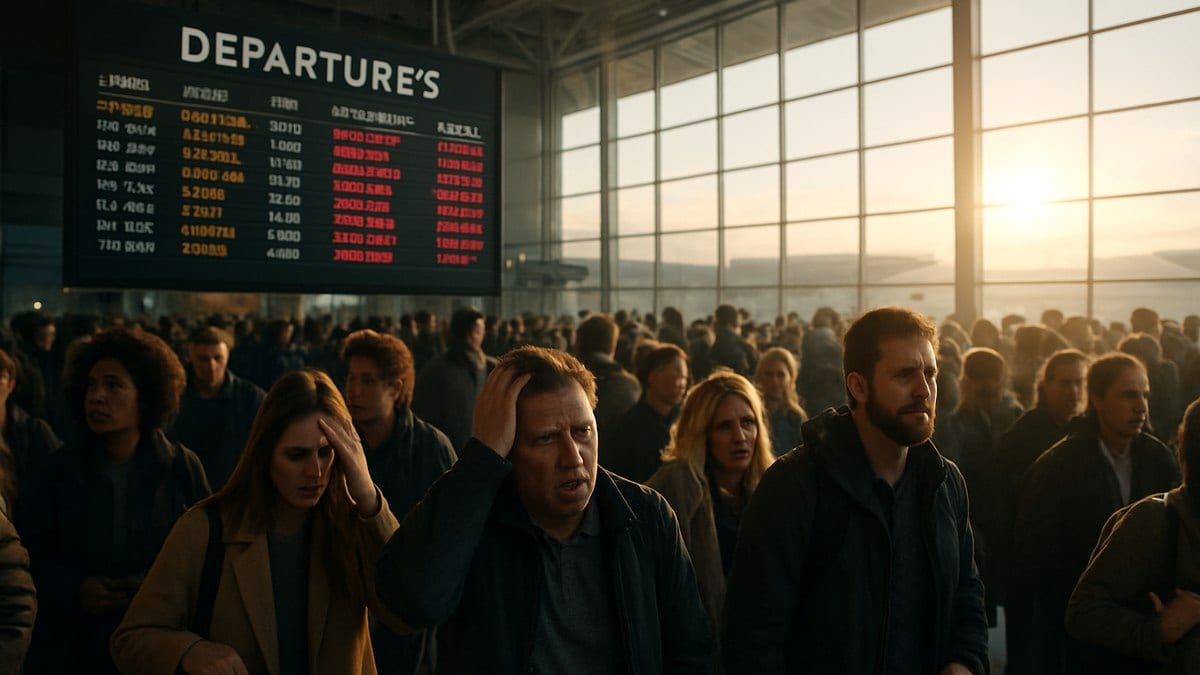
The first quarter of 2026 has delivered a punishing stress test for global aviation, as overlapping geopolitical shocks, fuel market turmoil, extreme weather and chronic staffing gaps triggered rolling waves of flight cancellations and delays on nearly every continent.
Get the latest news straight to your inbox!
Middle East Conflict Sends Shockwaves Through Global Networks
Airspace closures linked to the Iran war in late February and March 2026 rapidly became the single most disruptive trigger for worldwide schedules, forcing airlines to cancel thousands of flights and redraw long haul routings between Europe, Asia and Africa. Publicly available data from aviation analytics firms shows that, within days of the first strikes, more than 15,000 flights had been canceled as key hubs in Dubai and Doha sharply curtailed operations and nearby countries imposed restrictions on overflights.
Published coverage indicates that Dubai International Airport briefly shut its airspace on February 28, resuming with a limited schedule only in early March, while Qatar’s Hamad International Airport faced prolonged disruption after Qatari airspace was closed and later reopened under emergency conditions. Major Gulf carriers reduced passenger operations to a skeletal mix of repatriation and select trunk routes, redirecting capacity toward cargo and humanitarian movements while rerouting traffic around conflict zones.
The ripple effects extended far beyond the region. Reports from Asia and Europe describe long haul flights forced into lengthier polar or Mediterranean detours, adding hours to journey times and tightening aircraft and crew utilization. Airlines already operating on narrow margins of spare capacity saw their buffers eroded still further, turning localized airspace closures into a global scheduling shock that exposed how dependent modern aviation has become on a handful of mega hubs and congested corridors.
Specialist risk bulletins note that regulators and safety agencies issued fresh advisories on West Asian airspace, highlighting persistent missile and drone hazards and intermittent GPS interference. As those warnings were extended through March, carriers were pushed into a prolonged period of contingency routing that increased fuel burn and costs at precisely the moment when jet fuel prices were surging.
Fuel Price Spike Forces Airlines Into Defensive Cancellations
The conflict driven oil and fuel crisis that intensified in March 2026 compounded the operational strain. Analysis of energy markets points to one of the largest supply disruptions in decades after shipping through the Strait of Hormuz was curtailed, sending crude and refined product prices sharply higher and driving jet fuel costs to levels that many carriers had not budgeted for this year.
In the Asia Pacific region, regional travel media report that airlines moved into what they described as an emergency defensive posture, combining schedule cuts, ad hoc cancellations and steep fare increases. Air New Zealand emerged as a prominent example, announcing the cancellation of around 1,100 flights, or roughly 5 percent of its schedule, through early May. Other carriers in the region added surcharges and trimmed frequencies on fuel intensive long haul routes to Europe and North America.
Industry data providers note that, despite the volatility, overall global flight activity in March showed a year on year increase, with business aviation in particular recording double digit growth as corporate and high end leisure travelers shifted away from disrupted commercial networks. That divergence underscores a growing inequality in resilience, where passengers able to pay for private or semi private options can bypass some of the turmoil, while mass market travelers face thinner schedules and higher prices.
For many airlines, especially those with weaker balance sheets or limited hedging, the fuel price shock left little room to absorb delays or diversions without canceling additional flights. The result was a pattern of preemptive cuts, where carriers removed capacity days or weeks in advance to avoid the risk of operating loss making sectors, trading short term reliability for financial survival.
Weather, Shutdowns and Staffing Reveal Systemic Weak Points
While geopolitics and fuel dominated headlines, Q1 2026 also underlined how longstanding vulnerabilities in North American aviation can quickly align with external shocks. A succession of powerful winter storms across the United States and Canada in February and March produced several days with more than a thousand cancellations and many thousands of delays, particularly at major hubs in New York, Chicago, Atlanta and Toronto.
Flight tracking data cited in U.S. and Canadian media shows that snow, high winds and deicing bottlenecks repeatedly forced ground stops and flow restrictions at key airports. At the same time, a partial federal government shutdown in Washington placed additional pressure on Transportation Security Administration staffing, leading to warnings that dozens of smaller airports might face reduced screening capacity or temporary closure if funding gaps persisted.
Analysts interviewed in published reports emphasize that these disruptions did not occur in isolation. Air traffic control facilities in several regions continue to operate with chronic staffing shortages, a problem documented by earlier inspector general reviews and industry submissions. In March, a collision between an Air Canada aircraft and an airport fire truck at New York’s LaGuardia Airport drew renewed attention to controller workload and complex surface operations, even though investigations into that specific incident are continuing.
Recent consumer focused rankings of U.S. airports highlight how persistent delays are increasingly concentrated at a cluster of high traffic hubs where weather, aging infrastructure, constrained runway systems and staffing issues intersect. The Q1 pattern suggested that, once those nodes are stressed by storms or security disruptions, the knock on effects spread quickly throughout domestic and transborder networks, leaving airlines with limited options to isolate problems.
Asia and Europe Confront Capacity Limits and Network Fragility
Across Asia and Europe, the first quarter also produced several flashpoints that revealed how little slack exists in regional aviation systems during peak travel periods. Late March data compilations from travel and finance outlets describe single day events in Asia where more than 3,000 flights were delayed and dozens canceled, affecting an estimated six figure number of passengers in China, Japan, Southeast Asia and the Gulf.
Travel law and passenger rights platforms reported similarly intense disruption in parts of Europe in March, with hundreds of delays and scores of cancellations for carriers such as Lufthansa and easyJet at airports including Munich. Although overall traffic levels tracked by Eurocontrol remained slightly above 2025 volumes, on time performance metrics showed that a growing share of flights departed outside standard punctuality thresholds as weather, congestion and staffing intersected.
Detailed delay reports from European network managers underscore that airport related factors now account for a significant portion of total delay minutes per flight, even before accounting for en route constraints. That trend suggests that terminal capacity, ramp operations and ground handling resilience are emerging as critical bottlenecks in a continent where incremental runway expansion is politically and environmentally difficult.
In Asia, commentators point to the outsized role of a few mega hubs in Beijing, Shanghai, Tokyo and the Gulf, where any technical issue, storm or geopolitical restriction can cascade rapidly across regional and intercontinental traffic flows. Recent coverage of delays associated with technical holds at major Chinese airports illustrates how a localized systems problem can generate hours of rolling knock on disruptions at destinations as far afield as London and Sydney once aircraft and crew rotations are thrown off balance.
Structural Lessons for a Volatile Travel Future
As Q1 2026 draws to a close, industry analysts are framing the quarter not only as a period of acute disruption but as a revealing case study of structural fragility. The combination of conflict driven airspace closures, extreme fuel price swings, severe weather and labor and staffing stress tested nearly every layer of global aviation at once.
Publicly available analysis from consultancies and aviation data firms argues that networks optimized for efficiency and high utilization proved vulnerable when multiple shocks arrived simultaneously. Tight aircraft and crew schedules, limited spare capacity at hubs, and aging control and airport infrastructure left operators with few buffers to absorb unexpected events, contributing to extended recovery times after each disruption.
Regulators and policymakers are now facing renewed calls, in policy papers and industry submissions, to accelerate investments in digital air traffic control technologies, modernize airport infrastructure and revisit staffing and training pipelines for critical safety and security roles. Discussions also focus on passenger rights regimes, as large scale cancellations in multiple regions tested compensation and rebooking frameworks that were largely designed for isolated storms or localized strikes, not overlapping global crises.
For travelers, the experience of Q1 2026 has reinforced the sense that air travel reliability can no longer be taken for granted in an era of geopolitical volatility and climate linked weather extremes. The quarter’s turbulence has provided a stark preview of how quickly complex aviation systems can move from routine operations to widespread disruption when several pressure points are triggered at once.