

More news on this day
Qatar Airways is working in lockstep with national and international aviation authorities to prepare for the safe reopening of Qatari airspace, while operating a limited schedule and expanding support for thousands of passengers whose journeys have been disrupted by the ongoing closure.
Get the latest news straight to your inbox!
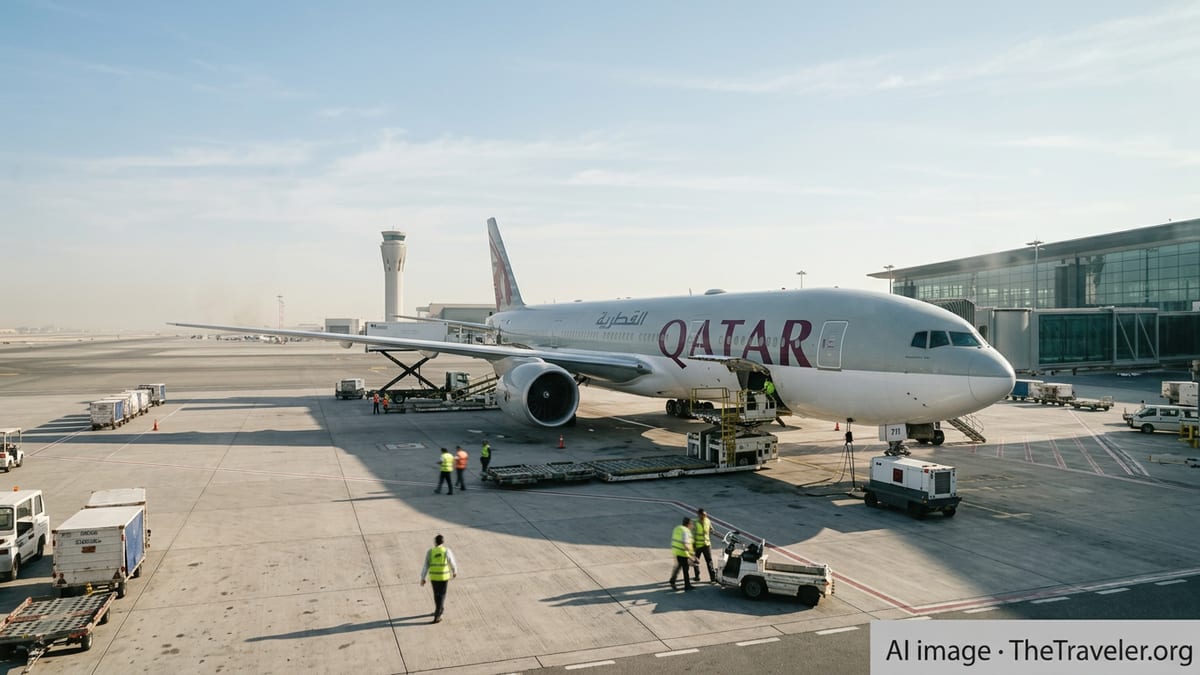
Coordinated Effort to Safely Reopen Qatari Airspace
The closure of Qatari airspace in late February has triggered one of the most significant operational disruptions in the airline’s recent history, prompting Qatar Airways to step up coordination with the Qatar Civil Aviation Authority and other global aviation bodies. Officials are focused on validating airspace safety, revising routing procedures and ensuring that any decision to restart normal traffic is grounded in robust risk assessments.
Regulators have begun allowing strictly controlled navigational contingency routes around Doha, giving the flag carrier carefully defined corridors for limited services. These partial measures, agreed in close consultation with military and civil aviation experts, are designed to restore essential connectivity without compromising safety. The airline has stressed that full commercial schedules will resume only when authorities formally confirm the safe, unrestricted reopening of national airspace.
Technical teams from Qatar Airways are working alongside air traffic management specialists to model traffic flows, separation standards and contingency procedures once normal overflight rights are restored. This joint work is expected to shape the phased reintroduction of routes and frequencies, as well as updated guidance for pilots and dispatchers operating in the region.
Limited Operations While Full Schedule Remains Suspended
While regular commercial operations remain suspended, Qatar Airways has been authorized to operate a rolling series of limited flights to and from Doha. These services, announced in short-dated blocks for specific days and destinations, are primarily focused on repatriation and essential travel. Schedules have covered key long-haul and regional gateways in Europe, Asia and the Middle East, subject to day-by-day operational clearances.
The airline has taken pains to emphasize that these flights do not yet signal a full restart of its global network. Instead, they are temporary measures, arranged in coordination with regulators to make use of available capacity on contingency routes. Passengers have been repeatedly urged not to travel to airports unless they hold a valid, confirmed booking on one of the listed services.
To manage demand and avoid overcrowding at terminals, Qatar Airways is publishing destination lists and operating dates through its official channels as soon as regulatory approvals are secured. Ground staff at Hamad International Airport have been reinforced to handle check-in, security coordination and passenger care for the reduced number of departures.
Enhanced Support Measures for Disrupted Passengers
With tens of thousands of itineraries affected, passenger support has become a central pillar of the airline’s response. Qatar Airways has expanded call centre capacity, redirected staff to social and digital service channels and issued updated guidance to travel agents handling rebookings on its behalf. The carrier is encouraging customers to check their booking status online and to wait for proactive notifications where possible, in order to ease pressure on phone lines.
The airline has also introduced more flexible options for ticket changes and refunds, including extended travel validity and, in some cases, the ability to reroute via alternative carriers once original flights are formally cancelled. These policies are being refined in step with evolving operational realities and in line with the wider regulatory framework governing passenger rights in key markets.
At Hamad International Airport and other major outstations, additional customer service teams have been deployed to assist stranded travellers with accommodation, meal vouchers and onward travel arrangements where required. Qatar Airways has repeatedly acknowledged the frustration caused by the disruption, while underscoring that passenger and crew safety remains the overriding priority guiding every operational decision.
Operational Readiness for a Phased Resumption
Behind the scenes, Qatar Airways is preparing its global network for a rapid but controlled scaling up of operations once clearance is granted. Network planners are running multiple restart scenarios, from a limited resumption on key trunk routes to a broader restoration of frequencies across Asia, Europe, Africa and the Americas. Each scenario must align with airspace capacity, crew duty-time limits and fleet availability.
Maintenance and engineering teams are ensuring that aircraft grounded by the disruption remain flight-ready, with scheduled checks, engine runs and cabin preparations continuing in line with manufacturer and regulatory requirements. Cabin crew and pilots are being kept current through recurrent training and briefings on revised procedures that may apply in the initial stages of the reopening.
The airline is also coordinating closely with airports across its network to synchronize gate availability, ground handling and connectivity with partner carriers. Particular attention is being paid to managing the expected surge in demand from passengers who have had to postpone or reroute their journeys during the airspace closure, with priority given to those who have already experienced cancellations.
Global Ripple Effects and Industry Response
The closure of Qatari airspace has had knock-on effects far beyond Doha, affecting flight times, routings and capacity across multiple regions. The country’s location on key east–west corridors, and Qatar Airways’ role as a major transfer carrier, mean that diversions and cancellations have disrupted travel patterns between Europe, Asia, Africa and Oceania.
In response, airlines and aviation authorities around the world have been revisiting contingency plans for regional tensions and sudden airspace restrictions. Industry analysts note that Qatar Airways’ close engagement with regulators, and its insistence on linking any full resumption to formal safety confirmations, is likely to be studied as a case model for managing complex airspace disruptions.
For passengers, the situation remains fluid. While the gradual expansion of limited services offers some relief, many travellers are still facing delays, rebookings and altered itineraries. Qatar Airways continues to urge customers to monitor official communications carefully, work through their original booking channels and allow additional time for travel planning until Qatari airspace is fully reopened and normal operations are restored.