

More news on this day
Qatar Airways has kept its regular passenger schedule suspended after the closure of Qatari airspace, while gradually introducing a limited programme of relief flights aimed at repatriating stranded travellers and maintaining essential links to Doha.
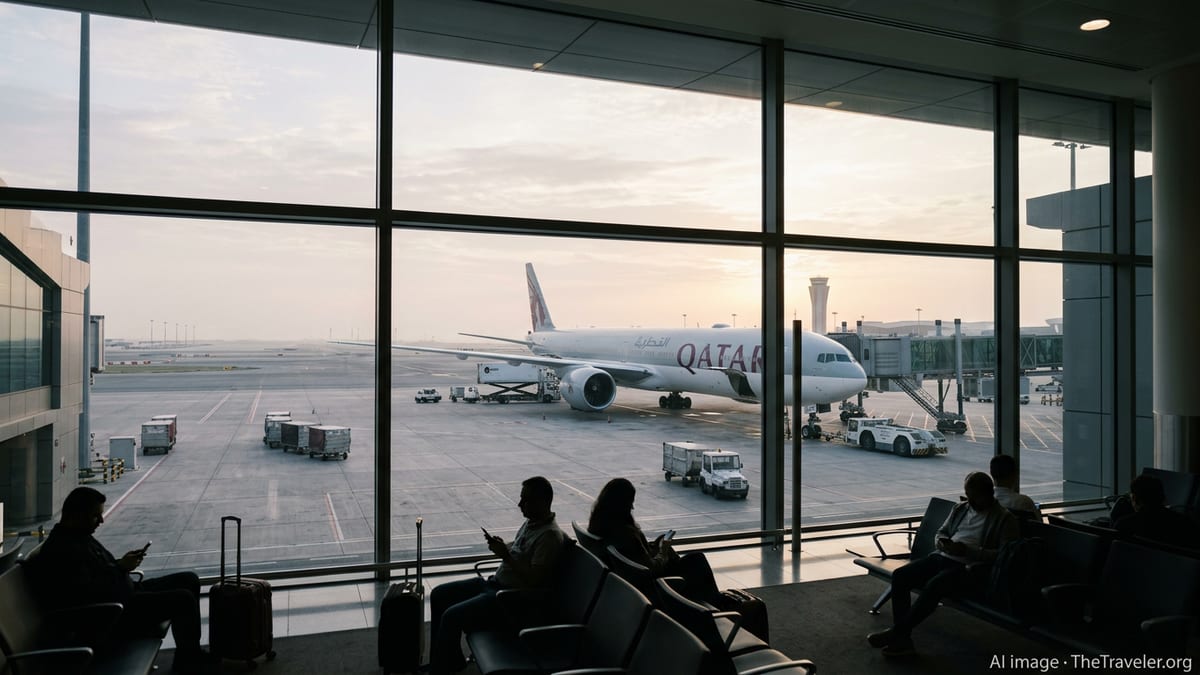
Airspace Closure Halts Normal Operations
The closure of Qatari airspace that began on February 28 has forced Qatar Airways to suspend its scheduled commercial services to and from Doha, triggering widespread disruption across one of the world’s busiest long haul networks. The Qatari flag carrier confirmed that its full timetable remains on hold and that any flights currently operating are exceptions under special permissions, not a resumption of normal service.
The airline has stated that it will only restore its regular schedule once the Qatar Civil Aviation Authority formally declares the airspace safe for full reopening. Until then, aircraft movements are tightly controlled and limited to specific contingency routes, with priority given to passenger evacuation and vital cargo such as medical supplies and perishables.
The shutdown has rippled far beyond Qatar’s borders. Long haul routes linking Europe, Asia, Africa and the Americas via Doha have been suspended, leaving connecting passengers scrambling for alternatives and placing additional strain on other Gulf and European hubs already contending with the regional security crisis.
Industry analysts say the abrupt halt has dealt a sharp blow to a carrier that built its brand around high frequency global connectivity, with planes and crews now out of position and revenue-generating flights largely grounded.
Limited Relief Flights Begin Under Tight Controls
In recent days Qatar Airways has shifted from a blanket suspension to a carefully controlled programme of relief flights, operating within temporary corridors cleared by the Qatar Civil Aviation Authority. These flights are designed primarily to repatriate passengers caught mid-journey when the airspace closed and to reconnect families separated by the disruption.
Initial operations focused on services from regional gateways such as Muscat and Riyadh to major European hubs, including London Heathrow, Frankfurt, Berlin, Copenhagen, Madrid, Rome and Amsterdam. The airline has since expanded this pattern to include a small number of arrivals and departures at Doha’s Hamad International Airport, with flights on selected dates from cities such as Amsterdam, Frankfurt, London and Zurich.
Authorities and the airline stress that these movements are highly constrained and subject to rapid change as the security picture evolves. Seats are limited and, in most cases, pre-assigned to passengers whose original itineraries were cancelled. Travellers without confirmed bookings are being warned not to assume that the presence of a flight number on schedules indicates a return to normal operations.
Qatar’s civil aviation regulators have described the current phase as a partial reopening focused on evacuation and cargo, cautioning that it should not be interpreted as a full restart of commercial air travel in and out of the country.
Stranded Passengers Face Uncertainty and Long Delays
The suspension has left tens of thousands of Qatar Airways customers in limbo worldwide, particularly those who had planned complex itineraries using Doha as a connecting hub between continents. Reports from airports in Europe, North America and Asia describe passengers facing repeated cancellations, rebookings at short notice and long waits for clear guidance.
At some major international airports, Qatar Airways aircraft remain parked on remote stands while crews and ground teams manage a reduced schedule and rising customer frustration. Many travellers have turned to social media to document challenges in securing refunds, alternative flights or accommodation, although the airline says it is processing an unprecedented volume of requests and working through queues as quickly as operationally possible.
Airlines that partner with Qatar Airways through codeshares and alliances have also been affected, as they attempt to reroute passengers over other hubs at a time when regional airspace options are constrained. Some travellers report being moved to services operated by European or Asian carriers, but capacity is limited and fares on remaining seats have surged.
Travel agents and consumer advocates are advising passengers to treat any forward bookings via Doha in the coming days with caution, monitoring their reservations closely and avoiding non refundable add ons such as independent hotels until their new flight plans are certain.
Airline Urges Passengers to Wait for Direct Contact
Qatar Airways has repeatedly urged customers not to make unnecessary journeys to airports and to wait for direct communication from the airline before attempting to travel. Only passengers holding a valid, confirmed ticket for one of the limited relief flights are being accepted for check in, with others advised to remain where they are until rebooking or refund options are formally issued.
The carrier has published internal guidance for travel partners covering rebooking rules, ticket validity and waivers, and says affected passengers may be eligible for complimentary date changes or refunds depending on their ticket type and route. However, the scale of the disruption and the evolving security situation mean that processing times vary significantly between markets.
Customer contact centres and online channels have come under heavy pressure, with long call waiting times and intermittent website congestion. In response, Qatar Airways has encouraged travellers to use digital self service tools where possible and to keep a close eye on notification emails or app alerts for updated itineraries.
Airport authorities in Doha and other affected cities are coordinating with the airline to manage crowds, reiterating that those without confirmed seats on specific relief flights will not be able to board and may not be allowed into secure areas of terminals.
Regional Aviation Under Strain as Crisis Continues
The disruption to Qatar Airways comes as several other Middle Eastern and international carriers adjust or suspend services in response to the same airspace restrictions and broader security concerns. Airlines including British Airways and regional low cost operators have cancelled flights to Doha and nearby destinations, adding to the overall squeeze on capacity in and out of the Gulf.
With key overflight corridors partially closed or operating under emergency procedures, carriers are facing longer routings, higher fuel burn and more complex operational planning on routes that continue to operate. Aviation authorities are prioritising safety, leading to conservative decisions on which flights can proceed and when.
For Qatar Airways, the immediate focus remains on safely moving stranded passengers and maintaining essential cargo flows rather than chasing short term commercial gains. The airline has signalled that it expects significant schedule disruption even after full use of the airspace is restored, as aircraft and crew rotations are rebuilt and backlogs of rebooked travellers work their way through the system.
Travel industry observers say the episode highlights how quickly a modern global hub and spoke network can be disrupted by a sudden airspace closure, and how reliant long haul connectivity has become on a handful of strategically located airports such as Doha.