

More news on this day
Qatar Airways has started operating a limited schedule of flights to and from Doha after receiving temporary approval for safe air corridors, offering stranded passengers a critical pathway home following the unprecedented closure of Qatari airspace at the end of February.
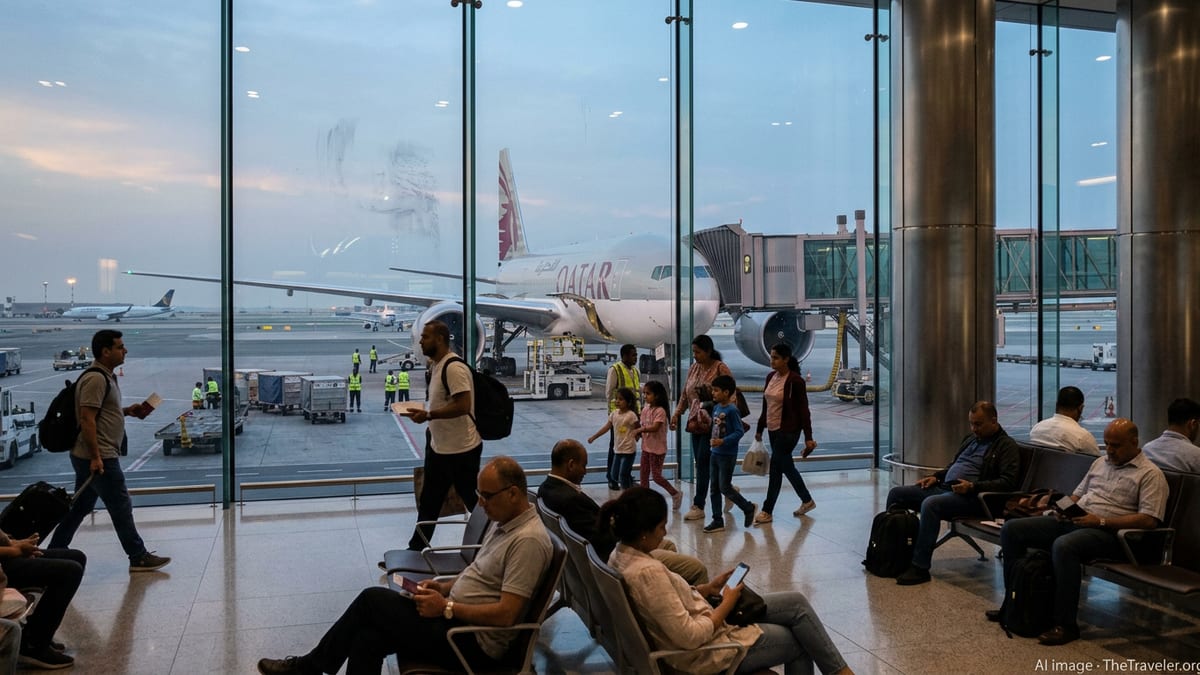
Limited Corridors Restore a Lifeline From Doha
Following several days of complete suspension of commercial services at Hamad International Airport, Qatar Airways has confirmed it is now operating a restricted flight schedule along specially approved corridors. The move comes after the Qatar Civil Aviation Authority granted temporary authorisation for limited navigation routes, allowing the flag carrier to begin moving passengers again while broader airspace restrictions remain in place.
The airline has stressed that these services are tightly controlled and subject to continuous safety assessment. Initial flights have focused on high-demand routes to major European hubs, with priority given to travelers who were already in Doha when the airspace closed or whose journeys were disrupted mid-trip. Seats are being allocated first to passengers whose original itineraries were cancelled in the immediate aftermath of the shutdown.
Hamad International Airport remains far from normal operations. The terminal has been open only to passengers holding confirmed seats on the temporary services, and the airline has repeatedly urged people not to travel to the airport unless they have received direct confirmation. Airport authorities continue to coordinate closely with air traffic controllers and security agencies as each relief flight is cleared for departure or arrival.
Industry analysts note that even a small number of flights can significantly ease pressure on accommodation and transit facilities in Doha, where thousands of travelers were left waiting after the abrupt halt of operations. The carefully managed restart is designed to move people out in phases while preserving the flexibility to pause or adjust schedules if risk assessments change.
Safety At The Center of Temporary Flight Plans
Qatar Airways has framed the limited resumption as a safety-led operation rather than a commercial restart. Flight paths are being routed through the newly designated contingency corridors, which are designed to keep aircraft clear of any ongoing security risks while maintaining sufficient spacing and altitude restrictions to reduce operational complexity for pilots and air traffic controllers.
Crews assigned to these services have received enhanced briefings tailored to the evolving airspace picture around Qatar and the wider region. Dispatch teams are working with real-time intelligence and regional control centers to validate every sector before take-off, with the option to divert, delay or cancel flights at short notice if conditions warrant.
The airline has emphasised that no flight will operate unless both internal safety teams and national authorities are fully satisfied with the risk profile. That approach has led to a patchwork schedule, with some routes operating only on specific days and others still suspended entirely. While frustrating for passengers seeking quick answers, aviation safety experts say the measured rollout reflects standard crisis-management practice in complex airspace environments.
On the ground, additional security and customer-support staff have been deployed at Hamad International Airport to manage boarding, verify documentation and provide reassurance to nervous travelers. Announcements in the terminal have repeatedly underlined that the flights are operating under special clearance and could be subject to change, reinforcing the message that the situation remains fluid.
Repatriation Focus: Reuniting Travelers With Loved Ones
From the outset of the disruption, Qatar Airways has framed its priority as getting people back to their families as quickly as safety conditions allow. The first wave of relief services from Doha has therefore targeted major origin and destination cities where large numbers of passengers were left stranded in transit, including key European and regional hubs with strong onward connectivity.
Many of the temporary flights are being treated in practice as repatriation services, with seats allocated based on the length of disruption, individual circumstances and the feasibility of alternative routing. The airline has been directly contacting affected travelers with new flight details, urging them to wait for official notification rather than attempt to rebook independently or arrive at the airport unannounced.
Qatar Airways has also widened its disruption policy window to cover bookings over several weeks, allowing impacted customers to change travel dates without penalty or request refunds for unused portions of their journeys. Travel agents and partner carriers are working under updated guidelines intended to simplify rebooking, though passengers report that high call volumes and fast-changing availability are still making it difficult to secure seats.
Despite those challenges, each day of limited operations is gradually reducing the backlog of travelers stuck in Doha and other cities. Families separated across continents have begun sharing stories of long-awaited reunions, many describing multi-leg replacement itineraries that rely on the few corridors currently open into and out of Qatar.
Passenger Guidance: Check Before You Travel
With schedules changing rapidly, both Qatar Airways and airport authorities have been repeating the same core instruction to passengers: do not proceed to the airport unless you have an officially confirmed booking on one of the temporary flights. Many travelers affected by earlier cancellations are still waiting for updated itineraries, and walk-in passengers risk overwhelming airport facilities without increasing their chances of boarding a flight.
The airline is directing customers to rely on official communication channels and its own customer-service teams for the latest information, rather than third-party websites or social media rumours. Travelers whose original journeys fell between the key disruption dates have been told they remain eligible for complimentary date changes within a defined window, or for refunds if they choose to abandon or postpone their plans.
For those needing to travel urgently for compassionate or essential reasons, Qatar Airways has encouraged passengers to flag their circumstances when speaking to agents, although it has stopped short of promising priority access beyond the existing criteria. The carrier is also reminding customers who booked through travel agencies or online intermediaries that changes may need to be handled by those third parties, which can add another layer of delay.
Industry observers say the situation underscores the importance for travelers of keeping contact details up to date in their bookings and regularly checking for notifications, particularly when flying through regions prone to sudden operational disruptions. For now, passengers booked on future dates are being advised to monitor developments closely rather than making drastic changes too far in advance.
What the Limited Schedule Means for the Weeks Ahead
The gradual reintroduction of flights to and from Doha is an early sign that Qatar’s aviation network is beginning to adjust to the new constraints, but a full return to normality remains some way off. The current operating corridors allow only a fraction of the usual daily movements at Hamad International Airport, and airlines are prioritising essential connectivity over frequency.
Qatar Airways has indicated that it will continue to refine its schedule day by day, adding or adjusting services as more airspace information becomes available. That means passengers should expect an extended period in which timetables remain provisional, with late-notice changes still possible. The carrier is likely to focus next on restoring links to key regional gateways and high-demand long-haul markets where there are limited alternative options.
As the world watches how quickly and safely air traffic can scale up from Doha, the experience of this disruption is already prompting renewed debate over resilience planning in global aviation. For passengers, however, the immediate concern is more personal: securing a seat, getting home, and closing what for many has been an anxious chapter of uncertainty.
For now, Qatar Airways’ limited temporary schedule represents a cautious but important step in that direction, offering a controlled route out of Doha for those who have been waiting and a signal that, even under tight restrictions, the skies above the Gulf are beginning to open again.