

More news on this day
Qatar Airways is preparing to operate a limited schedule of flights between 18 and 28 March 2026 as Qatari airspace remains subject to security-related restrictions, with the carrier outlining new options for affected travelers seeking to rebook or secure refunds.
Get the latest news straight to your inbox!
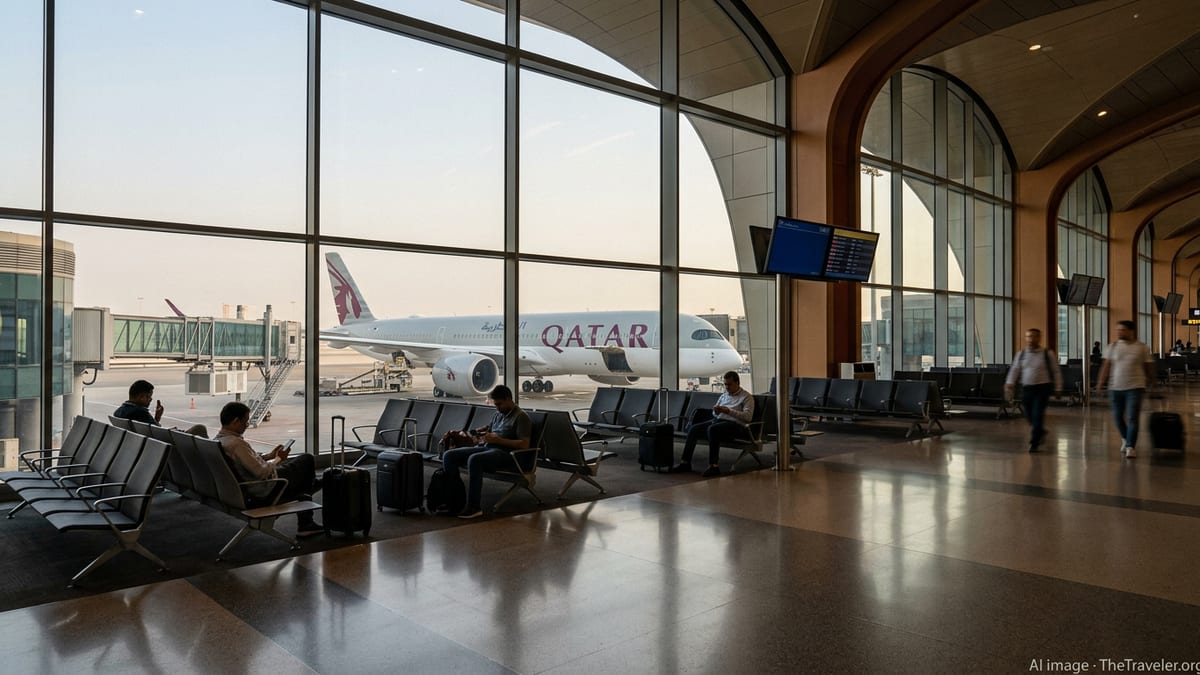
Reduced Schedule as Qatari Airspace Remains Restricted
Following the closure of Qatari airspace at the end of February 2026 in response to regional security tensions, Qatar Airways has maintained a suspension of its regular commercial timetable while gradually introducing ad hoc relief and repatriation services. Publicly available airline and aviation community updates now indicate that the carrier plans to operate a revised, limited schedule between 18 and 28 March 2026, marking a further step in the phased restoration of connectivity to and from Doha.
The limited operation window follows earlier small-scale flight resumptions in the first half of March, when the airline secured approval for a handful of services on selected dates using special routing corridors. The 18–28 March schedule is expected to expand those options, though overall capacity will remain significantly below normal levels, reflecting the constrained airspace and continued safety precautions in the region.
Information shared through airline advisories and traveler communications suggests that these flights will prioritize passengers who were previously stranded or whose journeys had been disrupted by earlier cancellations. Seats for new bookings are likely to be scarce, and travelers are being encouraged to treat any itinerary involving Doha during this period as subject to change at short notice.
While there has been no declaration of a full reopening of Qatari airspace, the planned services underscore a gradual shift from pure suspension toward a managed, tightly controlled operating environment. Industry observers view the move as a signal that regulators are increasingly confident in the safety of restricted corridors, even as broader closures and diversions across the region remain in place.
Passenger Flexibility: Rebooking, Refunds and Alternative Routes
Alongside the limited flight program, Qatar Airways has introduced and progressively expanded a set of flexible options for customers whose travel plans have been affected by the airspace closure. Travel trade advisories and passenger-facing notices outline eligibility windows for complimentary date changes, with some policies allowing multiple rebookings for tickets originally scheduled between late February and mid-March 2026.
In many cases, travelers are being offered the choice between rebooking on a later Qatar Airways service, re-routing once limited flights resume, or requesting a refund for unused segments. Reports indicate that the carrier has also coordinated with partner airlines and global distribution systems to facilitate ticket changes without standard penalties, particularly for itineraries where onward connections on other carriers have been disrupted.
Travel agents and frequent flyers describe a system in which waiver codes and special commercial policies are being applied behind the scenes, allowing reissuance of tickets without change fees and, in some instances, with fare differences reduced or waived. However, travelers have also reported inconsistencies between call centers, online tools and airport desks, making it important for passengers to keep clear records of any waivers referenced in their bookings.
Given the evolving schedule, passengers whose flights fall between 18 and 28 March are being advised through various channels to monitor their reservations closely, confirm any proposed changes in writing and consider travel insurance or credit-card protections where applicable. Travel specialists suggest that those with nonessential trips remain flexible about dates and routing, as inventory on the limited services may be prioritized for those trying to return home.
Operational Priorities and How the Limited Flights Will Work
The partial resumption between 18 and 28 March is expected to focus on key long-haul and regional routes where demand from stranded passengers is highest and where safe routing options have been cleared. Previous limited operations in early March concentrated on major European capitals and select Asian gateways, using contingency navigation routes coordinated with regional air traffic authorities.
Industry coverage indicates that similar principles will likely guide the upcoming schedule: a narrow set of departure and arrival points, carefully timed operations and tight integration with security and air traffic management agencies. Flight times on some routes may be extended because of detours around closed or restricted airspace, and aircraft rotations may be adjusted to keep crews and equipment within approved corridors.
Passengers holding tickets during the 18–28 March window are being cautioned that not every previously scheduled flight number will correspond to an operating service. In practice, Qatar Airways is expected to publish a list of confirmed flights for each day and may consolidate passengers from multiple canceled services onto a smaller number of operating sectors. Travelers who do not receive explicit confirmation that their flight is operating are being encouraged, through public information channels, to seek clarification before heading to the airport.
Hamad International Airport in Doha, which remains the hub for these operations, continues to function with modified procedures in line with the broader airspace restrictions. Terminal activity has been significantly lower than in normal times, but the airport has already handled earlier relief flights, suggesting that ground operations for the 18–28 March services can draw on established contingency routines.
Impact on Global Connectivity and Travel Planning
The Qatari airspace closure has had a pronounced effect on global flight networks, particularly for passengers who rely on Doha as a transit point between Europe, Asia, Africa and the Americas. Qatar Airways, known for its extensive long-haul network, has had to cancel or reroute thousands of journeys since late February, creating a ripple effect across partner airlines and alliance connections.
Travel analysis highlights that the limited schedule from 18 to 28 March, while welcome, will only partially address this backlog. Many travelers have already been rebooked via alternative hubs in the Middle East, Europe or Asia, while others have postponed or canceled their trips outright. For those who have waited for a direct option through Doha, the new flights could provide a long-awaited path home, but seat availability and timing constraints mean that some disruptions are likely to persist into April.
The situation has also prompted broader questions about reliance on single-hub itineraries in geopolitically sensitive regions. Aviation commentators note that corporate travel managers and leisure travelers alike may look to diversify routing options in the near term, building in additional time for connections and considering the resilience of an airline’s network in case of sudden airspace closures.
At the same time, Qatar remains a significant aviation crossroads, and the gradual reintroduction of flights is being viewed as a key indicator for the broader recovery of regional air traffic. The 18–28 March period will provide an early test of how effectively contingency corridors and limited schedules can restore connectivity while maintaining safety margins in a complex airspace environment.
What Affected Travelers Should Do Now
For passengers with bookings between 18 and 28 March, the most immediate priority is to verify whether their specific flights are included in the limited operating schedule. Public guidance from airlines, travel advisers and online communities consistently emphasizes checking flight status tools, managing bookings directly and ensuring that contact details on reservations are up to date so that schedule changes and rebooking options can be communicated quickly.
Travel experts recommend that passengers document any messages they receive regarding cancellations, rebookings or waivers, including screenshots of emails and booking pages that reference special policies. This can help resolve disputes over eligibility for free date changes or refunds if different customer-service channels apply policies inconsistently.
Those who are not yet ticketed but are considering travel through Doha in late March are being urged to approach bookings with caution. Given the constrained number of flights and the possibility of further adjustments, some commentators suggest delaying nonessential trips, exploring routings via alternative hubs or working with experienced travel agents who closely track airline waivers and capacity changes.
As events continue to evolve, the 18–28 March window is emerging as a pivotal phase in Qatar Airways’ response to the airspace crisis. The blend of limited service restoration, flexible passenger policies and ongoing operational constraints illustrates how airlines are attempting to balance safety, regulatory requirements and traveler needs in one of the most complex aviation disruptions in recent years.