

More news on this day
Qatar Airways is preparing to operate 60 confirmed flights on March 30, 2026, with a constrained but expanding network of 93 destinations expected to remain in place through April 15 as the carrier rebuilds its schedule from Doha.
Get the latest news straight to your inbox!
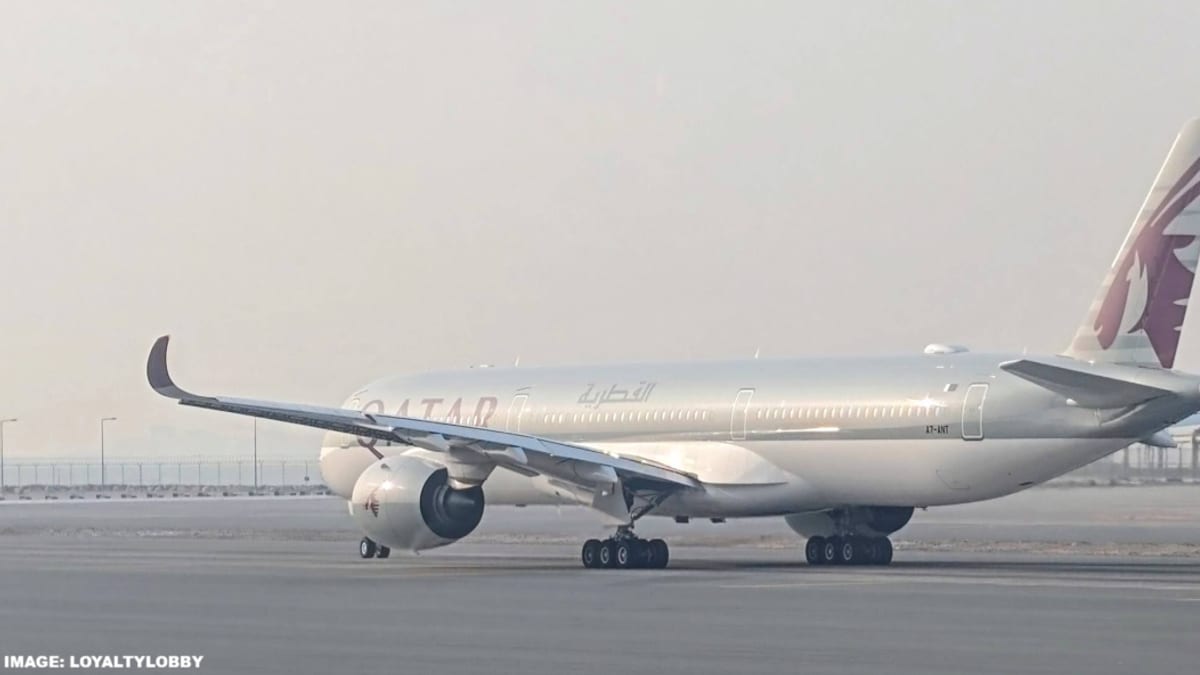
Image by LoyaltyLobby
Limited Operations Evolve Into Structured March 30 Schedule
Publicly available airline communications and industry tracking indicate that Qatar Airways has moved from ad hoc repatriation services in early March to a more structured schedule by the end of the month. After Qatari airspace was closed on February 28, the airline initially suspended most regular services and relied on temporary operating corridors to run a small number of essential flights.
By mid-March, official updates described a limited timetable from Doha between March 18 and March 28, focused on key long haul and regional routes. This period has effectively served as a bridge between near-total suspension and a more predictable pattern of departures and arrivals. Within that context, the confirmation of 60 flights for March 30 marks a notable increase in activity compared with the preceding weeks.
The March 30 schedule, while still far below the carrier’s pre-disruption levels, points to a gradual stabilisation of operations rather than a snap return to normality. The structure of these flights, timed to make use of the approved airspace windows and daylight operating patterns at Hamad International Airport, reflects the operational constraints still in place around Doha.
Analysts following timetable filings and reservation systems describe the 60-flight day as a carefully calibrated move that balances demand from stranded travellers with limited runway and airspace capacity. It gives Qatar Airways room to test more sustained operations without overcommitting its fleet or crew resources while regulatory conditions remain fluid.
Network Rebuild Targets 93 Destinations Through April 15
Alongside the single-day figure of 60 confirmed flights, Qatar Airways has outlined a short term network plan that points toward 93 destinations being served to some extent between late March and April 15. This tally includes reinstated long haul cities in Europe, Asia and the Americas, as well as high volume regional links that underpin the carrier’s hub strategy.
Travel trade publications and route tracking platforms report that the list builds on the earlier limited schedule valid to March 28, adding a series of long haul gateways in North America and Europe while restoring more coverage across South and Southeast Asia. Examples include major cities such as London, Paris, Mumbai, Delhi, Bangkok and Istanbul, which featured prominently in earlier interim timetables.
The 93 destination figure does not indicate pre-disruption frequencies on each route. In many cases, services are operating at sharply reduced levels, sometimes a few times per week rather than daily, and often with adjusted departure times geared around the constrained operating corridors into and out of Doha. Nonetheless, the broadened map gives passengers and travel agents clearer planning visibility than was available in early March.
Industry observers note that the network through April 15 appears designed as an intermediate phase. It restores enough global coverage to reconnect key regions while leaving flexibility for further additions or frequency increases if airspace conditions and demand allow later in April and into May.
Passenger Options and Ongoing Uncertainty Around April Travel
Throughout the disruption, Qatar Airways has maintained a series of flexible policies that allow affected passengers to change plans without standard penalties. Public information from the airline and widely shared advisories state that travellers with tickets during the core disruption window have been able to rebook or request refunds, with date change windows extending into late April or beyond depending on the update cycle.
Despite this flexibility, uncertainty remains for many passengers with itineraries in early to mid-April. Online forums and travel community discussions show that some routes scheduled within the 93 destination framework have only recently reappeared in booking systems, while others continue to show no availability or are subject to rolling schedule changes. This environment has prompted some travellers to secure backup tickets on alternative carriers in case services via Doha are adjusted again.
Travel agents and advisory platforms are generally recommending that passengers monitor their bookings closely in the days leading up to departure. With the limited schedule formally published only up to April 15, some routes scheduled just after that date remain subject to possible adjustments as Doha’s air traffic picture evolves.
For those travelling on March 30 itself, the confirmation of 60 flights provides a comparatively clearer outlook than earlier in the month. However, experts caution that last minute timing tweaks and aircraft changes remain possible, and that check in and connection times may differ from historic norms at Hamad International Airport.
Operational Constraints at Hamad International Shape the Timetable
The scale and composition of Qatar Airways’ 60-flight day on March 30 and its 93-destination network to April 15 are directly influenced by constraints at its Doha hub. Reports on airport operations in March describe Hamad International as functioning on a significantly reduced basis, with airspace restrictions, traffic metering and a focus on daylight operations all affecting capacity.
In addition, aviation analysis outlets have highlighted separate plans for a single runway operating period at Hamad International beginning in mid-April, related to scheduled runway maintenance. While this project is distinct from the immediate security-driven airspace restrictions, it adds a further layer of complexity to network planning for the second quarter of 2026.
Qatar Airways appears to be sequencing its recovery with these factors in mind. The period through April 15 allows the airline to rebuild a portion of its network and evaluate passenger demand under the current airspace regime before the planned runway works begin. This measured approach differs from previous rapid expansions and instead prioritises operational resilience.
Observers point out that the carrier has historically used its flexible fleet mix and hub banking structure to adjust quickly to changing conditions. In the current scenario, that flexibility is being deployed in reverse, with carefully staged additions such as the March 30 ramp up and selective long haul resumptions folded into a constrained framework.
Implications for Doha’s Role as a Global Transit Hub
The evolving schedule around March 30 and the limited network up to April 15 carry broader implications for Doha’s role as a global connecting hub. Before the disruption, Qatar Airways and Hamad International Airport marketed a network of more than 170 destinations and tightly timed transfer banks that allowed rapid one stop itineraries between Europe, Asia, Africa and the Americas.
With only 60 flights operating on March 30 and 93 destinations planned in the short term, that model is temporarily reduced in scope. Many passengers who would ordinarily have a choice of multiple daily connection options via Doha are instead working with single daily or even less frequent services, often at nonstandard times.
Travel industry analysis suggests that, in the near term, this may shift some long haul connecting traffic toward alternative hubs in the Gulf and Europe. At the same time, the partial restoration of services by late March underlines the continued centrality of Doha in many networks, particularly where competing carriers do not offer equivalent one stop options.
How quickly Qatar Airways can move beyond the 60-flight day and 93-destination framework will depend on regulatory decisions about Qatari airspace and the successful completion of infrastructure works at Hamad International. For now, the March 30 schedule and the limited network through April 15 represent a cautious but visible step on the path back to the airline’s wider global footprint.