

More news on this day
Qatar Airways, one of the world’s largest long haul carriers, has been plunged into an unprecedented operational crisis as regional airspace closures, grounded aircraft, and cascading schedule disruptions leave global travelers stranded from Asia to Europe and the Americas.
Get the latest news straight to your inbox!
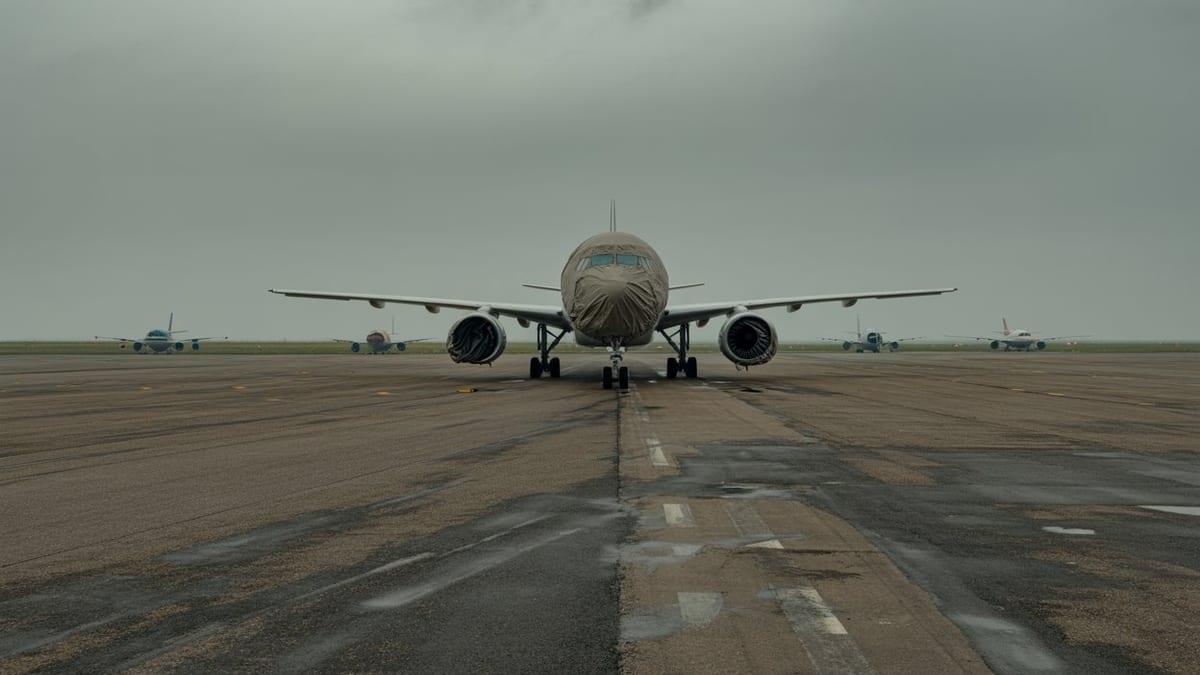
Image by Travel And Tour World
How the Crisis Started and Why Qatar Airways Is So Exposed
The current wave of disruption began on February 28, 2026, when military strikes involving Iran, Israel, the United States, and several Gulf states triggered sweeping security measures across the region. Multiple countries, including Qatar, imposed full or partial airspace closures, instantly severing some of the world’s busiest aviation corridors. Hamad International Airport in Doha, a critical crossroads for East–West traffic, saw departures and arrivals suddenly curtailed as authorities moved to protect civilian aviation.
Publicly available aviation data and industry analysis indicate that Qatar Airways has been hit harder than almost any other global airline. Between February 28 and March 24, nearly nine out of ten scheduled flights were reportedly cancelled, effectively freezing the majority of the carrier’s long haul network. That interruption is particularly severe because Qatar Airways relies heavily on its Doha hub to connect passengers between Europe, Africa, Asia, and Oceania, with a high proportion of travelers in transit rather than starting or ending their journeys in Qatar itself.
The cancellation wave created immediate knock on effects. Aircraft and crew became out of position, transit banks collapsed, and once predictable daily schedules were replaced by ad hoc announcements and rolling changes. Even as some neighboring hubs explored limited reopening or diversion corridors, Qatar’s own airspace remained tightly restricted for days, leaving the airline with few options beyond a near total pause in regular operations.
Grounded Planes, Stranded Passengers, and Patchwork Relief Flights
With Qatari airspace effectively closed in early March, Qatar Airways temporarily suspended most scheduled services, grounding large portions of its wide body fleet. Passenger accounts from Doha and major transit hubs describe crowded terminals, long queues at rebooking desks, and uncertainty about when normal flying might resume. Travelers en route between continents found themselves unexpectedly marooned in Doha, Dubai, Abu Dhabi, and cities across the broader region as connecting flights vanished from departure boards.
In response to the mounting backlog, the airline has introduced a phased series of relief and repatriation flights rather than an immediate return to its full timetable. Published information shared via travel advisories, cargo and logistics notices, and passenger communications shows that special services began operating in the first week of March on select routes from Doha to major European capitals such as London, Paris, Madrid, Rome, and Frankfurt. Seats on these flights have been limited, contributing to intense competition among stranded travelers seeking any available route home.
Despite these efforts, large numbers of passengers remain in limbo, particularly those whose journeys relied on complex itineraries across Asia, Africa, and South America. Capacity constraints, crew duty rules, and ongoing security reviews continue to restrict how quickly Qatar Airways can clear the backlog. Even travelers who have reached their final destinations are reporting missing baggage, fragmented itineraries, and refund or voucher claims still awaiting resolution.
Rerouted Flight Paths and a Reshaped Global Map of the Skies
Beyond individual cancellations, the crisis is rapidly redrawing the global flight map. Analysts note that closures and restrictions over Qatar, the United Arab Emirates, Kuwait, Bahrain, and parts of Iran and Iraq have carved a vast “no go” zone across a key bridge between Europe and Asia. Airlines that once relied on relatively direct Gulf crossings are now diverting north over Turkey and Central Asia or south via Egypt and the eastern Mediterranean, adding hours to flight times and increasing fuel costs.
Qatar Airways is particularly constrained because its model depends on funnelling traffic through a single hub. While some competitors with multiple hubs or shorter regional networks have been able to reconfigure schedules more flexibly, Qatar Airways has fewer alternative bases to fall back on. Industry coverage indicates that, for now, the carrier is prioritizing essential trunk routes and relief flights over marginal or highly indirect services, reshaping which city pairs are connected and which are temporarily cut off.
This rerouting also has ripple effects far from the Middle East. Travelers booking seemingly unrelated journeys, such as flights between Europe and Southeast Asia or between Africa and North America, are discovering that their itineraries quietly depended on Gulf connections. With Qatar Airways scaling back capacity and alternative carriers facing surging demand, fares on many remaining routes have risen sharply, and award or low cost inventory has become difficult to find.
What Affected Passengers Need to Know Right Now
For travelers holding Qatar Airways tickets over this period, the single most important step is to verify the latest status of each flight before heading to the airport. Many passengers report that third party travel apps and online travel agencies have been slower to update than the airline’s own tools, leading to situations where a flight appears “on time” in one system but cancelled in another. Cross checking using the airline’s booking management tools and airport departure boards can reduce the risk of unnecessary trips to the terminal.
Current disruption policies published by industry intermediaries and travel advisories indicate that Qatar Airways is offering options that typically include full refunds for unused tickets, free date changes within a defined window, and rerouting where feasible once airspace restrictions ease. However, the exact terms can depend on when the ticket was issued and on the original travel dates, so passengers are being urged to review the conditions attached to their booking references and to keep written records of any changes.
Travelers who are already stranded in transit hubs should be prepared for limited same day solutions. Hotel availability near airports across the Gulf has tightened as airlines place displaced passengers, and some reports describe overnight stays in terminal seating where accommodation could not immediately be secured. Having access to essential medications, chargers, and a change of clothes in carry on bags has been particularly important as checked luggage may not be accessible during extended delays.
Looking Ahead: Gradual Reopenings, Lingering Uncertainty
As of late March 2026, airspace restrictions in parts of the region are beginning to ease in stages, but the environment remains highly volatile. Aviation and logistics bulletins suggest that Qatar Airways is working toward a cautious ramp up of regular services, with more flights expected to return to the schedule if security conditions allow. Some passenger communications point to targeted resumptions from mid to late March on selected long haul routes, though this is subject to change at short notice.
A key challenge will be unwinding the accumulated disruption. Even once Qatari airspace is more consistently open, aircraft and crews will need to be repositioned, maintenance schedules recalibrated, and network connectivity gradually restored. Analysts expect that knock on effects, including irregular departure times, last minute aircraft swaps, and occasional cancellations, could persist for weeks after headline restrictions are lifted.
For now, experts broadly recommend that travelers with non essential trips involving Qatar or the wider Gulf consider postponing or rebooking via alternate hubs that are currently operating more stable schedules. Those who must travel through the region are being advised to allow generous connection times, monitor their bookings frequently, and remain flexible on routing and timing. While Qatar Airways has signaled its intention to restore its global network, the events of the past month have underlined how quickly geopolitical tensions can upend even the most carefully choreographed schedules in modern aviation.