

More news on this day
Cancun, Playa del Carmen, and Tulum are reopening to travelers after the U.S. Embassy in Mexico lifted its shelter-in-place directive for Quintana Roo, easing days of heightened anxiety and travel disruption triggered by a sweeping security operation and cartel violence across multiple Mexican states.
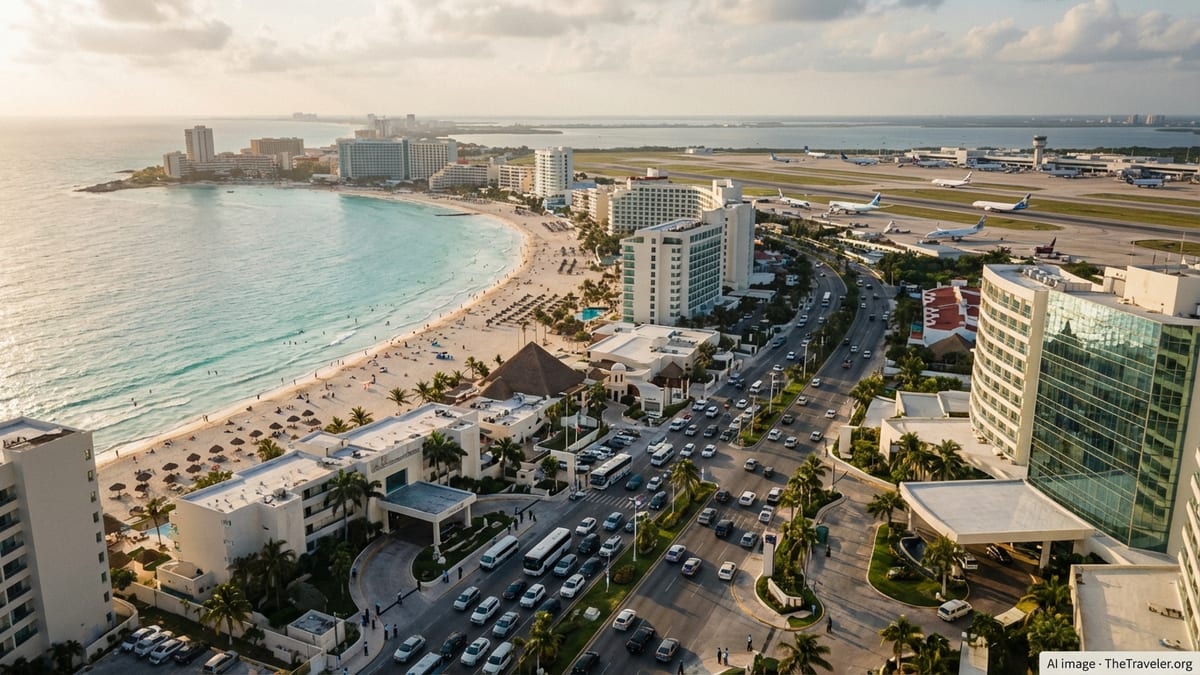
Embassy Eases Warning After Sweeping Security Lockdown
The updated guidance from the U.S. Mission to Mexico marks a key turning point after a rare and wide-ranging shelter-in-place alert urged American citizens in Quintana Roo and several other states to remain in hotels or homes while security forces responded to cartel-linked unrest. The earlier alert, issued over the weekend, followed a major operation against the Jalisco New Generation Cartel that rippled far beyond western Mexico and briefly included the Caribbean hotspots of Cancun, Playa del Carmen, Cozumel, and Tulum in its scope.
According to the latest embassy communication, U.S. government personnel assigned to Quintana Roo are no longer required to shelter in place, and normal consular operations are resuming in the state. The move effectively clears the way for U.S. travelers to continue with planned trips to the region, even as officials stress that security conditions remain dynamic and that travelers should stay alert to local developments.
While the overall nationwide security alert remains in effect for other parts of Mexico, the specific short-term measures that had paused movement in Quintana Roo have now been relaxed. For the Mexican Caribbean’s tourism industry, the Embassy’s updated stance is being read as a cautiously optimistic signal that the immediate risk that prompted the temporary lockdown in beach destinations has subsided.
Mexican federal and state authorities in Quintana Roo have emphasized that tourist corridors along the Riviera Maya remained under reinforced protection during the emergency, with additional patrols and coordination between local police, National Guard units, and airport security teams to prevent any spillover of violence into major resort zones.
Airports and Resorts Transition From Disruption to Recovery
In the hours after the initial shelter-in-place directive, travelers arriving at and departing from Cancun International Airport faced a patchwork of delays and cancellations as airlines reassessed schedules and crews, and some ground transportation providers temporarily scaled back operations. Airport officials maintained that runways remained open, but access roads and logistics chains were strained as security checkpoints multiplied.
With the advisory for Quintana Roo now eased, Cancun’s airport has begun a gradual return to more predictable operations. Airlines are restoring frequencies and re-accommodating passengers who missed connections or were forced to extend stays. Terminal concourses that only a day earlier were crowded with stranded travelers now reflect a more typical high-season flow, albeit with visibly heightened security and more frequent announcements urging passengers to stay informed.
In Playa del Carmen and Tulum, resort operators report that movement restrictions have been lifted, allowing excursions, airport transfers, and intercity transport to resume on normal timetables. Hotel managers say that while some guests chose to remain on property during the height of the alert, on-site services such as pools, restaurants, and entertainment largely continued, framed by reassurances from staff and tour operators that there had been no direct incidents inside the main resort districts.
Tour companies that run day trips to archaeological attractions like Tulum’s cliffside ruins and nearby cenotes are now reinstating regular departures, though some are keeping smaller groups and flexible timing in case conditions change. Many operators are emphasizing private or small-group transportation options to give nervous visitors an additional sense of control and personalization after a tense few days.
What the Updated Guidance Means for U.S. Travelers
For Americans with upcoming vacations booked to Cancun, Playa del Carmen, or Tulum, the Embassy’s decision to lift the shelter-in-place directive in Quintana Roo sends a clear message: travel to the Mexican Caribbean can proceed, but with heightened situational awareness. The baseline Mexico travel advisory remains in place, and security officials continue to urge visitors to follow common-sense precautions and stay tuned to local news and official channels.
Travel advisers say the biggest immediate impact for new arrivals is likely to be logistical rather than security-related. Some travelers may still encounter residual schedule changes or minor delays as airlines and airports work through the backlog created by the temporary disruption. Travelers are being encouraged to confirm flight times closely, build extra time into airport transfers, and maintain contact information for both their airline and hotel.
Insurance specialists note that the episode is a reminder of the value of comprehensive travel policies that cover trip interruption and unexpected extra nights in destination. While most resorts in Quintana Roo continued operating throughout the alert and many guests experienced the situation mainly as an enforced day on property, those whose flights were canceled or rerouted faced out-of-pocket costs that could have been mitigated by adequate coverage.
Travelers are also being advised to enroll in official alert systems where available and to share itineraries with family or friends back home. The rapid evolution of events over the past several days, from the initial security operation to the broad shelter-in-place directive and now its partial rollback, underscores how quickly advisories can change and how important it is for visitors to receive real-time updates.
On the Ground in Cancun, Playa del Carmen, and Tulum
Inside Cancun’s hotel zone, the most visible signs of the security alert for many tourists were an uptick in uniformed patrols, screening at hotel entrances, and a flurry of notifications from resorts and tour operators. Beachfront activity continued under mostly normal conditions, with visitors sunbathing and swimming while monitoring news on their phones and checking with front-desk staff about any new instructions.
In downtown Playa del Carmen, the usually lively pedestrian corridor of Fifth Avenue saw a temporary dip in foot traffic at the height of the advisory as some businesses shortened hours and a number of visitors opted to stay within resort complexes. As the Embassy eased Quintana Roo-specific restrictions, nightlife venues and restaurants began to extend their hours again, and local tourism officials launched reassurance campaigns emphasizing that law enforcement presence would remain high.
Tulum’s boutique hotels and eco-resorts, many of them set along a narrow coastal strip, focused on communication and flexibility. Property managers briefed guests on the nature of the shelter-in-place request and coordinated closely with transportation partners to adjust airport runs and excursions. With the change in guidance, those same operators are once again highlighting beach clubs, wellness retreats, and visits to nearby nature reserves, pointing to the swift normalization of daily flows as a sign of stability.
Across the region, local workers and business owners have expressed relief that the most restrictive phase of the advisory in Quintana Roo was relatively short-lived. Many recall earlier episodes when isolated incidents in other states cast a long shadow over the Mexican Caribbean and are hopeful that the rapid clarification by both U.S. and Mexican authorities will reassure international markets.
How Authorities Say They Stabilized the Situation
Mexican officials say the decision to request and then roll back shelter-in-place measures in Quintana Roo was part of a broader, nationwide security strategy responding to coordinated acts of intimidation and retaliation in the aftermath of a high-profile cartel leader’s killing. Security forces were deployed in large numbers in western and northern states, and preventative steps were taken in tourist regions to deter opportunistic violence or copycat blockades.
In Quintana Roo specifically, authorities prioritized the main transport corridors connecting Cancun’s airport to hotel zones and to Playa del Carmen and Tulum. Checkpoints were reinforced and surveillance increased on key highways, while tourism police intensified patrols in beach districts. Officials stressed that there were no reports of large-scale confrontations within the principal resort areas of the Mexican Caribbean during the period of heightened alert.
The U.S. Embassy’s latest message acknowledges the ongoing security operations nationwide but indicates that conditions in Quintana Roo now allow for the resumption of regular movement. U.S. officials continue to coordinate with Mexican counterparts, sharing intelligence and monitoring the potential for further unrest in other states where the shelter-in-place directive remains in effect for both diplomats and private citizens.
Security analysts caution that while tourist zones like Cancun and Tulum benefit from a strong economic incentive to remain calm and secure, they are not entirely insulated from the broader dynamics of Mexico’s security challenges. The response to this latest episode, they say, shows both the reach of cartel networks and the speed with which authorities can move to protect internationally vital corridors when necessary.
Impact on Bookings, Confidence, and Pricing
Tour operators and hotel groups along the Riviera Maya report a mixed initial reaction from travelers. Some guests chose to shorten stays or reschedule arrivals during the most uncertain hours of the alert, while others elected to continue as planned, accepting the shelter-in-place period as a temporary disruption. Now that the U.S. Embassy has cleared travel in Quintana Roo, agents say most near-term bookings are holding, though a short-lived slowdown in new reservations is expected as headlines circulate.
Industry insiders note that the Mexican Caribbean has weathered similar shocks before and has often rebounded quickly, helped by competitive pricing and the region’s deep air connectivity to U.S. and Canadian hubs. In the coming days, some properties may roll out promotions aimed at reassuring hesitant travelers and filling any gaps created by last-minute cancellations connected to the alert.
Large international chains with a strong presence in Cancun and Playa del Carmen are emphasizing flexible cancellation policies and the ability to rebook without major penalties. This approach, honed during the pandemic and refined through previous security scares, is being framed as a customer-friendly way to manage uncertainty without abandoning travel plans altogether.
Smaller independent hotels and rental hosts in Tulum and across the Riviera Maya are relying more heavily on direct communication, using social media updates and email newsletters to describe current on-the-ground conditions and remind would-be visitors that beaches, archaeological sites, and hospitality venues are open and operating.
Staying Safe on an Upcoming Trip to Quintana Roo
With the immediate lockdown in Quintana Roo lifted, safety experts are advising travelers to blend routine vacation planning with a few extra layers of preparation. That begins with monitoring official advisories in the days leading up to departure and again upon arrival, as well as confirming that hotels and transfer companies have up-to-date contingency plans in case of any renewed disruption.
Travelers are also being urged to favor well-established transportation providers, pre-arranged airport transfers, and reputable tour operators. Sticking to recognized tourist corridors, avoiding late-night travel between cities, and limiting time in isolated areas remain core recommendations that take on renewed importance in light of the recent unrest.
Within resort areas themselves, visitors can expect to see more visible security than usual, from controlled access points at hotel entrances to increased patrols along popular stretches of beach and nightlife districts. While this can feel jarring to some, tourism officials stress that the measures are preventative and are intended to provide reassurance rather than signal any immediate threat.
For many travelers, the episode is serving as a reminder that even world-famous leisure destinations like Cancun, Playa del Carmen, and Tulum exist within broader national contexts that can shift quickly. The clearing of Quintana Roo by the U.S. Embassy will allow vacations to resume, but for those heading to the Mexican Caribbean in the days and weeks ahead, a slightly more vigilant mindset will now be part of the journey.