

More news on this day
Radisson Hotel Group is accelerating its net zero roadmap, shifting from headline pledges to tangible upgrades across existing hotels and new developments as the global race to decarbonize travel gathers pace.
Get the latest news straight to your inbox!
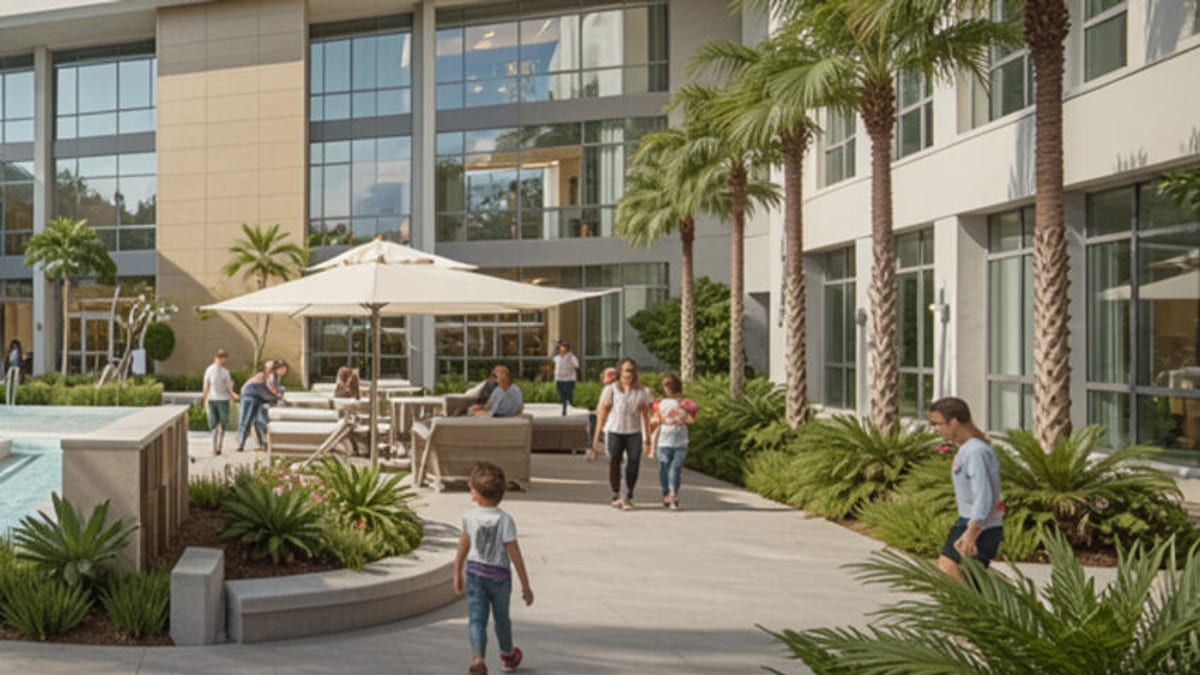
Image by Latest International / Global Travel News, Breaking World Travel News
From Long-Term Pledge to Operational Net Zero Pilots
Radisson Hotel Group first set a formal ambition to reach net zero emissions by 2050 in line with the Science Based Targets initiative, outlining a science-based pathway to cut greenhouse gas emissions across its portfolio. Subsequent responsible business reports describe how that commitment is moving from strategy documents into day-to-day hotel operations.
Published coverage of the group’s latest sustainability reporting notes a stronger focus on decarbonizing existing assets, historically the hardest segment of the built environment to align with climate goals. Rather than concentrating solely on new greenfield projects, the company is prioritizing deep retrofits, energy efficiency, and cleaner energy contracts at hotels already open and trading.
This shift is reflected in the emergence of certified net zero hotels within the portfolio. Industry reports highlight recently refurbished properties in Manchester and Oslo that are operating with 100 percent renewable energy for heating, cooling, hot water, and kitchens, alongside aggressive waste reduction and residual emissions offsetting. These pilots are being framed as proof-of-concept sites for a new operating model that can be scaled to other locations.
Analysts tracking hospitality decarbonization see these hotels as a signal that net zero in the sector is moving beyond future targets and into real properties with verifiable performance standards. The approach combines technical upgrades with process redesign spanning housekeeping, food and beverage, procurement, and transport logistics.
Decarbonizing Existing Properties at Scale
Radisson’s net zero strategy places particular emphasis on existing hotels, which account for the bulk of its global footprint and carbon emissions. Publicly available information shows that the group is rolling out standardized tools and frameworks to help property owners measure, reduce, and verify carbon performance across operations.
Energy efficiency retrofits are a central pillar, including upgraded building management systems, improved insulation, high-efficiency boilers and chillers, and smart controls for lighting and HVAC. Coverage of the group’s recent net zero pilots indicates that these interventions are paired with 100 percent renewable energy sourcing wherever feasible, giving older properties a way to dramatically cut operational emissions without full rebuilds.
Other operational changes described in sustainability-focused media include low-carbon food menus that substitute high-impact ingredients with lower-footprint alternatives, initiatives to minimize food waste through digital monitoring, and expanded recycling in guest rooms and back-of-house areas. Transport-related emissions are also being addressed through promotion of public transit, lower-emission transfer options, and charging infrastructure where demand justifies investment.
Industry commentators note that these measures require close coordination with hotel owners and franchise partners, particularly where capital expenditure is needed for upgrades. Reports indicate that Radisson positions the net zero transition as a long-term value driver, linking energy and resource savings with stronger brand positioning as climate-conscious travel demand grows.
Embedding Sustainability in New-Build and Conversion Projects
While the decarbonization of existing buildings is a headline priority, Radisson is also using its development pipeline to lock in lower-carbon performance from day one. The group’s responsible business materials and third-party coverage reference an expanding number of hotels developed or refurbished to green building standards such as LEED and BREEAM, with dozens of properties already certified and more in the pipeline.
For new-build hotels, this typically includes energy-efficient envelopes, high-performance glazing, advanced heat recovery systems, and on-site or off-site renewable energy procurement, depending on local grid conditions. Design teams are encouraged to factor life-cycle emissions into material choices, while integrating features such as water-saving fixtures and low-waste kitchen layouts to reduce operating impacts.
Conversions and major refurbishments, like those in Manchester and Oslo, are being used to test more ambitious net zero approaches within existing structures. Trade press reports suggest that these projects involve an additional investment to meet rigorous net zero criteria, with the company presenting them as templates that can be adapted to other urban hotels facing similar constraints.
Developers and investors in hospitality are watching these projects closely as they seek to future-proof assets against tightening climate regulations and shifting guest expectations. By embedding climate performance requirements into brand standards and project guidelines, Radisson aims to ensure that each new opening moves the overall portfolio closer to its 2050 target.
Third-Party Validation and Industry Collaboration
Independent verification is emerging as a key component of Radisson’s net zero narrative. The group’s greenhouse gas reduction targets have been validated by the Science Based Targets initiative, a partnership that assesses whether corporate climate goals are aligned with Paris Agreement pathways. This validation is frequently cited in industry coverage as an important marker of credibility.
In addition, select net zero pilot hotels have sought certification from external auditors to confirm that energy, emissions, and offsetting claims meet recognized standards. Reports concerning the Manchester and Oslo properties, for example, reference independent conformity assessment to verify that the hotels’ carbon accounting and reduction measures align with defined net zero benchmarks.
Radisson is also actively involved in collective initiatives within the sector. Publicly available information points to its role in contributing to the Hotel Sustainability Basics framework and the wider Pathway to Net Positive Hospitality, which aim to create common baselines and roadmaps that can be adopted across brands and ownership structures. This collaborative approach is intended to reduce fragmentation in sustainability requirements and accelerate adoption of best practices.
Observers suggest that such alliances are particularly important in hospitality, where franchising and varied ownership models can complicate group-wide implementation. Shared tools and sector-backed standards provide hotel owners with clearer guidance on what is expected and how performance will be measured over time.
What Net Zero Means for Travelers and Destination Cities
For travelers, Radisson’s accelerated net zero efforts are beginning to appear in the form of clearer sustainability labeling, greener amenity choices, and visible operational changes in hotels. Guests at pilot properties may encounter information about low-carbon menu options, expanded recycling, reduced single-use plastics, and encouragement to choose lower-emission transport modes, all of which support the hotels’ climate goals.
Destination cities where Radisson is expanding or upgrading its footprint stand to benefit from reduced local emissions and resource use, particularly in dense urban centers where hotel energy demand is concentrated. Urban sustainability strategies increasingly highlight the importance of decarbonizing commercial buildings, and large hotel groups such as Radisson are seen as critical actors in meeting those targets.
Travel industry analysts note that climate-conscious travelers are starting to factor verified sustainability performance into their accommodation choices, especially for corporate and group bookings where environmental criteria are embedded into procurement. As Radisson increases the number of certified green and net zero hotels in its portfolio, it is positioning itself to capture this growing demand segment.
As the 2050 horizon draws closer, Radisson Hotel Group’s challenge will be to transform a series of high-profile net zero flagships into a consistent standard across hundreds of properties worldwide. The pace and scale of its current initiatives suggest that the transition from targets on paper to measurable changes in hotels is now firmly underway.