

More news on this day
Domestic holidays across England are getting a timely boost as English Tourism Week 2026 launches against the backdrop of a landmark rail fare freeze, with tourism leaders seizing on cheaper train travel to promote budget-friendly breaks in cities, coasts and countryside.
Get the latest news straight to your inbox!
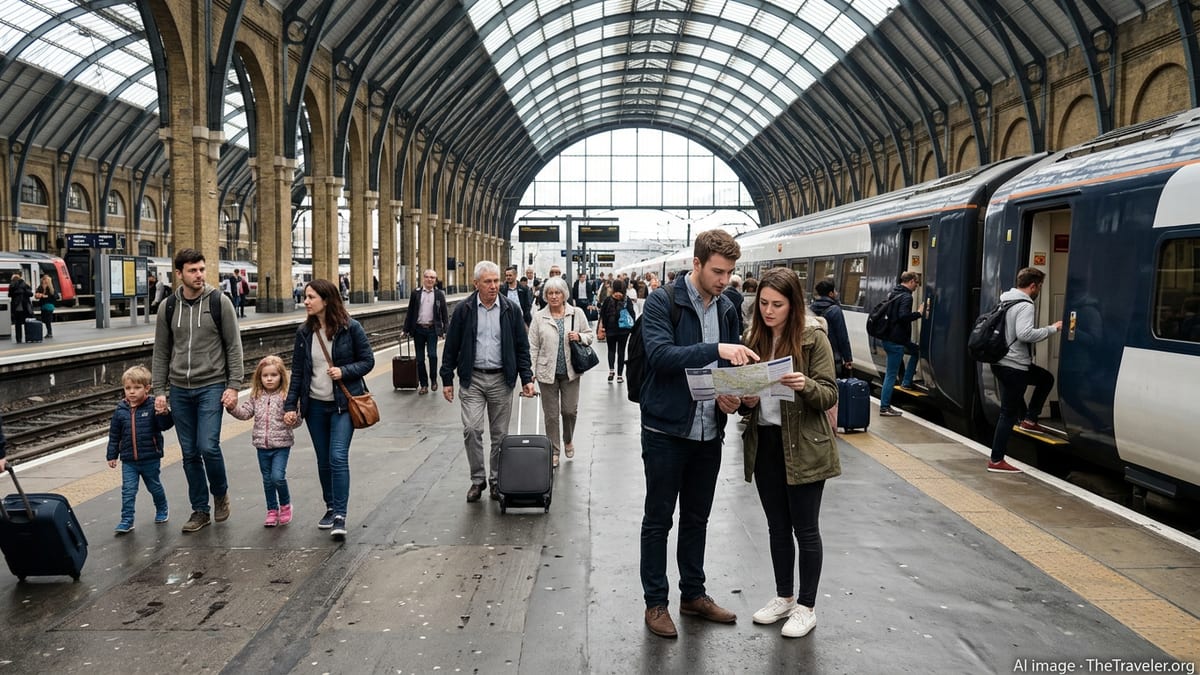
Tourism Week Aligns With First Rail Fare Freeze in 30 Years
English Tourism Week, led by VisitEngland as a nationwide celebration of the visitor economy, returns this March with a renewed focus on value and local discovery. Running across destinations from seaside resorts to historic market towns, the campaign highlights both the economic importance of tourism and the growing appetite for shorter, more sustainable trips at home.
This year’s showcase coincides with the government’s decision to freeze regulated rail fares in England from March 2026, the first such move in three decades. After years of above-inflation increases, ministers have pitched the freeze as a cost-of-living measure that allows households to keep travelling while energy, food and housing bills remain high.
The policy, confirmed alongside the November 2025 Budget, fixes most commuter and off-peak fares at 2025 levels until March 2027. Officials say the intervention will save regular passengers hundreds of pounds over the next year compared with previously planned rises that were linked to inflation.
Tourism bodies have welcomed the move, arguing that predictable, affordable rail pricing is crucial for regional visitor economies still consolidating their post-pandemic recovery. Many local tourism partnerships are explicitly weaving the fare freeze into English Tourism Week messaging to encourage residents to explore beyond their immediate areas.
Destinations Package Cheaper Rail Into ‘Budget-Friendly’ Breaks
From York and Bath to Brighton and the Lake District, destination marketing organisations are rapidly building new offers around the frozen fares, positioning rail as the backbone of low-cost domestic escapes. Several city tourism boards are rolling out “rail and room” promotions that pair advance off-peak tickets with discounted midweek hotel stays during shoulder seasons.
In popular heritage destinations, attractions are coordinating with local train operators to spotlight wallet-friendly day trips that avoid the cost of overnight accommodation. Campaigns built for English Tourism Week promote itineraries such as museum hops, riverside walks and self-guided heritage trails, all reachable on standard off-peak tickets that are no longer creeping up each spring.
Coastal areas, which often rely on seasonal peaks of visitor demand, are also tapping into the narrative of affordable access. Tourism managers in resorts along the south and east coasts say the freeze makes it easier to persuade budget-conscious families in major cities to commit to advance bookings, particularly when combined with railcards, family tickets and kids-go-free offers.
Rural tourism bodies in regions such as the Cotswolds and the Yorkshire Dales are meanwhile emphasising car-free countryside escapes, using the stable rail fares to promote scenic branch-line journeys and onward bus connections. For visitors concerned about both costs and climate impact, these campaigns present rail as both the cheaper and greener choice for a weekend away.
Rail Initiatives Aim to Convert Cost Savings Into More Journeys
The fare freeze is being supported by a series of promotional initiatives designed to turn lower prices into additional trips. The return of the Great British Rail Sale in early 2026, offering millions of discounted tickets for travel across England, has been heavily flagged by tourism boards as a way to sample new destinations during English Tourism Week and beyond.
National operators and newly renationalised train companies are also promoting existing discount schemes, from regional rover tickets to railcards for young people, couples and seniors. With base fares held at 2025 levels, these layered discounts can deliver substantial savings for leisure travellers, particularly on longer intercity journeys that might previously have been prohibitive.
Industry analysts note that while the freeze reduces revenue growth for the rail network, it aligns with a broader policy shift that seeks to grow passenger numbers rather than rely on fare rises alone. For tourism, that creates an opportunity: if the combination of steady pricing, headline-grabbing sales and more straightforward ticketing can rebuild trust in the railway, destinations could see a durable uplift in domestic visitor numbers.
English Tourism Week organisers are urging local businesses to capitalise quickly, encouraging attractions, hotels and restaurants to highlight rail access prominently in their marketing and to develop offers that reward visitors who arrive by train rather than car.
Balancing Affordability With Service Reliability
Despite the positive reception for the fare freeze, tourism leaders acknowledge that price is only part of the equation. Persistent concerns over reliability, crowding and late-running services could still discourage travelers from choosing rail for holidays and short breaks, especially when travelling with children or luggage.
Government and rail industry figures insist that service quality remains a priority even as fare revenue growth slows. Recent funding settlements have set aside money for rolling stock upgrades, station improvements and digital ticketing projects, with ministers arguing that a more modern, passenger-focused network will ultimately support both daily commuting and tourism.
Some regional tourism boards are working closely with train operators to mitigate potential pain points during English Tourism Week. Measures include extra staff at key stations, clearer wayfinding for visitors unfamiliar with the network, and real-time travel information pushed through tourism apps and local websites. The aim is to ensure that first-time or infrequent train users experience a smooth enough journey that they are willing to repeat it.
Environmental groups and sustainable tourism advocates are meanwhile pressing the government to lock in the benefits of the freeze by committing to long-term investment in rail capacity and local transport links. They argue that if lower fares simply lead to cramped trains without parallel infrastructure upgrades, the opportunity to shift domestic travel habits away from private cars could be lost.
Domestic Tourism Poised for a Value-Driven Year
As English Tourism Week shines a spotlight on the sector, early indicators suggest that the value message is resonating with British travellers. Booking platforms and regional tourism agencies are reporting stronger interest in spring and early summer stays within England, with many consumers explicitly citing transport costs as a deciding factor in choosing domestic over overseas trips.
For small tourism businesses, from guesthouses and independent cafes to tour guides and cultural venues, the combination of frozen fares and focused national promotion arrives at a critical moment. Many are still grappling with higher wage, energy and supply costs, leaving limited scope to cut prices themselves; more affordable rail travel effectively acts as an external discount on the overall cost of a trip.
VisitEngland and local partners are expected to closely track visitor numbers and spending patterns over the course of 2026 to assess how much of the uplift can be attributed to cheaper train travel. If the data show a clear link, the fare freeze could strengthen the case for maintaining a closer alignment between transport pricing policy and tourism strategy in future years.
For now, tourism officials are urging residents to see English Tourism Week not just as a celebration but as an invitation. With rail fares on hold for the first time in a generation, they argue, there may be no better moment to swap the airport queue for a station platform and rediscover destinations that are just a train ride away.