

More news on this day
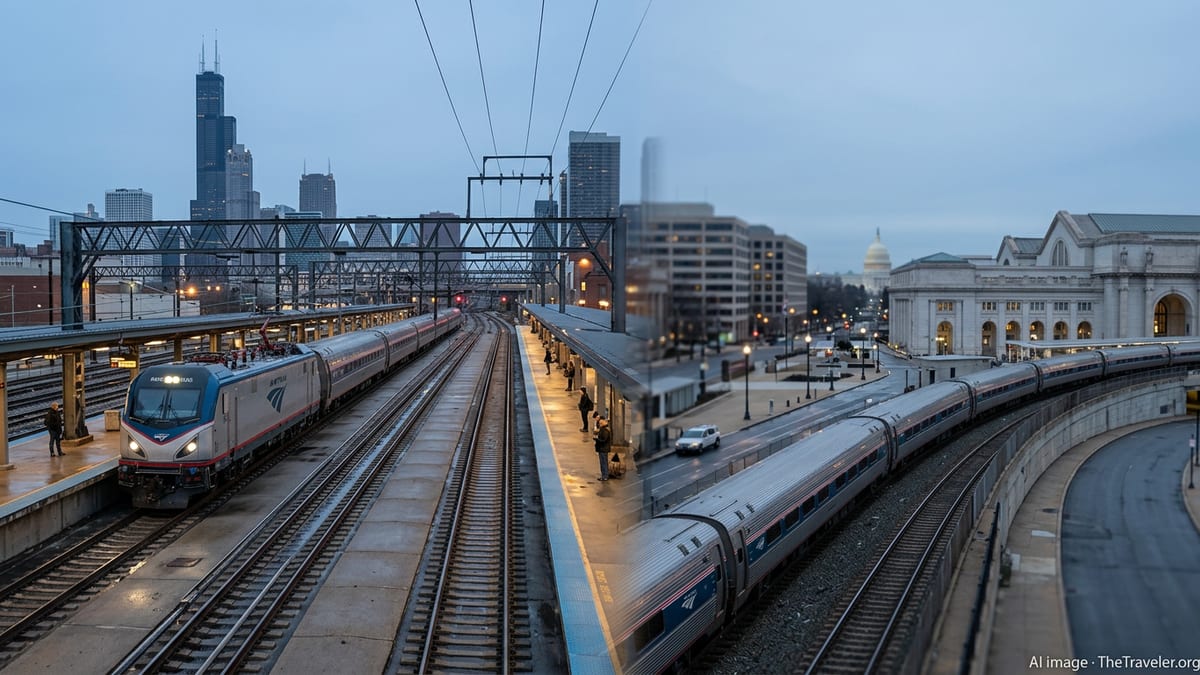
Railway Age has opened nominations for its 2026 “10 Most Influential Industry Leaders” list, inviting the North American rail community to highlight executives, policymakers and innovators driving a new era of passenger and freight transportation across key hubs such as Chicago, Illinois and Washington, D.C.
Nominations Open for 2026 Influential Rail Industry Leaders
Trade publication Railway Age confirmed that submissions are now being accepted for its seventh annual “10 Most Influential Industry Leaders” feature, which will appear in the magazine’s May 2026 issue. The call for nominations is directed at subscribers and industry stakeholders who wish to recognize individuals whose decisions and vision are reshaping the North American rail network.
The program focuses on active leaders whose work spans freight, passenger and commuter operations, infrastructure investment, technology, safety and regulatory affairs. Railway Age describes the honorees as people whose mantra is making a difference and who demonstrate sustained commitment to service and operational excellence across the rail system.
Nominations are scheduled to remain open through early April, giving railroads, suppliers, public agencies and advocacy groups several weeks to put forward candidates. The list will complement Railway Age’s broader portfolio of recognition programs, including its Women in Rail awards and “Fast Trackers” 25 Under 40 series that spotlight emerging talent.
Industry observers note that the 2026 list is expected to reflect mounting pressure on rail leaders to respond to shipper demands, climate targets and ridership expectations, particularly in dense corridors anchored by Chicago and Washington, D.C.
Chicago’s Role as a Strategic Freight and Passenger Hub
Chicago remains one of the most critical junctions in the North American rail network, handling substantial volumes of both intercity freight and passenger traffic. The city’s extensive web of Class I railroads, regional lines and urban transit links has made it a focal point for discussions about capacity, congestion relief and the modernization of rail operations.
Railway Age’s upcoming Next-Generation Freight Rail conference, set for March 10, 2026 at the Union League Club of Chicago, underscores the city’s prominence in these conversations. The event is expected to draw senior executives, engineers and policymakers to debate new operating paradigms, long-train safety research, digital innovation and advanced motive power options while the nominations window for influential leaders is open.
Chicago is also a proving ground for initiatives that integrate freight efficiency with community impact, including grade-crossing improvements, intermodal connectivity and environmental mitigation in neighborhoods adjacent to major rail corridors. Figures who have advanced such projects are likely to feature prominently among this year’s nominees.
With major conferences, award programs and corporate headquarters clustered in and around the region, the city’s rail community is anticipated to be both a source of candidates and a key audience tracking which leaders are ultimately selected.
Washington, D.C. Spotlights Policy, Funding and Passenger Mobility
While Chicago anchors operational and freight debates, Washington, D.C. is central to policy, funding and passenger rail strategy. Federal agencies, congressional committees and national trade associations based in the capital continue to shape the regulatory environment and investment frameworks within which rail leaders operate.
Recent attention on corridor development, safety standards, climate resilience and workforce issues has elevated the profile of public sector officials and agency heads whose decisions influence long term rail planning. From Amtrak’s national network strategy to regional commuter expansions, many of the most consequential choices for travelers and shippers trace back to deliberations in Washington, D.C.
The capital is also a frequent host for high profile transportation awards and conferences that celebrate leadership across modes. These events provide a parallel stage on which Railway Age honorees may already be recognized, particularly those steering major transit agencies, regional rail systems or federal programs tied to passenger mobility.
By opening nominations at a time of intense policy activity in Washington, the publication is positioning its 2026 list to capture the interplay between technical rail expertise and political decision making that will influence how Americans move in the coming decade.
Leadership Trends Shaping the North American Rail Network
The 2026 call for influential leaders comes as the rail industry faces a convergence of challenges and opportunities. Executives and public officials are under pressure to improve safety performance, deploy new technology and respond to evolving expectations around reliability, transparency and sustainability.
In freight, nominees are expected to include leaders advancing precision operations, investing in infrastructure resiliency and experimenting with lower-emission locomotives and alternative fuels. Many are working to align long term capital programs with changing supply chain patterns and expectations for service consistency at ports and inland hubs.
On the passenger side, potential honorees include those expanding regional rail and urban transit, improving accessibility and customer experience, and coordinating rail with other modes such as intercity bus and local mobility services. Chicago and Washington, D.C., both of which rely on multi-layered rail systems, have been early testing grounds for such integrated approaches.
Talent development is another recurring theme. Railway Age continues to spotlight rising professionals through its “Fast Trackers” program, and many of the leaders now being nominated for the influential list have prioritized leadership pipelines, diversity initiatives and training programs that aim to prepare the next generation of rail decision makers.
What the Nominations Mean for Travelers and Cities
While Railway Age’s recognition is primarily directed at industry insiders, the choices made in this year’s nominations will have ripple effects for travelers, shippers and communities. Leaders who are driving investments in capacity, safety and customer experience directly influence on time performance, service options and the environmental footprint of transportation.
In metropolitan regions such as Chicago and Washington, D.C., where rail corridors cut through dense neighborhoods and connect to major employment centers, decisions about scheduling, infrastructure upgrades and station redevelopment can shape daily commutes and long distance travel patterns. The individuals selected for the 2026 list are expected to be at the forefront of these decisions.
The recognition may also amplify conversations about how rail can relieve highway congestion, reduce emissions and support economic development in smaller cities and rural areas connected to major corridors. By emphasizing leaders who collaborate across public and private sectors, the awards signal the importance of partnership in delivering tangible improvements for riders and freight customers.
As nominations move forward in the coming weeks, stakeholders across North America will be watching to see which figures emerge as emblematic of a rail industry seeking to modernize while maintaining its central role in the continent’s transportation network.