

The real cost of living in Thailand for a single expat in 2026 depends primarily on city choice, housing expectations and lifestyle. While Thailand remains significantly cheaper than major Western cities, rapid rent increases in Bangkok, currency movements and moderate inflation have narrowed the gap. Decision makers considering relocation need a realistic, line item based view of day to day expenses rather than headline claims of extremely low living costs.
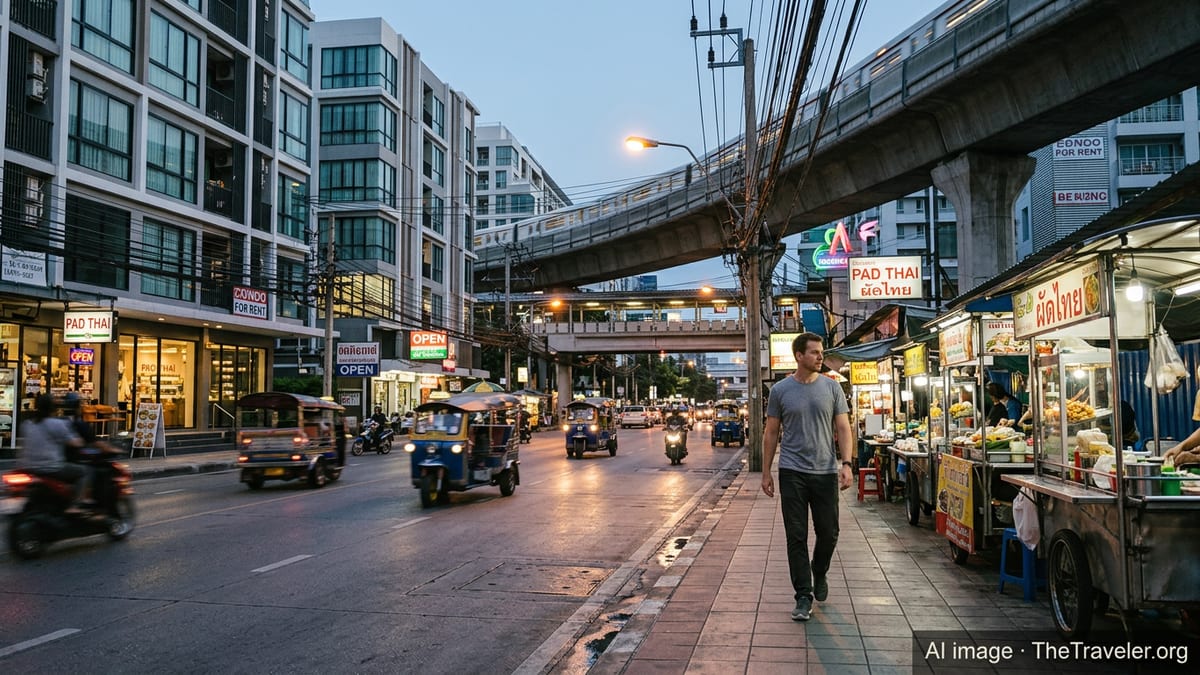
Cost of Living Context for Thailand in 2026
Thailand in early 2026 remains a relatively low to medium cost destination by global standards, but cost dynamics differ sharply between central Bangkok, secondary cities such as Chiang Mai and regional towns. Urban rents have risen since the pandemic recovery period, while food prices have remained more stable due to strong domestic agricultural production and targeted price stabilization measures. Overall consumer price inflation has moderated compared with 2022 and 2023, but cumulative increases mean that older cost of living anecdotes now understate actual expenses.
For a single expat, the largest determining factors of total monthly outlay are rental choices and frequency of imported or Western-style consumption. A modest studio or one bedroom unit on the urban fringe combined with primarily local food can keep total spend within a lower range. In contrast, a modern condo in a central Bangkok district, daily air conditioning, co working membership and regular imported groceries push spending toward levels comparable with mid tier European cities.
Most recent data from rental and energy market trackers indicate that accommodation and utilities account for roughly 40 to 60 percent of a typical single expat budget, with food and local transport making up a further 25 to 35 percent. Discretionary categories such as restaurants, entertainment and short haul travel then determine whether an individual budget falls at the lean or comfortable end of the spectrum.
Housing and Utilities as Core Cost Drivers
Housing is the largest cost component for most single expats in Thailand. As of early 2026, estimates drawn from rental market summaries and aggregated listing data indicate that a one bedroom apartment in central Bangkok typically rents in the range of approximately 25,000 to 35,000 Thai baht per month, with modern furnished condos in highly desirable areas clustering near the upper half of that range. Some surveys place the citywide average for a one bedroom unit in Bangkok close to 28,000 baht per month, reflecting strong demand for centrally located stock and ongoing recovery in corporate and long stay tourism rentals. ([nestopa.com](https://nestopa.com/th-en/articles/monthly-cost-of-living-in-bangkok?utm_source=openai))
Outside prime districts and in older buildings along mass transit lines, single expats can still find smaller units closer to 15,000 to 20,000 baht per month, although competition for these units has increased. In secondary cities such as Chiang Mai, long term rents for a modest one bedroom condo or small house commonly fall in the 7,000 to 12,000 baht range according to 2025 and 2026 expat budget templates and agency estimates. ([thriveinthailand.com](https://thriveinthailand.com/wp-content/uploads/2025/05/Monthly-Thailand-Expat-Budget-Sheet.pdf?utm_source=openai)) These differential rent levels are the main reason why a Bangkok based expat may face a monthly cost of living 30 to 60 percent higher than a counterpart in a northern city.
Residential electricity prices in Thailand in 2025 and 2026 average around 4.1 to 4.3 baht per kilowatt hour, combining base tariff and fuel adjustment components. ([globalpetrolprices.com](https://www.globalpetrolprices.com/Thailand/electricity_prices/?utm_source=openai)) For a single person in a one bedroom condo running one air conditioning unit in the evenings, realistic monthly consumption often sits in the 150 to 250 kilowatt hour range, implying an electricity bill in the region of 700 to 1,200 baht in a smaller unit and potentially 1,500 baht or more in larger, less efficient spaces. Consumption patterns with near constant air conditioning can easily double those numbers. Water charges are generally modest, often between 100 and 300 baht per month for a single occupant, although some buildings levy higher flat service fees.
When service charges, basic internet at roughly 500 to 900 baht per month and a mobile data package of around 300 to 600 baht are included, a realistic combined monthly figure for housing and core utilities for a single expat in central Bangkok typically lies in the vicinity of 30,000 to 40,000 baht for a mid range unit and 18,000 to 25,000 baht for someone prepared to compromise on location or building age. In secondary cities, the same basket more often falls between 10,000 and 18,000 baht, underscoring the importance of geographic choice in Thailand based relocation planning.
Food, Groceries and Everyday Consumption
Food costs in Thailand display a wide spread depending on the balance between local market purchases and restaurant dining, as well as the proportion of imported products. Local inflation figures through 2024 and early 2025 show relatively contained food price increases compared with energy and housing. ([km.fti.or.th](https://km.fti.or.th/wp-content/uploads/2025/07/%E0%B9%80%E0%B8%A8%E0%B8%A3%E0%B8%A9%E0%B8%90%E0%B8%81%E0%B8%B4%E0%B8%88%E0%B9%81%E0%B8%A5%E0%B8%B0%E0%B8%AD%E0%B8%B8%E0%B8%95%E0%B8%AA%E0%B8%B2%E0%B8%AB%E0%B8%81%E0%B8%A3%E0%B8%A3%E0%B8%A1%E0%B9%84%E0%B8%97%E0%B8%A2-%E0%B8%9B%E0%B8%B1%E0%B8%88%E0%B8%88%E0%B8%B1%E0%B8%A2%E0%B8%9A%E0%B8%A7%E0%B8%81-%E0%B8%A5%E0%B8%9A-%E0%B8%A0%E0%B8%B2%E0%B8%A2%E0%B9%83%E0%B8%95%E0%B9%89%E0%B8%89%E0%B8%B2%E0%B8%81%E0%B8%97%E0%B8%B1%E0%B8%A8%E0%B8%99%E0%B9%8C-%E0%B8%9B%E0%B8%B5-2568.pdf?utm_source=openai)) As a result, single expats who are comfortable with Thai dishes, seasonal fruit and vegetables and local staples continue to benefit from comparatively low food expenditure.
A realistic 2026 grocery budget for a single expat relying primarily on local products is often in the range of 4,000 to 7,000 baht per month, covering rice, eggs, fresh produce, chicken or pork, basic household supplies and occasional imported items. Heavy reliance on imported dairy products, premium breads, foreign cereals and European or Japanese branded goods can add several thousand baht per month to this figure. Many expats therefore structure their grocery basket with a core of local staples and selectively add imported items.
Prepared food purchases introduce additional variation. Regularly using inexpensive local food stalls and basic restaurants, a single person can often manage weekday meals at 50 to 80 baht per dish and slightly higher on weekends, leading to an approximate monthly spend of 5,000 to 9,000 baht if eating out once or twice daily. In contrast, frequent dining in mid range international or mall based restaurants at 250 to 500 baht per meal can move monthly food and dining expenditure toward 12,000 to 18,000 baht.
Combining groceries and outside food, a lean yet realistic monthly food budget for a single expat in 2026 is approximately 8,000 to 10,000 baht, assuming mostly local options. A more comfortable pattern combining local and international dining and a wider range of imported groceries typically sits in the 12,000 to 18,000 baht range. Very food centric lifestyles focused on premium venues can of course exceed these figures, but such outlier consumption does not define the core cost of living profile.
Local Transport and Urban Mobility Costs
Transport within Thai cities is comparatively inexpensive by global standards, especially where mass transit is available. In Bangkok, the BTS Skytrain and MRT networks charge distance based fares, with single journeys typically costing the equivalent of approximately 40 to 70 baht for common multi station trips in 2025 and 2026 after modest fare adjustments. Monthly pass products exist in limited and changing forms, but a typical expat relying on public transport, supplemented by occasional ride hailing, can often keep monthly transport costs within a relatively narrow band.
For a single expat living close to a rail station and commuting primarily on BTS and MRT, a realistic monthly budget might be 1,500 to 2,500 baht for transit fares. Adding regular ride hailing for late evenings or poorly connected destinations, at 60 to 150 baht per typical urban journey, can raise monthly transport expenditure to 2,500 to 4,000 baht depending on frequency. Motorbike taxi use and occasional intercity buses or trains would add modestly to that figure.
In Chiang Mai and many provincial cities, absence of extensive rail transit means a heavier reliance on motorbike rental, ride hailing or songthaews. Monthly motorbike rental for a basic automatic scooter commonly falls in the 2,500 to 3,500 baht range, with fuel adding roughly 600 to 1,200 baht depending on usage. Expats who prefer to avoid motorbike travel often pay more in aggregated ride hailing costs. Even so, a typical single expat transport budget in secondary cities still often remains under 4,000 baht per month unless very high travel volumes are involved.
For relocation cost modelling purposes, it is therefore reasonable to assume that urban transport forms a relatively small share of total living expenses in Thailand, especially when compared with housing and food. Only those choosing private car ownership, long commutes from outer suburbs or very frequent intercity flights will see transport become a major cost driver.
Lifestyle, Discretionary Spending and Hidden Costs
Beyond core categories of rent, utilities, food and transport, discretionary consumption patterns play a significant role in shaping the real cost of living for a single expat in Thailand. Key elements include entertainment, fitness, digital services, clothing, personal care, occasional domestic help and short holiday trips inside the region. These categories are highly individualized, but they are critical to defining whether a particular budget is simply survivable or genuinely comfortable for a long term resident.
Gym memberships in urban Thailand range from modest local facilities at around 800 to 1,200 baht per month to branded fitness chains charging 1,500 to 3,000 baht or more, often with joining fees. Subscription based digital services such as streaming platforms and cloud storage usually match international pricing, adding another 500 to 1,500 baht per month for a typical mix. Personal care expenses such as haircuts, basic cosmetics and household cleaning products can total 800 to 2,000 baht depending on preferences.
Entertainment costs are especially variable. A night out in central Bangkok including drinks, restaurant dining and club or live music entry can easily reach 1,000 to 3,000 baht per occasion. Single expats maintaining an active nightlife several times a month will see their monthly discretionary spending climb quickly. In contrast, those who prioritize home cooking, occasional local bars and low cost leisure activities can maintain much lower non essential expenditure while enjoying a reasonable standard of living.
There are also occasional or hidden costs to consider. These may include one time purchases of household items when first setting up a condo, modest clothing replacement due to climate considerations, and periodic health related spending even when core healthcare is insurance funded. Over the course of a year, such items can add the equivalent of several thousand baht per month when averaged out. Effective relocation budgeting therefore benefits from including a buffer line item, rather than basing decisions solely on recurring bills.
Sample Monthly Budgets for a Single Expat in 2026
The following table provides indicative monthly cost ranges in Thai baht for a single expat in Thailand in 2026. Figures are approximate and assume typical Bangkok or large city conditions, using recent rental market and price information as a reference point.
| Category | Lean Budget | Mid Range Budget | Higher Comfort Budget |
|---|---|---|---|
| Rent & building fees | 12,000 - 18,000 | 20,000 - 30,000 | 30,000 - 45,000 |
| Utilities & internet | 1,200 - 1,800 | 1,800 - 2,800 | 2,800 - 4,500 |
| Groceries | 4,000 - 6,000 | 6,000 - 9,000 | 9,000 - 12,000 |
| Eating out | 3,000 - 4,000 | 5,000 - 8,000 | 8,000 - 15,000 |
| Local transport | 1,000 - 1,800 | 1,800 - 3,000 | 3,000 - 5,000 |
| Lifestyle & leisure | 2,000 - 4,000 | 4,000 - 8,000 | 8,000 - 15,000 |
| Other / buffer | 1,500 - 2,500 | 2,500 - 4,000 | 4,000 - 6,000 |
On this basis, an approximate total monthly cost of living for a single expat in 2026 can be summarized as follows for major Thai cities:
| Lifestyle Level | Approximate Monthly Total (Baht) |
|---|---|
| Lean, careful spending | 24,000 - 35,000 |
| Balanced mid range | 35,000 - 55,000 |
| Higher comfort, central Bangkok | 55,000 - 80,000+ |
In secondary cities such as Chiang Mai, equivalent lifestyles generally require 20 to 30 percent less, primarily because of more affordable housing. These figures are not formal salary benchmarks but they provide decision makers with grounded reference points when evaluating whether prospective compensation packages or remote work income streams are sufficient for a sustainable and comfortable single expat life in Thailand.
The Takeaway
For a single expat evaluating relocation to Thailand in 2026, the real cost of living is no longer defined by ultra low historical anecdotes, but it remains competitive relative to many Western urban centers. The key drivers are rent and lifestyle intensity. A basic yet viable existence is achievable in some cities on a budget in the mid 20,000 baht range, but most professionals targeting a balanced standard of living in Bangkok should plan on monthly outlays between roughly 40,000 and 60,000 baht.
Prospective movers should pay particular attention to current rental market conditions in their target neighborhood and to their own likely patterns of imported consumption and entertainment. Core utilities, groceries and transport remain modest in absolute terms, but frequent international style dining, premium gyms and active nightlife can lift overall costs substantially. Incorporating a realistic contingency for occasional purchases and inflation helps avoid underestimation.
In summary, Thailand in 2026 offers a spectrum of cost of living outcomes for single expats. With careful housing selection and measured discretionary spending, it can deliver a solid quality of life at moderate cost. Those seeking high specification accommodation and a heavily internationalized lifestyle should, however, align their financial expectations with a cost profile closer to mid income developed country standards rather than relying on outdated assumptions of universally low prices.
FAQ
Q1. What is a realistic minimum monthly budget for a single expat in Thailand in 2026?
A realistic minimum for a long term single expat willing to live modestly and mostly outside central Bangkok is roughly 24,000 to 30,000 baht per month, assuming relatively low rent, mostly local food and limited nightlife.
Q2. How much should a single expat budget for living in central Bangkok?
A balanced mid range lifestyle in central Bangkok usually requires around 40,000 to 60,000 baht per month, with higher end condo rents and frequent international dining pushing costs toward or beyond the upper end of this range.
Q3. Is Chiang Mai significantly cheaper than Bangkok for a single expat?
Yes. The main difference is rent. Comparable one bedroom units in Chiang Mai often cost 30 to 50 percent less than in central Bangkok, so total living costs for similar lifestyles can be roughly 20 to 30 percent lower.
Q4. How much does rent typically cost for a one bedroom apartment in Bangkok in 2026?
Recent rental data suggests that a typical one bedroom apartment in central Bangkok rents for about 25,000 to 35,000 baht per month, with older or less central units below that range and premium new buildings above it.
Q5. What should a single expat expect to pay for utilities each month?
For a one bedroom apartment with moderate air conditioning use, electricity, water, internet and mobile service together often total around 1,800 to 3,000 baht per month, with heavier air conditioning driving higher bills.
Q6. How much does food usually cost for one person per month in Thailand?
A single expat relying mainly on local groceries and inexpensive Thai restaurants can often spend 8,000 to 12,000 baht per month, while frequent international dining and imported groceries can lift food costs to 15,000 baht or more.
Q7. Are transport costs a major part of the budget in Thailand?
For most single expats, local transport is a relatively small share of total expenses. Public transport and occasional ride hailing in Bangkok or motorbike use in other cities typically results in monthly costs of 1,500 to 4,000 baht.
Q8. How much should be set aside for entertainment and lifestyle spending?
Entertainment, gyms and general leisure can vary widely, but many single expats allocate 4,000 to 10,000 baht per month to this category, with heavy nightlife or premium memberships increasing that figure.
Q9. How does inflation in Thailand affect expat living costs in 2026?
After higher inflation in previous years, price growth has moderated, but cumulative increases mean that rents and some services are noticeably higher than pre pandemic levels, so outdated cost estimates should be treated with caution.
Q10. What overall monthly budget is recommended for a comfortable single expat lifestyle?
For a comfortable and sustainable lifestyle that includes a decent apartment, regular dining out, some travel and leisure, many analysts recommend planning on a monthly budget of around 45,000 to 60,000 baht in Bangkok and somewhat less in secondary cities.