

More news on this day
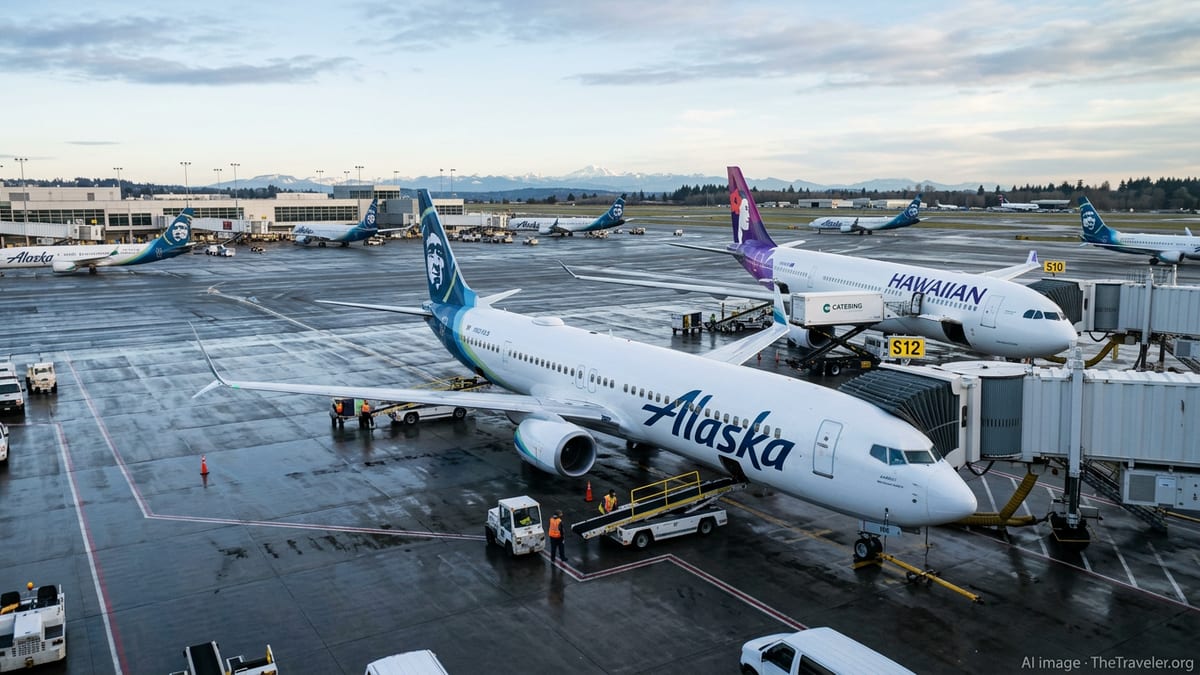
Alaska Airlines and its Hawaiian-branded operation are preparing a record-setting spring 2026 schedule, using their merged networks to push more seats than ever into Hawaii routes and key West Coast hubs just as peak warm-weather travel begins.
Get the latest news straight to your inbox!
What “Record Spring Schedules” Really Means in 2026
Publicly available filings and schedule data for Alaska Air Group show capacity rising steadily through 2024 and 2025, setting the stage for a new high-water mark in spring 2026. Industry analysis points to a combination of more daily departures, larger aircraft on trunk routes and tighter banked connections at major West Coast hubs. For travelers, that translates into more flight options to and from Hawaii and along the Pacific Coast than either Alaska or Hawaiian offered on their own before the merger.
Alaska Air Group completed key integration steps in late 2025, including operating Hawaiian flights under a single air operator’s certificate and aligning call signs and internal systems. By spring 2026, the group is moving into a phase where schedules can be planned holistically instead of airline by airline. Network planners are using this flexibility to time West Coast–Hawaii departures around peak connection banks in Seattle, Portland, San Diego and other growing bases, which allows the combined airline to publish its densest-ever spring timetable.
Reports focused on airport-level traffic show that Alaska has already been using Hawaiian’s widebody aircraft to boost capacity on select West Coast–Hawaii routes, in some cases replacing overlapping Alaska and Hawaiian frequencies with fewer but larger flights. This strategy, combined with overall growth in the Alaska mainline fleet, underpins expectations that the group’s spring 2026 schedule into Hawaii and across the Pacific Northwest will surpass previous records for seats offered.
How the Alaska–Hawaiian Merger Shapes the 2026 Spring Network
Under Alaska Air Group, the Hawaiian brand is being concentrated on flights to, from and within Hawaii, while long-haul flying to Asia and other regions is gradually rationalized. Analysis of schedule changes through late 2025 indicates that some transpacific routes once operated by Hawaiian have been reduced or suspended, freeing widebody aircraft for higher-demand markets and for new joint ventures from Seattle to Tokyo Narita and Seoul Incheon operated under the Alaska umbrella.
Spring 2026 is expected to be the first full shoulder season where these realigned roles are visible in day-to-day schedules. Hawaiian-branded services focus on core flows between the islands and major West Coast cities, while Alaska continues to concentrate on continental and international connectivity from its Seattle hub. For passengers, this manifests as more coordinated departure and arrival times, shared loyalty benefits under Alaska’s Mileage Plan and a common back-end reservation system that is due to be unified in the same time frame.
Industry commentary also highlights that Alaska’s shift to more tightly banked schedules at hubs such as Portland and Seattle increases the usefulness of each Hawaii-bound flight. Rather than a scattering of departures throughout the day, the spring 2026 pattern leans toward well-timed waves: guests arrive from smaller markets in the Pacific Northwest, Mountain West or Midwest and connect onto Hawaiian-branded widebodies heading to Honolulu, Maui or other island gateways within a short window.
Key Spring 2026 Trends for Hawaii-Bound Travelers
For travelers planning trips to Hawaii in spring 2026, the most noticeable change is likely to be schedule density on popular West Coast routes. Hawaii tourism data and airline timetables show that demand between Hawaii and cities such as Seattle, Portland, Los Angeles and San Diego has remained resilient, even as some international markets have softened. The combined airline group is responding by assigning additional capacity on these lanes, which can mean more daily departures at peak times and better odds of finding seats during school breaks and early-summer getaway periods.
Another trend is the growing role of mid-size West Coast bases in feeding Hawaii. San Diego, for example, has seen substantial year-over-year growth in Alaska flights, and projections for the first half of 2026 indicate a further double-digit increase in departures. As these secondary hubs scale up, they become practical alternatives to Seattle or Los Angeles for reaching the islands, with shorter connection times and less congestion.
At the same time, some long-haul routes from Hawaii to Asia and the U.S. East Coast have been trimmed or restructured as part of the post-merger optimization. Travelers who once relied on certain nonstop options may find that spring 2026 itineraries now involve a connection on the West Coast rather than a direct flight across the Pacific. The upside is that the overall number of city pairs available through connections is rising, even if the list of individual nonstops looks different than it did before 2025.
Operational Changes Passengers Will Notice in 2026
By spring 2026, several technical milestones in the integration of Alaska and Hawaiian are scheduled to be visible to passengers. One of the most prominent is the gradual phase-out of Hawaiian’s legacy flight codes in favor of Alaska’s identifiers, reflecting the earlier shift to a single operating certificate. For guests, this means that flights marketed under the Hawaiian brand may appear in booking tools and airport displays with Alaska-style flight numbers, even though the onboard experience, aircraft livery and in-cabin service remain associated with Hawaii.
Travelers connecting between Alaska and Hawaiian-branded flights will encounter a more unified experience in areas such as check-in, baggage handling and customer recognition. Frequent flyers who previously had to navigate separate loyalty programs are being folded into a single framework, with spring 2026 set as a key target for harmonizing mileage earning, redemption and elite benefits across the combined schedule.
Aircraft deployment is another operational change underlying the record spring schedule. Industry observers note that Hawaiian’s Airbus A330 widebodies are increasingly being used as high-capacity shuttles on select West Coast–Hawaii routes, while Alaska’s growing Boeing 737 and 787 fleets focus on continental and international services. This mix allows the airline group to match aircraft size more precisely to demand patterns, particularly during the busy late-spring travel period when leisure demand spikes but business travel patterns still matter on connecting segments.
How to Plan Around the Expanded Spring Timetable
For travelers, the record spring 2026 schedules present both opportunities and new considerations. The expanded network means more chances to find nonstop or single-connection itineraries to Hawaii from smaller U.S. cities, as well as more flexibility in departure times on major West Coast routes. Booking earlier than in past years may still be wise, however, as high-demand dates around school holidays, long weekends and the early-summer shoulder can fill quickly even with added capacity.
Itineraries that involve both Alaska and Hawaiian-branded segments should be examined carefully, particularly in the first months of the unified passenger service system rollout. While the goal of the integration is to simplify connections, travelers may wish to allow slightly longer layovers at key hubs such as Seattle, Portland or San Diego as the new combined systems and schedules settle in.
Finally, passengers who are accustomed to certain nonstop routes that have been restructured in the wake of the merger may need to adjust their expectations for spring 2026. In some cases, a one-stop itinerary via a West Coast hub can now be nearly as efficient as the former nonstop, thanks to banked schedules and coordinated connections. Understanding how the record spring schedule is structured around these hubs will help travelers choose flights that balance total travel time, reliability and fare levels as the Alaska and Hawaiian brands move into their first fully coordinated spring season.