

Rent costs in Madrid, Barcelona and Valencia have diverged significantly in the 2024–2026 period, driven by differing demand pressures, regulatory environments and international tenant interest. Anyone considering relocation to Spain must understand how monthly rent, price per square meter and neighborhood dynamics compare across these three cities, since housing is typically the single largest recurring expense in a relocation package or personal budget.
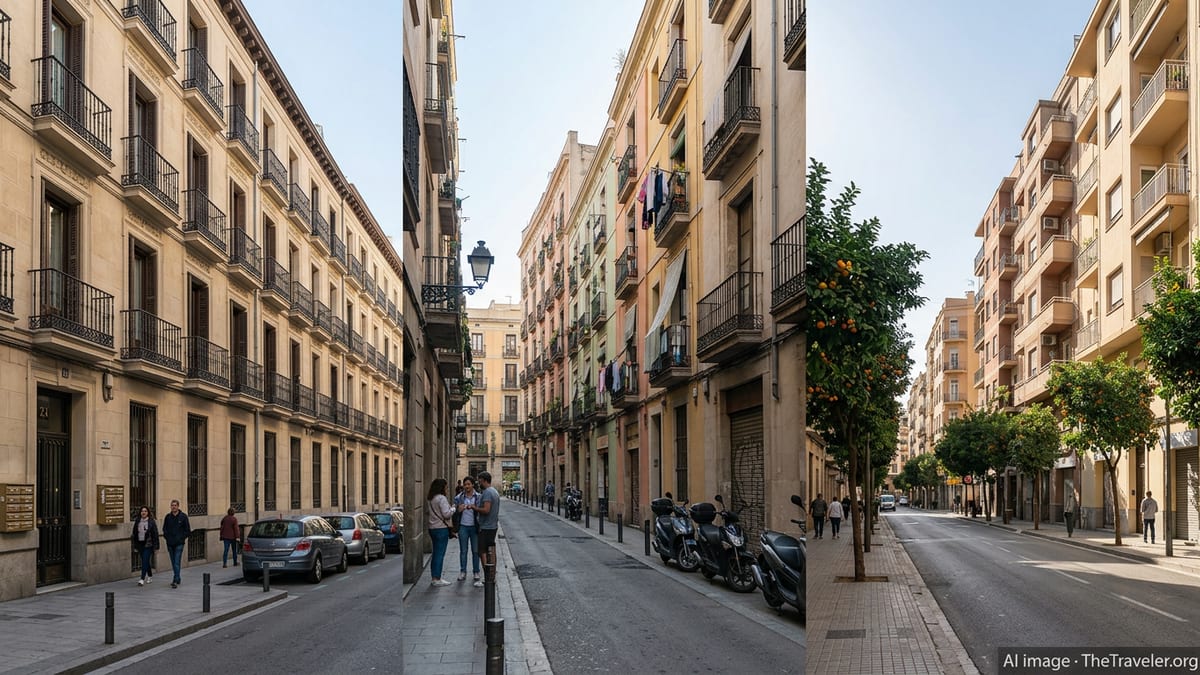
Overview of Rent Levels in Madrid, Barcelona and Valencia
Across Spain, advertised residential rents have risen sharply since 2022, but the three main destinations for international talent and remote workers show distinct price tiers. Barcelona is currently the most expensive of the three on a square meter basis, followed by Madrid, with Valencia still noticeably cheaper but experiencing fast upward pressure. Recent data from leading Spanish portals and regional housing institutes indicate Barcelona city averages close to or above 23 euros per square meter per month, Madrid in the high teens to low twenties depending on district, and Valencia around 11 to 12 euros per square meter citywide as of early 2025.
For a typical 1-bedroom apartment suitable for a single professional or couple, this translates into a broad band of outcomes. In central or highly sought-after areas, monthly asking rents for a 1-bedroom are often in the range of approximately 1,200 to 1,600 euros in Barcelona, 1,100 to 1,500 euros in Madrid and 800 to 1,100 euros in Valencia, with lower figures available further from core districts. Larger family-size units can increase these averages substantially in all three cities.
It is important to note that these figures are indicative and based on advertised and reported averages rather than guaranteed transaction prices. Competition for quality long term rentals is intense in all three markets, and actual rents for well located, modern properties can exceed local averages by a significant margin, particularly in Barcelona and central Madrid.
The structural pattern is clear: Barcelona generally sits at the top of the price range, Madrid follows closely, and Valencia remains more affordable in absolute terms, though the relative discount is shrinking as international demand grows.
Average Monthly Rent and Price per Square Meter
Comparing rent per square meter provides a standardized view across different property sizes. In Barcelona, recent analysis of 2025 market data indicates that the average rent in the city stands around 23.8 euros per square meter per month, implying roughly 2,020 euros for an 85 square meter apartment. Madrid data points for standard long term rentals are somewhat lower overall, commonly in the mid to high teens per square meter on a citywide basis, with higher levels in premium central districts. Valencia’s citywide averages have been reported at around 11.8 to 12 euros per square meter in early 2025.
On this basis, a simplified comparison for an 80 to 85 square meter apartment would be:
Barcelona: approximately 1,900 to 2,100 euros per month for a standard long term lease in the city at average rent levels, with central or especially desirable neighborhoods commanding more. Barcelona’s per square meter rate is materially above the Spanish national average and among the highest in the country.
Madrid: for a similar 80 to 85 square meter unit, typical advertised rents in non luxury central or well connected districts often fall in the 1,400 to 1,800 euro range, with more affordable options still available in outer districts and suburbs. Luxury segment data in Madrid shows rents for high end properties well above 3,000 euros per month, but this is not representative of the mainstream market.
Valencia: applying the roughly 12 euros per square meter benchmark to 80 to 85 square meters results in indicative monthly rents on the order of 950 to 1,050 euros for standard quality housing. In practice, a wide range exists: older units in less central neighborhoods can be materially cheaper, while renovated apartments in prime districts approach or exceed the 1,200 euro mark.
These averages mask significant variation by neighborhood quality, building age, furnishings and contract type. Nonetheless, they provide a useful starting point for relocators when modeling housing cost scenarios across the three cities.
City Center vs Outer Districts and Metropolitan Areas
Rent differentials between central neighborhoods and outer districts are marked in all three cities, but the premium for central locations is highest in Barcelona, followed by Madrid, and more moderate in Valencia. Additionally, the presence of commuter rail and metro networks creates viable options in metropolitan municipalities surrounding the main city limits, which can materially reduce rent costs for relocators willing to commute.
In Barcelona, official Catalan statistics show average contractual rent in the city at slightly above 1,150 euros per month as of late 2025, but this includes smaller and older units and does not fully capture the higher asking prices visible on international portals. Central districts and seafront areas frequently see asking rents substantially above the city average for both 1-bedroom and family apartments. By contrast, rents in municipalities further from the central core, even within the metropolitan region, can be significantly lower, though still elevated by regional standards.
Madrid exhibits a pronounced gradient between core districts within or close to the M30 ring road and peripheral areas beyond it. Reports on the residential market show central districts such as Salamanca, Chamberí and parts of Centro commanding the highest prices. Outer districts and satellite municipalities connected by commuter rail or metro lines offer more moderate rents, sometimes 20 to 30 percent below central levels for comparable size units, albeit with variation in building stock and amenities.
Valencia’s spatial structure is somewhat more compact, and the price differences between central and outer neighborhoods are narrower in euro terms, though still meaningful. Citywide averages around 11.8 euros per square meter conceal premiums in renovated historic districts and sea adjacent neighborhoods. Renting in nearby towns within the Valencian metropolitan area can further reduce costs, but the step down tends to be smaller in absolute terms compared with the large metropolitan belts of Madrid and Barcelona.
Regulation, Rent Caps and Market Dynamics
Regulatory frameworks around rent in Spain have evolved in recent years, with the national housing law enabling regions to declare tense housing markets and apply rent caps or reference indexes. Barcelona, within Catalonia, has been at the forefront of such measures, while Madrid and the Valencian Community have taken different approaches. These policies shape market behavior and can indirectly affect international tenants.
In Catalonia, data from the Catalan Land Institute shows that despite the implementation of rent caps and reference indexes, average contractual rents continued to rise in 2025, reaching approximately 1,153 euros per month in Barcelona city in the third quarter of the year. This suggests that regulatory ceilings, demand pressure and supply limitations interact in complex ways. For relocators, this means that while some contracts may be indexed, the overall environment remains tight and competitive.
Madrid has not applied the same level of rent control at the citywide level. Market reports highlight strong demand, including significant international interest, and limited supply of quality long term rentals, especially in central and high income districts. This combination supports continued upward pressure on rents, particularly for well located and renovated properties. Luxury segment analysis points to average rents between 3,000 and 8,000 euros per month in prime districts, underscoring the upper bound of what high income tenants can face.
Valencia has historically been more affordable, but its relative attractiveness has drawn increasing numbers of international tenants. According to local market commentary and portal data, average rent per square meter has risen, with anecdotal evidence indicating that Valencia rents have moved to roughly half to two thirds of Barcelona levels, depending on neighborhood. Although regional regulation has been less stringent than in Catalonia, growing demand against a limited rental stock is narrowing the affordability gap over time.
In summary, regulation may temper headline growth in some segments, but none of the three cities currently offers a slack rental market. Prospective tenants should expect competitive conditions and be prepared to act quickly on suitable properties, particularly in Barcelona and central Madrid.
Typical Ranges by Property Type and Tenant Profile
While averages provide a macro view, relocators benefit from understanding typical rent ranges for common property configurations. For a single professional or couple seeking a 1-bedroom apartment in a reasonably central location, current market evidence suggests the following working bands. In Barcelona, a centrally located 1-bedroom in a neighborhood popular with international tenants often costs around 1,200 to 1,600 euros per month, with some listings above this range for premium buildings or especially desirable streets.
In Madrid, a similar 1-bedroom in a central district such as Malasaña, Chamberí or parts of Salamanca frequently falls around 1,100 to 1,500 euros per month. More modest outer districts can still offer units closer to 900 to 1,100 euros, though such opportunities tend to be absorbed quickly. Shared flats and room rentals reduce individual cost but are influenced by the same underlying market scarcity.
Valencia remains the most accessible of the three for this tenant profile. A 1-bedroom in central or well connected neighborhoods is often advertised around 800 to 1,100 euros per month, depending on modernity, furnishings and proximity to key areas. Outside core zones or in older buildings, 1-bedroom units can occasionally be found below this, but high demand from both locals and newcomers has compressed the availability of lower priced, good quality options.
For families seeking 2 to 3 bedroom apartments, proportional increases apply. In Barcelona and Madrid, modern 3 bedroom family apartments in attractive urban neighborhoods can easily range from 2,000 to 3,000 euros per month or more. In Valencia, similar size family units are often in the 1,300 to 1,900 euro band, with neighborhood selection making a substantial difference.
Volatility, Trends and Medium Term Outlook
Rent levels in Madrid, Barcelona and Valencia are influenced by national economic conditions, local employment markets, tourism dynamics, demographic shifts and regulatory adjustments. Recent years have seen robust growth in asking rents across all three cities, with Catalan sources reporting double digit year on year increases in early 2025 in parts of Catalonia, and similar upward trends in other major Spanish metros.
Barcelona has experienced particularly strong growth, with some studies pointing to near doubling of average rents over the past decade. The combination of limited housing stock, tourism related pressure and a strong international profile has constrained the availability of long term rentals in central neighborhoods. The introduction of rent caps has not reversed the underlying tightness in the market, and any regulatory changes over the 2026 period will need to be monitored closely by relocators and employers.
Madrid’s rental market has also tightened, particularly in central and higher income districts, but the city’s larger metropolitan footprint offers more gradation and choice across different budgets. While premium segments have seen pronounced increases, a wider radius of commuter friendly neighborhoods provides some relief for tenants willing to trade centrality for lower rent and longer travel times.
Valencia remains comparatively affordable but is now firmly on the radar of international tenants and remote workers. Market commentary and local experience underscore that the city’s rental prices, while still lower in absolute terms, have moved up sharply in percentile terms over the last few years. In relative positioning, Valencia continues to offer a discount versus Madrid and Barcelona, but that discount is gradually eroding as demand outpaces new supply.
The Takeaway
For relocation decision making, the core conclusion is that Barcelona is currently the highest rent market among the three cities, followed by Madrid, with Valencia still offering the lowest average rents but with clear signs of sustained upward pressure. On a per square meter basis, Barcelona stands significantly above the Spanish average and above both Madrid and Valencia, making it the most budget sensitive option, especially for those requiring larger family apartments or preferring central, amenity rich neighborhoods.
Madrid occupies a middle ground. While not inexpensive and subject to strong demand in core districts, its broader metropolitan area provides a wider array of rent levels and property types, allowing greater flexibility in matching housing choices to employer budgets or individual income. For organizations planning relocation packages, housing allowances for Madrid can be calibrated slightly below Barcelona for comparable location and quality, though not by a large margin.
Valencia continues to provide the most accessible rent levels of the three cities, particularly for those open to a range of neighborhoods and property types. However, rising demand and limited inventory mean that this relative affordability cannot be taken for granted in the medium term. Relocators choosing Valencia for its lower rent should factor in possible continued rent growth over the life of their assignment or long term stay.
Ultimately, the choice between Madrid, Barcelona and Valencia from a rent perspective depends on the required property size, tolerance for commuting, neighborhood expectations and the strength of the relocation or salary package. A structured analysis of likely monthly rent under realistic scenarios shows that while Valencia currently offers a meaningful discount and Madrid a modest one versus Barcelona, all three operate in a high demand, low vacancy environment that demands careful planning and timely decision making.
FAQ
Q1. Is Barcelona always more expensive than Madrid for rent?
In most recent data, Barcelona shows higher average rent per square meter than Madrid, especially in central districts, although individual properties can vary.
Q2. How much cheaper is Valencia compared with Barcelona on average?
Valencia’s citywide average per square meter rent is roughly half to around two thirds of Barcelona’s, depending on neighborhood and property type.
Q3. Are rents in all three cities still rising?
Yes. Recent figures indicate ongoing upward trends in Barcelona, Madrid and Valencia, though the pace and local variations differ by district and property segment.
Q4. Can living outside the city center significantly reduce rent?
In all three cities, moving to outer districts or nearby municipalities generally lowers rent, with the largest absolute savings seen around Madrid and Barcelona.
Q5. Do rent caps in Barcelona make it cheaper for new tenants?
Rent caps appear to temper some increases but have not produced broad price reductions; average contractual rents in Barcelona have continued to rise despite regulation.
Q6. What is a realistic budget for a 1-bedroom in central Barcelona?
Relocators should plan for around 1,200 to 1,600 euros per month for a central 1-bedroom, with higher amounts for premium or newly renovated units.
Q7. What about a 1-bedroom in central Madrid?
In Madrid, a similar central 1-bedroom typically falls in the 1,100 to 1,500 euro range, though prices can be lower in less sought after districts.
Q8. How much should be budgeted for a 1-bedroom in central Valencia?
A central 1-bedroom in Valencia commonly runs about 800 to 1,100 euros per month, with some variation based on building quality and exact location.
Q9. Are family size apartments significantly more expensive in all three cities?
Yes. Modern 3-bedroom units in attractive urban neighborhoods often reach 2,000 to 3,000 euros or more in Madrid and Barcelona, and around 1,300 to 1,900 euros in Valencia.
Q10. How should employers differentiate housing allowances between the three cities?
Employers typically set the highest housing allowances for Barcelona, slightly lower for Madrid and meaningfully lower for Valencia, while still allowing for market tightness in all three.