

Germany’s apartment rental market is highly regulated, strongly tenant-protective, and structurally tight in major cities. For internationally mobile professionals, understanding how rents are structured, how landlord screening works, and what legal and financial commitments are typical is essential to assessing whether a relocation is practical and sustainable.
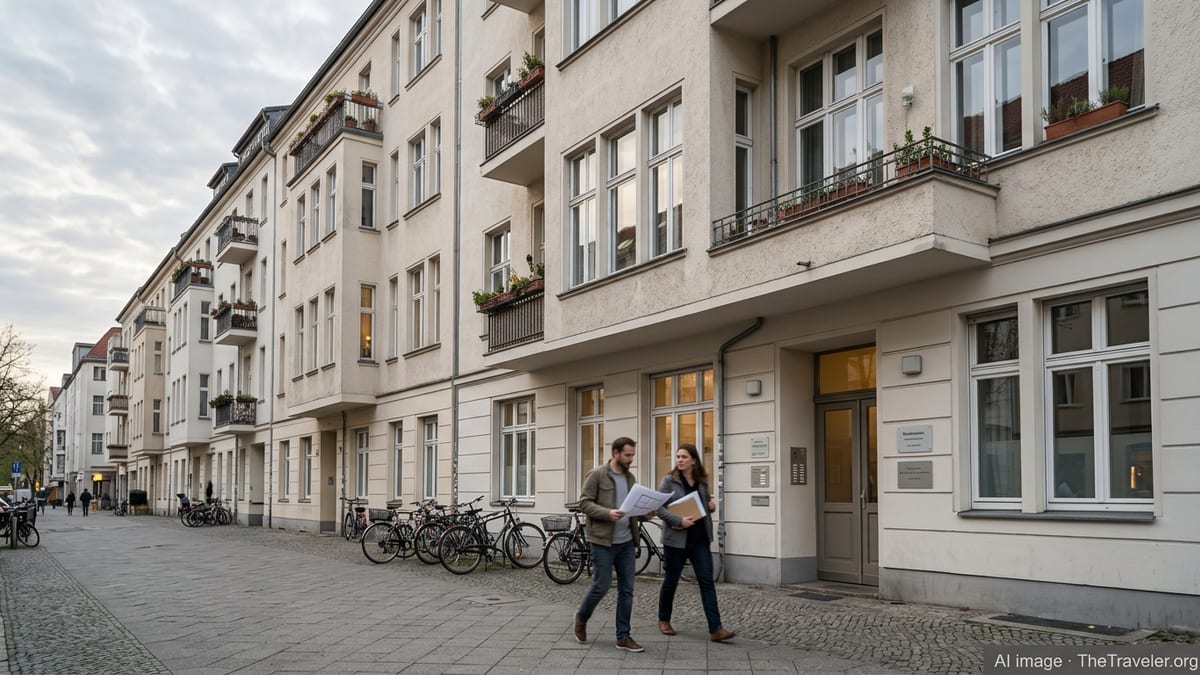
Overview of Germany’s Apartment Rental Market
Germany is a renter-majority country, with well over half of households renting rather than owning. This shapes a mature, legally dense rental system, especially in cities. Demand in major metropolitan areas has outpaced new construction for years, resulting in persistent housing shortages and competitive application processes for standard long-term leases.
Market conditions are particularly tight in the top employment hubs. In 2024 and early 2025, average asking net cold rents for new leases in Munich have been reported in the low to mid 20 euros per square meter per month, with Frankfurt and Stuttgart in the mid to high teens per square meter. Berlin, Hamburg, and Cologne commonly show mid teen euro per square meter levels for new contracts, while smaller or eastern cities may have averages closer to 8 to 12 euros per square meter.
Despite some moderation in rental growth rates during 2025, the underlying structural shortage in big cities remains. Construction completions have fallen short of national political targets, and listings volumes in major markets are still estimated to be significantly lower than a decade ago. In practice, this means that qualified tenants face rising price levels, strict screening, and often crowded viewings, particularly for centrally located or family-sized apartments.
For expats, the key implication is that the German system offers significant long-term security once a lease is signed, but securing that lease in the first place can be challenging, especially without local documentation or a German rental track record.
Understanding Rent Structure and Typical Price Levels
One of the first concepts expats must understand is the distinction between different rent components. The most important terms are “Kaltmiete” (net cold rent) and “Warmmiete” (gross rent including most running costs). The Kaltmiete refers to the pure basic rent for the apartment, without utilities or building operating costs. The Warmmiete consists of the Kaltmiete plus monthly advance payments for utilities and shared operating costs, known as “Nebenkosten.”
Across Germany, the net cold rent per square meter varies substantially by city and neighborhood. In leading cities such as Munich, net cold rents for new contracts above 20 euros per square meter are typical in sought-after districts. Frankfurt and Stuttgart often fall in the mid to high teens per square meter, while Berlin, Hamburg, and Cologne usually show average asking levels in the mid teens. Secondary cities, smaller university towns, and many eastern German locations may range roughly between 7 and 12 euros per square meter for comparable apartments, though there is wide variation by micro-location and property quality.
Nebenkosten significantly influence total housing costs. Estimates from tenant associations and market analyses suggest that average operating costs including heating commonly range around 2.50 to 3.50 euros per square meter per month, with variation depending on building efficiency, heating type, and local energy prices. For a 70 square meter apartment, this can imply an additional 175 to 245 euros per month paid as advance charges on top of the Kaltmiete. As a result, Warmmiete levels in major cities can easily exceed 1,400 to 1,800 euros per month for a mid-sized apartment in a central area.
For relocation planning, it is prudent to model both net cold rent and a realistic range of Nebenkosten, as underestimating ancillary costs is a common budgeting error among new arrivals.
Rent Regulation and Tenant Protections
German tenancy law, embedded in the Civil Code, is highly protective of sitting tenants. Leases for primary residences are usually open-ended, and eviction is tightly regulated and requires specific legal grounds. Once an expat secures a standard unfurnished lease, rent increases and termination conditions are constrained by detailed statutory rules and local reference rent tables, known as “Mietspiegel,” where available.
In many designated tight housing markets, the “Mietpreisbremse” or rental price brake applies to new leases. Under this regime, the rent for a new contract in an existing building is generally limited to no more than a modest percentage above the local comparable rent as defined in the Mietspiegel, although various exceptions apply, particularly for newly built or comprehensively modernized properties. Parallel to this, longer-term rent increases for existing contracts are usually subject to caps over defined time periods, intended to prevent sudden large jumps for sitting tenants.
These protections, combined with strong procedural safeguards against eviction, mean that residential leases are treated almost as semi-permanent tenure. From a landlord’s perspective, the difficulty of eviction and constraints on rent increases create a strong incentive to choose tenants who appear financially stable, reliable, and likely to stay long term. For expats, these same rules offer long-term security but make the initial application stage more demanding.
It is important to note that while regulations can limit rent growth within a specific tenancy, they do not guarantee affordability in high-demand areas. New contract rents in top cities can still be high relative to local incomes, and legal caps are often set with reference to already elevated reference values.
Security Deposits, Upfront Costs, and Financial Commitments
Security deposits, referred to as “Kaution” or “Mietkaution,” are tightly regulated under federal law. The legal maximum is three months of net cold rent, excluding utilities and operating costs. For example, where the Kaltmiete is 1,200 euros per month, the maximum allowable deposit is 3,600 euros, regardless of whether the unit is furnished or includes additional services.
Tenants have a statutory right to pay the cash deposit in three equal monthly installments, beginning with the first month of the tenancy. In practice, however, many landlords prefer or informally expect the full amount to be transferred before move in, particularly in high-demand markets. The deposit must be kept separately from the landlord’s personal assets, usually in a dedicated savings account, and any interest accrued belongs to the tenant. After the tenancy ends, the landlord may take a reasonable period, often several months, to settle potential claims and then must return the balance with interest.
Upfront cash requirements can therefore be substantial. A typical scenario in a major city might include one month’s rent paid in advance, up to three months of Kaltmiete as a deposit, and possible brokerage fees if a letting agent is involved and cost sharing is permitted under the current legal framework. It is not unusual for expats to face initial outlays equivalent to four to five times the monthly Warmmiete when signing a new lease, which can represent a significant liquidity challenge.
Some tenants use alternatives to cash deposits, such as bank guarantees or commercial “Kaution insurance” products. These instruments can reduce immediate cash requirements but often involve non-refundable annual premiums or bank fees. From a relocation planning perspective, it is advisable to factor both high cash deposits and potential guarantee options into relocation packages and employer support discussions.
Application Process, Documentation, and Landlord Screening
The application process for long-term rentals in Germany is formal and document-driven. Landlords typically expect a standardized application form (“Mieterselbstauskunft”) and supporting evidence of identity, income, and creditworthiness. For expats, the primary challenge is often replicating local documentation standards when newly arrived and not yet integrated into German systems.
Commonly requested documents include copies of passports or identity cards, recent payslips or an employment contract confirming salary, and a recent credit extract from the German credit bureau (commonly called a “Schufa-Auskunft”). Applicants are also frequently asked to provide a written statement confirming the absence of rental arrears, as well as references from previous landlords. In shared households or couple arrangements, landlords may request full documentation from each adult tenant, as all signatories become jointly liable for the full rent.
For new arrivals without German credit histories, employers’ confirmation letters and proof of sufficient income or savings gain importance. Some landlords may require higher reassurance, such as a local guarantor, larger deposit within legal limits, or prepayment of a portion of rent where it is legally permissible. This reflects the risk calculus in a system where eviction of non-paying tenants is complex and time consuming.
Viewing appointments in tight markets are often group events, and timing is critical. It is standard practice to submit all documentation quickly after viewing, with complete, well-structured application dossiers standing out positively. For higher-budget corporate rentals, the process can be more individualized, but the underlying expectations around proof of stable income and legal identity remain similar.
Contracts, Lease Terms, and Ongoing Obligations
Typical private rental agreements in Germany are written, detailed contracts that define the apartment, rent structure, ancillary costs, responsibilities, and termination rights. Most leases are open-ended, meaning they have no fixed end date, and can be terminated by the tenant with statutory notice, usually three months, unless a longer period is explicitly agreed. Fixed-term contracts exist but must meet specific legal conditions to be valid.
Contracts clearly distinguish between Kaltmiete and advance payments for Nebenkosten. Tenants pay a fixed monthly advance for utilities and building operating costs, with an annual settlement based on actual consumption and invoices. Surpluses are refunded to the tenant, while deficits must be paid. This annual “Nebenkostenabrechnung” can be a source of unexpected extra costs if advance payments are set too low or energy prices rise during the year.
Maintenance and repair obligations are also delineated. Structural maintenance and major repairs are usually the landlord’s responsibility, while minor repairs within defined cost limits may be shifted to the tenant under “small repair” clauses, provided these clauses remain within reasonable legal thresholds. Tenants are expected to keep the property in good condition, undertake basic upkeep such as regular ventilation to prevent mold, and report defects promptly.
Subletting and home office use are sensitive areas. Taking in long-term subtenants or listing the property on short stay platforms usually requires explicit landlord consent and may be restricted by local regulations. Breach of these contract clauses can trigger warnings and, in extreme cases, termination. For expats planning to host visiting family or use part of the apartment for professional purposes, it is important to understand the contract’s permitted use provisions before signing.
Regional Differences and Strategic Choices for Expats
Germany’s rental landscape is highly regionalized. The top seven cities plus a handful of other metropolitan areas concentrate much of the rental pressure, with high rents, low vacancy, and competitive bidding for attractive apartments. Conversely, many medium-sized cities and rural regions in eastern and northern Germany offer substantially lower rents and a wider choice of properties, though often with fewer international employers and services.
From a purely rental-market perspective, accepting a position in Munich, Frankfurt, or Stuttgart implies significantly higher housing cost ratios. Analyses for typical new leases in these cities suggest that a 60 to 70 square meter apartment can consume well above one third of net household income for average earners, and often more for single-income households. In contrast, similar-sized apartments in lower-cost secondary cities may require closer to 20 percent of household income, albeit with more limited local labor markets.
Expats with flexibility over location can use rent differentials as a key decision factor. For example, hybrid or remote workers might consider basing themselves in a more affordable commuter belt or regional center that still offers rail access to major hubs. However, this strategy must be weighed against commuting costs and the availability of international schooling or other family-related infrastructure that might be more concentrated in major cities.
Corporates designing assignment packages to Germany increasingly differentiate housing support by destination city, reflecting these structural differences. Clarity on typical rent ranges and upfront deposit expectations in the specific region, rather than relying on national averages, is therefore crucial when evaluating an offer.
The Takeaway
Renting an apartment in Germany combines a high degree of legal protection with a structurally tight market in major cities and increasingly complex cost structures. Net cold rent levels in top metropolitan areas are among the highest in continental Europe, and ancillary costs meaningfully increase total housing outlays. Legal mechanisms such as the Mietpreisbremse and local Mietspiegel frameworks moderate rent growth for existing contracts but do not eliminate affordability challenges for newcomers.
For expats, the core decision factors revolve around three dimensions. First, whether projected income comfortably supports local Warmmiete levels plus substantial upfront deposits and fees. Second, whether the documentation and creditworthiness expectations of German landlords can be met within the desired relocation timeline. Third, whether there is geographic flexibility to select a region or neighborhood that offers a more favorable balance between rent levels and professional opportunities.
Well prepared expat tenants who understand the distinction between Kaltmiete and Warmmiete, anticipate high deposits, and assemble a professional application dossier are significantly better positioned in competitive markets. From a relocation planning standpoint, securing corporate housing support or professional local search assistance can materially influence both the quality of housing obtained and the overall feasibility of a move to Germany.
FAQ
Q1. How much rent should expats expect to pay in major German cities?
In top cities such as Munich, Frankfurt, Stuttgart, Berlin, Hamburg, and Cologne, new lease net cold rents often range from the mid teens to above 20 euros per square meter per month, with total Warmmiete for a 60 to 70 square meter apartment frequently exceeding 1,400 to 1,800 euros depending on location and building quality.
Q2. What is the difference between Kaltmiete and Warmmiete in Germany?
Kaltmiete is the basic rent for the apartment excluding utilities and building operating costs, while Warmmiete is the total monthly payment including Kaltmiete plus advance payments for Nebenkosten such as heating, water, and shared services.
Q3. How high can a rental deposit be in Germany?
Under federal law, a standard residential rental deposit cannot exceed three months of net cold rent, regardless of whether the apartment is furnished or unfurnished, and it must be held separately from the landlord’s own funds, typically in an interest-bearing account.
Q4. Is it possible to pay the deposit in installments?
Yes. Tenants have a statutory right to pay the cash deposit in three equal monthly installments, starting with the first month of the tenancy, although in tight markets landlords often prefer full prepayment and may favor applicants who can pay the full amount upfront.
Q5. How strong are tenant protections in Germany?
Tenant protections are extensive. Most leases are open-ended, eviction is tightly regulated and requires legal grounds, and rent increases are constrained by statutory rules, local rent reference tables, and in many cities rental brake regulations for new leases in existing buildings.
Q6. What documents do landlords usually require from expats?
Landlords commonly request proof of identity, recent payslips or an employment contract, a credit report such as a Schufa extract, and sometimes references from previous landlords. For new arrivals without German credit histories, strong employer documentation and evidence of income or savings become especially important.
Q7. Are utilities included in the advertised rent?
Often the advertised rent will mention both the Kaltmiete and an estimated Nebenkosten advance. Utilities and operating costs are typically not fully included in the basic rent, and the final annual settlement can lead to additional payments if advance charges were set too low.
Q8. How long does it take to get a rental deposit back after moving out?
There is no fixed nationwide deadline, but landlords are generally allowed a reasonable period, often several months, to check the property and settle outstanding bills before returning the deposit balance with interest, minus any justified deductions for damage or unpaid amounts.
Q9. Can expats use a guarantor instead of a full cash deposit?
Some landlords accept alternatives such as bank guarantees or commercial deposit insurance products, which reduce immediate cash needs but usually involve non-refundable fees. Acceptance is discretionary and more common in larger cities and for higher-end rentals.
Q10. How do regional differences affect rental decisions for expats?
Rents and vacancy rates vary sharply by region. Major cities combine higher rents and tighter competition with more international employment opportunities, while many secondary cities offer significantly lower rents and easier access to apartments but may have fewer globally oriented employers and services.