

More news on this day
A large-scale outage of Baidu’s Apollo Go robotaxi fleet in Wuhan on March 31 left passengers stranded in the middle of fast-moving traffic and on elevated ring roads, intensifying scrutiny of China’s push to deploy autonomous taxis at scale.
Get the latest news straight to your inbox!
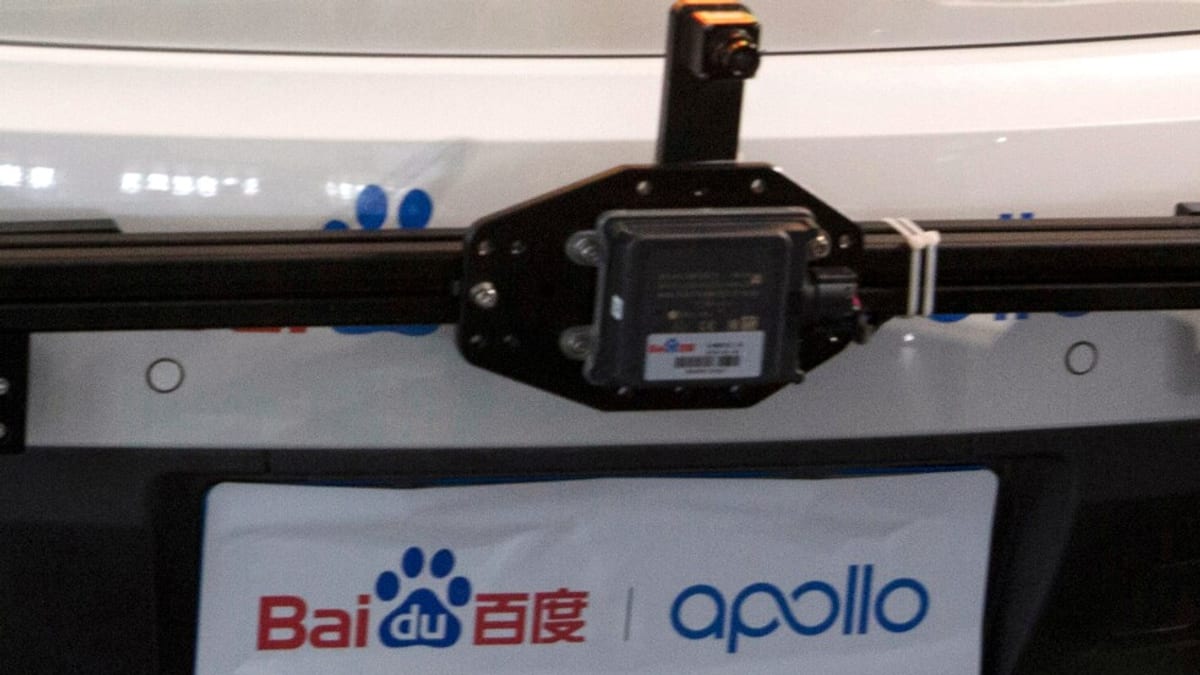
Image by AP News
Robotaxis Freeze Across Wuhan After Reported System Malfunction
Publicly available information indicates that the disruption began shortly before 9 p.m. local time on Tuesday, March 31, when multiple autonomous vehicles operating under Baidu’s Apollo Go ride-hailing service abruptly stopped in lanes of traffic across Wuhan. Reports from Chinese media and international outlets describe cars stalled on elevated expressways, inner-city ring roads and major intersections, with hazard lights flashing as human-driven vehicles navigated around them.
Police statements cited in news coverage describe a preliminary finding of a “system malfunction” that caused more than 100 robotaxis to halt almost simultaneously. The affected vehicles reportedly triggered automated safety protocols and came to controlled stops, but in many cases did so in active traffic lanes rather than on shoulders or at designated pull-off points.
No serious injuries have been reported in the aftermath of the outage, although local and international reports mention minor collisions and extended traffic jams in several parts of the city. Images and videos circulating on Chinese social media platforms show long queues of cars backed up behind stationary white Apollo Go vehicles, some of them stopped in the middle or overtaking lanes on elevated highways.
The incident marks one of the most extensive robotaxi shutdowns yet reported in any country, occurring in Wuhan, a central Chinese metropolis of nearly 14 million people that has been a showcase market for Baidu’s autonomous driving ambitions.
Passengers Weigh Safety Risks as Cars Stop in Live Lanes
Accounts compiled in Chinese media and technology publications describe passengers sitting in stalled robotaxis for up to 90 minutes while traffic continued to flow on either side. In some cases, riders appear to have been able to open doors and exit onto the roadway, while others hesitated amid instructions from in-car screens advising them to remain seated and wait for staff.
Several riders reported that their journeys had already been interrupted multiple times before the final halt, with vehicles stopping and restarting repeatedly before coming to a full stop in traffic. Screens inside some cars displayed error messages indicating a driving system malfunction and estimating that on-site staff would arrive shortly, though passengers later said help took far longer to materialize.
For those trapped on elevated ring roads and expressways, the choice between staying inside a disabled vehicle and stepping out into fast-moving traffic appears to have been particularly fraught. News reports describe passing motorists and road personnel assisting some passengers off the highway, while others waited inside with seatbelts fastened as cars and trucks maneuvered around the stalled robotaxis.
The outage has prompted renewed questions among residents and online commentators about how autonomous taxi services handle rare but high-risk failure modes, such as sudden system-wide disruptions that leave passengers in exposed locations, far from safe pull-over areas.
Traffic Disruption Highlights Infrastructure and Response Gaps
The sudden immobilization of dozens of vehicles at once had a visible impact on Wuhan’s evening commute, according to news and social media footage. Lines of stationary robotaxis effectively narrowed multi-lane roads, forcing vehicles behind them into abrupt merges. On elevated ring roads, where there are no traffic lights and limited shoulder space, the stalled cars reportedly created choke points that rippled far down the network.
Reports indicate that police and road management personnel were dispatched across the city to manage traffic and assist affected passengers. While the overall disruption appears to have been resolved overnight, the event exposed the logistical challenges of responding to a large-scale autonomous fleet failure in dense urban traffic, where each immobilized vehicle can quickly become a bottleneck.
Observers in transport and technology media note that standard operating procedures for breakdowns in conventional taxis or private cars typically assume a single vehicle failure at a time. By contrast, a synchronized malfunction in a connected robotaxi fleet can produce a pattern of stalled vehicles across multiple corridors, complicating the deployment of tow trucks, first responders and support staff.
The Wuhan outage has also fed into a broader discussion within China and abroad about whether city streets, emergency services and legal frameworks are fully prepared for mass deployment of autonomous mobility, especially when the technology is closely tied to centralized software and network connectivity.
Baidu’s Apollo Go Under Scrutiny at Home and Abroad
Baidu’s Apollo Go service has been a flagship of China’s autonomous driving sector, with Wuhan among its largest markets. Publicly available company figures cited in recent coverage indicate that Baidu operates hundreds of robotaxis in the city and more than 1,000 across its wider network, which also includes newly launched services in parts of the Middle East and planned collaborations in Europe.
In earlier promotional material, Apollo Go has been presented as a step toward large-scale, driverless urban mobility, with Wuhan serving as a testing ground for expanded hours and wider service areas. The reported system-wide malfunction now places a spotlight on how Baidu manages risk, redundancy and remote support across such a large fleet.
Industry analysts cited in technology and business reports suggest that the company will face pressure to explain whether the outage stemmed from a software update, connectivity issue, sensor failure or a combination of factors. They also note that regulators may request detailed logs of vehicle behavior, including decisions that led cars to stop where they did and how in-car guidance directed passengers during the incident.
The timing is significant because Chinese robotaxi operators are competing domestically and internationally to prove both reliability and safety. Any perception that vehicles can freeze en masse in complex traffic environments risks undermining public trust in autonomous ride-hailing, even if, as in this case, no severe injuries are reported.
Global Robotaxi Rollout Faces Fresh Questions
The Wuhan breakdown follows earlier high-profile incidents involving robotaxis in the United States and other markets, where self-driving fleets have been criticized for blocking roads, misreading traffic patterns or struggling in adverse conditions. Analysts say the latest outage adds to a growing record of stress tests for a technology that is rapidly moving from controlled pilots to everyday public use.
Comparisons in recent news coverage draw parallels between Wuhan’s immobilized Apollo Go vehicles and previous clusters of stalled autonomous cars in San Francisco, where power outages and system problems have led to traffic jams and abrupt service suspensions. While each case involves different technical causes, together they highlight the vulnerability of large, connected fleets to cascading failures.
For travelers and local residents considering robotaxis as a convenient alternative to traditional cabs or ride-hailing, the episode in Wuhan underscores the importance of clear safety protocols, responsive customer support and urban design that anticipates where and how autonomous vehicles can safely fail. Commentators in transport media argue that emergency playbooks may need to evolve to address scenarios in which dozens of vehicles lose functionality at once, including better guidance for passengers about when it is safe to exit a vehicle in traffic.
As investigations continue and Baidu works to restore confidence in Apollo Go, policymakers and regulators in China and other countries are expected to study the Wuhan outage closely. The findings are likely to influence upcoming rules on fleet supervision, requirements for safe-stop locations, and expectations for how quickly operators must intervene when passengers are left stranded in moving traffic.