

More news on this day
Royal Caribbean International is overhauling three of its best-known cruise ships in European and Asian shipyards, with extensive drydock programs scheduled ahead of the 2026 summer deployment in Alaska, Europe and the Caribbean.
Get the latest news straight to your inbox!
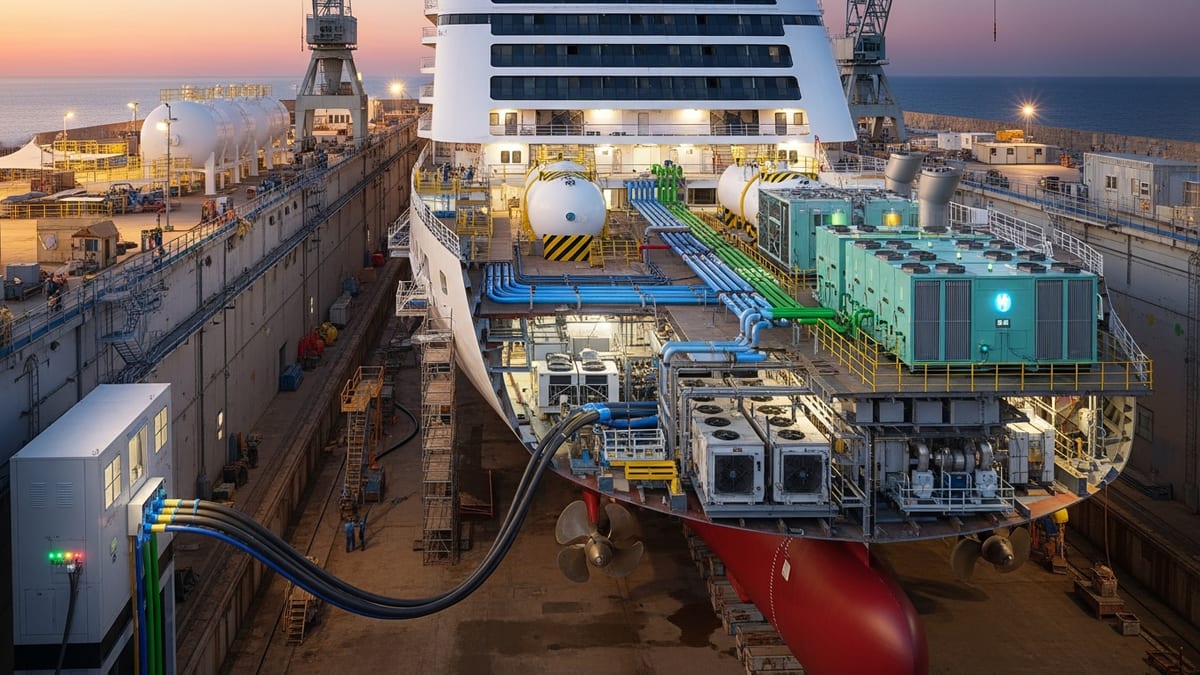
Ovation of the Seas Leads Asian Drydock Push in Singapore
Ovation of the Seas is the first vessel in Royal Caribbean’s latest refurbishment wave, entering drydock in Singapore in mid March 2026 for a month long upgrade program. Publicly available information shows that the Quantum class ship is undergoing a major modernization under the company’s Royal Amplified initiative, with work focused on new dining concepts, nightlife venues and expanded accommodation capacity.
Industry coverage indicates that the refit in Singapore includes the expansion of Casino Royale, the addition of a new nightclub and the introduction of the Pesky Parrot tropical themed bar concept that has appeared on other ships in the fleet. Specialty dining is also being reshaped, with reports pointing to the replacement of Wonderland with Izumi Teppanyaki and the introduction of Giovanni’s Italian Kitchen in place of an earlier Italian venue.
The drydock is also being used to add around 40 new staterooms by reclaiming space from technical and lesser used public areas on several decks. According to trade press reports, teen and suite lounge spaces are being reconfigured and relocated to accommodate the additional cabins and to refresh high yield areas for premium guests.
Once the work is completed in April, Ovation of the Seas is scheduled to sail from Singapore to Yokohama before repositioning to North America for an Alaska season. The refreshed ship is expected to offer open jaw itineraries between Vancouver and Seward, with the upgrades aimed at keeping the hardware competitive in a market where newer ships are raising passenger expectations.
Harmony of the Seas Set for European Upgrade Before Transatlantic Move
While Asia hosts the Ovation project, Royal Caribbean is preparing Harmony of the Seas for a significant drydock in Europe later in 2026. Cruise industry outlets report that the Oasis class vessel is slated for a multi week shipyard stay in the Mediterranean region, with work expected to focus on both technical maintenance and guest facing enhancements ahead of a busy deployment schedule.
Available planning information suggests that Harmony of the Seas will spend the 2026 summer in Europe, operating itineraries that position it as one of the largest vessels in the region. Following that season, the ship is expected to reposition to Port Canaveral in Florida for winter cruises to the Caribbean, including itineraries featuring Royal Caribbean’s private destinations.
The European drydock is understood to be part of the wider Royal Amplified program that has progressively updated older hardware with upgraded pool decks, enhanced family areas and expanded suite offerings. Although detailed yard plans have not been fully published, trade coverage points to further refinement of top deck attractions and dining venues to bring Harmony more in line with features that have proved popular on the newest ships.
For European ports and shore operators, the refit underscores the continued importance of large scale cruise refurbishments to regional shipyards. Facilities in France, Italy and Spain have increasingly specialized in complex cruise projects, and the Harmony program is expected to contribute to that pipeline of high profile work.
Liberty of the Seas Undergoes Modernization Ahead of New Homeports
Liberty of the Seas, a Freedom class ship that has been a mainstay in the Royal Caribbean fleet for more than a decade, is also scheduled for a substantial drydock as part of the 2026 plan. According to deployment summaries and independent cruise reporting, the ship will undergo upgrades before transitioning between North American homeports, including a return to Texas later in the year.
The upcoming refit follows earlier modernization work but is expected to introduce additional family focused features and technology improvements in line with the Royal Amplified template. Publicly available information suggests that the program may include refreshed waterpark elements, updated accommodation categories and upgrades to digital infrastructure to support expanded onboard services.
Liberty of the Seas is set to operate a mix of Caribbean and possibly transatlantic sailings after the drydock, with the refit positioned as a way to keep the established ship competitive against newer entrants in the same markets. Upgrades to energy efficiency systems and routine class maintenance are typically bundled into such projects, and analysts expect similar technical work to be included in Liberty’s yard stay.
The ship’s movements after refurbishment are being closely watched by travel agents and cruise planners, particularly in ports that stand to benefit from increased passenger throughput once the upgraded vessel resumes regular operations.
European and Asian Yards Compete for High Value Cruise Work
The decision to carry out these projects in Europe and Asia highlights how critical those regions have become for cruise repair and refurbishment. Maritime industry publications note that Mediterranean shipyards are investing in large drydocks and specialized cruise capabilities, allowing them to handle some of the world’s biggest passenger ships for complex overhauls.
In parallel, Singapore’s large yard complexes have secured multi year agreements with major cruise groups, including Royal Caribbean Group, to provide repair, maintenance and upgrade services. This has helped position Asia as a key hub for drydock work on vessels operating in the region or transiting between seasonal deployments.
For Royal Caribbean, splitting the projects between European and Asian facilities enables the company to align refits with ship deployment patterns. Ovation of the Seas can undergo work close to its Asian turnaround port before repositioning to Alaska, while Harmony of the Seas can be upgraded in the Mediterranean ahead of its European summer. Liberty of the Seas can similarly time its yard stay around North Atlantic or European positioning cruises.
Shipyards benefit from the predictable pipeline of cruise work, which often occupies large docks for several weeks and supports local clusters of suppliers and contractors. Observers note that the current cycle of refits is part of a broader trend in which cruise operators extend the lives of existing ships with targeted investments rather than relying solely on newbuild tonnage.
Strategic Timing Ahead of a Packed 2026 Cruise Season
The trio of drydocks comes as Royal Caribbean prepares for what industry analysts describe as one of the busiest cruise seasons on record in 2026. New ships are entering service, private destinations are expanding and demand for both Alaska and Mediterranean itineraries remains strong, creating pressure to ensure that existing hardware remains competitive.
By scheduling Ovation of the Seas, Harmony of the Seas and Liberty of the Seas for significant refits ahead of their 2026 deployments, the company is aligning ship capabilities with evolving passenger expectations. Upgraded cabins, refreshed public spaces and enhanced entertainment offerings are becoming critical differentiators as more brands vie for similar markets.
At the same time, the drydock work reflects a focus on efficiency and regulatory compliance. Projects of this scale typically include hull work, propulsion and stabilizer maintenance, and upgrades to environmental systems. These elements may not be visible to passengers but play a central role in keeping older ships aligned with tightening international standards and operating cost targets.
For travelers, the near term impact is a temporary absence of these ships from regular schedules as they enter yards in Europe and Asia. In the longer term, the refits are expected to shape Royal Caribbean’s offerings across Alaska, Europe and the Caribbean, with refurbished vessels emerging in time for peak seasonal demand in the second half of 2026.