

More news on this day
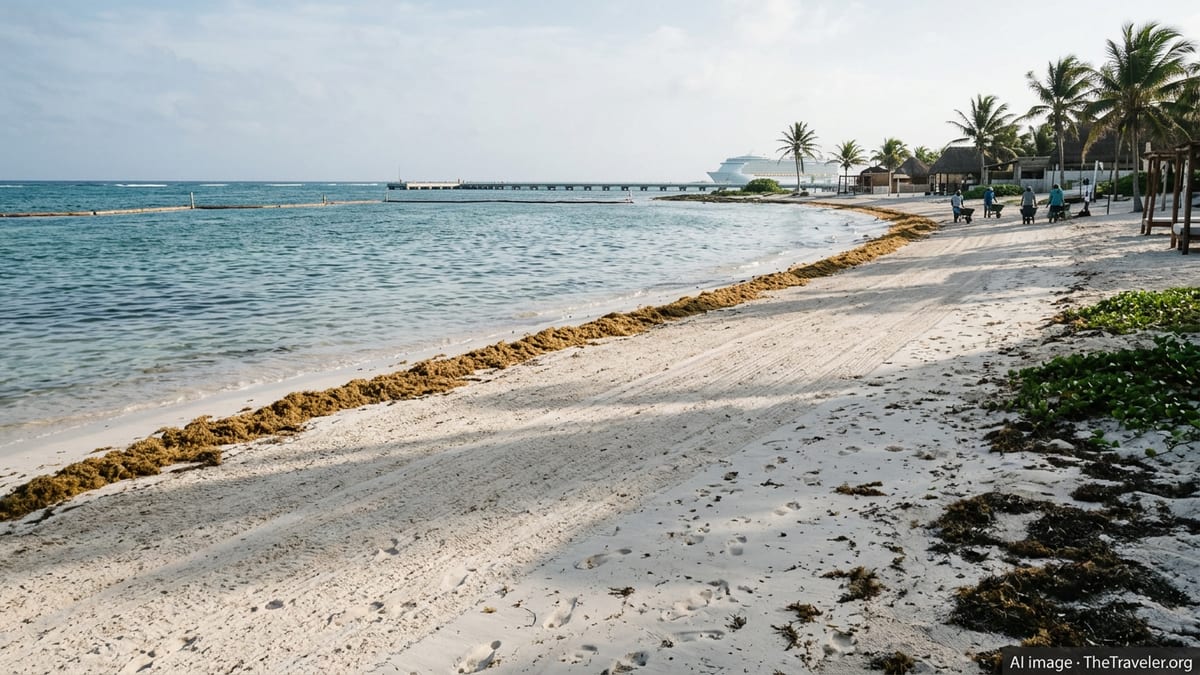
As Royal Caribbean pushes ahead with plans for its new Perfect Day Mexico destination in Mahahual, the cruise giant is increasingly focusing on one very local challenge: seasonal sargassum seaweed that can blanket Costa Maya’s otherwise turquoise shoreline.
Why Sargassum Matters for Perfect Day Mexico
Mahahual, the small village behind the Costa Maya cruise pier, has become a test case for how major cruise brands manage sargassum as they build large-scale beach attractions. The floating brown algae, carried by shifting Atlantic currents, routinely washes ashore along this stretch of the Mexican Caribbean, especially between April and October when landings tend to peak. Local authorities and tourism businesses have long treated it as an urgent issue because heavy accumulations can transform clear-water beaches into malodorous, unusable shorelines within days.
Royal Caribbean’s planned Perfect Day Mexico, set on and around the existing Costa Maya port, is designed around beaches, pools and water attractions that depend on postcard-ready conditions. Company materials promoting the project highlight three separate beaches and extensive waterfront lounging areas, making reliable sargassum control central to the guest experience. The line has made clear in public comments that maintaining clean beaches is part of its broader environmental and community commitments as it invests hundreds of millions of dollars in Mahahual and surrounding areas.
For travelers eyeing itineraries that feature “Western Caribbean & Perfect Day Mexico,” the key takeaway is that sargassum will not be a surprise to local planners, even if it may be new to first-time visitors. The destination is being developed in a region that has already spent years experimenting with barriers, cleanup brigades and reuse projects to keep the shoreline usable during peak season.
Local Cleanup Campaigns and New Barriers
Mahahual’s recent sargassum seasons illustrate the scale of the challenge. In March 2025, state authorities coordinated a mass beach cleanup that removed about 100 tons of sargassum from the town’s waterfront in a single day, with more than 250 people taking part. Officials in Quintana Roo have been steadily installing offshore containment barriers in front of Mahahual, with plans for more than two kilometers of floating systems intended to deflect incoming mats of seaweed before they pile up on the sand.
These efforts are part of a broader state-level strategy that also includes a proposed sargassum management and circular-economy center, designed to monitor landings, centralize collection and explore ways to turn the algae into usable products instead of waste. For cruise passengers, that means beach conditions can vary by week, but cleanups tend to be fast-moving and highly coordinated once landings spike. When arrivals surge, travelers are likely to see tractors, trucks and manual crews at work in the early morning hours, followed by relatively clear beaches later in the day.
Royal Caribbean has positioned itself as a partner in this wider response. Through local meetings and public statements, the company has emphasized that its investment in Perfect Day Mexico goes hand in hand with support for coastal management. Its most recent announcements in Mahahual, including funding to improve critical road infrastructure in the nearby community of Nuevo Mahahual, explicitly frame the project as part of a long-term relationship with residents and municipal authorities.
Royal Caribbean’s Environmental Partnerships in Mahahual
Beyond beach cleaning, Royal Caribbean has begun to establish formal environmental partnerships in Mahahual that intersect with how sargassum and other coastal pressures are managed. In 2025 the company announced a collaboration with the MARES Center, a regional organization focused on conserving coastal ecosystems in southern Mexico. Backed by a dedicated funding pool, the alliance supports restoration work, scientific monitoring and educational activities tied to mangroves, seagrass beds and nearshore habitats.
Company representatives have also stressed that large portions of mangrove within the project footprint are slated for preservation, and that new infrastructure such as wastewater treatment systems, solid-waste handling facilities and on-site water production is being planned to reduce strain on local resources. While these measures are not aimed solely at sargassum, they are part of the same environmental framework that governs how the destination will handle organic material arriving from the sea, stormwater runoff and tourism-driven waste streams.
For environmentally minded travelers, these initiatives offer an early glimpse of how Perfect Day Mexico may differ from older-generation cruise beach stops. Officials say the goal is a resort-style experience that can coexist with nearby protected areas and the Mesoamerican Barrier Reef, which lies just offshore from Mahahual. How effectively those commitments translate into day-to-day operations will become clearer as construction advances and pilot programs for coastal restoration and monitoring ramp up.
Legal Scrutiny and Oversight of Coastal Impacts
Perfect Day Mexico’s environmental footprint, including its approach to sargassum and shoreline management, is under active scrutiny in Mexico. In recent weeks, a federal judge granted an injunction requested by an environmental organization, temporarily halting demolition work at an abandoned water park within the broader project area while authorities review permitting and land-use decisions. Mexican federal agencies are still evaluating Royal Caribbean’s environmental impact submissions for the main development, a process that examines effects on mangroves, dunes, wildlife and coastal dynamics.
Local and national groups have raised concerns about how increased visitor numbers, new water attractions and expanded infrastructure could affect Mahahual’s already stressed sewage and drainage systems, as well as nearby mangrove stands that help buffer sargassum and storm surges. State and federal officials are weighing these arguments alongside the promised economic benefits, including new jobs, higher passenger volumes and opportunities for small businesses connected to the port.
From a traveler’s perspective, the legal proceedings mean that timelines and project details may continue to shift, even as Royal Caribbean markets Western Caribbean sailings that highlight a future stop at Perfect Day Mexico. The company has maintained that it is committed to regulatory compliance and to applying high environmental standards in Mahahual, which would include measures for handling sargassum landings, protecting vegetation that stabilizes the shoreline and monitoring impacts on nearby reefs.
What Cruise Travelers Should Know Before Booking
For guests considering a cruise that advertises Perfect Day Mexico or a call in Costa Maya, expectations around sargassum should be seasonal and flexible. If your sailing falls between late spring and mid-summer, it is reasonable to anticipate some seaweed on the beach or floating in nearshore waters, even with barriers and cleanups in place. Outside of peak months, landings can be lighter, and the water is more likely to resemble the turquoise scenes in promotional images.
It is also worth noting that Mahahual remains an active public destination beyond the planned private resort. Depending on how cruise lines schedule calls once Perfect Day Mexico opens, passengers may still encounter the traditional malecon seafront, independent beach clubs and local tour operators who have spent years adapting to sargassum cycles. Many resorts and community groups now build cleanup time into their daily routine, so an early-morning arrival can look very different from the same beach by midday.
Finally, itineraries that reference Perfect Day Mexico are inherently tied to ongoing construction and regulatory milestones. Travelers should read the fine print on substitution policies, stay alert to itinerary updates issued by their cruise line and understand that descriptions of new attractions and beach areas are based on projects still in development. What is clear already, however, is that managing sargassum in Mahahual has become a central piece of Royal Caribbean’s strategy to deliver a “perfect day” experience on Mexico’s Caribbean coast.