

More news on this day
Air travel across several key Russian hubs is facing significant disruption after 86 delays and 22 cancellations were reported at major airports, affecting passengers flying with Aeroflot, S7 Airlines, Rossiya Airlines, Ural Airlines, and other carriers through Moscow, St. Petersburg, and Kazan.
Get the latest news straight to your inbox!
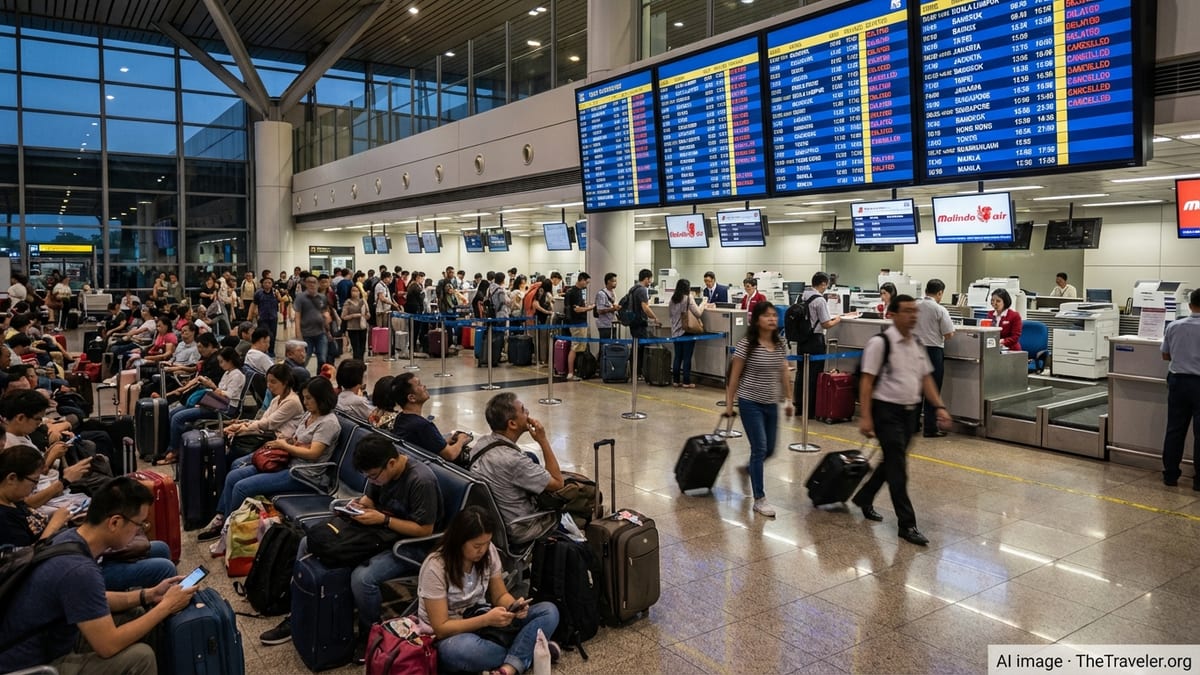
Airports in Moscow, St. Petersburg, and Kazan Report Heavy Disruptions
Recent operational data from Russian airports indicate a pronounced spike in schedule disruptions concentrated at major hubs serving Moscow, St. Petersburg, and Kazan. According to published coverage, a combined total of 86 delayed flights and 22 cancellations has been recorded over a short period, straining capacity at some of the country’s busiest terminals.
Reports highlight Sheremetyevo International Airport near Moscow and Pulkovo Airport in St. Petersburg as among the most affected facilities, with knock-on effects for connecting traffic across the domestic network. Kazan International Airport has also reported irregular operations as delays cascade through shared routes and aircraft rotations.
The disruptions come at a time of strong demand on trunk routes linking Moscow with St. Petersburg and regional centers such as Kazan, where frequent shuttle-style services are designed to support both business and leisure travel. When those tightly timed services are pushed back, subsequent departures often face compounded delays.
Publicly available flight-tracking and performance dashboards show elevated average delay levels across Russian airports in recent days, underlining how even a modest number of cancellations can amplify congestion when schedules are already dense.
Key Carriers Bear Operational Strain
The latest figures show that Russia’s leading airlines are carrying much of the operational burden. Aeroflot, S7 Airlines, Rossiya Airlines, and Ural Airlines collectively operate a substantial proportion of flights at Sheremetyevo, Domodedovo, Pulkovo, and Kazan, leaving them particularly exposed when irregular operations develop.
Performance metrics from aviation analytics platforms indicate that Aeroflot and S7, which dominate many of the high-frequency domestic corridors, have both seen a noticeable share of services running behind schedule. Rossiya and Ural Airlines, with more regionally focused networks, have also encountered disruptions where their flights intersect with the busiest hubs.
In practice, a delay or cancellation rarely affects a single airport in isolation. Aircraft and crews typically rotate between Moscow, St. Petersburg, and regional cities such as Kazan on the same day. When one leg is disrupted, airlines are often forced to re-sequence aircraft usage, reassign crews, or consolidate flights, which can reduce resilience to further operational shocks.
According to information compiled from carrier statistics and airport boards, passengers on both short domestic hops and longer connecting itineraries are experiencing extended waits, missed onward connections, and last-minute schedule changes as airlines work through backlogs.
Possible Triggers Range from Weather to Technical and Airspace Constraints
Publicly available information does not point to a single, uniform cause for the current pattern of 86 delays and 22 cancellations. Instead, analysts note that multiple common factors can combine to disrupt air traffic across a region, particularly in a large and climatically diverse country like Russia.
Short-notice weather shifts remain a frequent driver of irregular operations, especially around Moscow and St. Petersburg where traffic density is high and runway throughput is sensitive to visibility and wind conditions. When arrival rates are reduced, even briefly, holding patterns and ground queues can form, generating secondary delays that last well beyond the initial weather event.
Technical issues in airport systems, airline information technology, and air traffic management have also caused notable disruptions in Russia in the past, according to archived coverage and aviation industry reports. Even localized outages in check-in, baggage handling, or crew rostering systems can lead to missed departure slots and forced cancellations when recovery options are limited.
In addition, route changes and temporary airspace constraints can lengthen flight times and complicate scheduling, particularly on busy corridors linking Moscow to St. Petersburg and to regional airports such as Kazan. When aircraft spend longer in the air or are rerouted away from optimal tracks, turnarounds at destination airports can slip, feeding additional delay into later services.
Impact on Passengers and Domestic Travel Patterns
The immediate effect of the latest disruptions has been felt by passengers facing prolonged waits, last-minute gate changes, and in some cases overnight stays. Travel advisories compiled by industry-focused outlets encourage passengers to monitor their flight status closely, arrive at airports earlier than usual, and be prepared for rebooking if their service is canceled.
Travelers relying on domestic connections are particularly vulnerable. Many itineraries within Russia involve a change of planes in Moscow or St. Petersburg, and public data on missed-connection risk shows that even relatively short upstream delays can cause passengers to misconnect at hub airports. This can be especially disruptive for those heading onward to smaller regional cities with fewer daily flights.
The uncertainty has also prompted some travelers to look again at alternative modes, such as high-speed rail between Moscow and St. Petersburg, where seats can sell out quickly during periods of aviation disruption. For journeys involving Kazan and other Volga region destinations, long-distance trains and intercity buses offer additional options, although they usually require more travel time than air services.
Industry observers note that recurring episodes of delays and cancellations can affect traveler confidence in domestic air travel, particularly among infrequent flyers. However, Russia’s main carriers continue to maintain dense schedules on core routes, reflecting ongoing demand despite periodic operational challenges.
What Travelers Can Do When Flights Are Delayed or Canceled
Consumer guidance from travel organizations and passenger-rights resources emphasizes the importance of documentation when disruptions occur. Passengers are advised to keep boarding passes, receipts for meals and accommodation, and any written notifications of delays or cancellations provided at the airport, as these may be needed later when submitting claims.
For delayed departures, publicly available guidance suggests that travelers should promptly check their airline’s mobile app, website, or airport customer service desks for alternative routing options. When flights are canceled, same-day rebooking on another departure with the same airline is common, though capacity constraints can limit availability on busy routes linking Moscow, St. Petersburg, and Kazan.
Travel and aviation advisories also recommend that passengers build flexibility into their plans whenever possible, including longer layovers for self-planned connections and refundable or changeable accommodation bookings at destination. This can help reduce financial losses when transport plans are disrupted by events beyond the traveler’s control.
As Russian carriers work through the latest backlog of 86 delayed and 22 canceled flights, observers expect some residual knock-on effects to continue for at least the short term. Travelers using Aeroflot, S7 Airlines, Rossiya Airlines, Ural Airlines, and other operators through Moscow, St. Petersburg, and Kazan are being urged by publicly available information sources to stay alert to schedule updates and prepare for potential changes to their itineraries.