

More news on this day
Rising jet fuel costs tied to the deepening US–Israel–Iran conflict are rippling through Europe’s skies, with Ryanair warning that summer schedules may be trimmed and fares pushed higher just as peak holiday demand builds.
Get the latest news straight to your inbox!
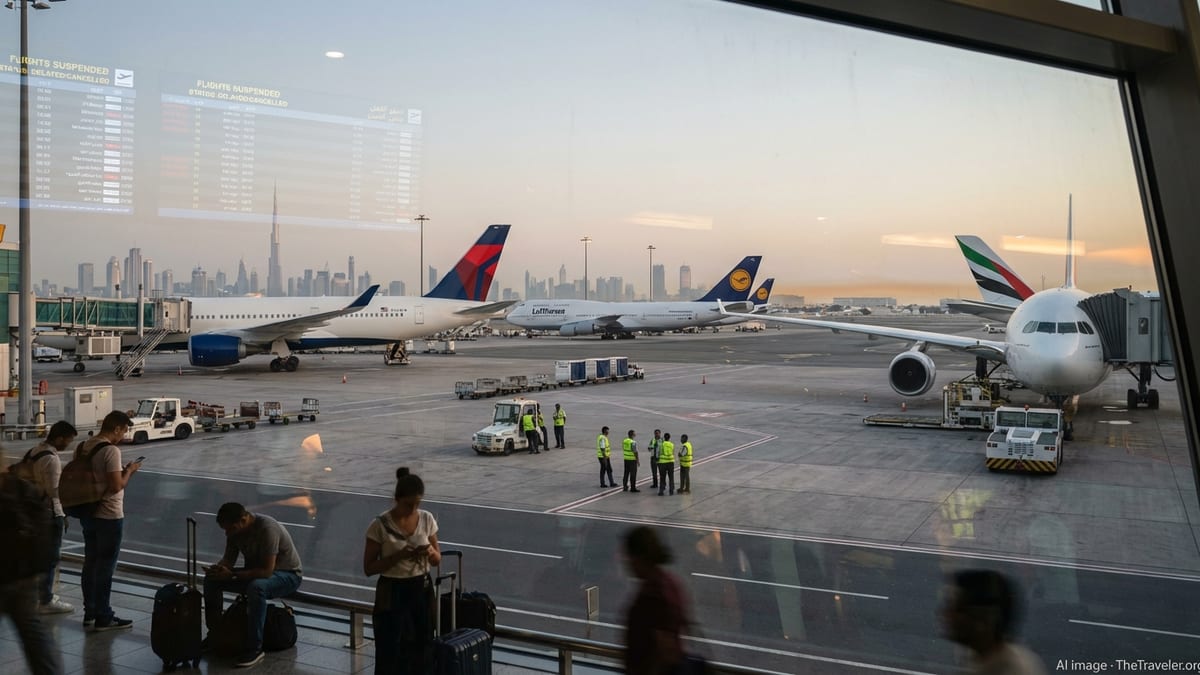
Fuel Shock From Middle East War Reaches European Short-Haul Giants
The 2026 war involving the United States, Israel, and Iran, along with the effective closure of the Strait of Hormuz, has triggered one of the sharpest oil supply shocks in decades. Publicly available assessments by energy agencies describe a severe disruption to global crude flows, with a particular squeeze on refined products such as jet fuel crucial to commercial aviation in Europe.
As oil prices have surged, the cost of kerosene used by airlines has more than doubled compared with late 2025 levels, according to economic analyses of the conflict. Airlines are now paying far more to keep aircraft in the air, while also facing detours to avoid closed or volatile airspace over parts of the Middle East, which increases fuel burn and operating complexity.
European low cost carriers, built on tight margins and high aircraft utilization, are among the most exposed. Their business model depends on ultra-efficient operations, lean staffing, and high seat density to sustain rock bottom fares. A rapid, externally driven spike in fuel prices tests that formula in ways not seen since the energy volatility that followed the pandemic years.
Reports from aviation industry trackers suggest that while long haul carriers can sometimes reprice premium cabins or redeploy wide body aircraft, short haul budget operators have less flexibility. Many have been forced to contemplate capacity cuts or fare surcharges on bread and butter routes across the continent.
Ryanair Warns of Potential Cancellations as Hedging Limits Are Exposed
Ryanair, Europe’s largest budget airline by passenger numbers, has entered this crisis with substantial fuel hedging in place. Company disclosures and financial coverage indicate that around 80 percent of its jet fuel needs are locked in at about 67 dollars per barrel until March 2027, insulating much of its consumption from day to day market spikes.
The remaining 20 percent, however, must be sourced at current prices, which recent interviews with the carrier’s leadership describe as close to 150 dollars per barrel. That gap is large enough to eat significantly into margins, particularly at a time when competition and regulatory pressures limit how quickly fares can be raised on some routes.
In recent days, Ryanair’s senior executives have used media appearances and investor updates to flag a “reasonable” risk that between 10 percent and 25 percent of its fuel supply could be at risk during May and June if the conflict and associated shipping disruptions persist. Publicly available coverage of those comments notes that if physical fuel shortages emerge in Europe from June, the airline will consider cancelling flights or thinning out its summer schedule to conserve supply.
Analyst reports summarizing these warnings state that intra European routes on which Ryanair carries large volumes of leisure traffic are especially vulnerable. Some coverage highlights that investors have already marked down earnings expectations for the airline, with brokerages cutting target prices on the back of higher fuel assumptions and the possibility of reduced capacity.
Portugal and Key European Markets Brace for Network Cuts
For now, there is no formal announcement of country specific cancellations by Ryanair tied directly to fuel shortages. However, network experts and regional media in Spain, France, Germany, Belgium, Portugal, and Croatia are closely watching for adjustments as the summer timetable approaches. These markets are heavily reliant on low cost traffic for inbound tourism and for migrant and expatriate communities shuttling between home and work.
Ryanair has already demonstrated a willingness to trim or axe routes where operating costs and taxes undermine profitability. In France, for instance, publicly available coverage has documented earlier decisions to drop certain services after aviation taxes increased in 2025. Industry observers now suggest that similar cost based decisions could be extended if fuel prices remain elevated through late spring.
In Spain and Portugal, local tourism commentators warn that secondary airports serving coastal holiday regions are on the front line. Many of these destinations depend disproportionately on ultra low cost carriers to feed hotels and resorts during June, July, and August. A handful of smaller airlines have already cancelled selected flights in Spain, citing fuel costs linked to the Iran war, signaling how quickly the situation can translate into schedule cuts.
Germany, Belgium, and Croatia, which all host key Ryanair bases or receive substantial seasonal traffic, could see a more selective reshaping of capacity. Reports indicate that airlines under pressure often prioritize the busiest city pairs and consolidate weaker routes by reducing weekly frequencies or upgauging aircraft size rather than exiting markets entirely at the first sign of trouble.
How Summer Travellers Could See Plans Disrupted
The combination of high demand and constrained supply is likely to reshape how Europeans travel this summer. Expert commentary suggests that where flights are not cancelled outright, fares will probably rise, especially on popular weekend departures and school holiday peaks. Travelers booking late may find fewer ultra cheap promotions and more dynamic surcharges that reflect fuel costs.
Analysts focusing on Ryanair’s business model note that, even with robust hedging, the airline faces difficult trade offs. It can absorb part of the fuel shock and accept lower profits, it can selectively cut frequencies to keep planes full and fuel use optimized, or it can pursue more aggressive fare increases on routes where it has strong market share. In practice, the carrier may use a combination of these responses, varying strategy across individual markets.
For passengers, this translates into a more fluid environment than the prewar norm. Schedule changes announced only a few weeks before departure could force rebookings onto less convenient flights or alternate airports. While European consumer protection rules require airlines to offer refunds or rerouting when flights are cancelled, those safeguards do not guarantee that a comparable low fare or departure time will be available during a high pressure peak season.
Travel insurers and consumer advocates emphasize that the disruption risk is not evenly distributed. Routes with multiple competing carriers may retain more stability, whereas thinly served destinations reliant on one or two low cost operators could experience sharper cuts. Holidaymakers with fixed accommodation dates or cruise departures are especially exposed if their original flights disappear from the timetable.
Look Before You Leap: Practical Steps for Booking Europe Trips Now
With uncertainty swirling around jet fuel supply and pricing, specialists in travel risk management are advising passengers to scrutinize their plans more carefully than in recent summers. One recurring recommendation is to avoid rigid, non refundable itineraries on the cheapest possible tickets, particularly on routes where a single low cost carrier dominates.
Public advice from consumer groups highlights the value of building flexibility into travel dates and considering slightly higher fare classes that permit changes for a lower fee. Travelers are also being urged to purchase comprehensive insurance that explicitly covers airline schedule changes stemming from industrial action, operational issues, or broader disruptions, while noting that many policies treat fuel related cancellations as standard operational risk.
Another strategy gaining attention is to book flights into major hubs that host multiple airlines, rather than niche airports served by a single budget operator. If an airline like Ryanair later trims its schedule, passengers at major airports in Spain, Portugal, France, Germany, Belgium, or Croatia may have more alternative carriers to fall back on, even if fares are higher than originally planned.
As the conflict in the Middle East evolves and European fuel supply forecasts are updated, airlines are expected to keep revising capacity for late summer. For travelers, the message emerging from current reporting is straightforward: secure plans early, monitor booking updates closely, and be prepared to adjust if the fuel shock forces Europe’s ultra low cost flying model to temporarily hit the brakes.