

More news on this day
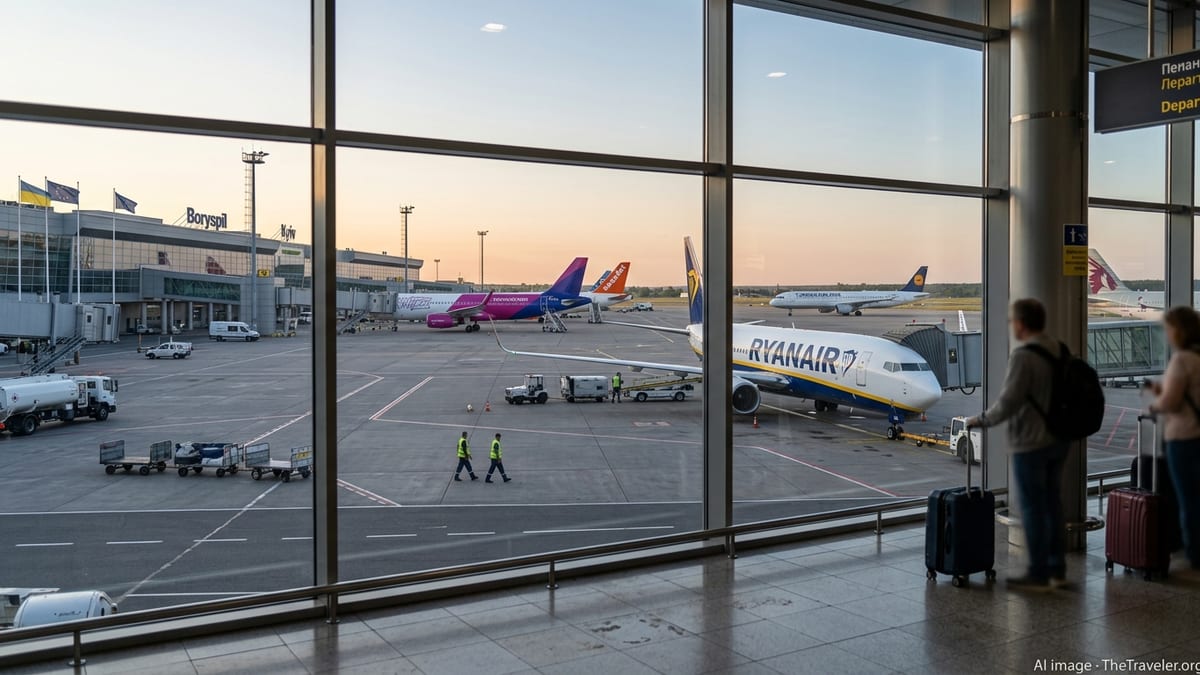
Ryanair has joined a growing list of European and Gulf carriers positioning for a rapid return to Ukraine once its airspace reopens, with industry planning focused on a tourism surge from Poland, Hungary, Germany and the United Kingdom that could quickly refill hotel rooms in Kyiv, Lviv and Odesa.
Get the latest news straight to your inbox!
Carriers Draw Up Postwar Playbooks For Ukraine
Low cost giant Ryanair is now firmly aligned with rivals Wizz Air and EasyJet in preparing detailed return plans for Ukraine, according to recent industry coverage. Reports indicate that Ryanair has discussed basing multiple aircraft in the country and aims to ramp up capacity within weeks of a ceasefire and a formal safety green light for civilian flights.
Earlier reports on Wizz Air’s strategy describe a phased restart, with around 30 routes in the first weeks after airspace reopening and ambitions to carry several million passengers per year into Ukraine’s main cities. EasyJet, which did not serve Ukraine before the full scale invasion, has also been cited in European business media as evaluating entry once a political settlement and safety approvals are in place.
Legacy and network carriers are moving in parallel. Lufthansa, Turkish Airlines, airBaltic and Qatar Airways have all been named in recent aviation and business reports as actively studying route resumption into Ukraine once conditions allow. Publicly available information points to interest in rebuilding hubs at Kyiv’s main airports, restoring links to Lviv, and ultimately re-establishing access to the Black Sea port city of Odesa.
While timelines remain dependent on security and regulatory decisions, the volume of planning activity signals that major airlines intend to move quickly when risk assessments and insurance markets permit a restart of scheduled passenger services.
Reopened Airspace Seen As Trigger For Tourism Recovery
Industry analyses suggest that the reopening of Ukrainian airspace would act as a powerful catalyst for inbound tourism and city break travel. Before flights were suspended in February 2022, Kyiv, Lviv and Odesa had grown into established short haul city destinations for weekend trips, cultural tourism and conference traffic from across Europe.
With direct flights restored, travel demand from nearby source markets such as Poland and Hungary is expected to recover first. Rail and road connections between these countries and western Ukraine have remained busy for business, family and humanitarian travel. Airlines and tourism analysts now anticipate that, once safety perceptions improve, many of these travelers could shift back to air, particularly for leisure visits and events.
Germany and the United Kingdom are also seen as critical to any tourism rebound. Prior to the war, German and British visitors were among Ukraine’s higher spending city tourists, drawn to Kyiv’s hospitality scene, Lviv’s historic center and Odesa’s Black Sea waterfront. Aviation planners are already modelling how restored nonstops from hubs such as Berlin, Frankfurt, Munich and London could quickly rebuild these flows.
Tourism consultants note that the first waves of postwar travel often mix returning diaspora, reconstruction stakeholders and cautious leisure visitors. Frequent low cost services combined with network-carrier connections via major hubs would give Kyiv, Lviv and Odesa the connectivity they need to compete for that early demand.
Kyiv, Lviv And Odesa Hotels Position For A Demand Spike
Hotel operators in Ukraine’s major cities have spent much of the past two years adapting to irregular demand, long stay guests and the constraints of conflict. Industry commentary now suggests that many properties are quietly planning for a sharp shift in market mix once international flights resume, particularly in Kyiv and Lviv, where prewar tourism infrastructure was most developed.
Kyiv’s hotel sector, which once served a blend of corporate travelers, conference delegates and city break tourists, is expected to benefit significantly from the return of carriers such as Ryanair, Wizz Air and Lufthansa. A renewed schedule of low cost and full service flights into the capital’s main airports would make it easier to revive international events, exhibitions and business meetings that support midscale and upscale hotels.
Lviv, long promoted as a cultural gateway to western Ukraine, is likely to see strong interest from Poland and other neighboring markets as soon as weekend leisure trips become straightforward again. Reports from regional tourism bodies indicate that many of the city’s boutique and heritage hotels view the reopening of air links as the key milestone for restoring prewar occupancy levels.
For Odesa, the return of air access is particularly important. While some domestic tourism has persisted via rail and road, widespread international beach and city tourism is difficult to sustain without reliable flights. Aviation planning that connects Odesa to hubs in Turkey, the Gulf and central Europe through carriers such as Turkish Airlines and Qatar Airways would support both resort properties along the Black Sea and business hotels in the city center.
Safety, Regulation And Insurance Remain The Pacing Factors
Despite growing airline enthusiasm, aviation safety agencies in Europe continue to treat Ukrainian airspace with caution. Publicly available assessments from regional regulators underline that any reopening will depend on robust, independently verified security conditions, including air defense coverage, deconfliction with military activity and the ability to protect civilian airports from attack.
Insurance availability is another central constraint. Without war risk cover at commercially viable premiums, airlines cannot deploy aircraft or crew into Ukrainian territory, regardless of demand. Industry specialists point out that governments and multilateral institutions may need to support or partially underwrite insurance frameworks to unlock the first phase of restored scheduled flights.
Regulatory coordination between Ukraine and the European Union will also shape the pace of recovery. Travel industry analysis notes that a staged reopening is more likely than a single, nationwide switch, with western airports such as Lviv often mentioned as possible early candidates once conditions stabilize. Over time, a broader reopening that includes Kyiv and Odesa would be necessary to fully restore Ukraine’s international tourism network.
Until a clear security and regulatory roadmap emerges, airline plans remain indicative. However, the level of detail in current capacity proposals suggests that once the necessary safety and insurance thresholds are met, carriers will move quickly, creating a sudden jump in seat supply that hotels and local tourism operators will need to be ready to absorb.
New Competition For Routes From Poland, Hungary, Germany And The UK
When Ukraine’s skies do reopen, air service analysts expect intense competition on routes from neighboring and high demand markets, particularly Poland, Hungary, Germany and the United Kingdom. These countries already serve as key transit and origin points for Ukrainian travelers and are likely to anchor the first wave of restored city pairs.
From Poland, carriers are expected to focus on links between Warsaw, Krakow and regional airports and cities such as Lviv and Kyiv. For Hungary, Budapest’s role as a low cost hub would make it an obvious base for Wizz Air and potentially Ryanair to rebuild Ukrainian networks. Germany’s large Ukrainian diaspora and strong business ties point to renewed flights from Frankfurt, Munich and Berlin, while the UK market may initially be served through London’s major airports.
Low cost airlines are positioning to capture price sensitive leisure and visiting friends and relatives traffic, while full service carriers such as Lufthansa, Turkish Airlines and Qatar Airways are eyeing higher yield connecting passengers through their hubs. This dual model could provide Ukraine with a more diverse mix of inbound travelers than before the war, covering backpackers, city break tourists, corporate travelers and long haul visitors arriving via transfer.
For Kyiv, Lviv and Odesa, the prospect of several major airline groups and low cost rivals competing on fares and frequencies may translate quickly into fuller planes and, in turn, busier hotels and restaurants. Tourism stakeholders are already watching airline announcements closely, aware that the first confirmed schedules will signal a new phase in Ukraine’s economic and tourism recovery.