

More news on this day
Ryanair is quietly recasting East Midlands Airport from a workaday regional hub into one of the UK’s most useful springboards for fast, affordable European city and sun breaks, as an expanded schedule, extra festive seats and growing cross‑Europe connectivity converge just in time for a new wave of price‑sensitive travellers.
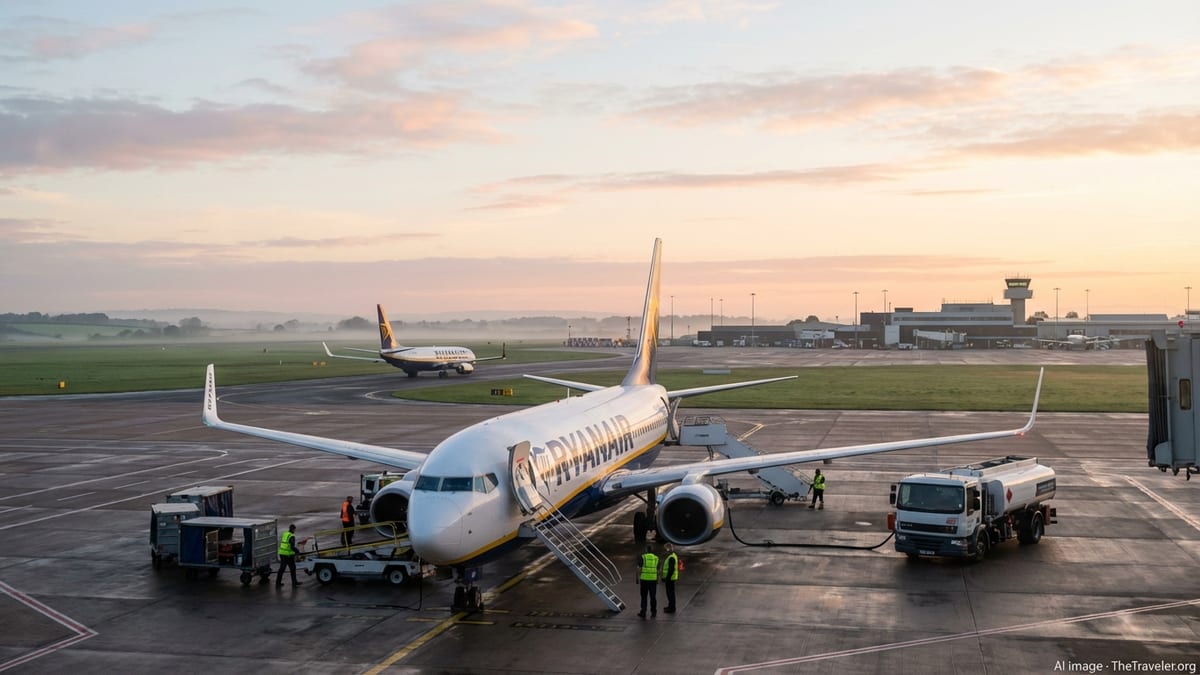
Summer 2025: A Dense Web of Short‑Break Options
Ryanair’s summer 2025 schedule from East Midlands underlines just how central the airport has become to the carrier’s regional strategy. The Irish low‑cost airline is operating 33 routes from the Leicestershire gateway, backed by six based aircraft representing a local investment valued at around 600 million dollars. For passengers, that translates not into abstract capital figures but into sheer choice, with more frequencies on classic short‑break favourites such as Alicante, Faro and Malaga, as well as a spread of city and beach destinations across the continent.
The emphasis is firmly on high‑frequency links that make two or three nights away both practical and affordable. Extra flights on Mediterranean routes mean more options for Friday departures and Sunday or Monday returns, the pattern that underpins the booming short‑break market. For many in the East Midlands, it is now possible to finish work on a Thursday, fly out for a long weekend on the Costas or Algarve, and be back at their desk on Monday morning, without the added time and cost of travelling to a London or Manchester hub.
Ryanair also leans heavily on secondary European airports that typically offer faster transfers and lower costs once on the ground. The airline’s network thinking is designed around quick access rather than prestige hub connections. For the growing number of travellers looking for 48 hours of sunshine, tapas or old‑town sightseeing rather than a fortnight away, East Midlands now offers a menu of options more commonly associated with much larger airports.
For the airport operator, a busier Ryanair programme feeds directly into on‑site spending and supports the case for continued investment in passenger facilities. A high‑density short‑haul operation keeps security lanes, retail units and car parks busy across the week instead of only on traditional peak days, spreading revenue more evenly and bolstering the airport’s position within the region’s transport mix.
Christmas 2025: Extra Seats for Winter Sun and City Lights
The transformation of East Midlands into a short‑break playground is not confined to summer. For Christmas week 2025, Ryanair is adding more than 15,600 extra seats to and from the airport, responding to strong demand for festive family travel, winter sun escapes and Christmas‑market city breaks. The airline expects to carry over 24,000 passengers through East Midlands during the holiday week alone, a significant figure for a regional airport and a clear signal of pent‑up appetite for quick trips around the festive period.
Extra capacity at Christmas offers practical benefits for local travellers. More seats generally mean a better chance of finding convenient departure times and, at least in relative terms, keeping a lid on fares during what is traditionally one of the most expensive weeks of the year to fly. For those hoping to visit relatives in Spain or Portugal, or to squeeze in a pre‑Christmas shopping weekend in a European city, the additional flights can be the difference between a realistic short break and being priced out of travel altogether.
Winter operations also help rebalance what was once a highly seasonal market focused on summer charter flights. By treating Christmas and New Year as mini peaks in their own right and tying them into a broader winter schedule, Ryanair can deploy aircraft and crews more efficiently. East Midlands benefits from that year‑round activity, with jobs supported across handling agents, security, retail and hospitality even in months that were once considered quiet.
From a tourism perspective, the festive uplift works both ways. Not only can East Midlands residents scatter across Europe in search of markets and milder weather, but visitors from continental cities gain more opportunities to fly into the heart of England for winter breaks in historic towns such as Nottingham, Leicester and Derby, each a short journey from the terminal.
Regional Connectivity: Linking the Midlands to Europe’s Second‑Tier Cities
Ryanair’s approach from East Midlands fits a broader pattern across its European network: building point‑to‑point links between regional centres that bypass the traditional big‑city hubs. The airport sits in a busy triangle of urban areas and major roads, drawing millions of potential passengers from across the Midlands who might otherwise be forced to start their journeys in London or Birmingham. By anchoring six aircraft on site, Ryanair can weave a schedule that maximises this catchment area.
On the European side of the equation, many of Ryanair’s destinations are cities where the airline is also expanding local capacity. From regional airports in Spain to central Poland, the carrier has been steadily adding flights in recent seasons, including extra services on routes that touch East Midlands. That creates a virtuous circle: as Ryanair adds flights at smaller continental bases and strengthens bilateral connections, the viability of weekend trips from the UK into those markets improves.
Examples include growing operations at airports such as Lodz in Poland, where Ryanair’s summer 2024 schedule added more flights to East Midlands among other UK destinations. As frequencies rise, flying out on a Friday evening and back on a Sunday or Monday from the Midlands becomes a realistic proposition for city‑break travellers, not just for those heading to the best‑known capitals but to emerging short‑break spots where accommodation and dining often remain better value.
For tourism boards in these destinations, a direct Ryanair link to East Midlands opens doors to a demographic that is both budget‑conscious and increasingly adventurous. Travellers who have already ticked off Barcelona or Rome are now looking at lesser‑known cities within a two‑ or three‑hour flight, many of which are served by the airline’s expanding network. The result is a growing web of weekend‑friendly routes stitched together through a Midlands gateway that until recently punched well below its weight.
Competition, New Airlines and a Hotter Summer 2026
The story of East Midlands as a short‑break platform is not solely about Ryanair, but the carrier’s weight at the airport shapes how others respond. Summer 2026 is already being trailed by the airport as one of its busiest seasons yet, with new airlines and additional destinations entering the mix. SunExpress, a joint venture between Lufthansa and Turkish Airlines, will begin operating from East Midlands from Easter 2026, adding regular flights to Antalya, one of Türkiye’s most popular coastal resort areas.
Jet2, which has long been a key leisure player at East Midlands, is also broadening its summer 2026 programme with new routes and a total of 43 destinations set to be served from the airport. That includes additional Greek and North African options, further reinforcing the airport’s credentials as a genuine alternative to larger hubs for both package holidays and independent travel. The combined effect of Ryanair’s base and the growth of rivals is to give passengers in the region unprecedented choice, particularly for trips under one week.
For Ryanair, competition can be a spur rather than a deterrent. The presence of other carriers vying for sun‑seekers and short‑break customers encourages tactical pricing and schedule adjustments, particularly around weekends and school holidays. Industry analysts note that the airline typically responds by sharpening fares and reinforcing popular routes rather than withdrawing, using its cost base to stay competitive in markets where demand is strong.
For East Midlands Airport itself, a crowded departure board in summer 2026 underlines its shifting role in the UK aviation landscape. What was once seen largely as a charter and cargo hub is maturing into a multi‑airline base where low‑cost and leisure carriers experiment with new destinations and frequencies. In that environment, Ryanair’s established footprint gives it a head start in capturing spontaneous short‑break traffic.
Price Pressures, Taxes and the Appeal for Savvy Tourists
Ryanair’s latest East Midlands push comes against a complex policy backdrop. The airline has been outspoken about the impact of rising air passenger duty on short‑haul flights from 2026, arguing that higher taxes on tickets risk discouraging both outbound holidaymakers and inbound tourists. Despite this, it is still committing aircraft and capacity to regional UK airports, betting that cost‑conscious travellers will search even harder for value as headline prices edge upwards.
For those travellers, East Midlands offers several built‑in savings. Its location close to motorway networks and within reach of large populations in Nottinghamshire, Derbyshire, Leicestershire and beyond often means shorter and cheaper journeys to the airport itself. Parking and on‑airport services typically undercut larger hubs, and security queues are generally more predictable, reducing the need to pay extra for premium fast‑track services or overnight stays at airport hotels.
At the fare level, Ryanair’s model remains geared toward headline prices that attract comparison‑site traffic and spontaneous bookings. The airline’s strategy of adding capacity at peak times from East Midlands, such as the extra Christmas 2025 seats, is designed to stimulate demand while ensuring aircraft are utilised as intensively as possible. For passengers willing to be flexible on dates and times, that can still translate into very low ticket prices, particularly outside school holidays.
There is also a cultural shift at play. Many travellers in the Midlands now treat short European breaks as a regular part of their leisure calendar rather than a rare indulgence, and they plan accordingly. Booking multiple low‑cost trips throughout the year, even if each one lasts only a long weekend, is becoming a familiar pattern. Ryanair’s dense schedule from East Midlands, stitched together with similar offerings at other regional airports, is both responding to and encouraging that behaviour.
What It Means for the East Midlands Region
The rise of East Midlands as a short‑break platform has implications far beyond the airport perimeter. Economically, more routes and higher passenger numbers support jobs on site and across the wider visitor economy, from hotels and restaurants to taxi firms and coach operators. Local authorities have long argued that better air connectivity is key to attracting investment and tourism, and Ryanair’s commitment to the airport gives them a tangible asset to promote.
Inbound tourism is a particularly important strand. Direct flights from European cities into East Midlands make it easier for visitors to explore attractions such as the Peak District, Sherwood Forest, historic market towns and sporting landmarks without detouring via London. Tour operators are already packaging itineraries that start or end at the airport, taking advantage of the relatively uncongested experience compared with the UK’s biggest hubs.
There is also an environmental conversation unfolding. While aviation remains a focus of climate scrutiny, regional players argue that well‑used direct flights from local airports can be preferable to long surface journeys connecting to distant hubs, particularly when aircraft are filled to high load factors. East Midlands has positioned itself as a test bed for more efficient ground operations and has cited the benefits of shifting some demand away from the most congested UK airports.
Politically, the airport’s growing relevance bolsters calls for more nuanced regional transport planning. As Ryanair and other carriers boost capacity, there is renewed debate about rail and bus links to the terminal and about how to ensure that the benefits of increased connectivity are distributed across neighbouring cities and towns rather than concentrated around the immediate airport area.
How Travellers Can Make the Most of the New Short‑Break Hub
For passengers, the practical takeaway from Ryanair’s East Midlands expansion is straightforward: there are more opportunities than ever to build quick European escapes into the calendar, often at relatively low cost. The denser schedule for summer 2025, combined with extra festive capacity and the promise of an even busier summer 2026, means that weekend and three‑night trips can be planned with far greater flexibility than a few years ago.
Travel agents and comparison sites report that demand for short‑notice bookings is particularly strong from regions served by expanding low‑cost bases. With more flights on popular routes, East Midlands residents can watch for fare dips, midweek promotions and off‑peak bargains to secure fast getaways that would once have required a long drive to a larger airport. The airport’s compact layout and typically brisk processing times also make it easier to travel with only hand luggage, further reducing cost and hassle.
For those willing to explore beyond the best‑known destinations, Ryanair’s pattern of pairing East Midlands with rising regional airports across Europe opens up a different kind of short break. Cities that once felt obscure are now just a couple of hours away, with flight times and fares that compare favourably to domestic rail journeys. In that sense, the airline is not just filling aircraft but subtly redrawing the mental map of what counts as an easy weekend away for millions in the heart of England.
As more airlines join Ryanair in targeting East Midlands and as the airport itself leans into its role as a regional gateway, the Midlands traveller’s question is shifting from whether it is possible to manage a quick European escape to which of dozens of options to pick. For savvy tourists, that abundance of choice is precisely what turns a local airport into a springboard for almost spur‑of‑the‑moment adventures across the continent.