

More news on this day
Europe’s busiest low-cost carrier, Ryanair, is pressing ahead with a sweeping overhaul of its 2026 network, cutting flights across Spain, Germany, France, Belgium, Portugal and Ireland, with popular destinations such as Hamburg, Dublin, Belfast, Vigo and Berlin set to lose frequencies or entire routes as the airline responds to rising airport charges and aviation taxes.
Get the latest news straight to your inbox!
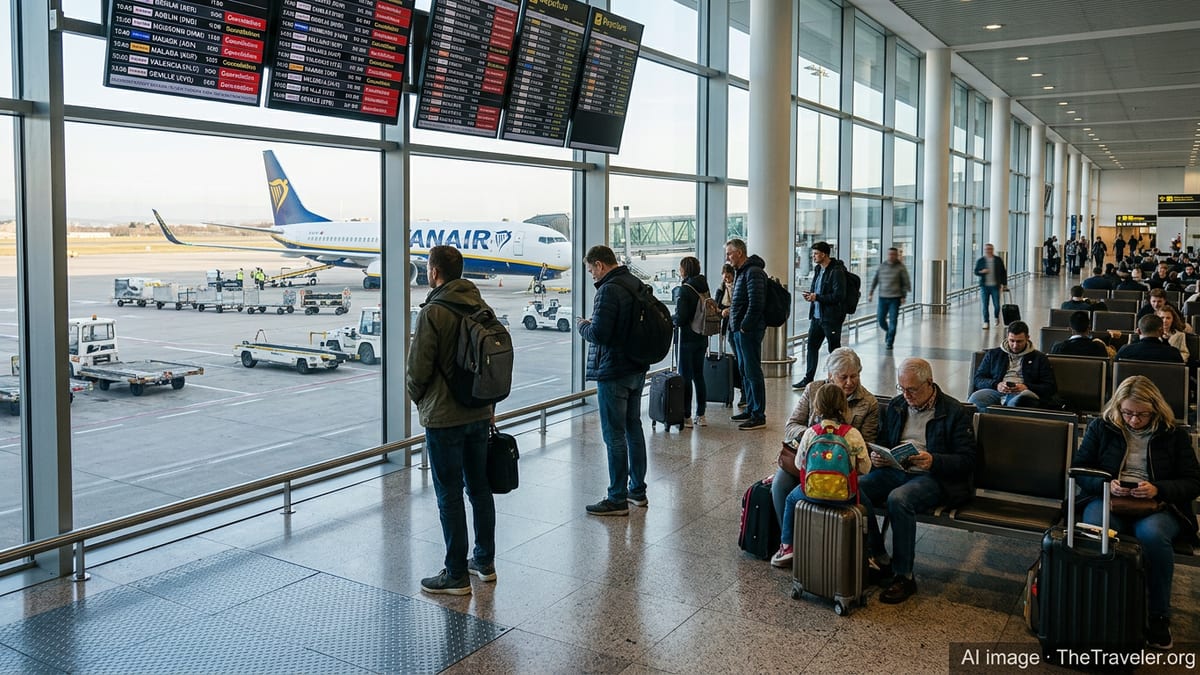
Spain Emerges as a Central Casualty of 2026 Capacity Reductions
Spain, one of Ryanair’s largest markets and a cornerstone of its Mediterranean leisure network, is emerging as a focal point of the 2026 cuts. Industry summaries of the airline’s plans indicate a reduction of around 1.2 million seats from its summer schedule in regional Spain, following earlier winter capacity trims. Regional airports including Asturias, Vigo, Santiago de Compostela and several Canary Islands gateways are expected to see notable reductions as aircraft are redeployed to more profitable routes.
According to recent analyses of European schedules, Ryanair is planning to close some thinner regional routes outright while scaling back frequencies on others rather than exiting the Spanish market entirely. Summer links from the north-western cities of Asturias and Vigo to major European hubs feature prominently among the services at risk, reflecting the airline’s strategy of pivoting away from airports where higher costs are not matched by strong yields or incentives.
While large Spanish bases such as Madrid and Barcelona are not immune to adjustments, the sharpest impact will be felt at smaller regional and island airports that rely heavily on low-cost carriers to feed tourism and visiting-friends-and-relatives traffic. Tourism bodies in Galicia, Asturias and the Canary Islands have already warned that the seat cuts could weigh on visitor numbers in 2026, particularly outside the peak summer weeks when capacity is already tighter.
Spanish aviation data for early 2026 show an overall decline in domestic capacity of several percentage points, with low-cost carriers a key driver of the reduction. Analysts say Ryanair’s retrenchment underscores how quickly airlines will pull back from secondary markets when confronted with higher airport fees, increased local taxation or weaker-than-expected demand recovery.
Germany, France, Belgium and Portugal Face Deep Route Reshuffles
Beyond Spain, Germany and Belgium are among the hardest hit by Ryanair’s 2026 recalibration. The carrier has already reduced German capacity by hundreds of thousands of seats for the winter 2025 season, cancelling dozens of routes and closing several smaller bases. For 2026, Berlin and Hamburg are again singled out as high-cost airports where frequencies will be cut rather than expanded, even as Ryanair adds capacity at cheaper regional gateways.
Belgium is facing one of the most dramatic adjustments. Ryanair has confirmed it will remove around 1.1 million seats from Brussels Charleroi in 2026, with a similar reduction signalled for 2027 if a planned increase in the country’s passenger taxes goes ahead. That decision will see aircraft and crews redeployed to lower-cost airports elsewhere in Europe, trimming the number of destinations on offer from both Brussels and Charleroi and raising concerns among local tourism and airport officials about lost jobs and spending.
France and Portugal, both key holiday markets, are also caught in the crosshairs. French regional airports have seen a series of Ryanair pullbacks and base closures over recent seasons, a trend that will continue into 2026 as the airline protests what it describes as uncompetitive charges and regulatory burdens. In Portugal, Ryanair plans to end all six of its routes to and from the Azores from late March 2026, a significant blow to the remote Atlantic archipelago’s connectivity with mainland Europe.
Across these countries, the pattern is similar: Ryanair is cutting at airports where it says charges and taxes have risen fastest, while shifting capacity toward markets that offer lower costs or incentives. The result is a patchwork of winners and losers, with some regional cities losing Ryanair service entirely even as others gain new links and additional flights.
Popular City Pairs and Holiday Routes Disappear from Timetables
For passengers, the most visible consequence of the network shake-up will be the disappearance of familiar city pairs from 2026 timetables. Aviation schedule data and recent briefings from the airline highlight reductions on routes touching major urban and leisure destinations including Hamburg, Dublin, Belfast, Vigo and Berlin. In some cases, frequencies are being scaled back to a few weekly flights; in others, routes are being withdrawn altogether for at least one season.
Travel industry reports point to cuts on services connecting Germany with Spain and Portugal, as well as reduced options from Berlin and Hamburg to popular sun destinations. In Ireland, Ryanair’s home market, route adjustments around Dublin and regional airports are expected as the carrier balances aircraft across its network and concentrates growth in countries where taxes are falling rather than rising.
Regional Spanish cities such as Vigo and Asturias are particularly exposed because many of their international links are operated almost exclusively by low-cost carriers. The loss or thinning of flights to cities like Dublin, Belfast or German business hubs risks making weekend city breaks and short leisure trips more complicated, often requiring connections through larger airports or a mix of rail and air travel.
Tour operators and online travel agencies are already warning that reduced seat supply into key holiday regions could translate into higher fares in peak periods. With fewer low-cost options on non-stop routes, price-sensitive travellers may need to book earlier, accept less convenient flight times or consider alternative destinations that retain more competition.
Costs, Taxes and Air Traffic Constraints Drive Strategic Shift
Ryanair’s leadership has repeatedly blamed rising access costs for the cuts, pointing to higher airport charges, security and air traffic fees, as well as new or increased ticket taxes in several European countries. Executives argue that when governments raise aviation levies, low-cost carriers respond rapidly by reallocating aircraft to friendlier markets, rather than absorbing the cost or passing it on fully to passengers.
The airline has contrasted Germany and Belgium’s tax and fee regimes with countries such as Spain, Ireland and Poland, where aviation taxes are lower or have been scrapped altogether in recent years. However, even Spain, which long benefited from a relatively supportive cost environment, is now seeing capacity reductions in regional markets as Ryanair weighs overall profitability and operational complexity against growing demand in other parts of its network.
Operational challenges within Europe’s air traffic control system are also a factor. Ryanair has been vocal about staffing shortages and disruption in control centres across France, Germany and Spain, arguing that repeated delays have added cost and undermined schedule reliability. Cutting marginal routes and consolidating capacity on stronger city pairs allows the airline to maintain higher aircraft utilisation while trimming exposure to congested airspace.
Industry analysts note that Ryanair’s current strategy aligns with its long-standing focus on cost leadership. Rather than attempting to maintain a sprawling network at any price, the carrier is using the 2026 timetable as an opportunity to prune weaker routes, exit high-cost airports and double down on markets where fees, taxes and incentives support ultra-low fares.
What Travellers Should Expect Across Europe in 2026
For travellers across Spain, France, Germany, Belgium, Portugal and Ireland, the 2026 schedule changes will mean fewer direct options on some cross-border routes and potentially fuller aircraft on those that remain. In practical terms, passengers flying between regional cities such as Vigo and Hamburg, or between secondary airports in Germany and Portugal’s islands, will be most affected.
Consumer groups and travel agents are advising passengers to keep a close eye on schedule updates, as additional minor adjustments are likely before the start of the 2026 summer season. Those with trips planned far in advance are being urged to monitor emails for any notifications of timetable changes, cancellations or rebookings, and to consider flexible accommodation and transport arrangements where possible.
At the same time, Ryanair continues to grow in lower-cost markets in eastern and southern Europe, opening new bases and routes that will offset some of the cuts in western and central Europe. That means travellers willing to route via alternative hubs or explore emerging destinations may still find plentiful low fares, even as familiar links to cities like Berlin, Dublin or Belfast become less frequent.
For airports and tourism boards in Spain and its European neighbours, the message from Ryanair’s 2026 plans is clear: in a market dominated by low-cost carriers, tax and fee policies have a direct and often rapid impact on air connectivity. As governments seek new revenue from aviation and pursue environmental goals, the tug-of-war between public policy and airline economics looks set to intensify well beyond the 2026 summer season.