

More news on this day
Ryanair’s decision to elevate Saarbrücken into a new operational base, tied to fresh links with Alicante, Trapani, and Lamezia Terme, is set to strengthen tourism flows between Germany, Spain, and southern Italy from summer 2026 onward.
Get the latest news straight to your inbox!
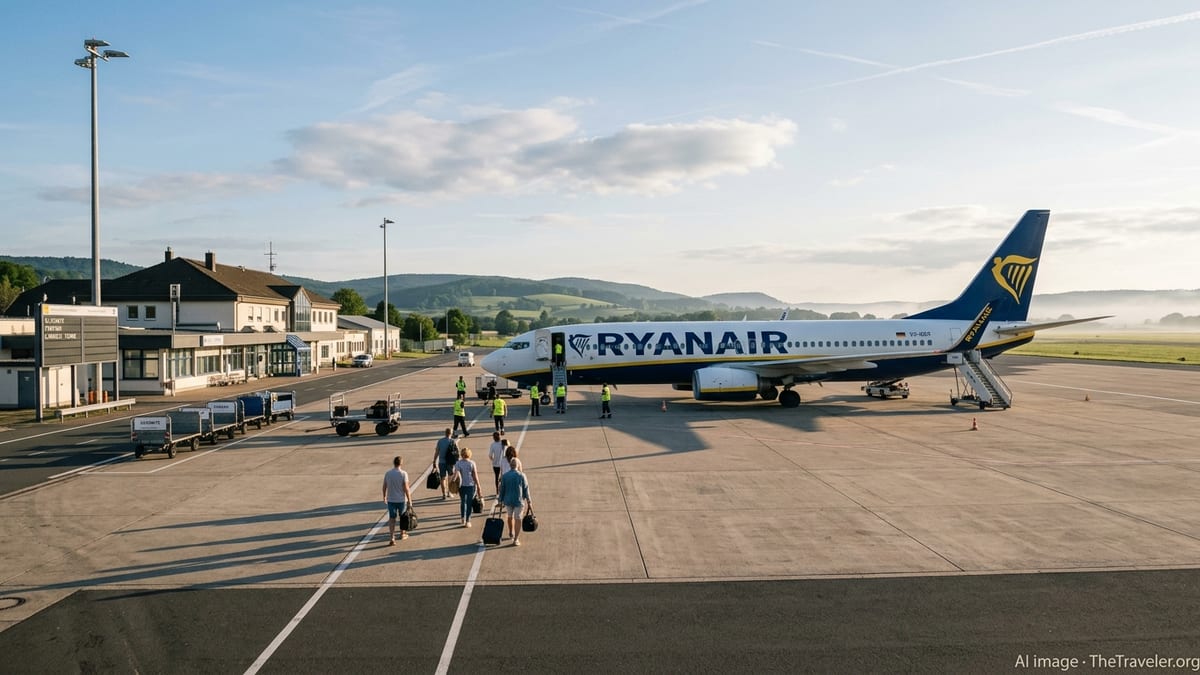
A New German Base Anchored in Saarbrücken
Publicly available schedule information shows that Saarbrücken is joining Ryanair’s German network as a new airport from summer 2026, as part of a wider expansion that also includes Friedrichshafen. The move follows a planned reduction in German aviation taxes and a freeze in air traffic control charges, which analysts view as making regional airports more attractive for low cost carriers. Saarbrücken is now positioned to shift from being a modest regional gateway to a focal point for new leisure traffic.
Industry coverage indicates that the carrier’s Germany plan reinstates hundreds of thousands of seats while redistributing capacity from higher cost hubs to smaller airports. Within that strategy, Saarbrücken’s upgrade into a base, with aircraft and crew stationed locally, is designed to support a more intensive schedule, early morning departures, and more reliable rotations to sun destinations such as Spain and Italy.
For the Saarland region, the base status is expected to bring direct employment at the airport and indirect benefits for hotels, transport operators, and tourism services. Travel observers note that low fares and nonstop links are often key triggers for first time outbound trips, especially in markets that historically relied on longer surface journeys or connections via larger hubs.
For travelers, the most visible change will be the availability of additional point to point routes and a denser timetable during the peak holiday months. Saarbrücken’s inclusion in Ryanair’s summer 2026 network signals that the city is now firmly on the map for budget conscious holidaymakers flying to and from southwestern Germany.
New Nonstops to Alicante, Trapani, and Lamezia Terme
Within the Germany expansion, Ryanair has highlighted new or reinforced links from German airports to Alicante on Spain’s Costa Blanca, as well as to Trapani in western Sicily and Lamezia Terme in Calabria. In Alicante’s case, recent reports show a record summer schedule with a large based fleet and new routes to German cities including Saarbrücken and Friedrichshafen, deepening the airport’s role as a major Mediterranean hub for northern European tourists.
Route listings and airport network documents for Italian regional gateways confirm Ryanair’s ongoing commitment to Trapani and Lamezia Terme, where the airline already supports a mix of domestic and international services. By attaching Saarbrücken to this established network in southern Italy, the carrier is effectively drawing a new leisure corridor between southwestern Germany and lesser known coastal regions on the Tyrrhenian and Ionian seas.
Travel analysts note that the choice of Alicante, Trapani, and Lamezia Terme reflects a pattern seen across Ryanair’s network: pairing cost efficient regional airports in Germany with sun destinations that can handle strong seasonal peaks. This allows the airline to operate high load factors during the summer while keeping airport and handling costs relatively low compared with major hubs.
For passengers, the practical outcome is a set of direct, typically multiple weekly flights that remove the need for connections in larger German or Spanish airports. That is especially significant for families and price sensitive travelers who prioritize short journey times and simple itineraries over premium services.
Tourism Impact in Spain and Southern Italy
The tourism implications of the new routes are likely to be particularly visible in Alicante, which already receives substantial inbound traffic from Germany and other northern European markets. Recent coverage of Ryanair’s Alicante schedule points to hundreds of weekly summer flights and a large number of based aircraft, delivering a steady stream of visitors to the Costa Blanca’s beaches, resorts, and holiday rentals.
In Trapani and Lamezia Terme, the anticipated growth is more about diversification than volume alone. Both airports serve regions of Italy that are rich in natural and cultural attractions but historically have lagged behind major destinations such as Rome, Venice, or Naples in terms of international air connectivity. Added direct services from a new German base broaden the visitor mix and can extend the tourist season, especially for travelers seeking milder spring and autumn stays.
Local tourism businesses in Sicily and Calabria are expected to benefit from more predictable inflows of German visitors, who traditionally stay longer and spend more per trip than some short haul segments. Even modest increases in seat capacity can support new investments in small hotels, agriturismo properties, guided tours, and coastal activities.
At the same time, tourism observers caution that regional authorities and destination managers will need to balance growth with sustainability. Increased low cost traffic can raise pressure on local infrastructure and coastal environments, making coordinated planning around transport links, waste management, and community engagement more important as new routes mature.
What Travelers Need to Know Before Booking
For travelers considering the new Saarbrücken links, the first point is timing. The enhanced German schedule, including Saarbrücken’s role and its connectivity to airports such as Alicante, Trapani, and Lamezia Terme, is centered on the summer 2026 season. Seats typically appear in the booking system several months in advance, and fares tend to be lowest when purchased early or during periodic sales.
Prospective passengers should pay attention to schedule patterns rather than assuming daily service. Reports on Alicante’s expanded network, for example, describe twice weekly operations on some German routes, which can affect flexibility for short breaks. Similar frequency levels are likely on leisure focused links to Trapani and Lamezia Terme, where flights often cluster on weekends or peak holiday days.
From a practical standpoint, travelers originating in the wider Saarland, Lorraine, and Rhineland Palatinate region may find Saarbrücken a more convenient departure point than larger hubs several hours away by road or rail. However, parking, ground transport, and check in cut off times at a regional airport can differ from those at a major hub, so it is advisable to verify details directly with the airline and airport before departure.
Holidaymakers heading to Spain and southern Italy are also encouraged to research local onward connections from Alicante, Trapani, and Lamezia Terme. These airports serve a mix of resort areas and inland towns, and ground transport options such as regional trains, buses, and car rentals can vary significantly by season. Planning the full door to door journey helps ensure that the advantages of inexpensive airfare are not offset by last minute ground transport challenges.
Regional Competition and the Bigger Picture
The addition of Saarbrücken as a Ryanair base comes at a time of shifting dynamics in the German aviation market, with capacity being reduced at some higher cost airports and redistributed toward regional facilities. Public reports describe Ryanair trimming operations at larger or more expensive German airports while adding seats and new routes at smaller ones, a strategy designed to maintain overall traffic while keeping unit costs in check.
Within this broader context, Alicante, Trapani, and Lamezia Terme function as key nodes in a cost sensitive leisure network that links secondary airports across Europe. For destination marketers in Spain and Italy, direct access from a new German catchment area opens opportunities for targeted promotion, including city break campaigns, outdoor and culinary tourism, and off peak travel offers.
For other carriers, the development adds another layer of competition on north south leisure flows, particularly during peak summer months when demand is strongest. While full service airlines are focusing on connections through major hubs, low cost operators are increasingly stitching together regional pairs like Saarbrücken and Alicante or Saarbrücken and Lamezia Terme, reshaping how Europeans reach the Mediterranean.
As schedules for summer 2026 continue to be refined, travelers can expect further adjustments to frequencies and possibly additional destinations from Saarbrücken. For now, the confirmed emphasis on Alicante, Trapani, and Lamezia Terme signals that the new base will lean heavily toward sun and sea tourism, with implications that will be felt from Germany’s southwest all the way to the beaches of Spain and southern Italy.