

More news on this day
Sabah is turning the spotlight away from its famous islands and beaches toward the state’s lesser-known interior, where emerging agrotourism routes and indigenous cultural hubs are being positioned as Malaysia’s next frontier for curious travelers.
Get the latest news straight to your inbox!
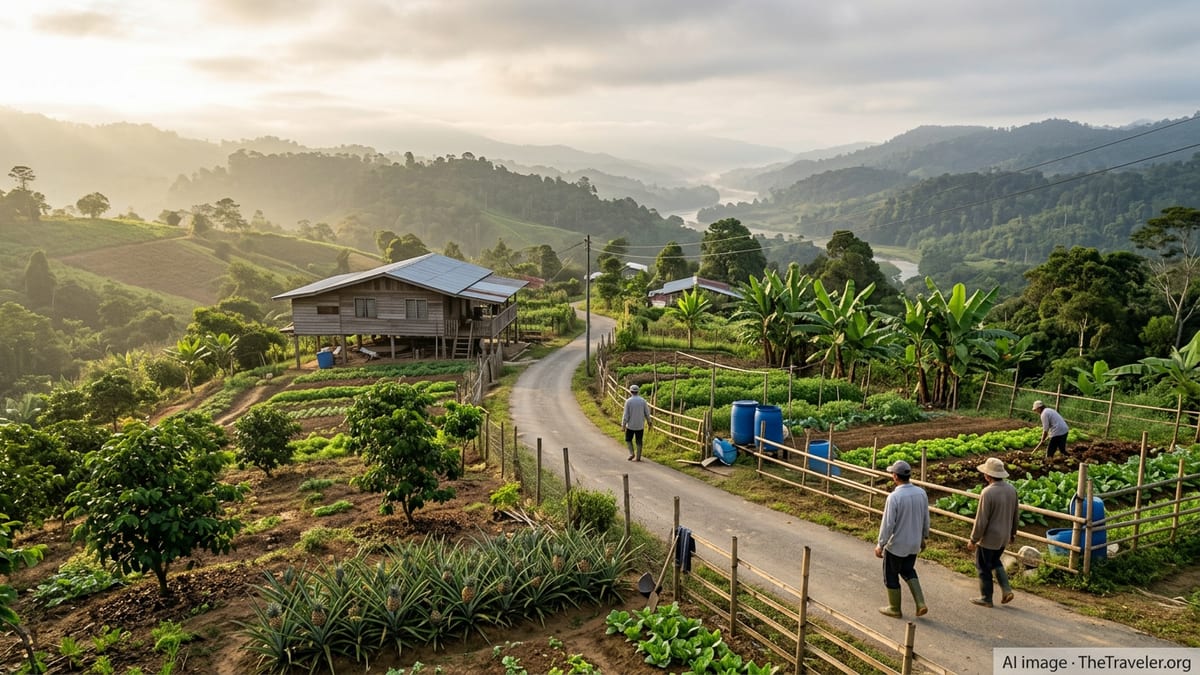
Rural Heartlands Move to the Tourism Forefront
Recent campaigns and policy initiatives in Malaysia are placing Sabah’s interior firmly on the tourism map, as national and state agencies look beyond established coastal hotspots to diversify visitor experiences. Publicly available information shows that rural and community-based tourism are now key pillars in preparations for Visit Malaysia Year 2026, with Sabah highlighted for its mix of rainforests, smallholder farms and multiethnic cultural traditions.
Government statistics indicate that tourism in Sabah continued to expand in 2024, contributing more than 13 billion ringgit to the state economy. Within that growth, stakeholders are increasingly focused on steering visitors toward inland districts that have historically seen far fewer arrivals than Kota Kinabalu or Kinabalu Park. The aim is to spread tourism income more evenly while protecting sensitive coastal and marine environments.
Reports on community-based tourism development in Sabah describe a shift from ad hoc village stays to more structured experiences built around local crops, craft traditions and conservation. Training programs supported by state agencies and non-governmental partners are helping interior communities design small-scale products such as guided farm walks, river excursions and cultural performances that can be integrated into longer overland itineraries.
In parallel, the Sabah Tourism Board and national partners have stepped up destination marketing aimed at encouraging travelers to spend more time inland rather than treating the interior as a brief transit corridor between the capital and Mount Kinabalu. This repositioning frames rural Sabah as a standalone draw for visitors interested in slow travel, food trails and culture-focused routes.
Agrotourism Routes Spotlight Coffee, Pineapple and Smallholder Farms
Agrotourism has become one of the most visible gateways into Sabah’s untapped interior, with coffee, pineapple and dairy farms among the attractions promoted to visitors. Earlier initiatives identified a first wave of agro-based tourism sites spread across districts such as Tenom, Beaufort, Kota Belud, Kudat, Kota Marudu and Ranau, offering travelers a way to engage directly with local producers.
In Tenom, long regarded as Sabah’s coffee capital, visitors are now being encouraged to go beyond café tastings to explore plantations, learn about roasting techniques and stay at farm-based accommodations. Public information on Tenom’s cluster of coffee estates and homestays shows a growing menu of activities, from bean-to-cup workshops to walks through shaded hillsides planted with robusta and liberica coffee.
Further north, pineapple-growing initiatives in Kota Belud are being promoted alongside small-scale dairy operations near Ranau’s highlands, where cool temperatures and sweeping valley views provide a different side of Sabah from the tropical imagery normally associated with the state. At these sites, travelers can observe daily farm routines, participate in light harvesting activities when permitted, and sample fresh produce that rarely reaches mass export markets.
Beaufort and Lahad Datu, traditionally known more for agriculture and forestry than tourism, are also emerging as interior waypoints through farms that combine accommodation, orchards and river access. These diversified spaces are being framed as living classrooms where visitors gain insight into Sabah’s rural economy, including the challenges of maintaining livelihoods while adapting to climate variability and market shifts.
Indigenous Cultures Anchor New Interior Itineraries
The interior of Sabah is home to many of the state’s largest indigenous communities, including Kadazan, Dusun, Murut and Rungus groups whose traditions shape much of the region’s cultural appeal. Travel features and tourism brochures increasingly weave stops at cultural villages, heritage centers and seasonal festivals into overland itineraries that link the coast to the hills.
The Kaamatan harvest festival, marked annually in May across Sabah and the federal territory of Labuan, serves as a focal point for cultural tourism. Public information describes how villages and cultural grounds host traditional music, the sumazau and related dances, craft markets and rituals that commemorate rice as a sacred crop. For travelers who plan journeys around these dates, the interior becomes a stage for living heritage rather than a backdrop passed through en route to other attractions.
Beyond flagship events, a growing network of community-run cultural centers in interior districts gives visitors year-round access to local traditions. These venues often feature traditional architecture, food tastings, weaving or beadwork demonstrations and interpretive walks that explain how upland farming, forest use and river life have shaped indigenous identities.
Travel coverage highlights that many of these experiences are designed to be small-scale and participatory, with visitors joining everyday activities rather than viewing staged performances. This approach is presented as a way to support cultural continuity while providing supplementary income to host communities.
Community-Based Tourism Emerges as a Conservation Tool
Sabah’s interior is also a focal point for conservation programs that use tourism as an incentive to protect forests, rivers and wildlife corridors. Community-based ecotourism initiatives documented by regional organizations link homestays and guided nature activities to broader efforts to restore degraded areas, monitor wildlife and reduce pressure on sensitive habitats.
In several rural zones, villages are working with partners to develop trekking routes, birdwatching hides and river activities that draw value from intact ecosystems rather than resource extraction. By earning income from visitors who seek out quiet trails, endemic birdlife and riverine scenery, participating communities can justify setting aside community forests and adopting more sustainable land-use practices.
Training programs in interior Sabah emphasize skills such as basic guiding, visitor safety, hospitality and small-business management, helping residents take on more direct roles in tourism rather than serving only as occasional suppliers or performers. Publicly available project summaries note that women and youth are often key beneficiaries, particularly where handicrafts, food production and digital marketing are involved.
For travelers, these initiatives translate into opportunities to experience Sabah’s inland biodiversity in relatively low-impact ways. Multi-day stays in villages near forest reserves or along lesser-known rivers allow guests to move at a slower pace than typical coach tours, while providing a clearer understanding of the trade-offs local communities face between conservation and short-term economic gains.
Access, Readiness and the Push for Sustainable Growth
Despite the excitement surrounding Sabah’s hidden tourism gems, the interior remains logistically more demanding than coastal hubs. Road conditions vary, public transport can be infrequent, and some agrotourism and cultural sites are accessible only via prearranged transfers. Travel advisories and regional guides generally recommend that visitors plan itineraries carefully, allowing for extra time between districts and checking seasonal conditions in advance.
There are also significant differences in community readiness. Reports from conferences on community-based tourism in Sabah point out that some villages are fully equipped with homestay licenses, trained guides and dedicated visitor facilities, while others are only beginning to experiment with farm visits or cultural showcases. As a result, travelers are encouraged to manage expectations and remain flexible, understanding that experiences may be more informal and less standardized than in mature destinations.
Stakeholders across the state have identified sustainability as a central guiding principle for interior tourism growth. This includes limiting visitor numbers at sensitive sites, adopting waste-management practices that can cope with increased footfall, and ensuring that income is shared fairly at the village level. Training modules and policy discussions emphasize that tourism should support, rather than replace, traditional livelihoods in farming and forest use.
As national campaigns such as Visit Malaysia Year 2026 gather momentum, Sabah’s interior districts are expected to feature more prominently in itineraries offered by tour operators and promoted through digital platforms. For travelers willing to venture beyond the state’s coastline, the coming seasons may offer a rare window into rural communities and landscapes that are only now stepping into the tourism spotlight.