

More news on this day
Hundreds of travelers at Salt Lake City International Airport faced unexpected overnight stays and missed connections after more than 40 flights were cancelled, triggering hours of delays and scrambling travel plans across the country.
Get the latest news straight to your inbox!
What Happened at Salt Lake City International Airport
Published coverage and live flight-tracking data on Thursday indicate that a combination of lingering winter weather in the West and wider network disruptions led to a wave of cancellations at Salt Lake City International Airport. More than 40 departures and arrivals were scrubbed in a single day, an unusually sharp cut for a major hub that typically prides itself on operational reliability.
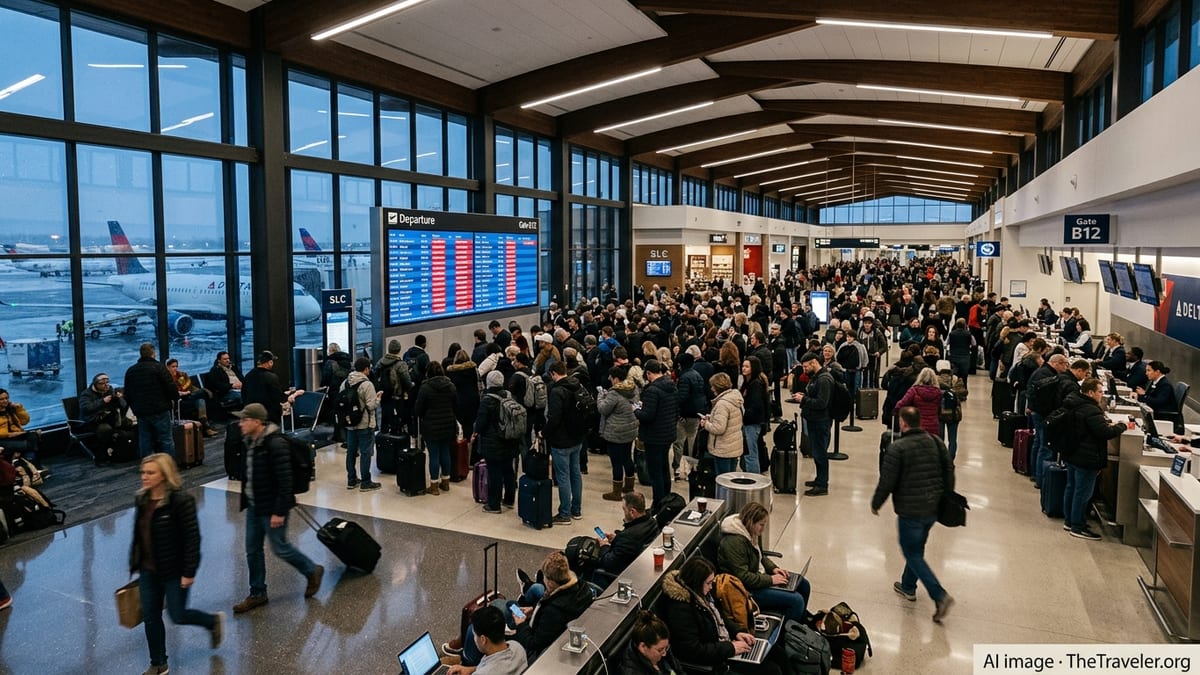
The cancellations built through the morning and early afternoon as airlines adjusted schedules in response to earlier storms affecting routes across the Rockies and Upper Midwest. By late day, check-in halls and concourses saw growing crowds of passengers clustered near departure boards, many attempting to rebook onto already full later flights.
Because Salt Lake City is a key connecting hub, particularly for flights linking the Mountain West with both coasts, the impact extended far beyond Utah. Travelers bound for destinations across the United States reported missed onward flights, unplanned overnight stays, and multi-stop rebookings that added many hours to already long journeys.
Airport statistics and recent planning documents show that Salt Lake City has been handling record passenger volumes, with traffic increasing year over year. On a peak travel day, even a few dozen cancellations can quickly ripple into backed-up security lines, long waits at customer service counters, and tight competition for remaining seats on later departures.
Why So Many Flights Were Cancelled
Publicly available weather and aviation data point to a mix of factors rather than a single cause behind the disruption. A late-season winter system tracking across parts of the western United States, along with residual impacts from earlier severe weather in other regions, reduced the number of aircraft and crew available to operate on time.
Airlines often respond to unstable conditions by preemptively cancelling or consolidating flights at hub airports. While this can reduce the risk of long tarmac delays or last-minute returns to the gate, it also concentrates the disruption into a smaller number of services. In Salt Lake City, that approach appears to have resulted in multiple banked departure times being thinned out, leaving gaps in the schedule.
Operational data and recent history at other major airports show how quickly cancellations can build once weather, airspace congestion, and tight crew schedules collide. Earlier this winter, similar systems elsewhere in the country produced thousands of cancellations over several days, highlighting how sensitive modern airline networks are to sudden constraints.
In Salt Lake City’s case, the situation was compounded by its role as a dominant hub for a single large carrier alongside a smaller number of competitors. When a hub airline reduces its schedule, passengers have fewer alternative direct options on other carriers, making it harder to absorb stranded travelers into the remaining flights.
What Stranded Passengers Experienced on the Ground
Social media posts and local accounts from inside the terminal described long lines at ticket counters and customer service desks as travelers sought rebooking options, meal vouchers, and hotel information. Some passengers reported standing in line for over an hour only to find that the next available seat to their destination was not until the following day.
Boarding areas near major domestic gates became increasingly crowded as rolling delays pushed departure times later into the evening. Seating and power outlets were in high demand, with many travelers camped on the floor charging phones and laptops while monitoring airline apps for updated departure information.
Families traveling with children and visitors unfamiliar with the airport layout often faced the steepest challenges, needing to juggle changing gate assignments, limited dining options near closing time, and uncertainty about overnight accommodation. Those who had checked luggage onto cancelled flights were additionally concerned about when and where their bags would eventually be delivered.
While staffing levels at the airport itself appeared broadly normal, airline counter and gate teams had to manage a crush of rebooking requests at once. In some cases, passengers turned to airline call centers and mobile apps instead of waiting at physical desks, though heavy call volumes meant long hold times there as well.
Key Things Travelers Should Know Now
Published guidance from airlines and consumer-rights resources suggests that passengers affected by cancellations at Salt Lake City should first verify whether their disruption is classified as weather-related or due to controllable operational issues. That distinction can influence eligibility for meal vouchers, hotel stays, and other forms of assistance.
Most major U.S. carriers allow no-fee rebooking onto the next available flight when a service is cancelled, although fare differences may apply if travelers choose to shift to a different routing or date. Seats on later flights from Salt Lake City may be limited for a day or more following a heavy cancellation event, so accepting a connecting itinerary or traveling at less convenient times can sometimes be the fastest way to reach a destination.
Travelers are also encouraged to use multiple channels at once when seeking help. Airline mobile apps and websites can in many cases process same-day rebookings faster than in-person counters, particularly when there are hundreds of passengers in line. At the same time, airport departure boards, overhead announcements, and gate displays remain essential for real-time information about boarding and last-minute gate changes.
Anyone with an upcoming departure from Salt Lake City is advised to check their flight status frequently before leaving for the airport and again after clearing security. Schedules can continue to shift as airlines reposition aircraft and crews, and a flight that appears on time several hours out may still be adjusted if earlier services run late.
How to Prepare if You Are Flying Through Salt Lake City
Given the recent disruptions, travelers with plans to connect through Salt Lake City in the coming days may want to build in additional flexibility. Booking longer layovers, opting for earlier flights in the day, and avoiding the last departure of the evening on a given route can provide more backup options if something goes wrong.
Travel planners and frequent flyers often recommend traveling with essential items in carry-on bags rather than checked luggage whenever possible, particularly during periods of volatile weather. Keeping medications, chargers, a change of clothes, and basic toiletries on hand can make an unexpected overnight stay at a hub airport far less stressful.
Those who have not yet purchased tickets might consider comparing itineraries with and without a Salt Lake City connection, especially if they are traveling during peak periods or into regions forecast to see challenging weather. While the city is generally viewed as a relatively efficient hub, concentrated cancellations demonstrate that no major airport is immune to broad network strain.
For travelers already en route, remaining patient, informed, and proactive can improve outcomes. Monitoring airline notifications, checking gate information regularly, and politely asking agents about alternative routings are practical steps that can help turn a stranded situation into a manageable detour rather than a complete travel breakdown.