

More news on this day
Flight delays at San Diego International Airport on April 12 created a fresh wave of disruption for spring travelers, triggering missed connections and operational challenges across several major US hubs.
Get the latest news straight to your inbox!
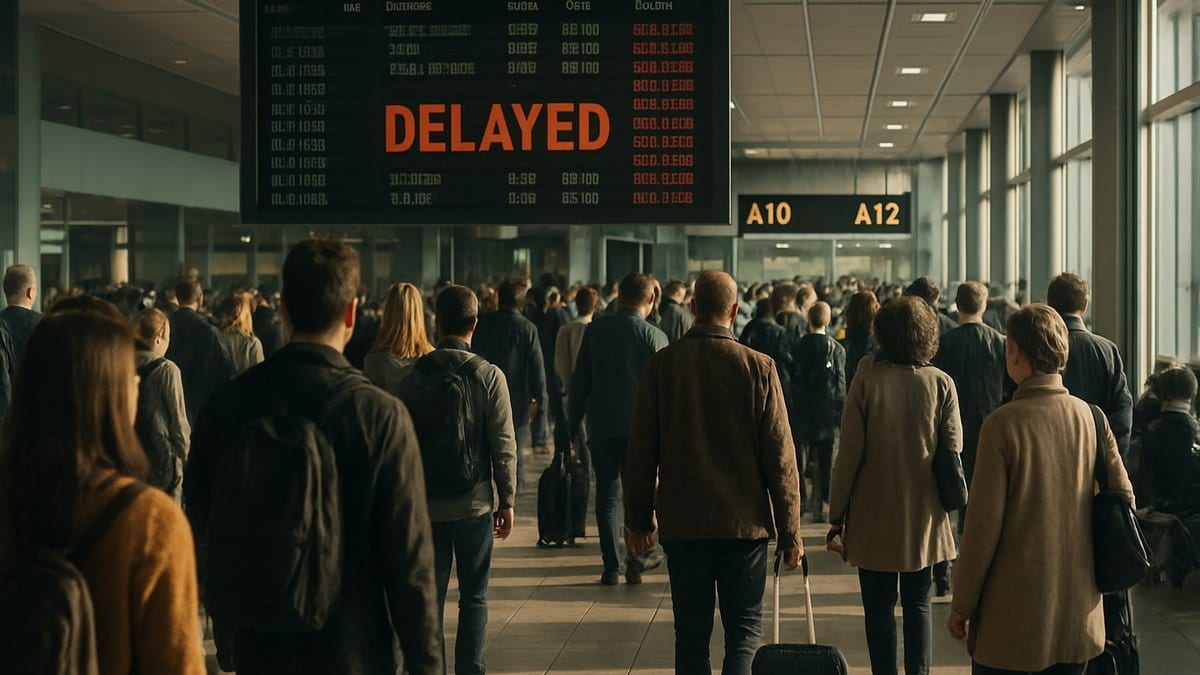
San Diego Disruptions Add Pressure to National Network
Publicly available flight tracking data on April 12 indicates that San Diego International Airport recorded several dozen delayed departures and arrivals, along with a small number of cancellations, affecting services on carriers such as Southwest, United, Alaska and American. While the raw numbers at San Diego remained modest compared with the country’s busiest hubs, the timing and concentration of delays during peak departure banks amplified the impact for connecting passengers.
Operational summaries suggest that many affected flights from San Diego were bound for large domestic hubs including Los Angeles, Dallas, Chicago and Denver. When early outbound services depart behind schedule, later flights that rely on the same aircraft or incoming crews can face knock-on issues, contributing to rolling delays across the day. On April 12, those dynamics appeared across multiple airlines, complicating travel for passengers who had tight onward connections.
San Diego’s role as a West Coast origin and destination airport means that disruption there often surfaces hours later on the other side of the country. Travelers connecting through central and eastern hubs reported extended layovers, missed evening departures and last minute rebookings as aircraft arriving from Southern California reached their next cities behind schedule.
Public data from aviation monitoring platforms shows that even limited schedule changes at a single-airport city such as San Diego can propagate widely once impacted aircraft cycle through larger hub airports, particularly during busy weekend travel periods.
Chicago, Newark and Texas Hubs Feel the Strain
Separate national delay statistics compiled on April 12 show heavy disruption at several key hubs, including Chicago, Atlanta and Newark, with hundreds of late departures and a significant number of cancellations. Reports indicate that weather, air traffic flow constraints and aircraft availability combined to slow operations, with airline networks already under pressure from earlier spring storms in the Midwest and Northeast.
In Texas, major airports such as Dallas Fort Worth, Houston, Austin and San Antonio recorded several hundred delays and multiple cancellations, according to published aviation updates. These centers function as core connection points for travelers from the West Coast heading to the Southeast, Midwest and East Coast. When flights from San Diego and other California cities arrive late into these hubs, departure banks for onward domestic and international services can quickly become congested.
Travel industry coverage notes that Dallas Fort Worth in particular has seen sustained operational strain over the past 48 hours, with disruptions on April 11 carrying into April 12 as airlines reposition aircraft and crews. That backlog, combined with fresh delays from origins such as San Diego, contributed to longer-than-normal lines at customer service desks and tighter margins for same-day rebooking options.
Newark and Chicago, both dense network hubs for transcontinental travel, also registered elevated delay counts. Passengers arriving from San Diego on late afternoon and evening flights encountered a reduced set of onward choices, especially for final legs to smaller regional airports that offer limited daily frequencies.
Weather, Congested Runways and Tight Schedules
San Diego’s single-runway configuration has long been recognized as a structural constraint for the airport, particularly during periods of low visibility or shifting wind patterns. Operational analyses and past disruptions highlight that any need to adjust runway use or arrival flows can slow departures and landings, backing up traffic on the ground and in surrounding airspace.
Although conditions in San Diego on April 12 remained generally favorable, the airport’s narrow physical footprint and limited room for holding aircraft mean that small schedule perturbations are harder to absorb. A sequence of delayed morning and midday departures can quickly compress later time slots, leaving airlines with fewer options to recover time before aircraft head onward to larger hubs.
Across the national system, early spring remains a volatile period for weather, with thunderstorms and shifting frontal systems affecting airports from the central Plains to the East Coast. In the days leading up to April 12, San Francisco and other West Coast gateways also encountered bouts of adverse weather, adding to the complexity of repositioning aircraft and personnel. These overlapping factors have left airlines operating with thinner buffers, so minor issues at origin airports can more readily evolve into multi-city disruptions.
Industry data and past seasons show that when runway, weather and schedule pressures converge, network carriers tend to experience slower recovery times. That dynamic appeared again on April 12, as San Diego related delays combined with existing challenges in the Midwest and Texas to lengthen the time needed to return to normal operations.
Passengers Confront Missed Connections and Limited Options
For individual travelers, the operational story translated into a familiar pattern of missed connections and improvised itineraries. Public reports on April 12 described passengers departing San Diego with relatively short scheduled connection times at downline hubs, only to arrive and find their onward flights already boarding or closed. In busy hubs such as Dallas Fort Worth and Chicago, that often meant same-day alternatives were already heavily booked.
Travel advisory outlets continue to recommend building in greater connection buffers when traveling through high volume hubs during the spring, particularly when the first leg originates from a single-runway airport like San Diego. The events of April 12 underscored that guidance, as travelers with one hour or less between flights were more likely to need rebooking than those with longer layovers.
Consumer-focused aviation resources also note that passengers facing extended delays or cancellations should review airline policies on meal vouchers, hotel accommodations and change fee waivers. While the specific level of support varies by carrier and by cause of disruption, public policy summaries emphasize that same-day communication through airline apps and airport displays remains essential for keeping track of rapidly changing departure times.
The April 12 disruptions offered another reminder that small schedule shifts at a coastal origin can cascade across multiple time zones. For travelers planning upcoming trips through San Diego and other busy West Coast airports, monitoring conditions not just at departure and arrival points, but also at intermediate hubs, remains an important part of minimizing the risk of severe itinerary changes.
Airlines Work to Stabilize Networks Ahead of Late-April Rush
Aviation analysts tracking April performance suggest that carriers are now racing to stabilize schedules ahead of the late April and early May travel surge. After a winter defined by intense storms in parts of the country and several notable operational meltdowns, airlines have come under renewed scrutiny for the resilience of their networks.
On April 12, published coverage across multiple outlets framed the San Diego related disruptions as one piece of a larger pattern of strain on the national system, rather than an isolated breakdown at a single airport. While the number of cancellations linked directly to San Diego remained relatively limited, the day’s events highlighted how interconnected schedules can magnify the impact of even modest local issues.
Industry observers expect carriers to continue adjusting aircraft routings, adding spare capacity on select routes and refining crew allocations in the coming days to prevent further backlog. Travelers departing from San Diego over the next week may see minor schedule adjustments as airlines seek to reclaim on-time performance and reduce the risk of cascading disruptions across the busiest hubs.
With peak summer travel still weeks away, April 12 serves as an early test of how well airlines and airports can navigate tight margins in a complex operating environment. For passengers, the day’s widespread delays reinforce the value of flexible itineraries, generous connection times and close attention to real time flight information when planning journeys that rely on multiple US hubs.