

More news on this day
Operations at San Diego International Airport were disrupted on April 12 as 46 delayed flights and one cancellation involving major carriers such as United Airlines, Southwest Airlines and Alaska Airlines rippled across domestic routes, affecting passengers traveling to and from Los Angeles, Chicago and several other US cities.
Get the latest news straight to your inbox!
Wave of Delays Concentrated Among Major Carriers
Publicly available flight tracking data and industry coverage indicate that the bulk of Saturday’s operational issues at San Diego International Airport stemmed from services operated by United, Southwest and Alaska, which collectively accounted for more than 46 delayed departures and arrivals and at least one cancellation across the day. These disruptions touched both short-haul West Coast routes and longer domestic connections that use San Diego as either an origin, destination or transfer point.
Travel and aviation news reports show that the delays formed part of a broader pattern of strain in the US aviation network on April 12, with congestion and schedule knock-on effects reported at major hubs including Los Angeles International Airport and Chicago O’Hare International Airport. While the scale in San Diego was smaller than at the largest hubs, the concentration of delays among a few key carriers amplified the impact on passengers.
San Diego International, which serves as a significant West Coast focus city for both Southwest and Alaska, typically handles a high volume of point-to-point leisure and business traffic. When several of its largest operators experience delays at the same time, even a relatively modest number of affected flights can trigger long lines at check-in and security, crowded gate areas and challenges for airline staff attempting to rebook misconnected travelers.
Flight status boards through the afternoon and evening reflected a mix of late inbound aircraft, revised departure times and rolling gate changes, underscoring how a single cancellation combined with dozens of delays can disrupt schedules for hours, particularly for passengers with tight onward connections through Los Angeles, Chicago and other hubs.
Knock-On Effects for Los Angeles, Chicago and Other Cities
The San Diego disruptions did not occur in isolation. National data compiled on April 12 show heightened levels of delays and cancellations at airports across the United States, including at Chicago O’Hare and Los Angeles International, two of the busiest hubs in the country and critical connection points for United and Southwest networks. With those hubs already dealing with dozens to hundreds of delayed flights, schedule reliability on feeder and spoke routes, including services to and from San Diego, came under additional pressure.
Published coverage of nationwide operations notes that Chicago and other Midwestern hubs recorded some of the highest numbers of delayed and canceled flights, affecting a wide list of domestic destinations. In this context, a delayed San Diego departure might be the downstream result of an aircraft arriving late from Chicago, Denver or another hub where earlier weather, airspace congestion or ground-operations challenges had already pushed the schedule off track.
Los Angeles also reported significant operational disruption during the same time frame, with more than one hundred delays and several cancellations across multiple airlines. For carriers like Southwest and United that operate dense shuttle-style schedules between Southern California, the Bay Area and other western cities, delays in Los Angeles can quickly propagate to San Diego, especially when aircraft and crews rotate between nearby airports over the course of the day.
Other US cities with direct links to San Diego, including Dallas, Phoenix, Denver and various Pacific Northwest and Mountain West destinations, likewise experienced pockets of disruption that fed into the situation. The resulting pattern for travelers was a patchwork of minor and major schedule changes that, taken together, created a challenging day to move through the domestic air system.
Airlines Balance Operational Strain With Growing San Diego Schedules
San Diego International has seen sustained growth in recent years, with carriers such as Southwest and Alaska expanding their route networks and frequencies from the airport. Airport planning documents and airline announcements outline recent and upcoming additions, including new point-to-point services that increase the city’s connectivity across the western United States. While this expansion offers more options for travelers, it also means that any disruption can now affect a broader range of routes and destinations.
Federal transportation statistics on airline performance show that major US carriers generally complete the vast majority of their flights as scheduled, with cancellation rates typically hovering around low single-digit percentages and most delays attributable to factors such as air carrier issues, national aviation system constraints and late-arriving aircraft. Within that context, the 46 delays and single cancellation recorded in San Diego on April 12 represent a localized spike rather than a systemic breakdown, but one that is keenly felt by passengers on the affected services.
For airlines, managing such a day involves juggling aircraft rotations, crew duty-time limits and gate availability while attempting to keep later flights on time. When disruptions at larger hubs cascade into secondary markets like San Diego, carriers must decide whether to prioritize protecting future departures or keeping current delayed flights as close as possible to their revised schedules, choices that can influence how long passengers ultimately wait on the ground.
The situation also highlights how closely linked San Diego’s operations are to the wider national network. A flight that appears on departure boards as a San Diego to Chicago service may in fact be the continuation of an aircraft that has already flown several legs, perhaps starting the day in a completely different region. A delay early in that sequence can reverberate through each subsequent segment, including those touching San Diego.
What Passengers Experienced on the Ground
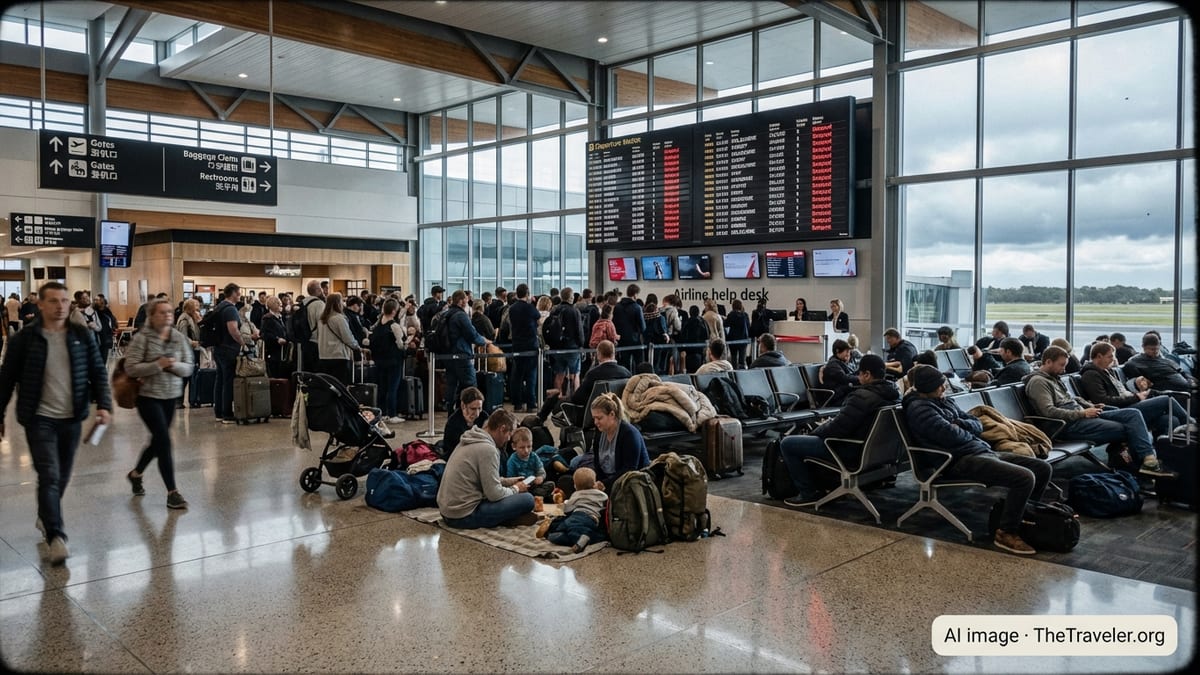
Travelers passing through San Diego International on April 12 encountered the typical symptoms of a disrupted operating day: crowds at customer service counters as passengers sought rebooking assistance, tightly packed gate areas during peak departure windows and longer waits at baggage claim as delayed flights arrived in bunches rather than at evenly spaced intervals.
Passenger accounts shared on social media platforms and travel forums described a mix of relatively short delays of under an hour and more substantial waits exceeding two hours on some routes operated by United, Southwest and Alaska. For some travelers connecting onward in Los Angeles, Chicago or other hubs, even modest delays from San Diego were enough to cause missed connections, leading to overnight stays or reroutes through alternative cities.
While San Diego is accustomed to dealing with episodic disruptions linked to coastal weather patterns or congestion in Southern California airspace, the combination of local delays with broader nationwide strain contributed to a sense among travelers that there were limited fallback options. As flights into major hubs filled with rebooked passengers, same-day alternatives became harder to secure, particularly for those traveling as part of families or larger groups.
Customer guidance available from airlines and consumer advocacy resources emphasizes the importance of monitoring flight status closely, building extra time into itineraries involving tight connections and understanding each carrier’s policies regarding meal vouchers, hotel accommodations and rebooking when delays or cancellations occur. On days like April 12, that preparation can make a material difference in how quickly affected passengers find workable alternatives.
Broader Questions About Resilience in the U.S. Air Network
The disruptions in San Diego and at other US airports on April 12 contribute to ongoing discussions about the resilience of the national air transportation system. As carriers continue to optimize schedules and operate at higher load factors, relatively small disturbances can create outsized ripple effects that are most visible to passengers in the form of late departures and arrivals.
Analysts who track federal on-time performance statistics note that the causes of delays are frequently shared across the system: a combination of airline-controlled factors such as maintenance and staffing, broader national aviation system issues including air traffic control constraints and routine weather that slows operations without rising to the level of extreme storms. The pattern seen around San Diego, Los Angeles and Chicago fits within this framework, where multiple moderate stress points combine to create a challenging travel day.
For San Diego specifically, the experience of 46 delays and one cancellation serves as a reminder that even mid-sized coastal airports are deeply embedded in a complex national web of flights. As airlines introduce new routes from the city and increase frequencies to major hubs, the benefits of added connectivity come with an increased sensitivity to disruptions elsewhere in the network.
In the short term, travelers using San Diego International are likely to continue to see generally reliable service, punctuated by days of irregular operations such as those observed on April 12. How airlines, airport operators and federal regulators address the underlying drivers of delay across the US system will help determine whether such episodes become more or less frequent in the years ahead.