


More news on this day
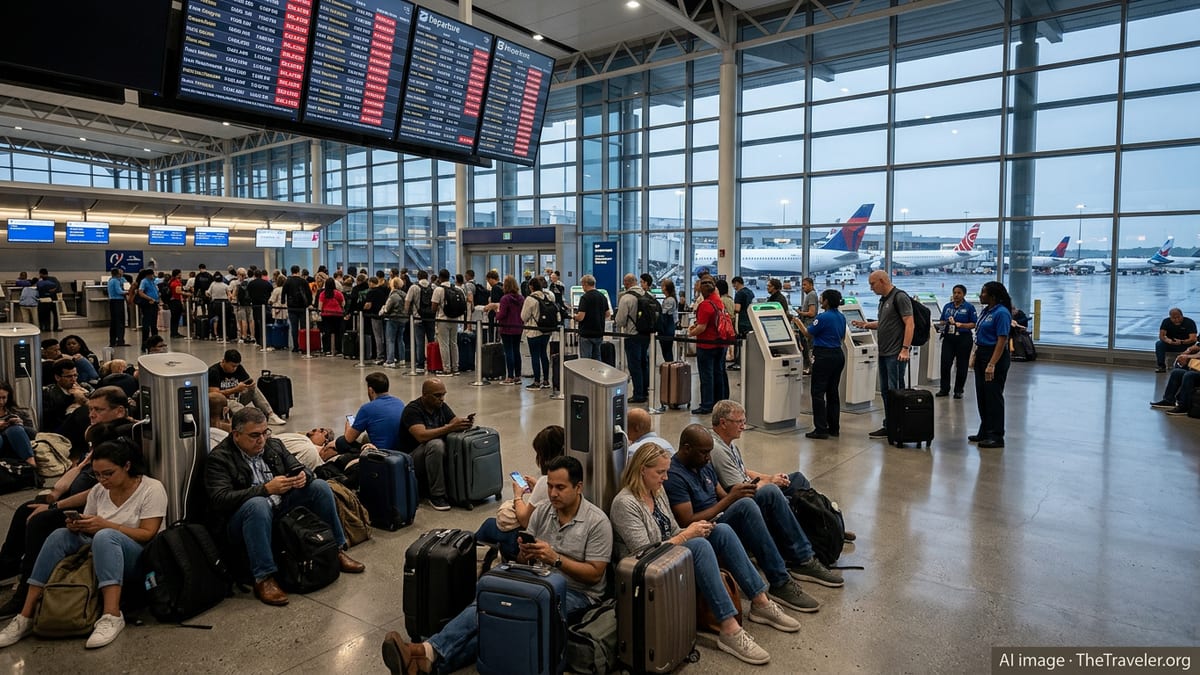
San Francisco International Airport experienced severe operational disruption over the July 3–4 holiday period, with ground handling issues and congestion leading to six flight cancellations and more than 100 delays affecting key North American routes operated by Air Canada, United Airlines and American Airlines.
Get the latest news straight to your inbox!
Ground Disruptions Collide With Peak Summer Demand
The latest wave of disruption at San Francisco International Airport coincided with one of the busiest travel weekends of the summer, amplifying the impact of relatively small numbers of cancellations into widespread knock-on delays. Flight status boards on July 3 and the morning of July 4 showed a cluster of grounded departures and late arrivals, including services marketed or operated by Air Canada, United and American.
Publicly available flight-tracking data indicates that at least six departures linked to those carriers were cancelled outright over the two day period, while more than 100 flights posted significant delays. The effects were most visible on transcontinental and transborder routes, where aircraft and crew are tightly scheduled and a single cancellation can cascade into missed connections across multiple hubs.
The disruptions came as San Francisco International was already grappling with reduced arrival capacity following a federal ban on simultaneous side by side landings on its main east west runways introduced earlier this year. Combined with seasonal coastal fog and construction activity, the constraint has made the airport more vulnerable to ground holds and extended taxi times when traffic peaks.
Key Routes to Toronto, Vancouver and East Coast Hubs Affected
Among the hardest hit on July 3 were transborder flights linking San Francisco with major Canadian gateways. Flight status logs show Air Canada operated services and codeshares with United between San Francisco and Toronto and between San Francisco and Vancouver encountering extended ground delays, with at least one Toronto departure cancelled and others departing well behind schedule.
Delays were not confined to Canada. United and American services from San Francisco to major East Coast hubs, including Washington and New York area airports, recorded departure times pushed back by an hour or more in some cases as aircraft waited for available departure slots. Passengers reported long queues at check in and gate areas as rolling estimates for boarding and pushback were repeatedly revised.
Domestic connections along the West Coast and into the Mountain states also absorbed the impact. Aircraft scheduled to operate short haul sectors after arriving late from San Francisco were unable to depart on time, leaving travelers on routes that never touched the Bay Area nonetheless contending with the fallout from the congestion there.
Structural Strain at SFO Heightens Impact of Weather and Volume
The disruption unfolded against a backdrop of already deteriorating on time performance at San Francisco International. Recent analysis of federal transportation data and airport statistics, reported in local coverage, shows average delays at the airport have roughly quadrupled this year compared with 2025, with only a bare majority of flights now arriving within 15 minutes of schedule.
The Federal Aviation Administration’s permanent restrictions on parallel landings at San Francisco, introduced in the spring, have reduced flexibility during periods of heavy demand. The measure, intended to bolster safety margins given the airport’s tightly spaced runways, means controllers have fewer options for recovering from earlier delays once the system comes under strain.
At the same time, ongoing airfield construction and routine coastal weather patterns, including low morning cloud and afternoon winds, are creating frequent ripple effects through the schedule. Observers tracking the latest disruption note that relatively modest ground handling issues or minor mechanical checks can quickly snowball into airport wide delays when there is little slack left in the operating day.
Holiday Travelers Confront Cancellations and Long Tarmac Waits
The timing of the latest cancellations and delays proved particularly challenging for passengers. With many travelers heading out for the July 4 holiday weekend, aircraft were operating close to full, limiting opportunities to rebook disrupted customers onto later departures. Social media posts from July 3 describe full flights held on the tarmac for extended periods, along with lengthy waits at customer service counters once cancellations were announced.
Travelers connecting through San Francisco on long haul itineraries reported missed onward flights and overnight stays, especially on routes tied to East Coast and Canadian hubs. For some, even short ground delays at San Francisco resulted in the loss of transatlantic or transpacific connections later in the day, forcing complete re-routing of their journeys.
Operational data collected over the first half of the year suggests that such experiences are becoming more common at the airport, particularly on peak travel days. With United maintaining a dominant share of traffic at San Francisco and Air Canada and American feeding in substantial transborder and domestic flows, disruption to a relatively small number of departures can reverberate widely through the network of all three carriers.
What Disruption Means for Future Travel Through San Francisco
Analysts who follow airport performance trends indicate that the events of early July fit a broader pattern rather than an isolated incident. As structural capacity limits and safety measures at San Francisco intersect with strong post pandemic travel demand, the airport is operating closer to its limits more often, increasing the likelihood that small operational issues will translate into large passenger impacts.
Publicly available planning documents from the airport commission highlight the importance of San Francisco as a hub, particularly for United’s international network and Air Canada’s transborder operations. That role amplifies the stakes when ground operations falter, since disruptions can affect not only point to point travelers but also those using the airport as a connecting gateway between Asia, Europe and North America.
For passengers planning trips through San Francisco in the coming weeks, industry observers suggest building additional buffer time into itineraries, especially when connecting to long haul flights or traveling on peak days around weekends and holidays. While airlines routinely adjust schedules and add contingency where possible, the combination of construction, regulatory constraints and high demand means that episodes of concentrated cancellations and widespread delays are likely to remain a recurring feature of travel through the Bay Area’s largest airport this summer.