


More news on this day
American Airlines is pressing ahead with one of the most extensive premium cabin overhauls in its history, rolling out new suites and expanded high-end seating across its fleet as competition intensifies for lucrative corporate and luxury travelers.
Get the latest news straight to your inbox!
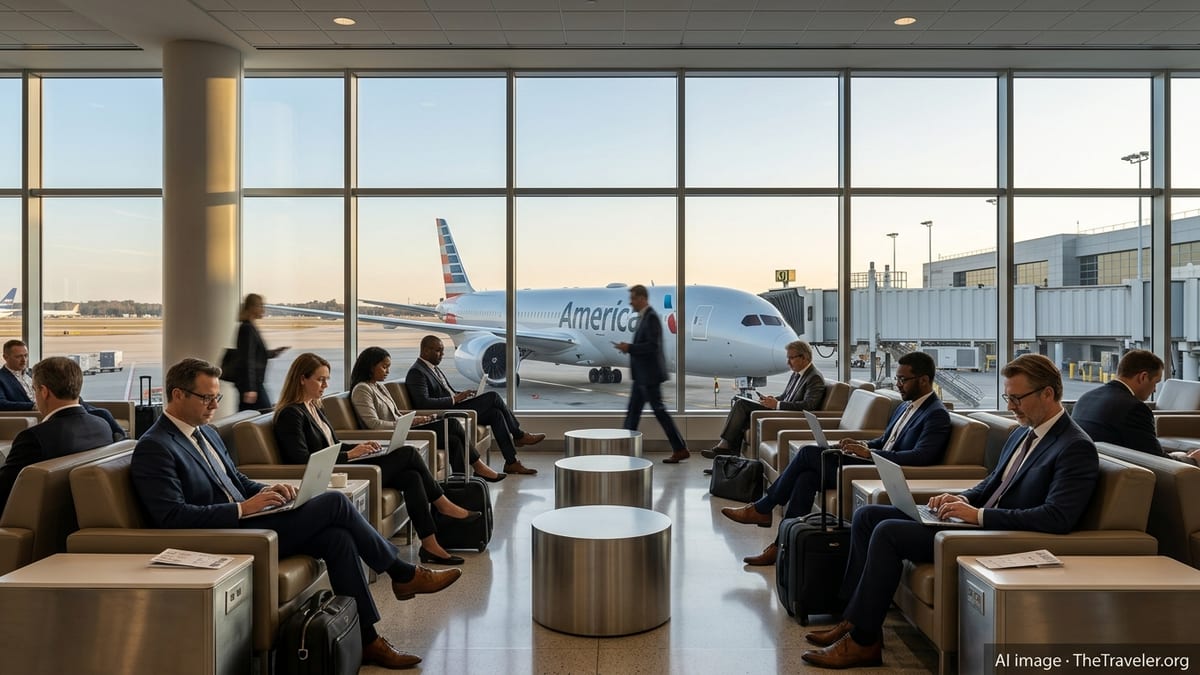
Flagship Suite and Premium Economy Move to Center Stage
American is reshaping the top end of its product with the Flagship Suite, a fully enclosed business-class seat that is now appearing on new Boeing 787-9 deliveries and will feature prominently on forthcoming Airbus A321XLR aircraft. Renderings and early photos in published coverage show individual suites with privacy doors, direct aisle access and larger personal storage, marking a significant step up from the carrier’s existing lie-flat seats on many long-haul routes.
Onboard layouts highlighted in public filings and industry analysis indicate that the new 787-9s will devote a greater share of cabin real estate to premium seats compared with earlier versions, pairing Flagship Suite cabins with a refreshed Premium Economy section. American has signaled through investor presentations that this configuration is central to a broader strategy to increase lie-flat and premium seating across its international network over the rest of the decade.
The A321XLR, American’s new long-range narrowbody workhorse, is being introduced with a three-cabin layout featuring Flagship Suite in business, a distinct Premium Economy cabin and an expanded Main Cabin section. According to airline statements and independent reporting, the design is intended to deliver what executives have described in public remarks as a widebody-style experience on a single-aisle aircraft, particularly on transatlantic and premium domestic routes.
Travel industry outlets note that these steps move American closer to the model favored by some global rivals, where a large, high-yield business cabin and a clearly differentiated Premium Economy product sit at the heart of the long-haul offering, while traditional international first class is scaled back or removed.
From Flagship First to More High-Yield Seats
A notable element of the overhaul is American’s gradual retreat from separate international first class in favor of an enlarged business cabin built around suites. Analyst commentary and public disclosures suggest that as more aircraft receive the Flagship Suite configuration, the airline expects to grow its inventory of lie-flat seats by more than half on long-haul jets by the end of the decade, even as first class disappears.
Retrofit programs now under way on Boeing 777-300ER and 777-200ER aircraft are central to this shift. Published materials show that the 777-300ER in particular will gain a substantially larger business cabin, with seat counts increasing from roughly 50 to around 70 suites on some layouts, reallocating space that previously supported a small number of first class seats and higher-density economy sections.
On narrowbodies, American is phasing out the specialized A321T premium transcontinental layout in favor of the A321XLR and other updated A321 variants. Reports indicate that these aircraft will bring a standardized hierarchy of business suites, Premium Economy and Main Cabin to both domestic coast-to-coast flights and select international services, simplifying the product while still targeting high-spend passengers on key routes.
Industry observers view this as part of a broader premiumization trend across major U.S. carriers, in which a larger pool of well-paying business, leisure and hybrid travelers is driving airlines to trade some economy density for more high-yield seats, particularly in business and Premium Economy.
Domestic Cabins Get More First Class and New Amenities
American’s premium push extends well beyond its widebody and long-haul fleet. The airline has confirmed through corporate announcements that its Airbus A319 and A320 narrowbodies are being retrofitted starting in 2025 to add more domestic first class seats, alongside refreshed interiors, larger overhead bins and new power options at every seat.
The cabin refresh complements a recent rollout of upgraded onboard amenities. According to coverage of American’s product updates, premium cabins now feature a rotating collection of amenity kits and enhanced bedding, while all cabins on select aircraft are gaining redesigned dining options. New or refurbished seatback screens with 4K resolution, Bluetooth connectivity and multiple charging ports are slated to appear across future 787-9, 777-300 and A321XLR deliveries as part of the same investment wave.
These domestic changes are designed to align the experience on shorter flights with the more upscale positioning of American’s long-haul product. More first class seats on high-frequency business routes, combined with improved in-flight entertainment and connectivity in the Main Cabin, are intended to attract corporate travelers while also making paid or upgraded premium seats more available to loyalty program members.
Fleet orders placed in recent years, including large commitments for additional A321neo and Boeing 737 MAX 10 aircraft, further underscore this strategy. Public statements from American and manufacturers indicate that at least some of these jets will carry layouts tuned toward a higher proportion of domestic first class and extra-legroom economy, giving the carrier more flexibility to match premium capacity to demand across its network.
Competitive Pressures on Key Routes
The timing of American’s cabin upgrades reflects growing competition for premium travelers, particularly on transatlantic and U.S. transcontinental markets. Rival U.S. airlines have been expanding their own suite-style business cabins and investing heavily in Premium Economy and upgraded lounges, setting a higher bar for comfort and privacy at the front of the plane.
On flagship routes such as New York to Los Angeles and San Francisco, where American deploys the A321XLR and other high-end configurations, reports from frequent flyers describe an increasingly competitive landscape in which cabin design, seat privacy, Wi-Fi reliability and catering can sway high-value customers. Similar dynamics are playing out on long-haul routes from hubs like Dallas-Fort Worth and Miami to Europe and Asia, where American’s refreshed widebodies compete directly with international carriers offering next-generation business class suites.
Analysts cited in trade publications suggest that American’s decision to funnel significant capital into cabin retrofits and new premium-focused aircraft is, in part, a response to this pressure. By expanding the number of business and Premium Economy seats and modernizing the hard product, the airline is aiming to capture more high-yield demand while also improving the revenue mix on aircraft that previously tilted more heavily toward standard economy.
At the same time, the transition introduces operational complexity. During the multi-year retrofit period, passengers may encounter a mix of old and new interiors on similar routes, and expectations around upgrades, mileage redemptions and seat selection can vary by aircraft type. Travel advisers and loyalty experts note that managing this shift effectively will be crucial if American wants the perceived value of its new cabins to keep pace with the investment.
What Travelers Can Expect in the Coming Years
For travelers, the near-term impact of American’s premium strategy will be felt first on key long-haul and transcontinental routes, where the newest 787-9s and A321XLRs are entering service. Passengers booking business class on these flights can expect enclosed suites with more privacy, larger entertainment screens and upgraded bedding, while Premium Economy customers will see more dedicated cabin space and refined soft products.
As the retrofit program expands, more 777s and other widebodies will transition to the new layouts, gradually increasing the odds of encountering the upgraded product on international trips. On domestic routes, flyers are likely to notice additional first class seats on A319 and A320 aircraft, refreshed cabins and more consistent access to in-seat power and improved Wi-Fi.
While some travelers may regret the loss of traditional international first class, industry commentary suggests that many will benefit from the larger pool of business suites and better differentiation between cabins that American is putting into place. The airline’s success will depend on how well it aligns pricing, loyalty benefits and service standards with the higher expectations that come with a premium-leaning fleet.
For now, American’s cabin investments signal a clear bet that demand for comfort and privacy at the front of the aircraft will remain strong. As more of the redesigned jets enter service over the next several years, premium passengers on the carrier’s most competitive routes are poised to see a markedly different experience than the one that greeted them before the pandemic.