

More news on this day
San Francisco International Airport is facing a fresh wave of operational disruption in early April, with publicly available tracking data on Saturday indicating 224 delayed flights and 7 cancellations affecting passengers across domestic and international routes.
Get the latest news straight to your inbox!
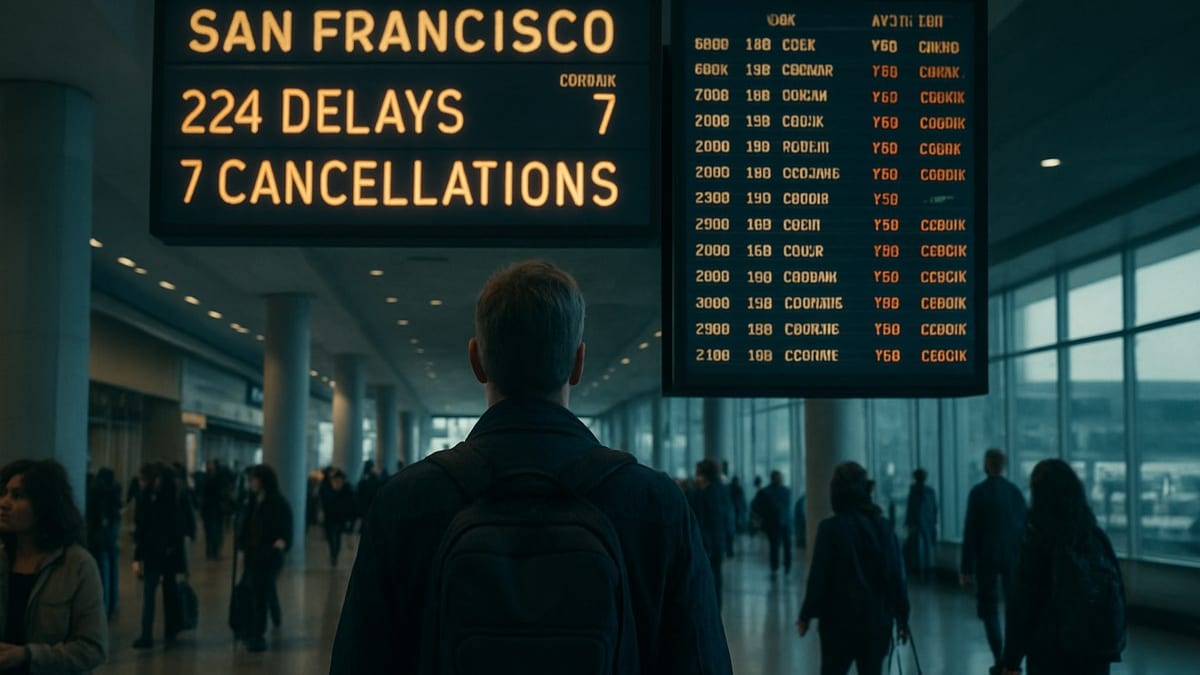
Early April Brings Fresh Turbulence for Bay Area Air Travel
The latest disruptions arrive at a busy time for San Francisco International Airport, as spring travel ramps up and more passengers return to the skies. The combination of heavy schedules and operational pressures has amplified the impact of even modest slowdowns, creating visible bottlenecks on departure and arrival boards.
Flight tracking data for the first weekend of April 2026 shows that the bulk of the issues are concentrated in delayed departures, with a smaller but still significant number of arrivals affected. While the seven cancellations represent a fraction of the airport’s daily traffic, they add to the strain for travelers already coping with extended waits and missed connections.
The pattern at San Francisco aligns with what has been observed at other major U.S. hubs in recent months, where periodic spikes in delays have coincided with busy weekends, changing weather patterns and tight airline schedules. For the Bay Area, those pressures are magnified by the airport’s role as a key gateway for transcontinental and transpacific flights.
Airport operations, airline staffing and conditions at connecting airports all contribute to how delays accumulate during the day. Once early flights depart late, subsequent rotations can be pushed back, leading to a cascading effect that is particularly noticeable to travelers flying in the afternoon and evening.
Weather, Congestion and Network Knock-ons Among Contributing Factors
Reports from aviation trackers and regional coverage indicate that a mix of factors has likely contributed to the latest disruption at San Francisco International. Even when local skies appear relatively clear, air traffic flow programs, low clouds, coastal winds or changing conditions elsewhere in the network can slow takeoffs and landings.
San Francisco’s geography and runway layout have long made it vulnerable to delays when visibility drops or when air traffic controllers must increase spacing between aircraft. On busy spring days, that can translate into longer taxi times, holding patterns and ground delays that ripple across an airline’s wider schedule.
Congestion at other major hubs can also play a role, particularly for carriers operating tight connection banks through cities such as Denver, Chicago, Dallas or Atlanta. When flights headed to or from San Francisco are held or rerouted in other parts of the country, the result is often reflected in the growing delay totals that passengers see on national dashboards.
Industry analysts note that cancellations, while far fewer in number than delays, tend to arise when airlines seek to reset their operations, reposition crews or manage maintenance needs. The seven cancellations recorded at San Francisco in early April appear modest relative to overall volume, but they can be especially disruptive for travelers on less frequent routes.
Impact on Passengers During Peak Spring Travel Weekend
The latest wave of delays and cancellations comes at a time when many travelers are taking advantage of spring breaks, long weekends and milder weather to fly in and out of the Bay Area. Higher passenger volumes mean that even small schedule changes can translate into crowded gate areas, long customer service lines and competition for the limited seats available on later departures.
Travelers passing through San Francisco International on the affected day have reported longer than expected waits at boarding gates and baggage carousels, along with last minute gate changes and rolling delay notifications. For those with tight connections, particularly on international itineraries, the margin for error has been thin.
Families traveling with children, as well as business travelers on time sensitive trips, are among those most affected when delay counts rise into the hundreds. Missed connections can result in overnight stays, rerouting through unfamiliar airports or the loss of a day’s worth of meetings or vacation time.
Consumer advocates regularly remind passengers in such situations to review their airline’s policies on meal vouchers, hotel accommodations and rebooking options when disruptions occur. While rules vary by carrier and by cause of delay, understanding available options can make a difference when seats are scarce and call centers are busy.
How Airlines and the Airport Are Managing Disruption
According to publicly available information, airlines operating at San Francisco International have been taking standard steps to manage the disruptions, including adjusting departure times, swapping aircraft where possible and consolidating lightly booked flights to free up capacity. These operational moves are intended to prevent a handful of affected flights from escalating into much broader network disruption.
Airlines typically rely on operations centers to track incoming weather, staffing and air traffic control constraints across their networks. When issues develop, they may issue waivers that allow passengers to change travel dates or routes without the usual fees, particularly when significant delays are anticipated at major hubs like San Francisco.
For its part, the airport has continued to provide general travel advisories and guidance encouraging passengers to check their flight status before leaving for the terminal and to arrive with extra time during peak periods. Publicly available airport dashboards and airline apps have been central tools for travelers seeking up to the minute information on gate assignments and departure times.
Ground handling, security screening and baggage operations can also feel the strain when delays stack up, as aircraft remain at gates longer and passengers spend more time in terminal areas. Coordinating among airlines, federal screeners and airport contractors remains a critical part of easing congestion during busy travel windows.
What Travelers Can Do When Delays Mount
With more than 220 delays and multiple cancellations recorded, travel advisors suggest that passengers transiting San Francisco International build additional flexibility into their plans. Longer connection times, particularly for international flights or last departures of the day, can provide some buffer against unexpected schedule changes.
Experienced travelers also recommend keeping airline apps installed and notifications enabled, since many updates are pushed digitally before they appear on terminal displays. Monitoring both the departure and arrival airports can help passengers anticipate where problems may arise, especially during periods of unsettled spring weather.
Those who are still planning trips through San Francisco in April 2026 may wish to consider flight options earlier in the day, when schedules are often more resilient and recovery time is greater if delays occur. Choosing itineraries with multiple daily frequencies on the same route can also improve the chances of being rebooked quickly if a cancellation occurs.
As the spring travel season continues, industry observers expect periodic flare ups of disruption at major hubs, including San Francisco. For Bay Area travelers, the recent tally of 224 delays and 7 cancellations serves as a reminder that even on routine days, conditions across the national air network can change rapidly, and preparation remains an important part of air travel.