

More news on this day
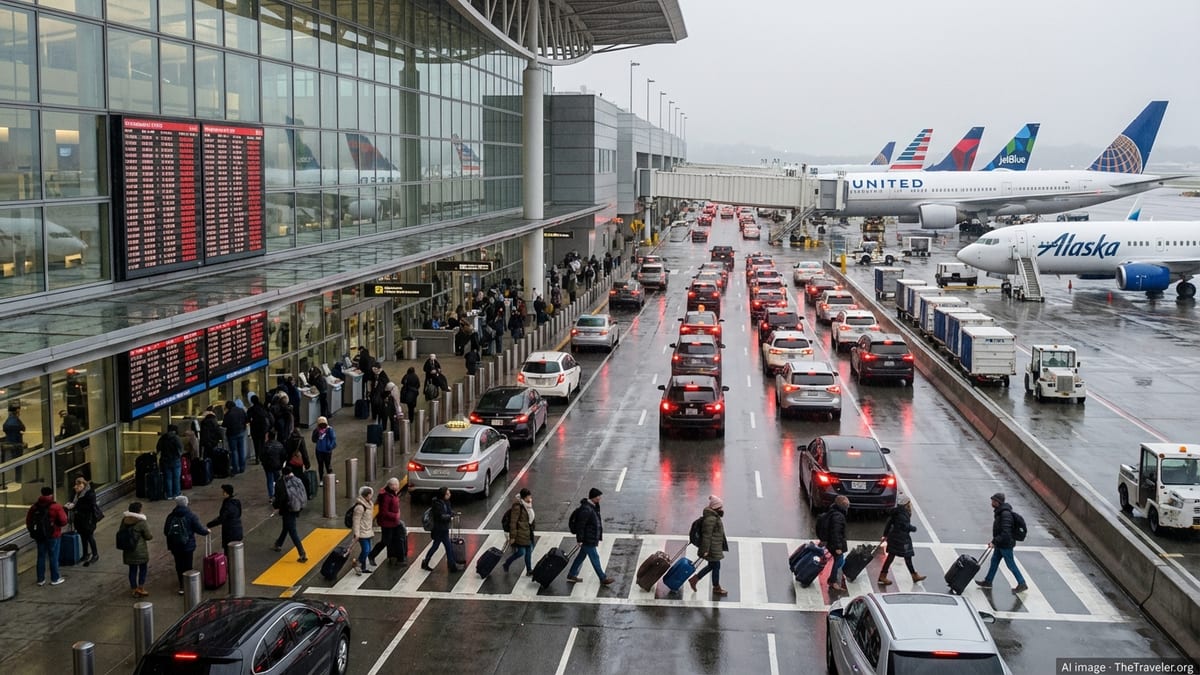
A powerful nor’easter hammering the U.S. Northeast has triggered a new wave of flight disruptions for Bay Area travelers, with San Francisco International Airport seeing at least 86 cancellations and 98 delays on Monday as major carriers including United, JetBlue, Delta, American, Alaska and regional operator Horizon scrambled to reroute aircraft and crews.
Blizzard in the Northeast, Bottleneck in the West
The latest aviation turmoil began far from California. A rapidly intensifying winter storm barreling into the Northeast on February 22 and 23 has effectively shut down large parts of the country’s busiest air corridor, with thousands of flights scrubbed at New York, New Jersey and New England airports. As airlines concentrated on protecting operations at core hubs, the disruption rippled almost immediately to West Coast gateways, including San Francisco International Airport.
By midmorning Monday, flight tracking data showed that U.S. carriers had canceled more than 5,000 services nationwide, with cancellation rates at LaGuardia, JFK, Newark and Boston Logan reaching historic levels. Those airports are key endpoints for transcontinental routes from San Francisco. With runways blanketed by snow and crosswinds swirling at near hurricane force in the Northeast, carriers preemptively grounded large portions of their schedules, pulling aircraft and crews out of rotation.
San Francisco’s role as a western gateway for East Coast and transatlantic traffic meant it could not escape the fallout. Aircraft scheduled to depart the Bay Area for Newark, Boston and other Northeast destinations suddenly had nowhere to land or no onward connections to operate, forcing airlines to cancel or delay departures even as skies over Northern California remained largely clear.
For travelers, the result was a familiar but no less frustrating picture: departure boards lit with red, check in halls crowded with weary passengers clutching rebooking confirmations, and customer service lines snaking through terminals as the storm on the other side of the country upended plans for business trips, family reunions and winter getaways.
United Takes the Brunt as Newark Corridor Shuts Down
United Airlines, the dominant carrier at San Francisco International and a major player on the transcontinental corridor to Newark Liberty International Airport, appears to be bearing much of the local impact. Multiple nonstop services between San Francisco and Newark were canceled heading into Monday, including flights that ordinarily anchor late afternoon and overnight connections to Europe and the Mid Atlantic.
The carrier’s Newark hub has been among the hardest hit by the nor’easter, with a large majority of its daily operation grounded as crews contend with whiteout conditions, challenging crosswinds and limited deicing capacity. With Newark functioning at only a fraction of its normal throughput, United has effectively been forced to turn off large portions of its West Coast feed, particularly from San Francisco where many of its long range aircraft originate or terminate.
Passengers booked on San Francisco–Newark departures reported receiving cancellation notices late Sunday and early Monday as the airline moved to reset its schedule. Some were reprotected via alternative routings through Chicago or Washington, while others were offered travel waivers allowing them to shift trips later in the week without change fees. But seats on remaining services evaporated quickly, leaving many travelers to choose between lengthy multi stop itineraries or multi day delays.
For United, the disruption is not limited to the San Francisco–Newark shuttle. Aircraft scheduled to operate onward from Newark to Europe and the Midwest remained out of position, complicating the carrier’s broader network recovery. Industry analysts note that the airline will likely spend several days rebalancing fleets and crews, even after runways in the Northeast are plowed and reopened.
JetBlue, Delta and American Slash Transcontinental Links
Low cost hybrid JetBlue, for whom Boston and New York are critical hubs, has also dramatically scaled back its San Francisco operation as the storm’s effects deepened. The carrier’s signature transcontinental services linking San Francisco with Boston and JFK have faced a string of cancellations, cutting a vital bridge for tech and finance travelers who rely on the route for same day coast to coast trips.
JetBlue has historically been heavily exposed to weather events in the Northeast because of its dense concentration of flights at Boston and New York area airports. On Monday that vulnerability was laid bare once again, with the airline forced to cancel the bulk of its schedule in the region and, by extension, its cross country links. At San Francisco, that translated into grounded Airbus jets, idle gates and passengers shifted to later departures or other carriers when possible.
Legacy rivals Delta Air Lines and American Airlines, while somewhat less reliant on Boston and New York than JetBlue, have not been spared. Both carriers operate key San Francisco routes to New York and Boston, as well as to connecting hubs in the interior that are now absorbing overflow from the storm zone. With the nor’easter disrupting their East Coast operations and winter weather complicating schedules in parts of the Midwest, Delta and American have trimmed transcontinental frequencies, prioritizing core bank structures at Atlanta, Detroit, Dallas Fort Worth and Charlotte.
Travelers with tickets on those airlines out of San Francisco have been urged to take advantage of broad weather waivers, which allow customers to move travel dates within a defined window at no extra cost. Nonetheless, many reported having to accept middle seats or less convenient timings as the pool of available inventory shrank across multiple carriers and alliances.
Alaska and Horizon Hit on Seattle and Pacific Northwest Feeds
Alaska Airlines and its regional affiliate Horizon Air, which together provide much of the short haul connectivity between San Francisco, Seattle and smaller communities in the Pacific Northwest, are also navigating a cascading disruption. While the brunt of the nor’easter is more than a thousand miles away, ripple effects on aircraft rotations and crew availability are increasingly visible in the West.
Several Alaska operated services between San Francisco and Seattle were canceled or substantially delayed as the carrier repositioned aircraft to cover other vulnerable parts of its network. Some of those flights were slated to carry onward connections for passengers heading to cities such as Boston, New York and Washington, which have been sharply curtailed by the storm. Without certainty that those downline legs would operate, Alaska has pulled back frequencies to avoid leaving travelers stranded mid journey.
Horizon, which flies under the Alaska brand on shorter regional segments, has been contending with similar constraints. Regional jets that feed long haul departures from Seattle and Portland have been delayed or held in place as dispatchers await clarity on whether partner flights in the Northeast will depart at all. That operational caution has translated into last minute schedule changes from San Francisco, where the airline’s departures board showed a patchwork of cancellations and rolling delays on Monday morning.
For many Bay Area travelers heading for Seattle or using it as a springboard to Alaska and western Canada, the combination of weather related cutbacks and aircraft imbalances has meant longer layovers, unplanned overnight stays or, in some cases, the decision to abandon trips entirely.
Salt Lake City and Dallas Connections Strained
Beyond direct transcontinental services, the storm’s impact is acutely felt on key inland hubs that connect San Francisco to the rest of the country. Delta’s operation at Salt Lake City, a major gateway for Rocky Mountain and interior West destinations, has been under stress as the carrier absorbs misrouted aircraft and disrupted flows from the Northeast and Upper Midwest.
Flights between San Francisco and Salt Lake City have faced a mix of cancellations and extended ground holds as air traffic managers sequence arrivals and departures through constrained airspace. Some aircraft en route from California have been held on the ground awaiting updated flow control instructions, with crews keeping passengers informed of evolving departure times as conditions shift hourly across the national network.
At the same time, American Airlines’ Dallas Fort Worth hub is straining under the pressure of rebooked itineraries. As flights into New York, Newark, Boston and Philadelphia disappear from schedules, Dallas has become a key alternative connection point for Bay Area passengers trying to reach the East Coast or international destinations. That surge in demand has filled remaining seats, while minor weather and congestion related delays in Texas have further tightened connection windows.
Travel agents report that standard two leg routings such as San Francisco to Dallas to Boston are now routinely converting into three or four segment odysseys, involving overnight stops and detours through secondary hubs. The complexity reflects the fragility of a system in which a single major weather event in one region can compel carriers to redraw routemaps in real time for travelers thousands of miles away.
Passengers Face Long Lines, Confusion and Patchwork Workarounds
Inside San Francisco International Airport’s terminals, scenes on Monday reflected the scope of the national flight meltdown. Families gathered on the floor around power outlets, business travelers juggled laptops on their knees as they waited hours for customer service, and overhead announcements repeatedly urged passengers to confirm flight status before proceeding to security.
With at least 86 flights canceled and close to 100 delayed, according to aggregated data from airline and airport dashboards, rebooking options quickly became constrained. Travelers whose flights to Newark, Boston, Dallas, Salt Lake City or Seattle were scrapped often found that the next available departure on their carrier was not for another one or two days, particularly if they required multiple seats together.
The pressure pushed many to explore patchwork solutions: splitting groups across flights, switching to nearby airports such as Oakland or San Jose, or even using Los Angeles as a makeshift connection hub. Others looked to Amtrak or long distance buses for partial legs of their journeys, especially those whose final destinations lay along the West Coast or in the Mountain West, where rail and road remained passable despite winter conditions in parts of the interior.
Airport volunteers and airline staff attempted to manage expectations, distributing snacks and water in particularly backed up gate areas and reminding travelers that weather related disruptions, while logistically disruptive, are ultimately implemented in the name of safety. For stranded passengers, however, the distinction offered limited comfort as hotel prices rose and available rooms near the airport became scarce.
Airlines Roll Out Waivers as Recovery Timeline Stretches
In response to the scale of the storm, most major carriers serving San Francisco have introduced broad travel waivers covering flights to affected East Coast cities. United, JetBlue, Delta, American and Alaska are all allowing eligible customers with itineraries touching the Northeast through at least Tuesday to rebook without change fees, provided travel is completed within a defined reissue window and origin and destination remain the same.
Those waivers extend to many San Francisco departures bound for Newark, Boston, New York and Philadelphia, and in some cases to connecting flights via Salt Lake City, Dallas and Seattle where the onward leg terminates in the storm zone. Agents have been instructed to work with passengers to identify the earliest feasible alternatives, though the underlying scarcity of seats limits what can be offered in practice.
Operational leaders caution that the recovery will not be instantaneous, even after snow stops falling in the Northeast. Airlines must first dig out aircraft parked at storm hit airports, inspect equipment for ice related damage, and then reposition planes and crews to where they are needed most. That process can take several days in a complex hub and spoke network, especially when disruptions occur during a busy winter travel period.
For Bay Area travelers, that likely means several more days of elevated risk for cancellations and missed connections on routes that traverse the northern half of the country. Industry watchers suggest that customers with flexible plans should consider pushing nonessential trips into the following week, when schedules are expected to stabilize and the system has more slack to absorb residual delays.
Advice for Bay Area Travelers Navigating the Turbulence
Travel experts say that while passengers cannot control the weather, they can take steps to minimize the chaos when storms strike. The first is to stay as close as possible to real time information. Airline mobile apps, text alerts and airport dashboards remain the fastest sources of schedule changes, often updating before gate agents have time to make public announcements.
Those departing from or through San Francisco this week are encouraged to build in extra time, especially if connecting through hubs like Newark, Boston, Dallas, Salt Lake City or Seattle that remain under stress from the nationwide disruption. Checking in online, traveling with carry on luggage when possible, and maintaining updated contact details with airlines can all help smooth last minute rebookings or reroutings.
Seasoned travelers also note that flexibility is a powerful asset. Being willing to accept alternative routings, nearby airports or different times of day can open up options that might not be visible through automated search tools. In a system recovering from a large scale storm, human agents often have access to creative combinations that standard booking engines do not readily surface.
Even as the Northeast digs out from the nor’easter and Bay Area skies remain comparatively calm, the episode is a reminder that modern air travel is as interconnected as it is efficient. When the country’s busiest corridor grinds to a halt under a blanket of snow, the shockwaves can be felt from New England to the Pacific, leaving travelers in San Francisco and beyond waiting for the system to thaw.